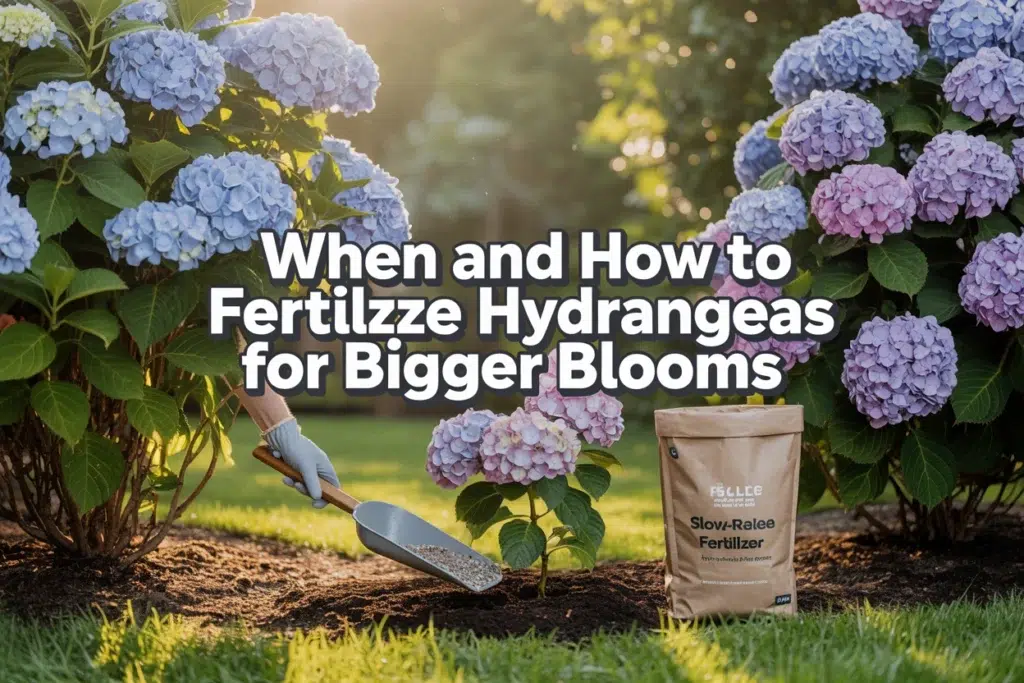
Knowing how to fertilize hydrangeas at the right time can help support healthy growth and better blooms. For established plants, the main feeding is usually done in early spring when new growth begins.
More fertilizer does not mean bigger blooms. Too much nitrogen can lead to lots of green leaves and fewer flowers, while overfeeding can also cause other problems.
The key is to feed only when needed, use a suitable product, and follow the label instructions.
When Should You Fertilize Hydrangeas?
For most established hydrangeas, early spring is the best time for the main fertilizer application. Wait until the plant starts showing new growth, then apply a slow-release fertilizer according to the product label.
A Simple Hydrangea Fertilizing Schedule
| Time | What to do |
| Early spring | Give established hydrangeas their main feeding as new growth appears. |
| Late spring to early summer | Consider a second, lighter feeding for reblooming or actively growing plants if the fertilizer label allows it. |
| Mid-August onward | Stop regular fertilizing to avoid encouraging tender late-season growth. |
| Fall and winter | Do not fertilize just to push new growth before dormancy. |
Do All Hydrangeas Need Fertilizer?
No. A healthy hydrangea growing well in good soil may not need heavy or frequent feeding.
Before adding fertilizer, look at the plant. If it has healthy growth and is flowering well, adding extra fertilizer may not improve it.
Fertilizer is more useful when your soil is low in nutrients or the plant shows signs of poor growth. A soil test can help you decide what your garden actually needs.
Early Spring: The Main Feeding
Early spring is when hydrangeas begin active growth after winter. Feeding at this point gives the plant nutrients as it develops new stems, leaves, and flower growth.
You do not need to wait until the plant is fully leafed out. New buds swelling and fresh leaves appearing are useful signs that the growing season has started.
Late Spring or Early Summer: Does Your Hydrangea Need More?
Not every hydrangea needs a second feeding.
Bigleaf, mountain, and some reblooming hydrangeas may benefit from another light application in late spring or summer. If you make two applications, follow the fertilizer label rather than simply using the full recommended amount twice.
For a healthy, established plant that is growing well, more fertilizer is not automatically better.
When Should You Stop Fertilizing?
Avoid fertilizing late in the growing season, especially if new growth may not have time to harden before cold weather. In many cooler parts of the United States, this means stopping by late summer.
If you are unsure about your local timing, your climate and the specific hydrangea variety should guide the final decision.
What Is the Best Fertilizer for Hydrangeas?
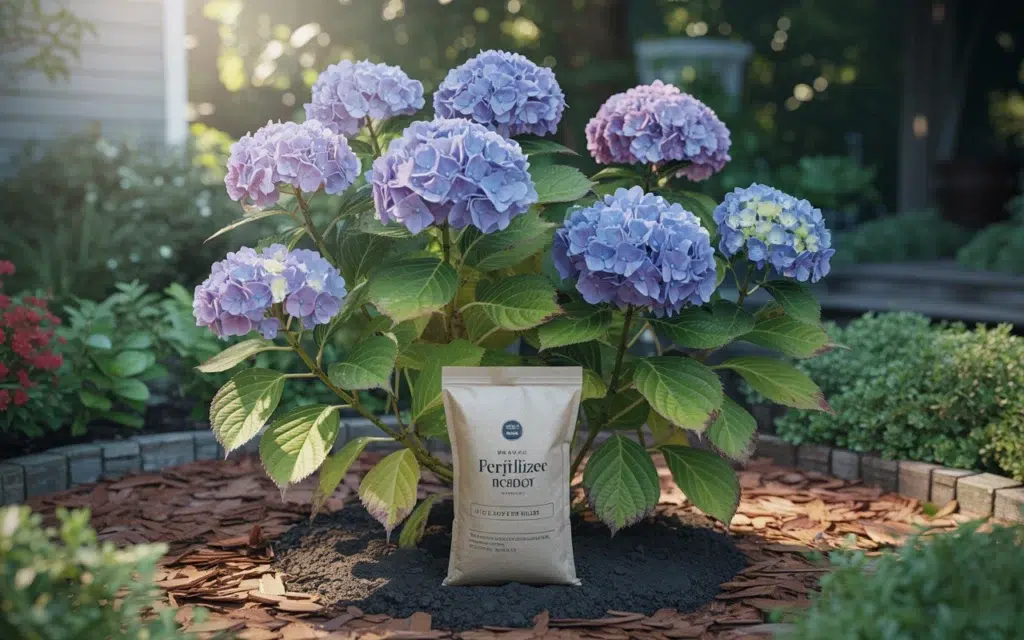
For most established hydrangeas, start with a balanced, slow-release fertilizer rather than looking for the strongest fertilizer you can find.
Products with N-P-K numbers such as 10-10-10 provide nitrogen, phosphorus, and potassium in equal proportions.The three numbers on a fertilizer bag are called the N-P-K ratio. They show the amount of nitrogen, phosphorus, and potassium in the fertilizer.
What Do N-P-K Numbers Mean?
- N — Nitrogen: Helps leaves and green growth.
- P — Phosphorus: Supports roots and other important plant processes.
- K — Potassium: Supports overall plant health.
A higher phosphorus number does not automatically mean bigger hydrangea blooms. Your plant needs the right balance of nutrients, and using too much fertilizer can cause problems.
If your soil already has enough nutrients, adding more will not necessarily improve flowering. A soil test is the best way to find out what your garden soil actually needs. The University of Minnesota Extension explains that soil testing helps determine existing nutrient levels before you add fertilizer.
For most home gardeners, a quality slow-release product labeled for flowering shrubs is a simple choice.
How to Fertilize Hydrangeas Step by Step
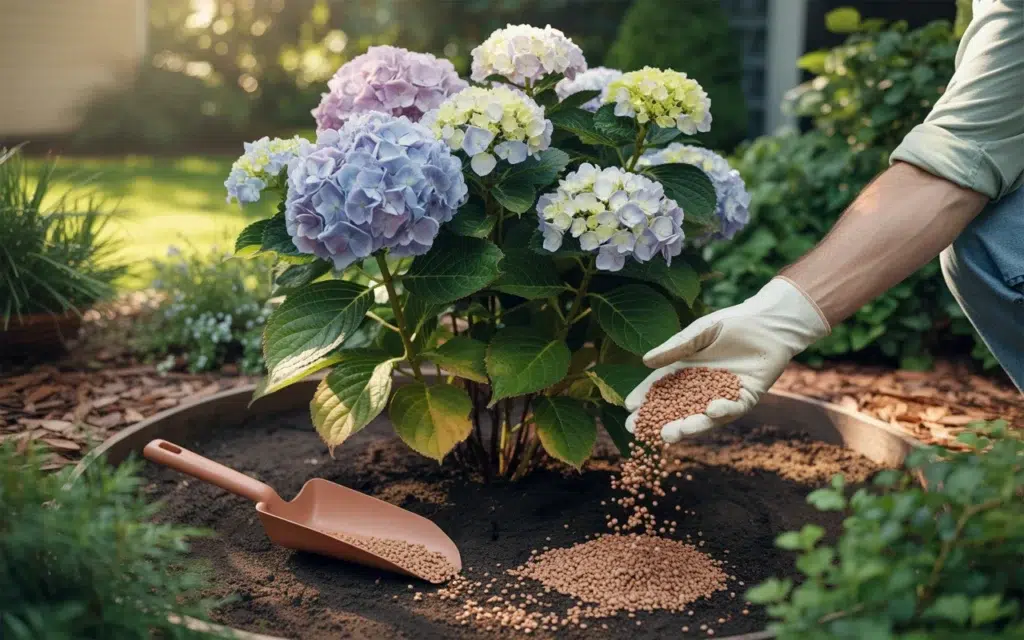
After you choose a suitable fertilizer, follow these steps to apply it safely.
1. Check the Plant and Soil First
Do not fertilize a hydrangea that is badly stressed, extremely dry, or struggling from another problem.
If you are unsure whether fertilizer is needed, a soil test can help. It is better to correct a real nutrient shortage than to fertilize simply because the plant is not blooming.
2. Water if the Soil Is Dry
Make sure the hydrangea has adequate moisture before applying granular fertilizer.
Applying concentrated fertilizer around dry roots increases the risk of root damage. Watering first helps create a safer environment for the fertilizer to dissolve and move into the soil.
3. Measure the Fertilizer
Follow the product label. Do not use a random amount based on the size of the shrub. Fertilizer strength varies between products, so the correct amount for one product may be too much for another.
If you are feeding twice in one season, do not automatically double the annual recommended amount. A split application should still stay within the product’s directions.
4. Spread It Around the Root Zone
For granular fertilizer, spread it evenly over the soil beneath the outer branches, often called the drip line.
Keep fertilizer away from the main stems. Do not pile granules against the base of the plant because concentrated fertilizer can injure the roots.
5. Water Thoroughly
After applying granular fertilizer, water the area well.
This helps move the nutrients into the soil where the roots can access them. It also reduces the chance of concentrated fertilizer remaining on the soil surface.
If you use a liquid fertilizer, mix and apply it exactly as the product label directs.
How Fertilizer Needs Change by Hydrangea Type
You do not need a completely different fertilizer for every hydrangea. The bigger difference is how the plant grows and when it produces flower buds.
| Hydrangea type | General fertilizing approach |
| Bigleaf | Main feeding in spring; some reblooming varieties may benefit from a second light feeding. |
| Mountain | Similar to bigleaf hydrangeas; spring feeding is usually the main focus. |
| Panicle | Spring feeding works well; avoid pushing excessive leafy growth. |
| Smooth | Feed in spring as new growth starts. |
| Oakleaf | Spring feeding is generally appropriate. |
| Climbing | A spring feeding can support active growth, but avoid overfeeding. |
Tip: Check the plant tag or variety name if you are not sure which type of hydrangea you have. Flowering and pruning needs can vary by type.
Bigleaf and mountain hydrangeas deserve extra attention because many flower on old wood, meaning their flower buds develop on stems from the previous season. Some newer reblooming varieties flower on both old and new wood. Smooth and panicle hydrangeas generally flower on new growth.
This matters because fertilizer is not the only reason a hydrangea fails to bloom. Incorrect pruning, winter damage, and lost flower buds can also be responsible.
How Much Fertilizer Do Hydrangeas Need?
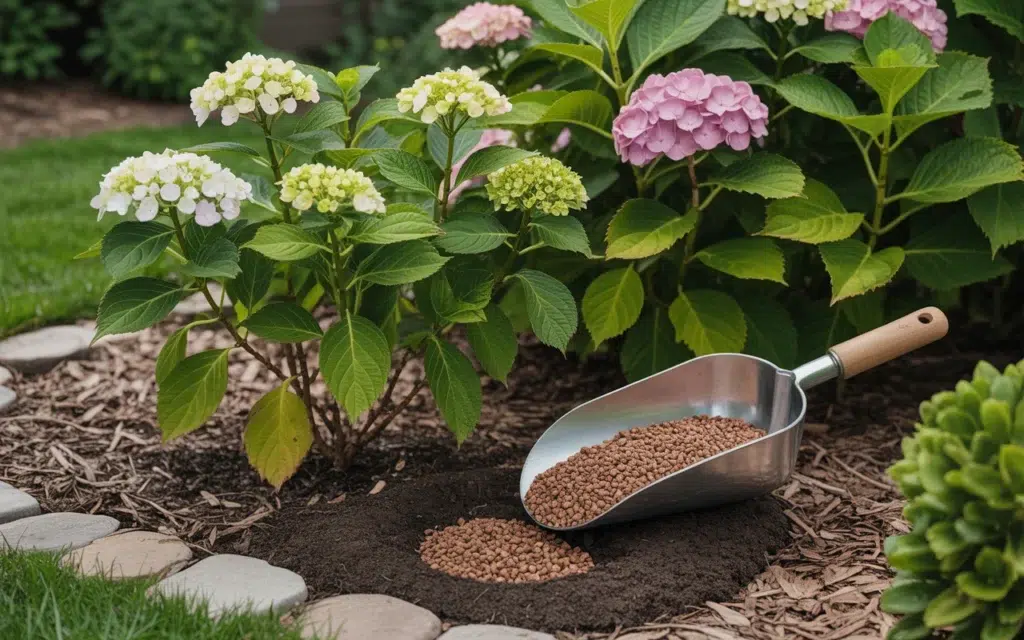
There is no one fertilizer amount that is right for every hydrangea.
The right dose depends on:
- the fertilizer concentration
- the size of the plant
- the nutrient level in the soil
- whether the product is slow-release or fast-release
- the fertilizer manufacturer’s directions
That is why the fertilizer label should determine your application rate.
Using extra fertilizer because you want extra-large flowers is one of the easiest ways to go in the wrong direction. Too much fertilizer can burn roots and lead to unhealthy growth. Penn State Extension specifically recommends using no more than the recommended fertilizer dose.
If your hydrangea has healthy green growth but very few flowers, adding more fertilizer may not solve the problem.
If Your Hydrangea Is Not Blooming, Fertilizer May Not Be the Problem
If your hydrangea has healthy leaves but very few flowers, adding more fertilizer may not help.
Other common reasons for fewer blooms include:
- Pruning at the wrong time
- Winter damage to flower buds
- Too much shade
- The wrong growing conditions for that hydrangea type
- A young or recently planted shrub that is still getting established
If your garden has a shady area where hydrangeas are not the best fit, you can also consider these flowering ground covers for shady areas for adding color closer to the ground.
Common Fertilizing Mistakes That Can Reduce Hydrangea Blooms
Using Too Much Fertilizer
More fertilizer does not mean more flowers.
Excess nutrients can damage roots, while too much nitrogen can encourage leafy growth instead of the flowering you want.
Fertilizing Too Late
Late summer feeding can push tender new growth when the plant should be slowing down for winter.
For most gardeners, stopping by mid-August is a safer approach.
Applying Fertilizer to Dry Soil
A thirsty plant is already under stress. Water first if the soil is dry, then fertilize according to the label.
Putting Granules Against the Stems
Fertilizer should be spread over the root zone, not piled at the base of the shrub. Concentrated fertilizer in one spot can injure roots.
Blaming Fertilizer for Every Missing Bloom
If your hydrangea has plenty of leaves but no flowers, fertilizer may not be the problem.
The plant may have been pruned at the wrong time, lost old flower buds to a cold winter, or simply be growing under conditions that do not suit its variety. Penn State Extension notes that pruning and winter damage are common reasons hydrangeas fail to bloom.
Does Fertilizer Change Hydrangea Flower Color?
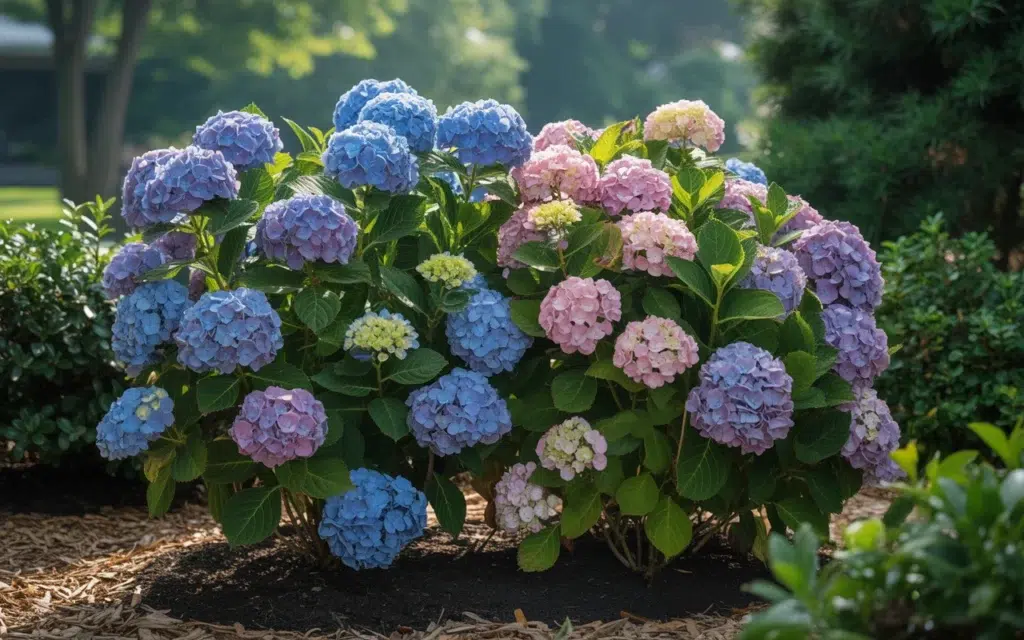
Usually, no. Regular fertilizer is not the main tool used to change hydrangea flower color.
For bigleaf and mountain hydrangeas, flower color is strongly influenced by soil pH and aluminum availability. Soil amendments are used when the goal is to shift flower color; regular fertilizer should not be treated as a color-changing product.
Acidic soil can support blue flowers in certain bigleaf and mountain hydrangeas, while higher-pH conditions can lead to pinker flowers. White-flowering hydrangeas do not all respond to soil pH in the same way.
So if your goal is bigger blooms, focus first on proper feeding, watering, light, and pruning for your hydrangea type. If your goal is blue or pink flowers, that is a separate soil-management question.
If your hydrangea is growing beneath a tree, remember that competition for light, water, and root space can also affect how well plants perform. For other planting ideas in these conditions, see our guide to plants that grow well under trees.
Quick Hydrangea Fertilizing Checklist
- Feed established plants when new growth begins.
- Use a suitable slow-release fertilizer and follow the label.
- Do not apply extra fertilizer to chase bigger flowers.
- Water dry soil before applying granular fertilizer.
- Spread fertilizer around the root zone, not against the stems.
- Avoid late-season feeding that may encourage tender growth before cold weather.
- Check pruning, sunlight, watering, and winter damage if your plant is not blooming.
Conclusion
For bigger hydrangea blooms, timing and moderation matter more than simply adding more fertilizer. Start with a spring feeding as new growth begins, use a balanced slow-release product, apply the correct amount around the root zone, and stop feeding by mid-August. Also remember that pruning, water, sunlight, winter damage, and hydrangea type all affect flowering.
That simple approach is better than chasing a stronger fertilizer every time your plant produces fewer flowers. It is also the kind of practical, evidence-based advice we aim to keep at Lawn Savy—clear enough to use in the garden and careful enough to avoid common gardening myths.
Frequently Asked Questions
How often should you fertilize hydrangeas?
For many established hydrangeas, one spring feeding is enough. Some bigleaf, mountain, and reblooming varieties may benefit from a second light feeding in late spring or early summer. Always follow the fertilizer label and avoid routine late-summer feeding.
What is the best fertilizer for hydrangeas to get bigger blooms?
A balanced, slow-release fertilizer is a good general choice for established hydrangeas. The best product depends on the plant and soil, so avoid choosing a fertilizer simply because it has a high phosphorus number.
Do hydrangeas need fertilizer every year?
Not always. A healthy hydrangea growing well in good soil may need little or no extra fertilizer. If growth is weak or a soil test shows low nutrient levels, feeding may be more helpful. Avoid fertilizing simply because you want more flowers.
Why does my hydrangea have leaves but no flowers?
Fertilizer may not be the reason. Some hydrangeas fail to bloom because of incorrect pruning, winter damage to flower buds, too much shade, or growing conditions that do not suit the plant. Check your hydrangea type before adding more fertilizer.
Can you fertilize hydrangeas in summer?
Yes, but timing matters. A late spring or early summer feeding may be useful for some actively growing or reblooming hydrangeas. Avoid pushing fertilizer too late into the season, and generally stop by mid-August.
Should you fertilize newly planted hydrangeas?
Usually, do not rush to fertilize a newly planted nursery hydrangea. Many nursery plants already contain slow-release fertilizer. Focus first on proper planting, watering, and mulch, then begin a normal feeding program the following year.
What happens if you over-fertilize hydrangeas?
You may get lots of leafy growth but fewer flowers. Heavy fertilizer use can also damage roots and burn the plant. If you are unsure about the amount, use the product label rather than adding extra in hopes of getting bigger blooms.