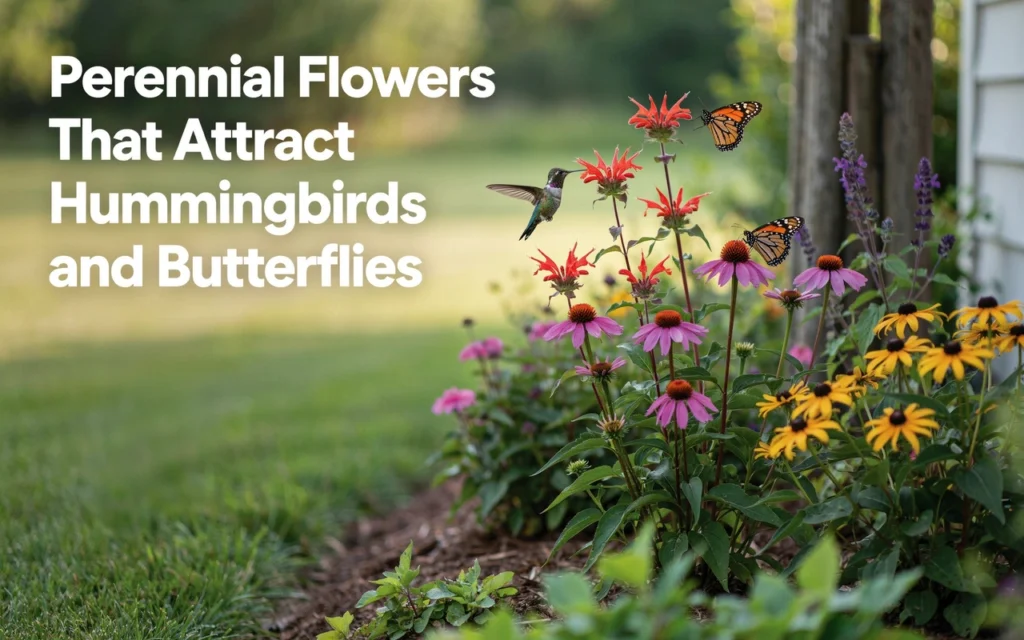
If you want hummingbirds and butterflies in your garden, choosing flowers by color alone is not enough. Look for plants that provide nectar, bloom at different times, and suit the growing conditions in your yard.
Bee balm, cardinal flower, coneflower, salvia, anise hyssop, milkweed, and other perennials can provide nectar across much of the growing season. The trick is choosing a mix that works for both pollinators instead of planting flowers that all bloom at the same time.
Your best choices will depend on where you live, so check your USDA hardiness zone and local growing conditions before buying plants.
Here are the perennial flowers worth considering if your goal is a garden filled with both At Lawn Savy, we believe choosing the right plants starts with understanding your yard, not just following the latest garden trend.
Best Perennial Flowers That Attract Hummingbirds and Butterflies
1. Bee Balm
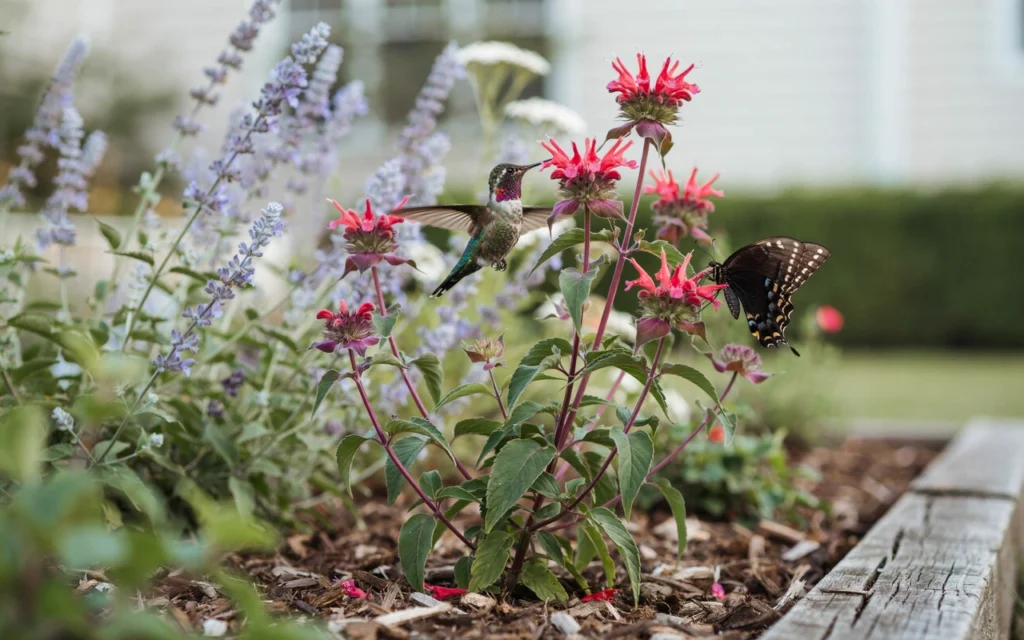
Bee balm is one of the most useful all-around choices for a garden designed to attract both hummingbirds and butterflies.Its tubular flowers provide easy access to nectar for hummingbirds, while the flower clusters also attract butterflies and other pollinators.
Give it good airflow if possible, because bee balm can be prone to powdery mildew.
It blooms in summer and performs best in full sun with consistently moist, well-drained soil. If you want one perennial that serves several pollinators at once, bee balm is a good place to start.
2. Cardinal Flower
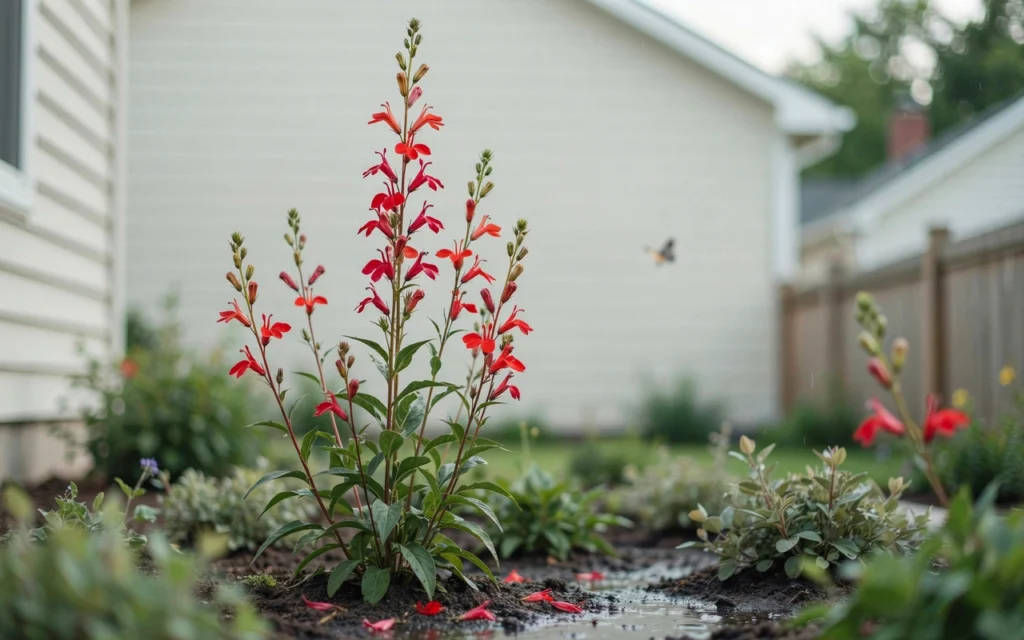
Cardinal flower (Lobelia cardinalis) is especially useful when hummingbirds are a priority. Its brilliant red, tubular flowers are well suited to hummingbird feeding, while butterflies may also visit the blooms for nectar. It is not a good choice for a dry garden.
Unlike many sun-loving perennials, cardinal flower appreciates consistently moist conditions. It is a particularly good choice for a rain garden, low-lying area, or spot near a pond where the soil does not dry out quickly.
3. Purple Coneflower
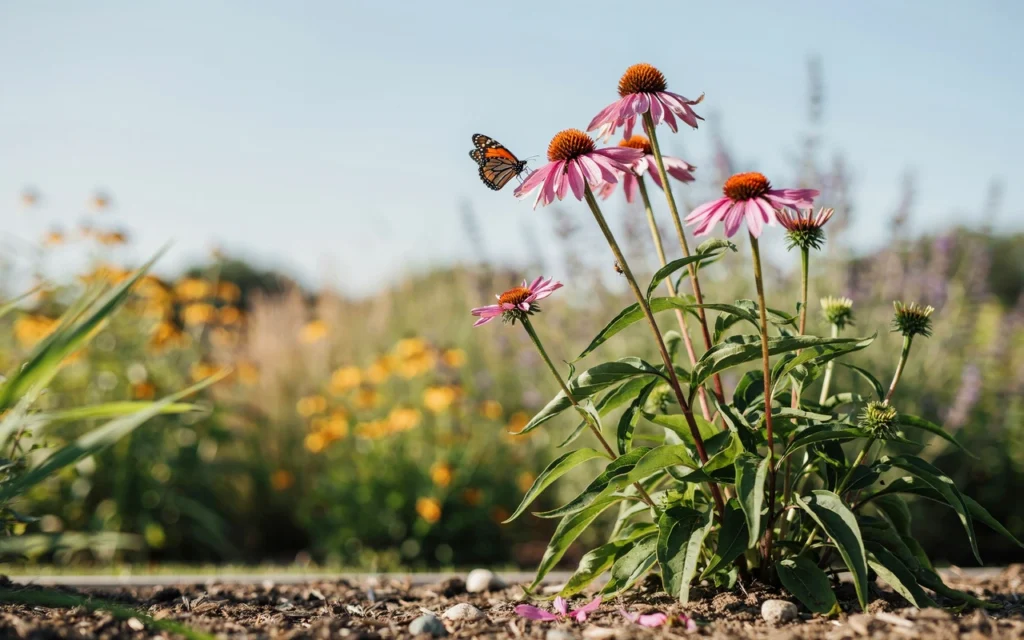
Purple coneflower (Echinacea purpurea) brings a different flower shape to the garden. Its open flowers are especially useful for butterflies and other pollinators, and hummingbirds may also visit them.
It is one of the more adaptable choices on this list and handles sunny, relatively dry conditions once established. The sturdy flower heads also provide visual interest after blooming, making coneflower useful beyond its peak flowering period.
4. Salvia
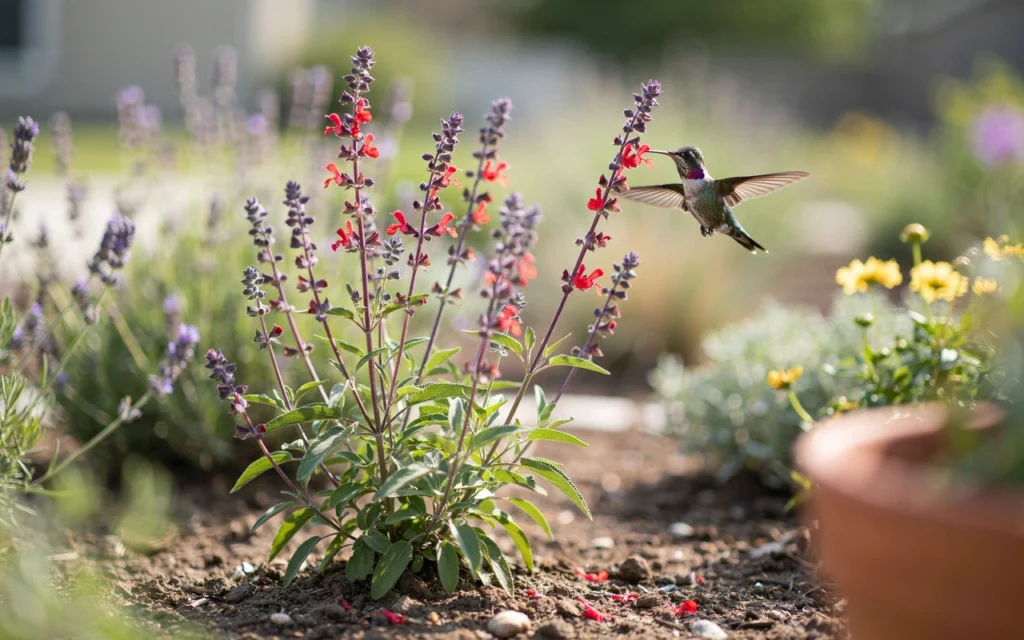
Salvia is an excellent choice when you want a long-lasting source of nectar. Many varieties produce tubular flowers that hummingbirds readily visit, while butterflies are attracted to the nectar-rich blooms as well.
Because salvia includes many species and cultivars, check the plant tag for sun, soil, moisture, and hardiness needs before planting. In general, give sun-loving varieties plenty of light and use well-drained soil. Choosing a variety suited to your USDA hardiness zone is more important than simply picking the most colorful one.
5. Anise Hyssop
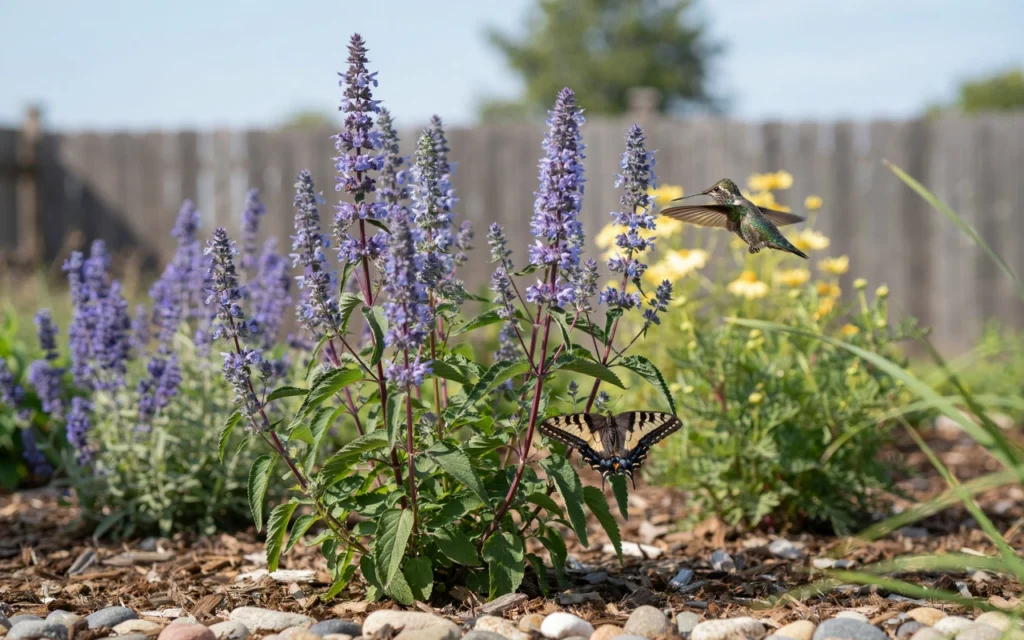
Anise hyssop (Agastache foeniculum) produces upright flower spikes that are packed with small blooms. Hummingbirds and butterflies both visit the nectar-rich flowers, making it a strong addition to a mixed pollinator bed.
Its leaves also have a noticeable licorice-like scent when crushed.
It prefers full sun and well-drained soil and is particularly useful when you want a perennial that contributes both height and a long period of summer color.
6. Columbine
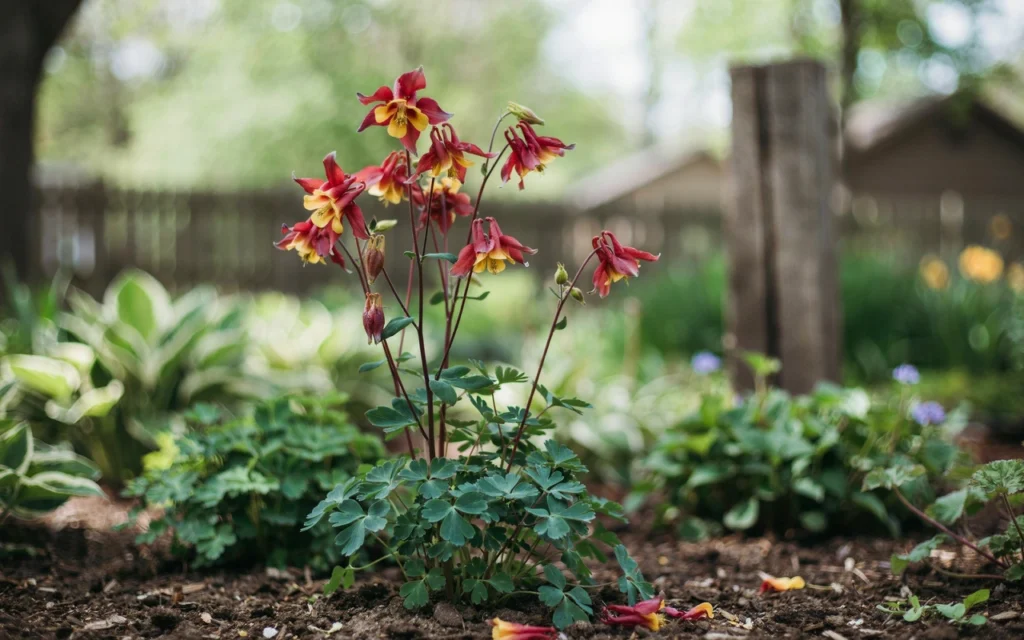
Columbine (Aquilegia) is one of the better choices for bringing hummingbirds into the garden earlier in the season. Its distinctive flowers have long nectar spurs that suit hummingbirds, while butterflies with longer feeding structures can also reach the nectar.
Unlike some of the taller summer perennials, columbine has a lighter, more delicate appearance. Plant it where you want spring-to-early-summer color without overwhelming the rest of the garden.
7. Butterfly Weed
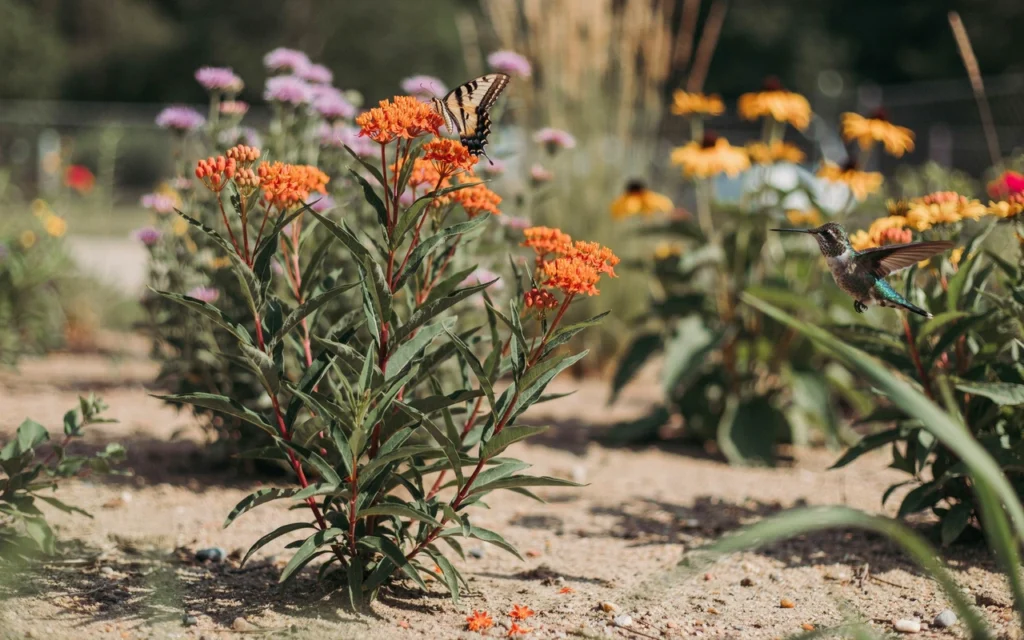
Butterfly weed (Asclepias tuberosa) deserves a place in a butterfly-focused garden for a reason that goes beyond its flowers. Its bright orange blooms provide nectar for adult butterflies, while milkweed plants also serve as host plants for monarch caterpillars.
So butterfly weed supports butterflies in more than one way. It helps support another stage of the butterfly life cycle, which is something a garden filled only with nectar-producing flowers cannot provide.
8. Penstemon
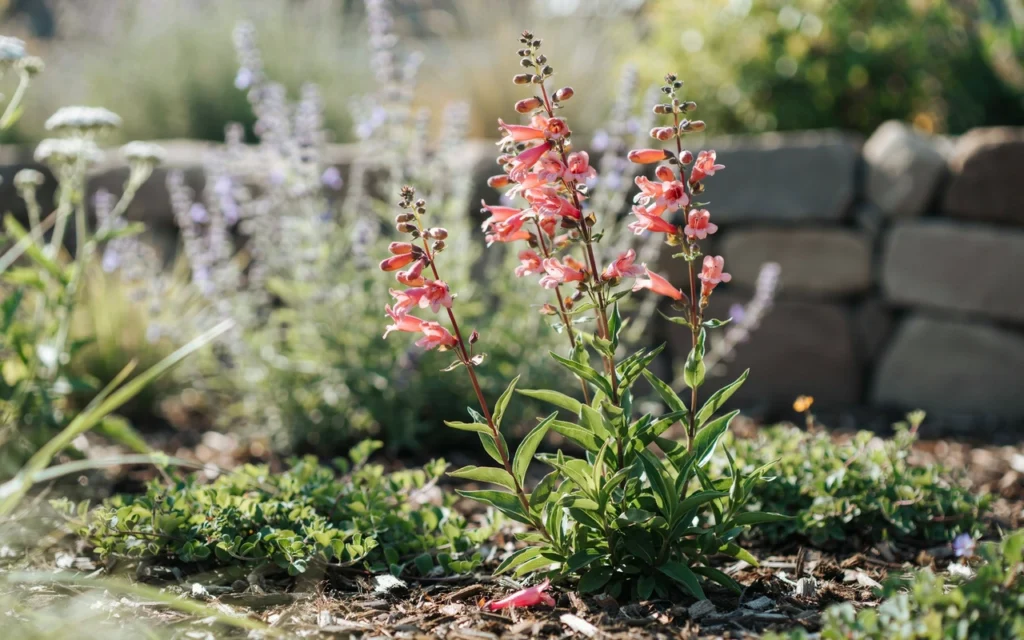
Penstemon, sometimes called beardtongue, produces tubular flowers that are particularly well suited to hummingbirds. Depending on the species, flower colors range from pink and red to purple and white, and butterflies may visit them for nectar as well.
Choose the species first, then check its hardiness zone and soil needs. “Penstemon” covers many different plants, so growing conditions can vary.
9. Phlox
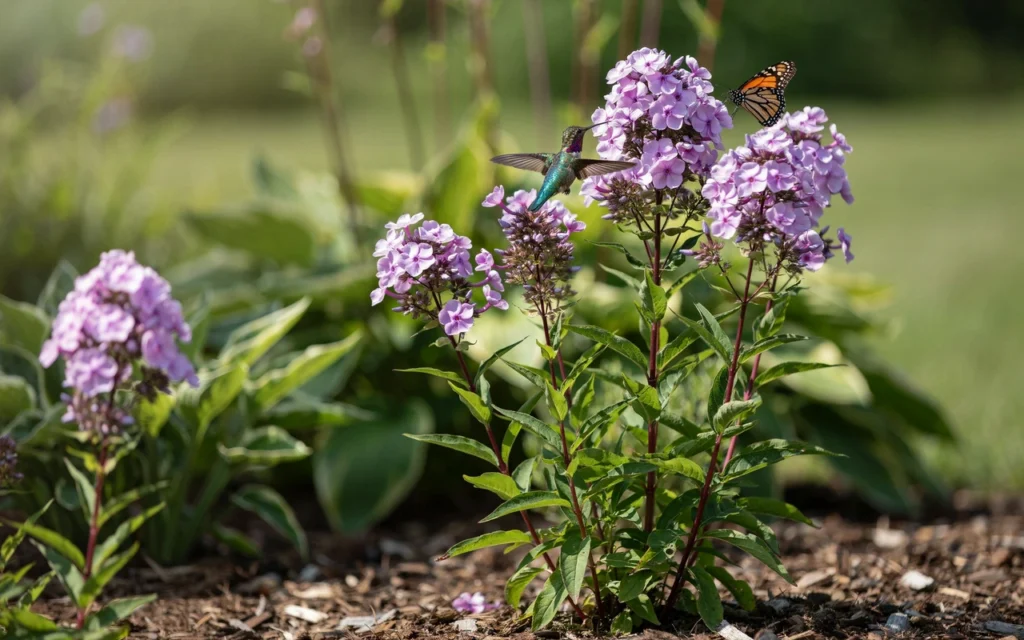
Phlox produces large flower clusters that attract butterflies and can also provide nectar for hummingbirds. Garden phlox is especially useful when you want a fuller display rather than individual flowers scattered throughout a bed.
Its bloom timing depends on the species and cultivar, so phlox can also help extend the flowering season when paired with earlier- or later-blooming perennials.
10. Black-Eyed Susan
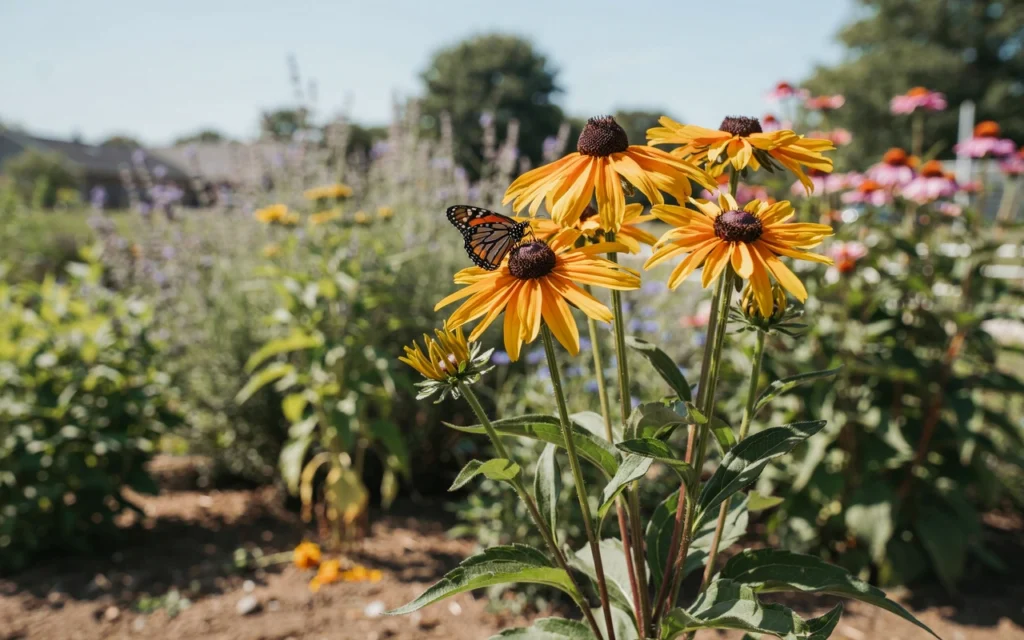
Black-eyed Susan (Rudbeckia) is a practical choice for a sunny perennial bed. Its open, daisy-like flowers make nectar accessible to butterflies, and the plant can provide a long period of summer into early-fall color.
Hummingbirds may visit it, but it is better thought of as a strong butterfly and general pollinator plant than as a primary hummingbird flower. That distinction matters when you’re trying to build a balanced garden rather than simply counting how many pollinators a plant supposedly attracts.
11. Blazing Star
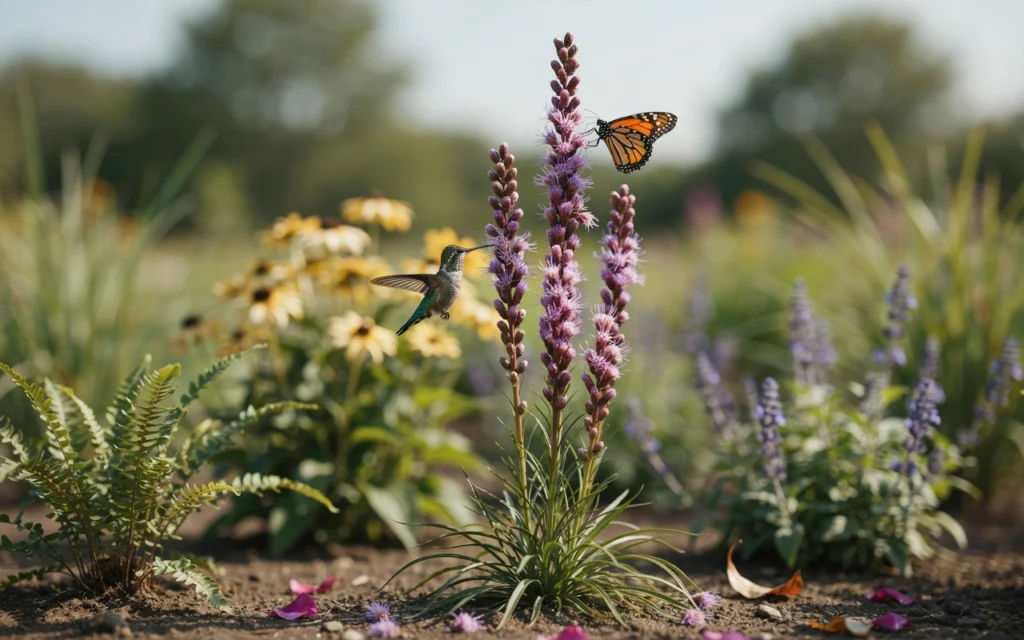
Blazing star (Liatris) produces tall spikes covered with small flowers and is particularly valuable for butterflies. Hummingbirds also visit its nectar-rich blooms.
Its upright growth makes it useful toward the back or middle of a perennial bed, where it can add height without requiring a large amount of horizontal space. Its native range depends on the species, so check the species rather than assuming every Liatris is native to your state.
12. Aster
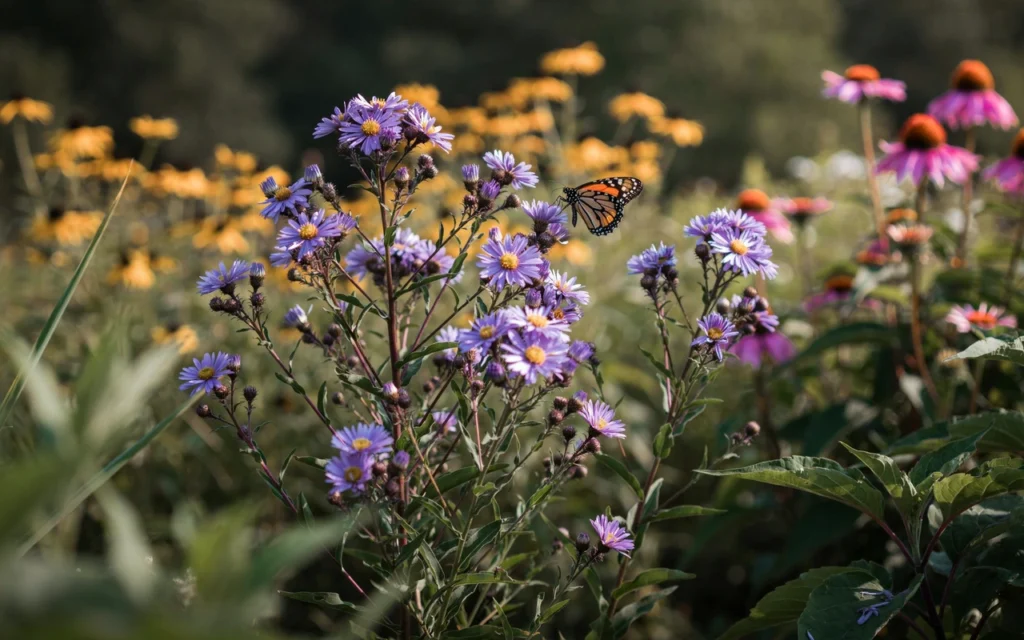
Asters are especially valuable for extending nectar availability into late summer and fall, when many gardens begin losing their flowers. Butterflies frequently visit the blooms, including species such as monarchs and painted ladies.
Asters are not the strongest hummingbird choice on this list, but they earn their place because a good pollinator garden needs flowers available at different times—not just the plants that attract the most attention in midsummer.
Quick Guide to Pollinator Plant Needs
| Flower | Hummingbirds | Butterflies | Bloom Timing | Main Need |
| Bee balm | Excellent | Excellent | Summer | Moist, well-drained soil |
| Cardinal flower | Excellent | Good | Summer | Moist soil |
| Coneflower | Good | Excellent | Summer | Sun, well-drained soil |
| Salvia | Excellent | Good | Varies | Sun |
| Anise hyssop | Excellent | Excellent | Summer | Sun, good drainage |
| Columbine | Excellent | Good | Spring–early summer | Partial shade to sun, depending on species |
| Butterfly weed | Good | Excellent | Summer | Sun, well-drained soil |
| Penstemon | Excellent | Good | Varies | Sun, good drainage |
| Phlox | Good | Excellent | Varies | Depends on species |
| Black-eyed Susan | Limited | Excellent | Summer–fall | Sun |
| Blazing star | Good | Excellent | Summer | Sun |
| Aster | Limited | Excellent | Late summer–fall | Depends on species |
Tip: Choose plants based on the conditions you already have. A flower that needs wet soil may struggle in a dry bed, while a drought-tolerant plant may not do well in constantly wet ground.
Which Flowers Are Best for Hummingbirds, Butterflies, or Both?
Not every perennial attracts hummingbirds and butterflies equally. Flower shape, nectar availability, bloom timing, and the plant’s growing conditions all affect how useful it is.
Best choices for hummingbirds:
Bee balm, cardinal flower, salvia, penstemon, columbine, and blazing star are strong choices because their flower structures make nectar accessible to hummingbirds.
Best choices for butterflies:
Purple coneflower, butterfly weed, black-eyed Susan, aster, phlox, and blazing star provide accessible nectar and useful flower clusters.
Good choices for both:
Bee balm, coneflower, salvia, anise hyssop, milkweed, and blazing star give you a strong starting mix when your goal is to attract both groups rather than favoring only one.
Hummingbirds often favor nectar-rich tubular flowers, while butterflies generally prefer flowers that provide an accessible place to land and feed. Color can play a role, but it should not be your only reason for choosing a plant.
Match Each Plant to the Right Moisture Level
Not every pollinator plant needs the same amount of water. Some, such as cardinal flower, prefer consistently moist soil, while others, such as butterfly weed, grow better in well-drained or drier soil. Group plants with similar water needs together to make watering easier and help each plant grow well.
How to Keep Your Garden Blooming From Spring to Fall
Planting ten different flowers does not guarantee ten different periods of bloom. If they all flower at the same time, your garden can still have a noticeable gap later in the season.
Instead, combine plants that flower at different points.
Use columbine and other earlier bloomers to provide food toward the beginning of the growing season. Follow with summer performers such as bee balm, salvia, coneflower, anise hyssop, and blazing star. Then use asters and other late-season flowers to keep nectar available as summer fades.
This approach is more useful than choosing plants simply because they all appear on a “best pollinator flowers” list. Extension guidance also recommends selecting a variety of nectar-producing plants that keep flowers available throughout the season.
Don’t Forget Butterfly Host Plants
Flowers provide nectar for adult butterflies, but butterflies need more than nectar.
Caterpillars feed on specific host plants, and different butterfly species have different host-plant requirements. Milkweed, for example, is an important host plant for monarch caterpillars.
That is why a butterfly-friendly garden should contain a mix of nectar plants for adults and host plants for caterpillars rather than relying entirely on flowering plants.
You do not need to turn the entire yard into a wildlife habitat. Adding even a few appropriate host plants alongside your perennial flowers can make the garden more useful to butterflies.
When selecting plants, the University of Minnesota Extension’s butterfly garden guide and Xerces Society’s regional native plant lists are useful references for matching plants to your area.
Milkweed is essential for monarch caterpillars, but other butterfly species rely on different host plants.
Simple Perennial Combinations for Hummingbirds and Butterflies
You don’t need every flower on this list to create an attractive pollinator bed.
For a balanced pollinator garden
Try combining bee balm, purple coneflower, salvia, butterfly weed, and aster. This gives you different flower shapes and helps spread nectar availability across the season.
For a hummingbird-focused garden
Build around cardinal flower, bee balm, salvia, penstemon, and columbine. Their tubular flowers are particularly useful for hummingbirds.
For a butterfly-focused garden
Combine butterfly weed, purple coneflower, black-eyed Susan, blazing star, and aster. Add an appropriate host plant for the butterfly species common in your region.
Whenever possible, choose plants native to your region or well adapted to your local conditions. A plant that attracts pollinators in one state may not be the best fit for another. The Xerces Society’s native plant guidance provides regional lists rather than treating one plant selection as suitable for every part of the country.
Check Your Growing Conditions Before You Plant
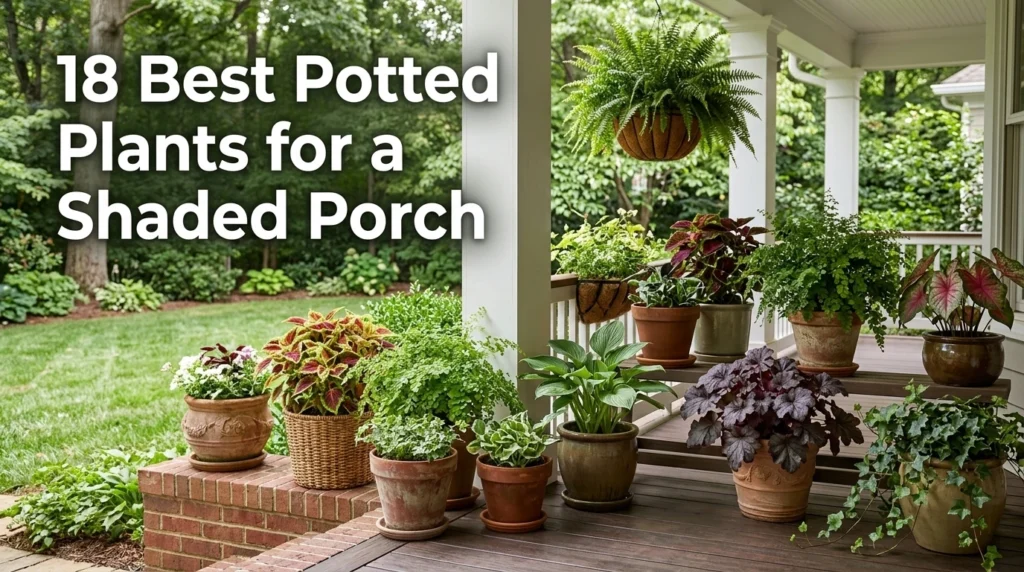
Before buying a perennial, check four things: your USDA hardiness zone, sunlight, soil moisture, and mature plant size. A pollinator-friendly plant is only useful if it can thrive where you put it. If your garden also includes shaded outdoor spaces, you can explore these best potted plants for a shaded porch to find options that fit lower-light areas.
Common Mistakes to Avoid
Choosing Flowers Only by Color
Bright red flowers are often associated with hummingbirds, but color alone does not make a plant a good choice. Flower shape, nectar availability, and bloom timing matter too.
Planting Everything That Blooms at the Same Time
A garden can look spectacular for a few weeks and then offer very little nectar afterward. Mix early, midseason, and late bloomers instead.
Forgetting Butterfly Host Plants
Nectar flowers help adult butterflies, but caterpillars need host plants. If your goal is to support butterflies rather than simply see occasional visitors, include appropriate host plants too.
Assuming Every Flower Attracts Both Pollinators Equally
Aster and black-eyed Susan are excellent butterfly plants, for example, but they should not be treated as equivalent to tubular hummingbird favorites such as cardinal flower or bee balm.
Choosing Plants Without Checking Local Conditions
A plant that thrives in one part of the United States may struggle somewhere else. Check sunlight, moisture, mature size, and USDA hardiness before buying several plants.
Planting Only One Type of Flower
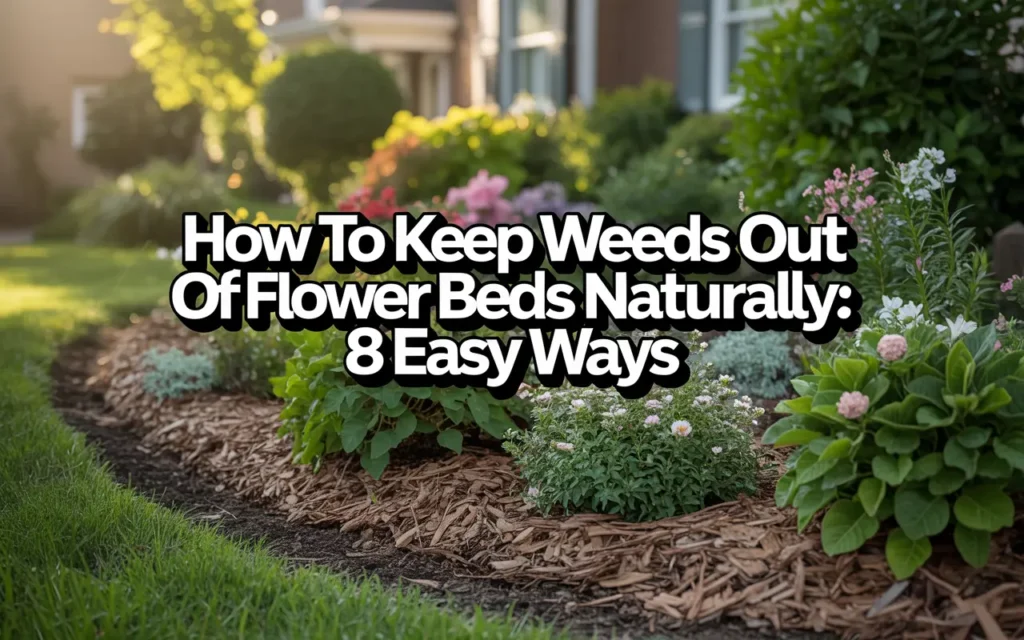
Keeping the garden bed healthy also means managing unwanted growth before it competes with your flowers. If weeds are becoming a problem, these natural ways to keep weeds out of flower beds can help you protect your plants without relying on unnecessary treatments.
Choosing Plants Without Checking Their Mature Size
A plant that looks small at the garden center may become much larger in your yard. Check its mature height and width before planting, especially in small beds.
Conclusion
The best Perennial Flowers That Attract Hummingbirds and Butterflies are not necessarily the ones with the brightest blooms or the longest list of visitors. A better garden combines nectar-rich flowers, different bloom periods, and appropriate host plants so pollinators have useful resources throughout the season.
Start with a few strong choices such as bee balm, coneflower, salvia, butterfly weed, and aster, then add plants suited to your region. A smaller, well-planned selection will usually be more useful than filling the garden with every flower you can find.
Frequently Asked Questions
What is the Perennial Flowers That Attract Hummingbirds and Butterflies
Bee balm is one of the strongest all-around choices because its nectar-rich tubular flowers attract hummingbirds while also drawing butterflies and other pollinators. Purple coneflower, salvia, anise hyssop, and blazing star are also strong options.
What perennial flowers attract hummingbirds the most?
Cardinal flower, bee balm, salvia, penstemon, and columbine are among the useful perennial choices for hummingbirds. Look for nectar-rich flowers with shapes that allow hummingbirds to reach the nectar.
What perennial flowers are best for butterflies?
Butterfly weed, purple coneflower, black-eyed Susan, asters, phlox, and blazing star are strong choices. For a more complete butterfly habitat, pair nectar plants with appropriate host plants.
Do butterflies need host plants as well as flowers?
Yes. Adult butterflies use nectar-producing flowers for food, while caterpillars depend on specific host plants for food and development. Adding both types makes a garden more useful to butterflies than planting nectar flowers alone.