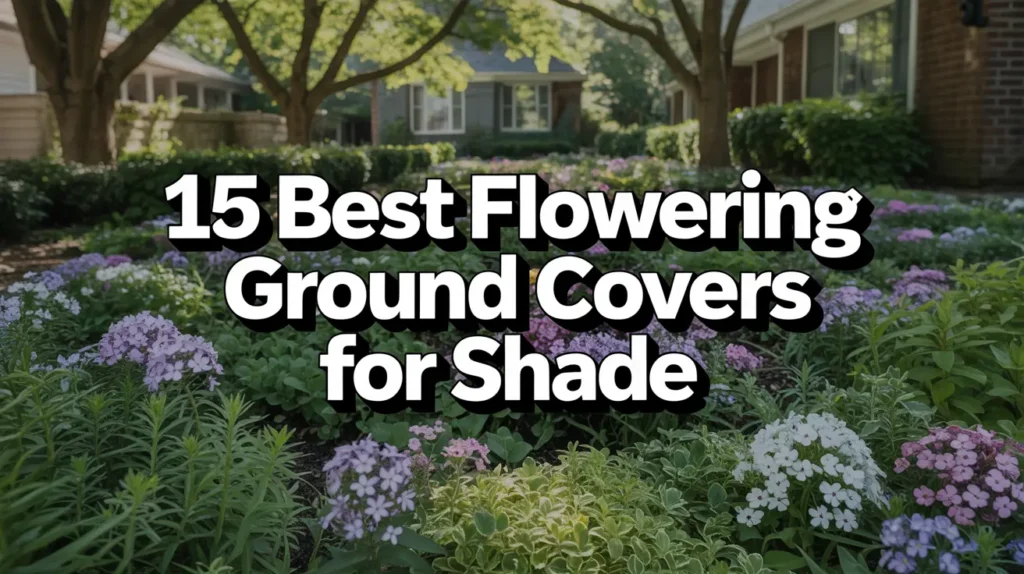
Finding plants for a shady yard can be hard, especially when grass will not grow well there. If grass struggles in a shady part of your yard, flowering ground covers for shade can cover bare soil while adding flowers, texture, and color. .
Good choices include foamflower, green and gold, woodland phlox, barrenwort, wild geranium, and dwarf crested iris. Before planting, check how much shade the area gets, whether the soil stays dry or moist, and which plants grow well in your USDA zone.
Quick Picks for Shady Ground Cover
- Best overall: Foamflower
- Best native choice: Green and gold
- Best for spring flowers: Woodland phlox
- Best for dry shade: Barrenwort
- Best for cool, moist shade: Bunchberry
- Best evergreen choice: Creeping wintergreen
- Best for fast coverage: Spotted deadnettle
Before You Choose a Flowering Ground Cover for Shade
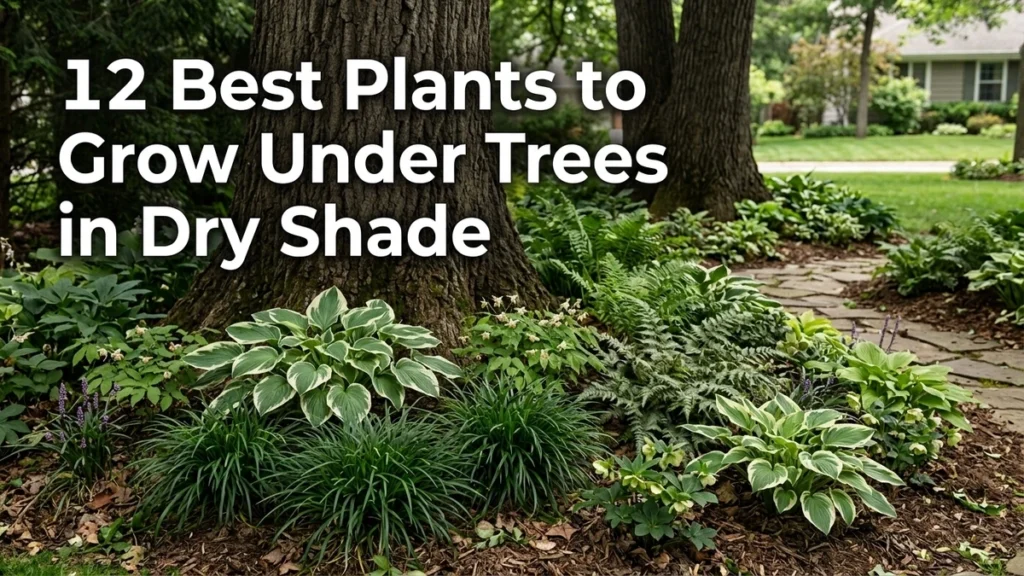
Shade under trees can also be very dry because tree roots compete for water. If you are planning a planting area beneath mature trees, choosing plants that are suited to those conditions is especially important. Our guide to plants that grow well under trees covers more options for these challenging spaces. Soil matters too. Some flowering ground covers like moist woodland soil, while others handle dry shade much better.
Soil matters too. Some flowering ground covers like moist woodland soil, while others handle dry shade much better.
Also check how quickly a plant spreads. Fast growth can be useful on bare soil, but some ground covers can escape into nearby beds or natural areas. University of Maryland Extension recommends checking light, moisture, drainage, tree-root competition, and aggressive growth before choosing a ground cover for your site.
USDA zones below are general growing ranges. Different plant varieties and local conditions can change how well a plant grows. At Lawn Savy, we focus on practical lawn and garden care to help you choose plants that fit your space and growing conditions.
15 Best Flowering Ground Covers for Shade
1. Foamflower — Best Overall for Shade
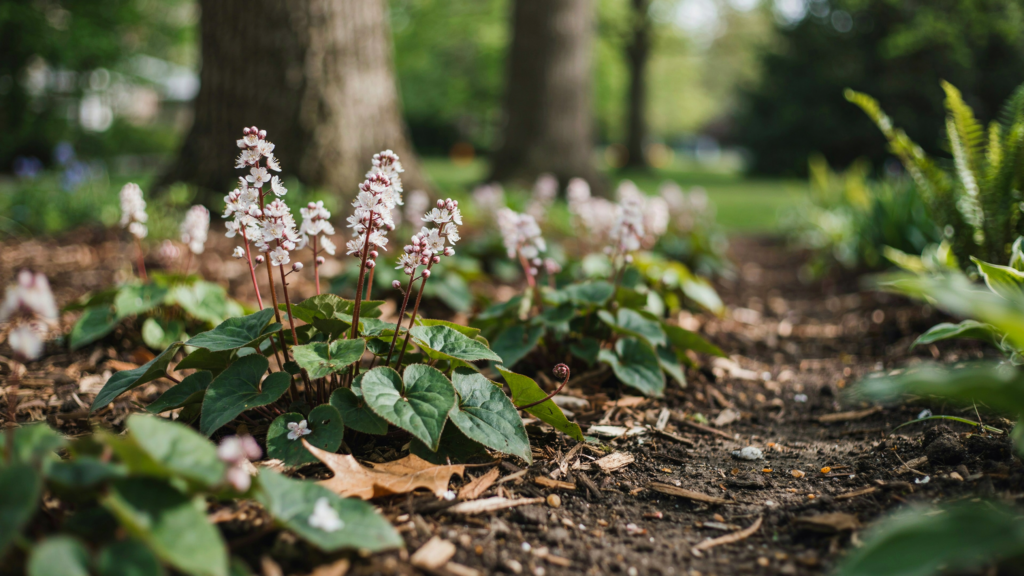
Botanical name: Tiarella cordifolia
USDA zones: 3–8
Light: Partial to full shade
Bloom time: Spring to early summer
Size: About 6–12 inches tall
Foamflower works especially well in natural-looking shade gardens. It produces soft spikes of white or pale pink flowers above green leaves.
It grows best in moist, rich, well-drained soil and works well beneath trees or along a shaded border. Some forms spread slowly into a soft carpet, while others stay in small clumps.
University of Maryland describes foamflower as an ideal ground cover for moist, shaded landscapes. It is also native to parts of eastern North America.
2. Green and Gold — Best Native Flowering Ground Cover
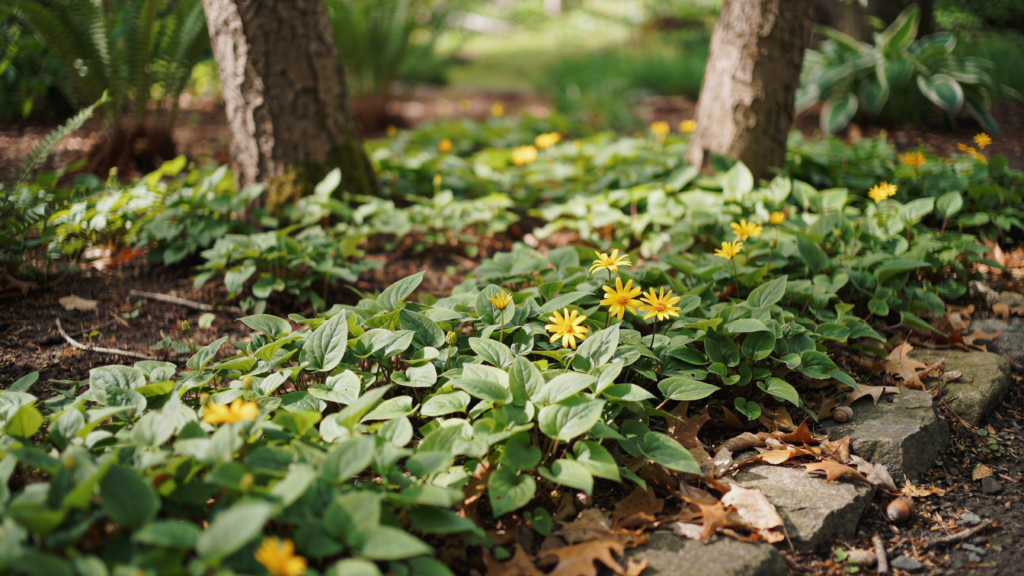
Botanical name: Chrysogonum virginianum
USDA zones: 5–9
Light: Partial to full shade
Bloom time: Spring into early summer
Size: Low foliage mat, spreading about 1–2 feet
Green and gold earns its name from bright yellow, daisy-like flowers above fresh green leaves. It works well along woodland paths, underneath open trees, and at the front of shady garden beds.
It likes well-drained soil and can handle soil that ranges from somewhat dry to moist. After its roots settle in, it needs little regular care.
The University of Maryland’s green and gold plant guide notes that it grows especially well in light shade and does not need heavy feeding.
3. Woodland Phlox — Best for Spring Color
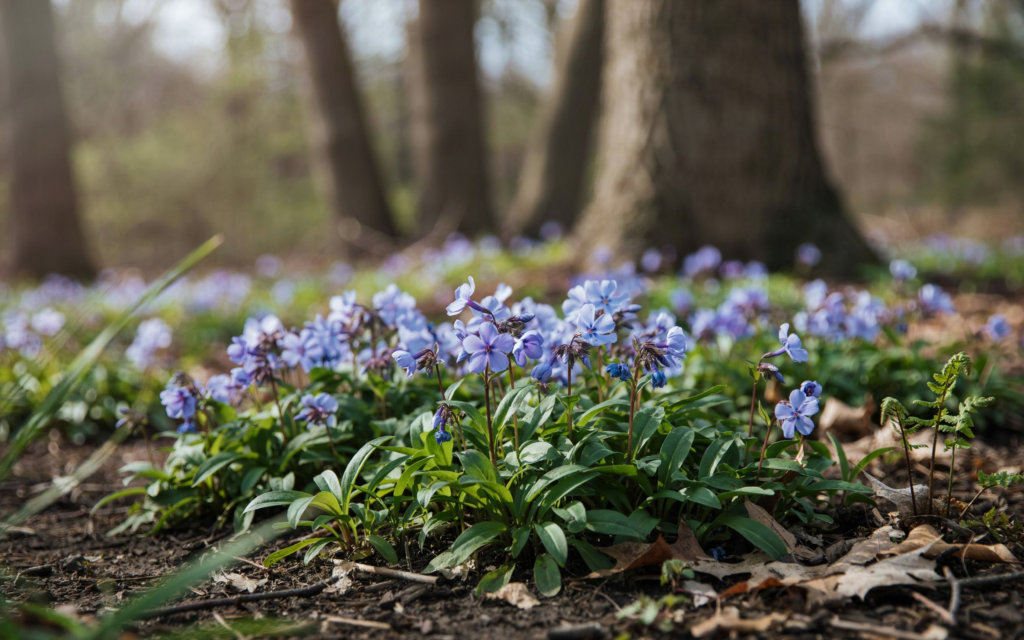
Botanical name: Phlox divaricata
USDA zones: 3–8
Light: Partial to full shade
Bloom time: Spring
Size: About 6–12 inches tall, spreading wider over time
Woodland phlox produces clusters of blue, lavender, or violet flowers in spring. The flowers may also have a light fragrance.
Unlike creeping phlox often grown in sunny rock gardens, woodland phlox is suited to shade. It prefers moist, organic, well-drained soil and can slowly spread into wider patches as its stems spread.
This native plant also attracts bees, butterflies, and hummingbirds. NC State recommends woodland phlox for partial to full shade and woodland-style plantings.
4. Barrenwort — Best for Dry Shade
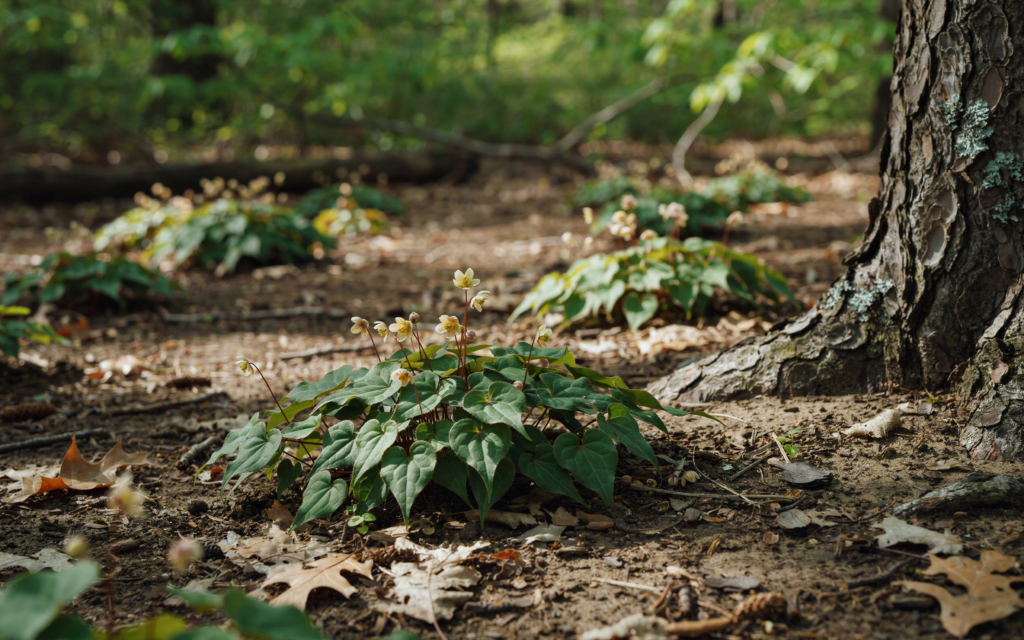
Botanical name: Epimedium species and hybrids
USDA zones: Usually 4–9, depending on type
Light: Partial to full shade
Bloom time: Spring
Size: About 8–12 inches tall
Dry soil under mature trees is one of the hardest places to grow plants. Barrenwort is a good option for this setting.
It has heart-shaped leaves and small flowers in white, yellow, pink, red, or purple. Many types spread slowly by underground stems and form tidy patches rather than racing through the garden.
Once established, barrenwort can handle both shade and periods of dry soil. NC State lists Epimedium as a shade ground cover that can compete with tree roots better than many plants.
5. Bunchberry — Best for Cool, Moist Shade
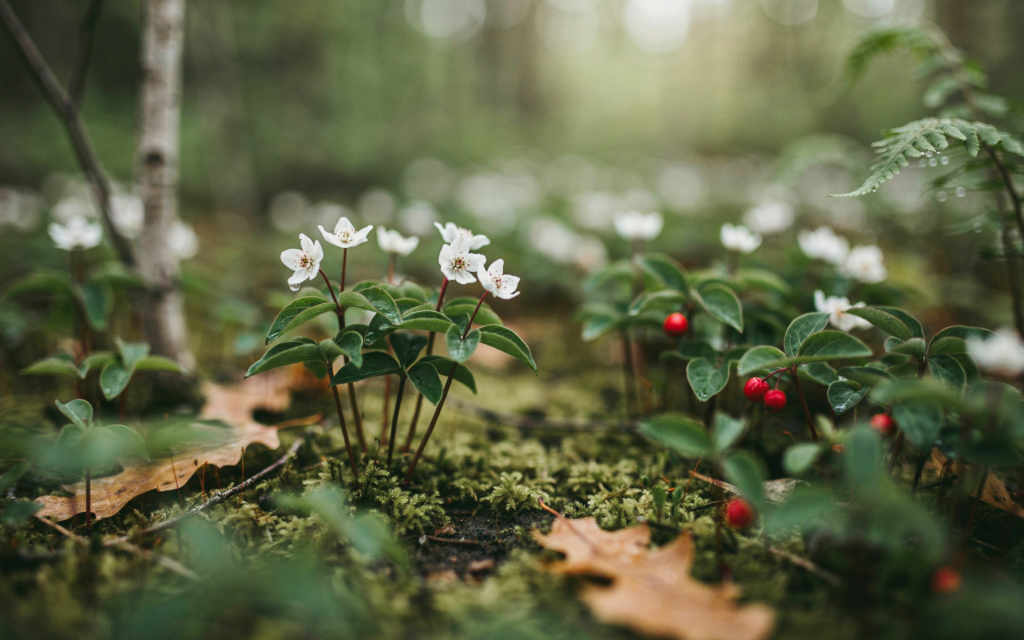
Botanical name: Cornus canadensis
USDA zones: 2–6
Light: Partial or dappled shade
Bloom time: Late spring to early summer
Size: About 6–12 inches tall
Bunchberry looks like a tiny flowering dogwood growing along the ground.Small flower clusters are surrounded by four white, petal-like bracts, followed later by bright red berries.
This is a better choice for northern gardens than hot southern yards. It likes cool conditions, acidic soil, and steady moisture.
Bunchberries spread through underground stems , but it can can take time to fill the area. It is best for woodland gardens where people will not walk over it.
6. Wild Geranium — Best Easy Native Choice
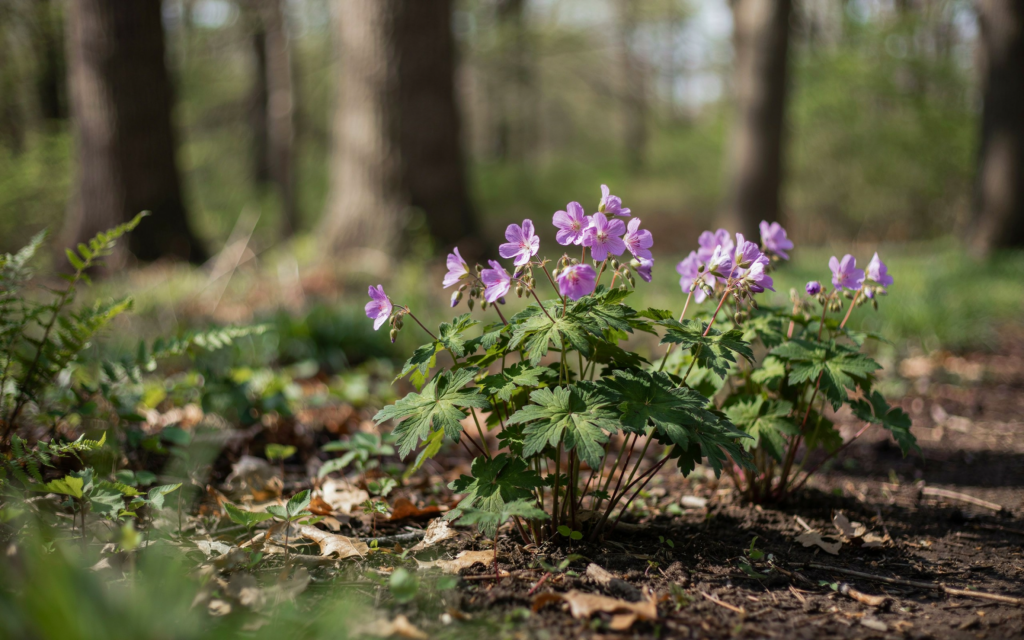
Botanical name: Geranium maculatum
USDA zones: Commonly grown across much of zones 3–8
Light: Light to partial shade
Bloom time: Mid to late spring
Size: About 1–2 feet tall
Wild geranium is taller than many ground covers, but groups of plants can cover soil well in a natural woodland bed.
The pink to lilac flowers appear above deeply cut leaves in spring. It prefers rich soil with moderate moisture but can handle some drier conditions once settled.
This eastern North American native can slowly spread and return in new spots when conditions suit it. It is a good choice when you want a loose, natural planting rather than a very flat carpet.
7. Dwarf Crested Iris — Best Low Spring Bloomer
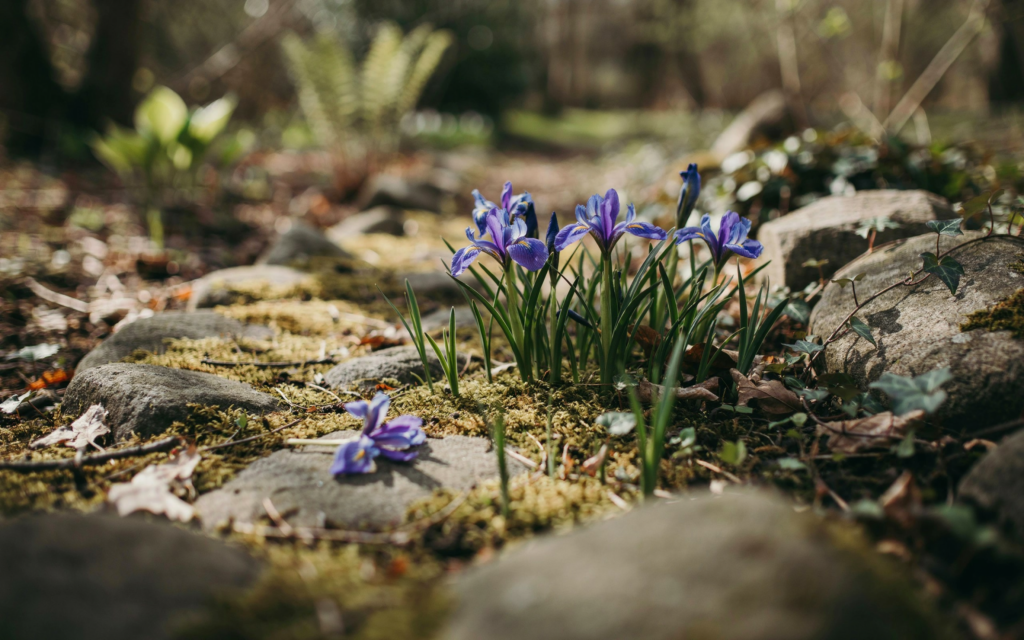
Botanical name: Iris cristata
USDA zones: 3–9
Light: Partial shade
Bloom time: Spring
Size: About 4–9 inches tall
Dwarf crested iris produces purple, blue, or pale flowers close to the ground. Its narrow leaves remain after flowering and help cover the soil.
This native plant spreads through underground stems and works well in woodland gardens, shady rock gardens, and along paths.
It prefers well-drained soil and can even handle some dry shade. Too much rich fertilizer may produce more leaves but fewer flowers.
8. Allegheny Spurge — Best Native Pachysandra Alternative
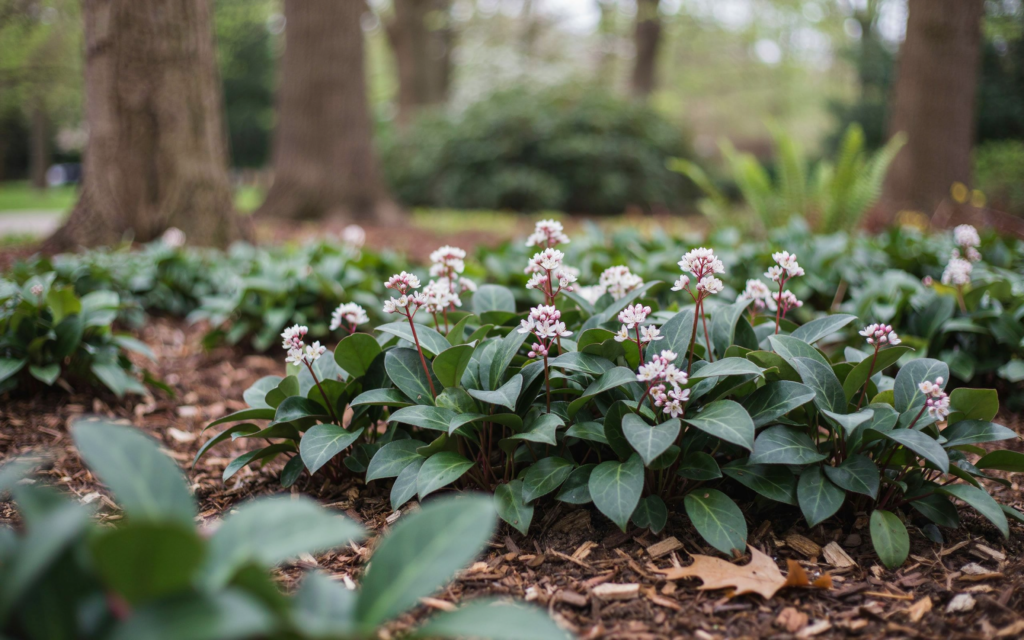
Botanical name: Pachysandra procumbens
USDA zones: Usually 5–9
Light: Partial to deep shade
Bloom time: Early spring
Size: About 6–12 inches tall
Allegheny spurge is a North American native that makes a good alternative to Japanese pachysandra.
Its blue-green leaves form a spreading mat beneath shrubs and trees. Small, fragrant white and pink flowers appear in spring.
It grows best in rich, moist soil but should not stay waterlogged.NC State describes Allegheny spurge as a native ground cover suited to shady places and notes that it spreads slowly.
9. Creeping Wintergreen — Best Evergreen Choice With Berries
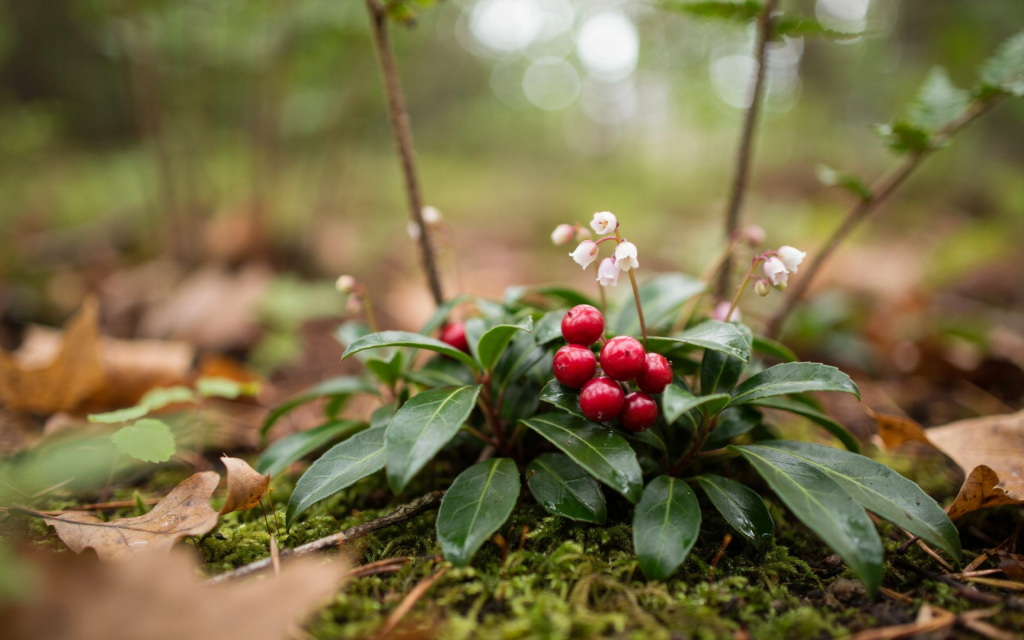
Botanical name: Gaultheria procumbens
USDA zones: About 3–8
Light: Partial to heavy shade
Bloom time: Late spring to summer
Size: About 4–8 inches tall
Creeping wintergreen stays low and has glossy evergreen leaves. Small white or pale pink flowers are followed by bright red berries.
It prefers acidic soil, so it is especially useful near other acid-loving plants. Moist, well-drained woodland soil is best.
Growth is fairly slow, which makes wintergreen easier to control than many fast-spreading ground covers. University of Maryland also lists it among native choices for shady, drier sites.
10. Woodland Stonecrop — Best for Rocky or Drier Shade
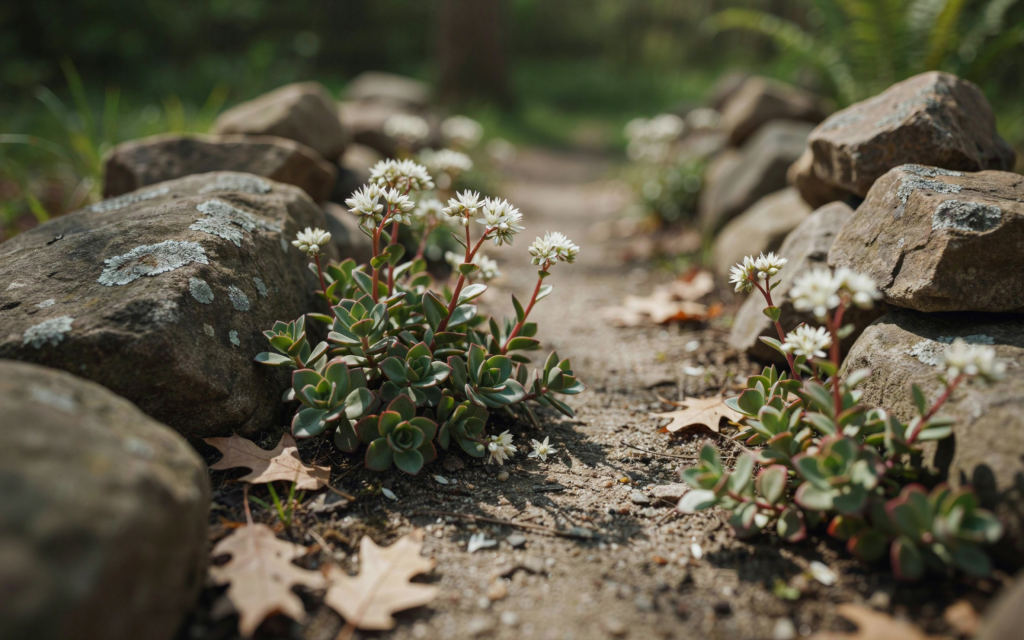
Botanical name: Sedum ternatum
USDA zones: Commonly 4–8
Light: Partial shade
Bloom time: Spring to early summer
Size: About 3–6 inches tall
Most people think of sedums as full-sun plants, but woodland stonecrop is different.
This eastern North American native produces a low mat of fleshy green leaves and small, white, star-shaped flowers. It works well around rocks, along banks, and in woodland edges.
It handles poorer and somewhat dry soil once established, but drainage is important. Avoid spots that remain wet for long periods.
11. Coral Bells — Best for Flowers and Colorful Foliage
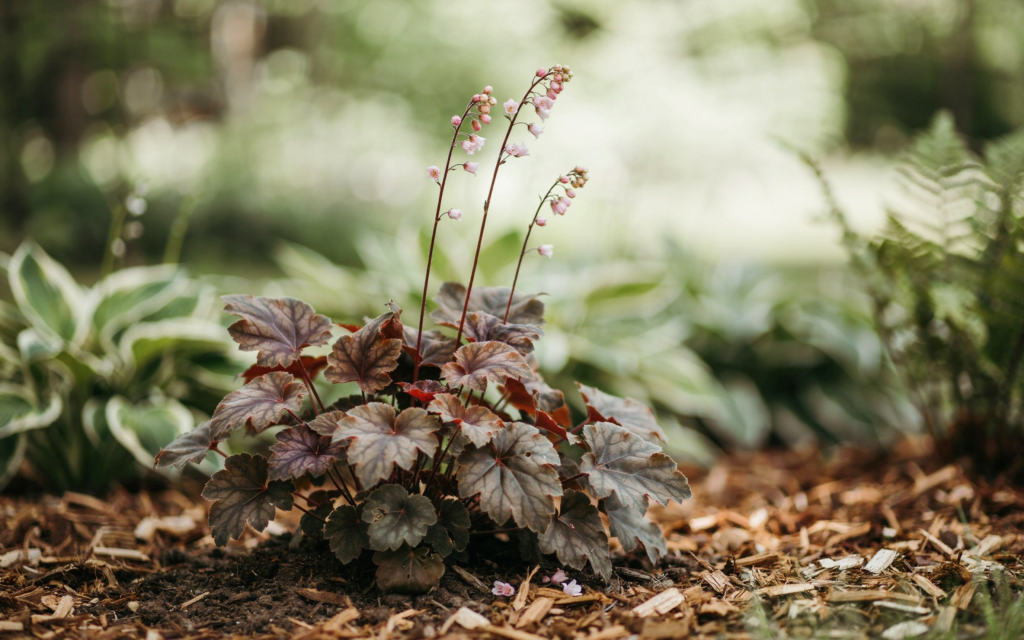
Botanical name: Heuchera species and cultivars
USDA zones: Often 4–9, depending on variety
Light: Partial shade
Bloom time: Spring to summer
Size: Usually 8–18 inches tall
Coral bells are grown as much for their leaves as their flowers. Depending on the variety, foliage can be green, silver, lime, bronze, purple, or burgundy.
Small flowers rise above the leaves on thin stems. Plants form clumps rather than a flat spreading carpet, so they work best when planted in groups.
For a native option, consider American alumroot, Heuchera americana, which grows naturally in eastern North American woodland settings.
12. Hellebore — Best for Late-Winter Flowers
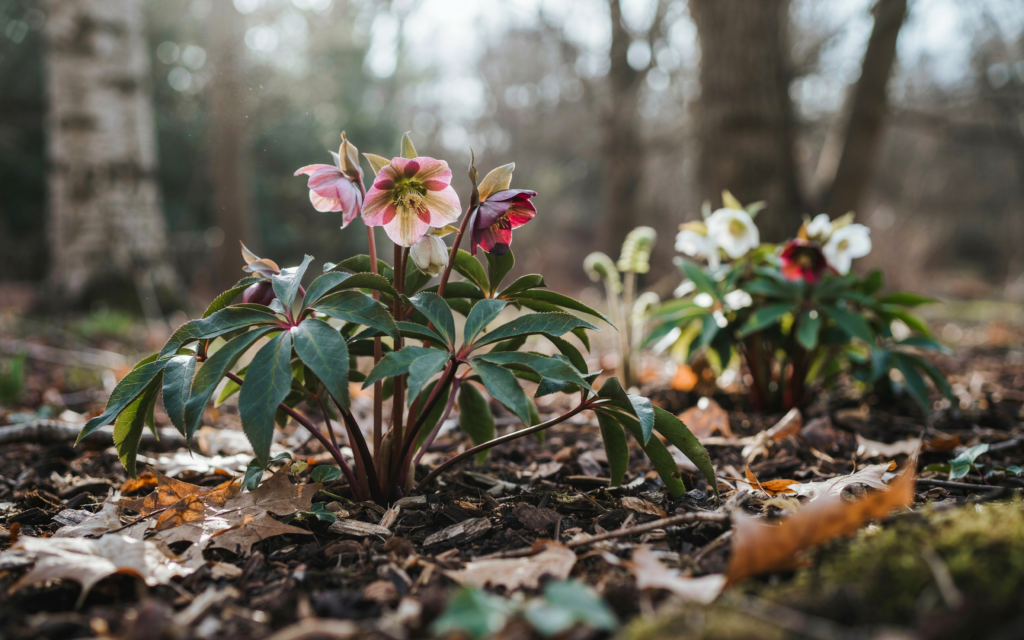
Botanical name: Helleborus species and hybrids
USDA zones: Usually 4–9, depending on type
Light: Partial to dappled shade
Bloom time: Late winter to early spring
Size: Around 1–2 feet tall
Hellebores provide flowers when little else is blooming. Depending on the variety, flowers may be white, pink, purple, green, or deep burgundy.
They form wide clumps rather than creeping mats, so plant several together if you want them to cover a larger shaded bed.
They prefer well-drained soil and are fairly low-maintenance once established. One important caution: Hellebores are poisonous if eaten, so avoid them where pets or young children may chew plants.
13. Spotted Deadnettle — Best for Fast Coverage
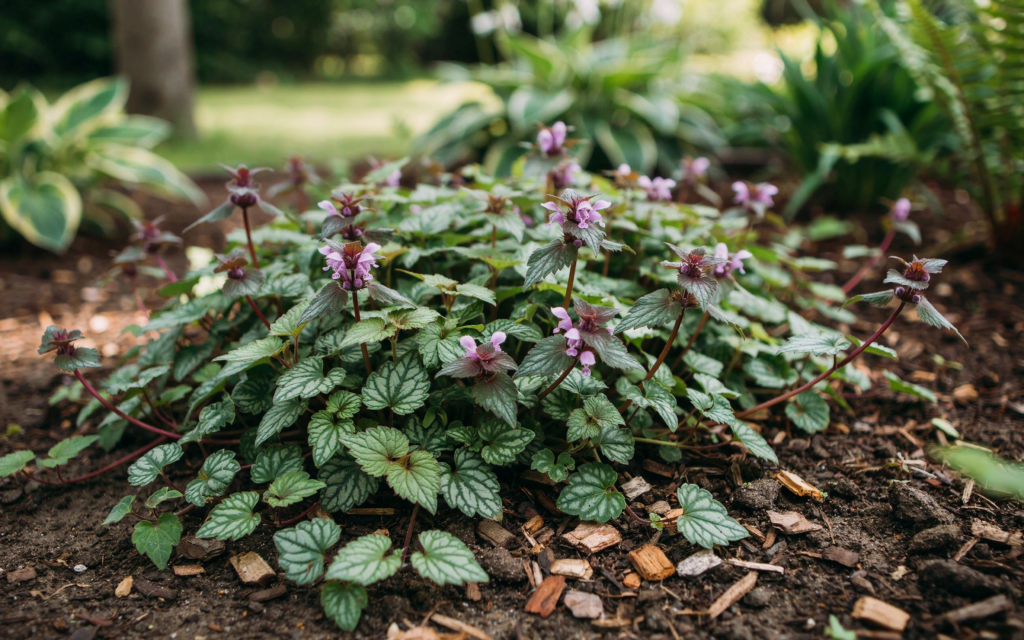
Botanical name: Lamium maculatum
USDA zones: 3–8
Light: Partial to deep shade
Bloom time: Spring into summer
Size: About 3–9 inches tall, spreading up to 2 feet
Spotted deadnettle has silver-marked leaves and small pink, purple, or white flowers. The pale foliage helps brighten dark garden areas even after flowering slows.
It spreads quickly and can form a dense mat. It prefers well-drained soil with regular moisture but can handle some dryness.
Because it spreads quickly, check local invasive-plant guidance before using it, then keep the edges trimmed if it is suitable for your area.
14. Sweet Woodruff — Best Fragrant Ground Cover
Botanical name: Galium odoratum
USDA zones: 4–8
Light: Partial to deep shade
Bloom time: Spring
Size: About 6–12 inches tall
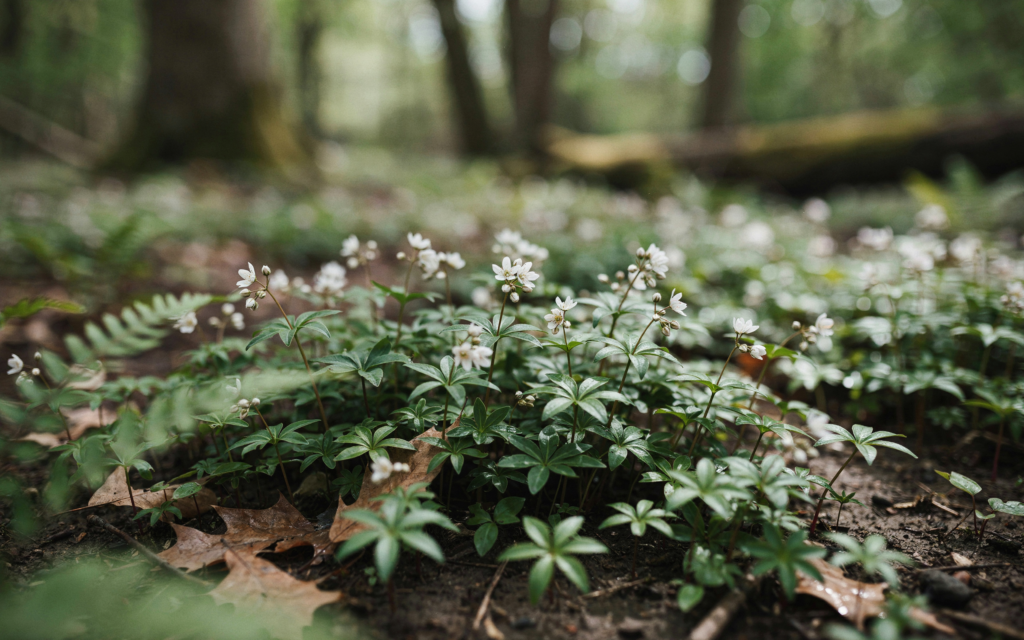
Sweet woodruff has small white, star-shaped flowers and whorls of green leaves. Its foliage develops a sweet hay-like scent when dried.
It is especially useful in moist, shaded areas where many other plants struggle. However, good conditions can make it spread quickly through rhizomes and seed.
NC State notes that sweet woodruff can become aggressive when conditions suit it, so use it where you can control the edges.
15. Ajuga — Best for Fast Coverage, but Check Local Guidance
Botanical name: Ajuga reptans
USDA zones: 3–10
Light: Partial to full shade
Bloom time: Mid to late spring
Size: About 6–12 inches tall in flower
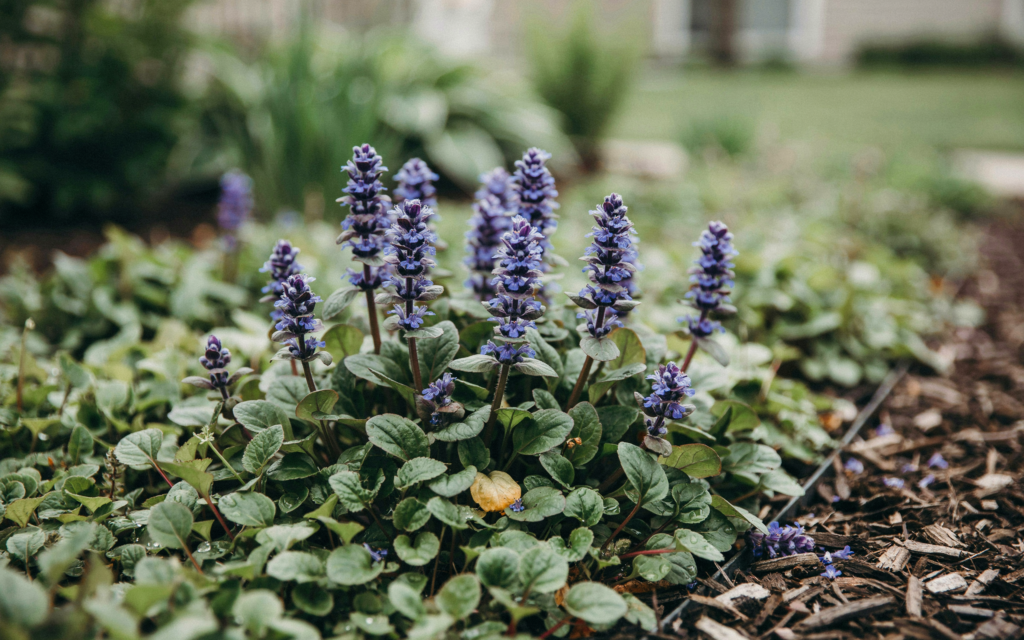
Ajuga, or bugleweed, quickly forms a dense carpet of leaves topped with blue-purple flower spikes in spring. It handles shade well and can grow where turfgrass struggles.
The problem is its spread. Ajuga can escape gardens and is considered invasive in some parts of the United States. University of Maryland, for example, recommends avoiding it in Maryland.
Before buying Ajuga, check your state Extension service or invasive-plant list. A native ground cover may be a safer long-term choice.
Common Mistakes When Choosing Shade Ground Covers
Choosing a Plant That Needs More Sun
Not every plant sold as “shade tolerant” grows well in full shade. Some need several hours of direct or filtered light to flower well.
Check the plant label and watch the area at different times of day before planting.
Ignoring Dry Soil Under Trees
Shade does not always mean moist soil.
Large tree roots take up a lot of water. Barrenwort, dwarf crested iris, green and gold, and woodland stonecrop are better starting points for drier shade than plants that need constant moisture.
Do not pile extra soil over large tree roots to make a planting bed.
Choosing a Plant That Does Not Fit Your USDA Zone
A ground cover may look perfect at the nursery but fail after winter or during summer heat.
Check your USDA zone, then consider local conditions too. Bunchberry, for example, performs much better in cool climates than in hot southern areas.
Choosing a Fast Spreader Without Checking Its Risk
Fast growth is not always a benefit.
A plant that fills bare ground quickly may also spread into lawns, neighboring beds, or natural areas. Invasive status varies by region, so check local guidance before planting non-native spreaders.
Choose a Ground Cover That Fits Your Shade
The best flowering ground covers for shade are not simply the plants that spread fastest. Choose one that matches your light, soil moisture, climate, and available space.
At Lawn Savy, we recommend starting with the conditions already in your yard instead of trying to force a plant into the wrong spot. For many shady gardens, foamflower, green and gold, woodland phlox, barrenwort, and other well-matched ground covers can turn bare soil into a useful, colorful planting without adding a lot of extra work.
Frequently Asked Questions
What Is the Best Flowering Ground Cover for Full Shade?
Foamflower is one of the best choices for moist full shade. Green and gold, creeping wintergreen, sweet woodruff, and spotted deadnettle can also handle heavy shade, depending on soil and climate.
For dry shade, barrenwort is often a better fit.
What Flowering Ground Cover Grows Well Under Trees?
Barrenwort, green and gold, dwarf crested iris, Allegheny spurge, and woodland stonecrop can work under trees.
The best plant depends on how dry the soil is. Tree roots often make the ground much drier than nearby shaded areas.
What Is the Best Native Flowering Ground Cover for Shade?
There is no single native choice for the entire United States. Native ranges differ by region.
For parts of the eastern U.S., useful choices include foamflower, green and gold, woodland phlox, wild geranium, dwarf crested iris, Allegheny spurge, and woodland stonecrop. Check your local Extension office or native plant society before buying.
What Is the Best Low-Maintenance Flowering Ground Cover for Shade?
Green and gold and barrenwort are both good low-maintenance choices once established.
Green and gold works well in light shade with well-drained soil. Barrenwort is especially useful where shade is also dry.
Which Flowering Ground Covers Work in Dry Shade?
Barrenwort is one of the strongest choices. Dwarf crested iris, woodland stonecrop, and established green and gold can also tolerate some dry conditions.
New plants still need regular water until their roots become established.
Can Flowering Ground Covers Stop Weeds?
A dense ground cover can reduce the space and light available to weeds, but it will not make a bed weed-free.
Weed the area before planting and keep removing weeds while the ground cover fills in. Once plants form a dense layer, weed pressure usually becomes easier to manage. University of Maryland notes that ground covers can act like a living mulch and compete with weeds for light and resources.
What Flowering Ground Cover Is Best Where Grass Will Not Grow?
If shade is the main reason grass fails, woodland phlox, foamflower, green and gold, barrenwort, or Allegheny spurge may work better than repeatedly reseeding turf.
First check whether the real problem is shade, dry tree roots, wet soil, or heavy foot traffic. Even a shade-loving ground cover will struggle if the site does not match its needs.