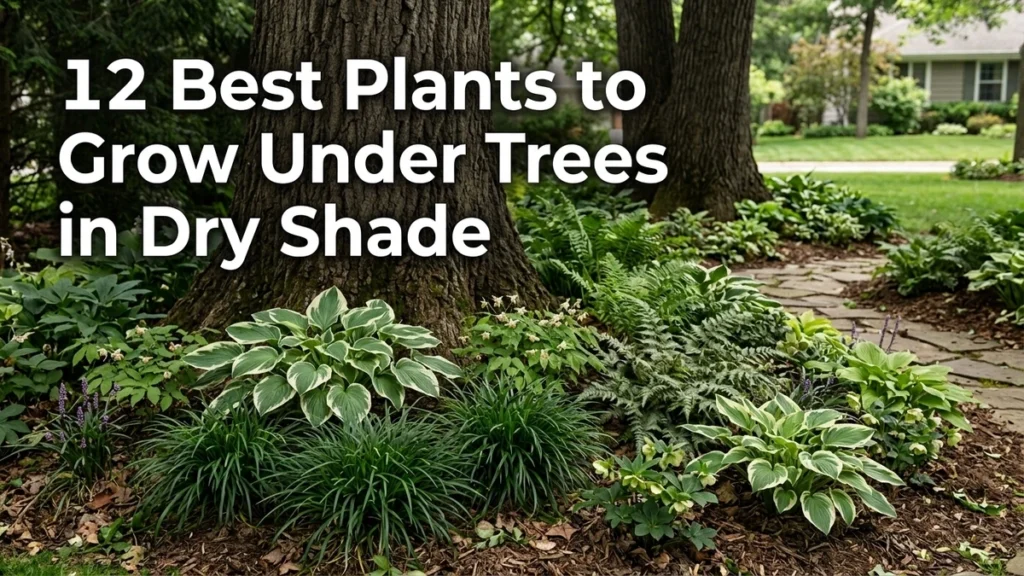
Growing plants under a mature tree can be hard. The branches and leaves above block sunlight and some rain, while large tree roots take up much of the available water. That means plants in this spot must handle both shade and dry soil.
Good choices include epimedium, hellebores, Christmas fern, Pennsylvania sedge, bigroot geranium, coral bells, and white wood aster. Many of these plants handle dry shade well after they have grown a strong root system.
Even drought-tolerant plants need regular water during their first growing season. Plant carefully, too. You want to help the new plants grow without cutting or damaging the tree’s main roots. For more practical planting and lawn care tips, Lawn Savy has guides to help you choose plants that fit your growing conditions.
Quick Picks for Dry Shade Under Trees
- Best overall: Epimedium
- Best grass-like ground cover: Pennsylvania sedge
- Best fern: Christmas fern
- Best flowering ground cover: Bigroot geranium
- Best native late-season flower: White wood aster
- Best grass-like border plant: Liriope
No plant is right for every tree. Check your climate, soil, available light, and the amount of water that reaches the area before you buy.
Why Is It So Hard to Grow Plants Under Trees?
Trees create dry shade in several ways. Their branches and leaves reduce sunlight. Some areas may get moving patches of light, while other spots stay in deep shade most of the day.
Tree roots also compete with smaller plants for water. After rain, a mature tree may take up moisture quickly and leave the upper soil dry.
The branches above can block rainfall as well. This can be even more noticeable under evergreen trees because they shade the ground throughout the year.
The Royal Horticultural Society also notes that plants under large trees often have to deal with both low light and low moisture.
A plant that likes shade can still fail here if it needs constantly wet soil. For the best chance of success, choose plants that can handle shade, dry periods, and competition from tree roots.
12 Best Plants to Grow Under Trees in Dry Shade
1. Epimedium — Best Overall for Dry Shade
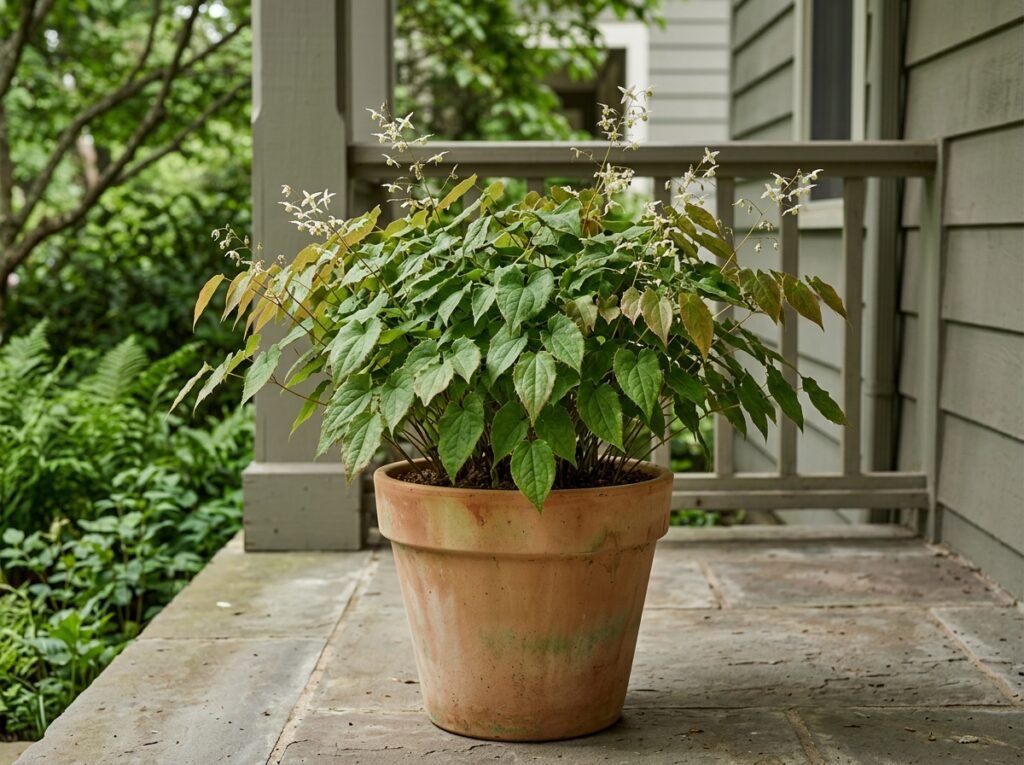
Botanical name: Epimedium species and varieties
Best for: Ground cover
Light: Partial, dappled, or deep shade
Epimedium, also called barrenwort, is one of the most reliable plants for dry shade. It stays fairly low and produces heart-shaped leaves with small flowers in spring.
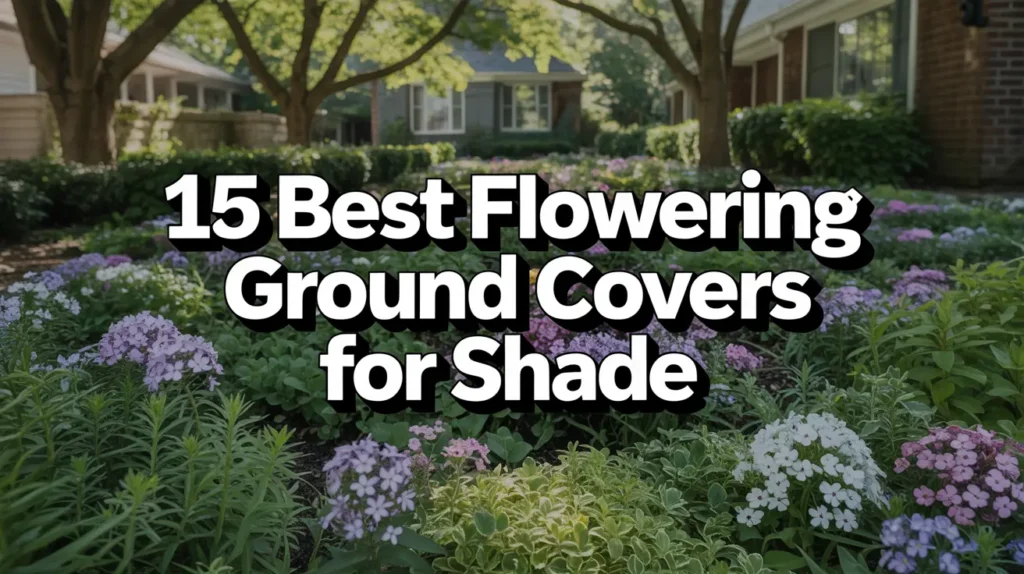
Some varieties can handle dry soil well after their roots have settled in. The spreading growth also helps cover bare ground without creating a tall or heavy planting. If you are also looking for flowering options that work in shadier garden areas, explore these flowering ground cover options for shade for more low-growing choices.
Do check the exact variety before buying. Different epimediums have different water needs.
The RHS specifically highlights Epimedium × versicolor ‘Sulphureum’ as a plant that performs well in dry shade beneath trees.
2. Hellebore — Best for Early Flowers
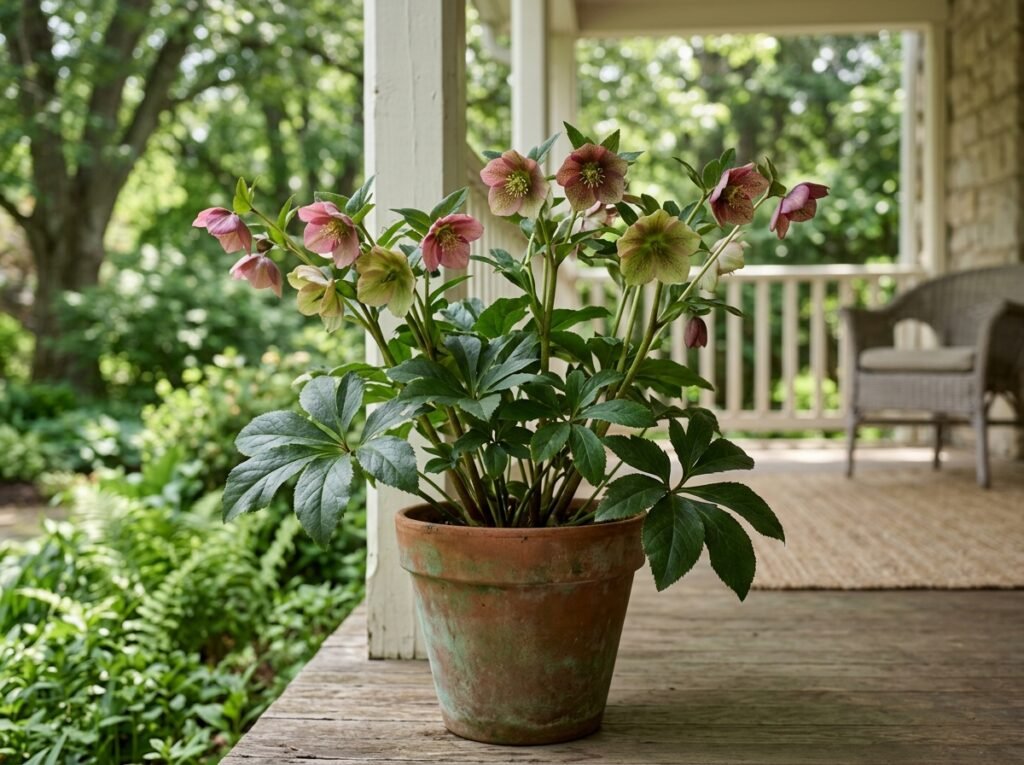
Botanical name: Helleborus species and hybrids
Best for: Winter and early-spring flowers
Light: Partial to full shade
Hellebores add flowers when much of the garden is still quiet. Depending on the type, blooms may be white, pink, purple, green, or dark red.
They are especially useful beneath deciduous trees. These trees lose their leaves in winter, so hellebores may receive more light before the new tree leaves appear in spring.
Hellebores prefer well-drained soil. Give new plants regular water instead of expecting them to cope with dry soil right away.
Hellebores are poisonous if eaten. NC State Extension lists the plant as having high-severity poison characteristics, and the ASPCA lists Helleborus niger as toxic to dogs and cats. Keep them away from children and pets that may chew plants.
3. Christmas Fern — Best Fern for Dry Shade
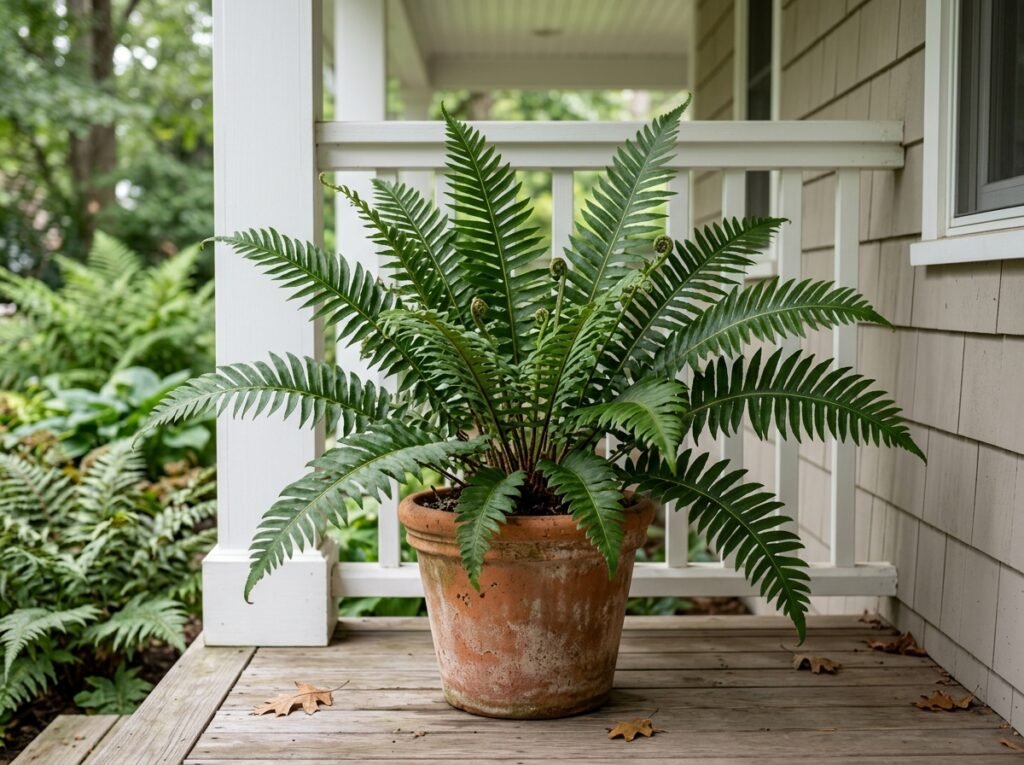
Botanical name: Polystichum acrostichoides
Best for: Woodland-style foliage
Light: Partial to full shade
Not every fern is a good match for dry soil.
Christmas fern is more useful than many moisture-loving ferns because it can grow in dry-to-medium, well-drained soil.
Its dark green fronds, or fern leaves, fit naturally beneath trees. The plant grows in clumps and spreads slowly rather than quickly taking over the area.
Christmas fern is native to a wide part of eastern North America. NC State Extension recommends it for part to full shade and dry-to-medium soil.
4. Pennsylvania Sedge — Best Grass-Like Ground Cover
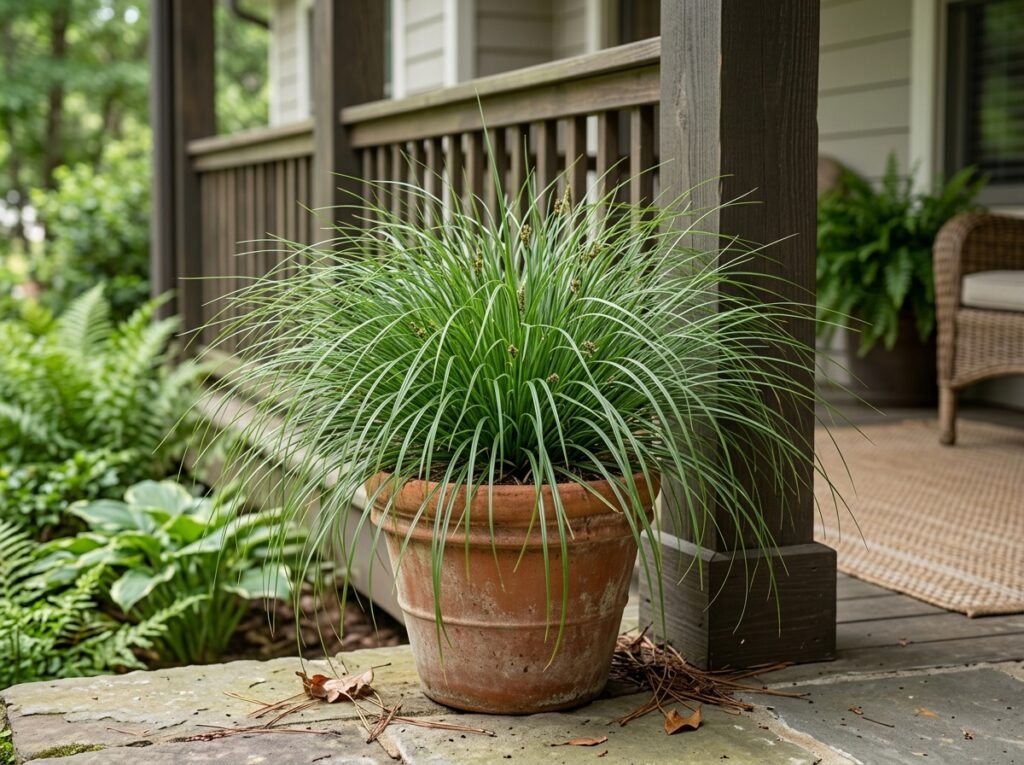
Botanical name: Carex pensylvanica
Best for: Soft, grass-like ground cover
Light: Partial to full shade
Native range: Eastern and central North America
Pennsylvania sedge is useful in places where lawn grass struggles beneath trees.
Its narrow, arching leaves create a soft green layer without needing the same amount of sun or mowing as regular turfgrass.
It handles heavy shade and dry-to-medium soil, making it useful beneath deciduous trees and along woodland edges.
UConn Extension recommends Pennsylvania sedge as a ground cover or lawn alternative for dry soil in shady areas. It also notes that plugs are often easier to establish than seed.
5. Bigroot Geranium — Best Tough Flowering Ground Cover
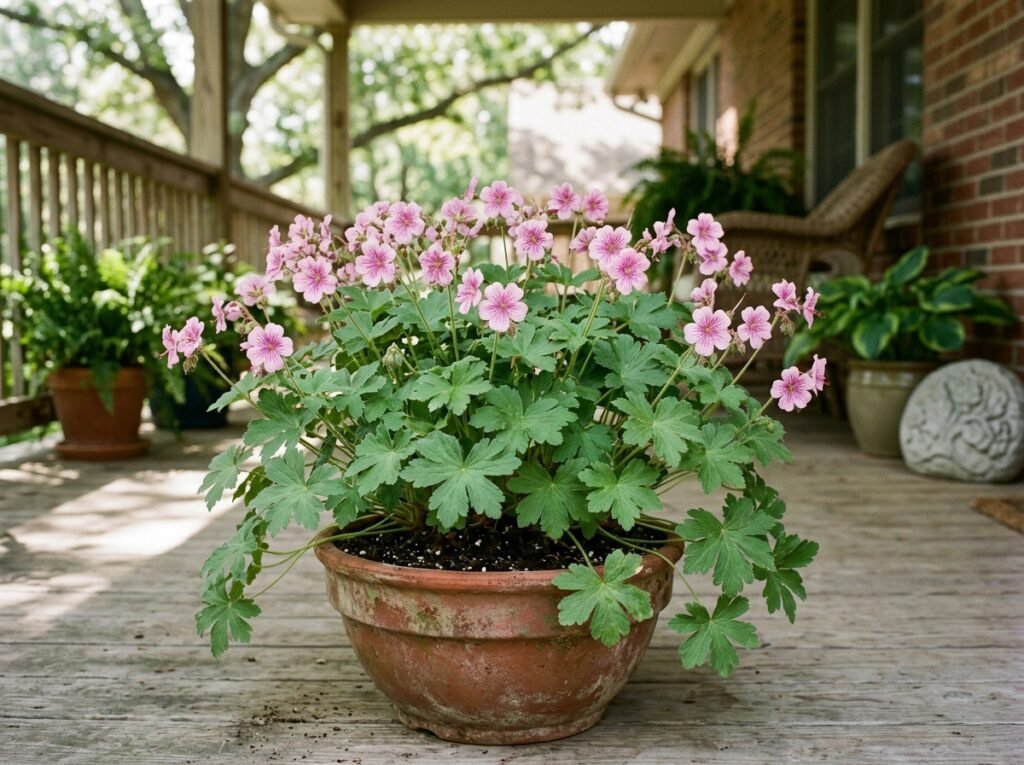
Botanical name: Geranium macrorrhizum
Best for: Flowers and spreading ground cover
Light: Partial shade
Bigroot geranium is a tough perennial with scented leaves and pink to purple flowers.
Thick underground stems help it spread across the ground. After it has settled in, it can handle dry periods better than many flowering shade plants that need steady moisture.
Missouri Botanical Garden lists bigroot geranium as tolerant of drought and dry soil and recommends it for ground-cover use.
It is a useful choice when you want more than green leaves beneath a tree.
6. Coral Bells — Best for Colorful Leaves
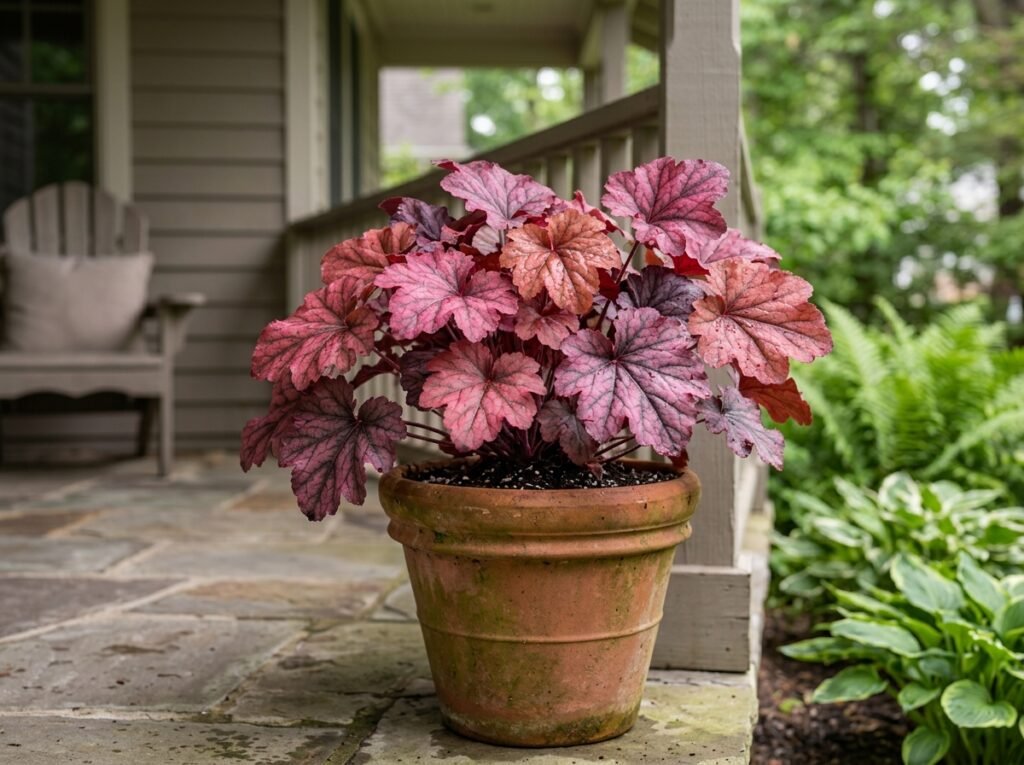
Botanical name: Heuchera species and varieties
Best for: Leaf color
Light: Partial or dappled shade
Coral bells can brighten a shaded area even when flowering is limited.
Depending on the variety, the leaves may be lime green, silver, bronze, burgundy, purple, or almost black.
Water needs can vary a lot between varieties. This makes plant selection important.
For example, NC State Extension describes hairy heuchera (Heuchera villosa) as moderately drought tolerant, but notes that it may decline if the soil dries out completely.
Choose a variety that suits your local summers, winters, and humidity. Do not choose only by leaf color.
7. Bergenia — Best for Bold Leaves in Dry Shade
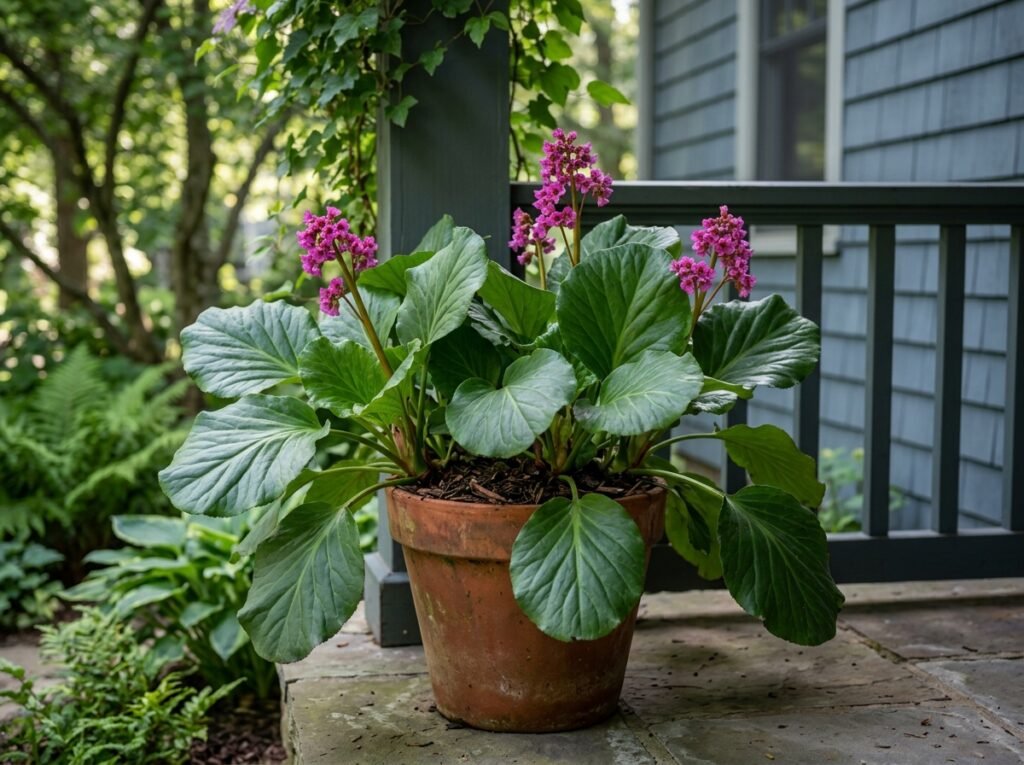
Botanical name: Bergenia species and varieties
Best for: Large leaves and spring flowers
Light: Partial or dappled shade
Bergenia has thick, broad leaves that add strong shape and texture beneath trees. It also produces clusters of pink, white, or purple flowers, depending on the variety.
It is tougher than its soft woodland look suggests.
The RHS notes that established bergenias can cope with dry conditions and can be grown beneath trees and in dry, shady areas. Deep shade may reduce flowering.
Bergenia is still a better choice for a spot that receives some rain than for extremely dry soil close to a large tree trunk.
If your site stays dry for very long periods, epimedium, Pennsylvania sedge, or bigroot geranium may be easier choices.
8. Wild Columbine — Best Native Spring Flower
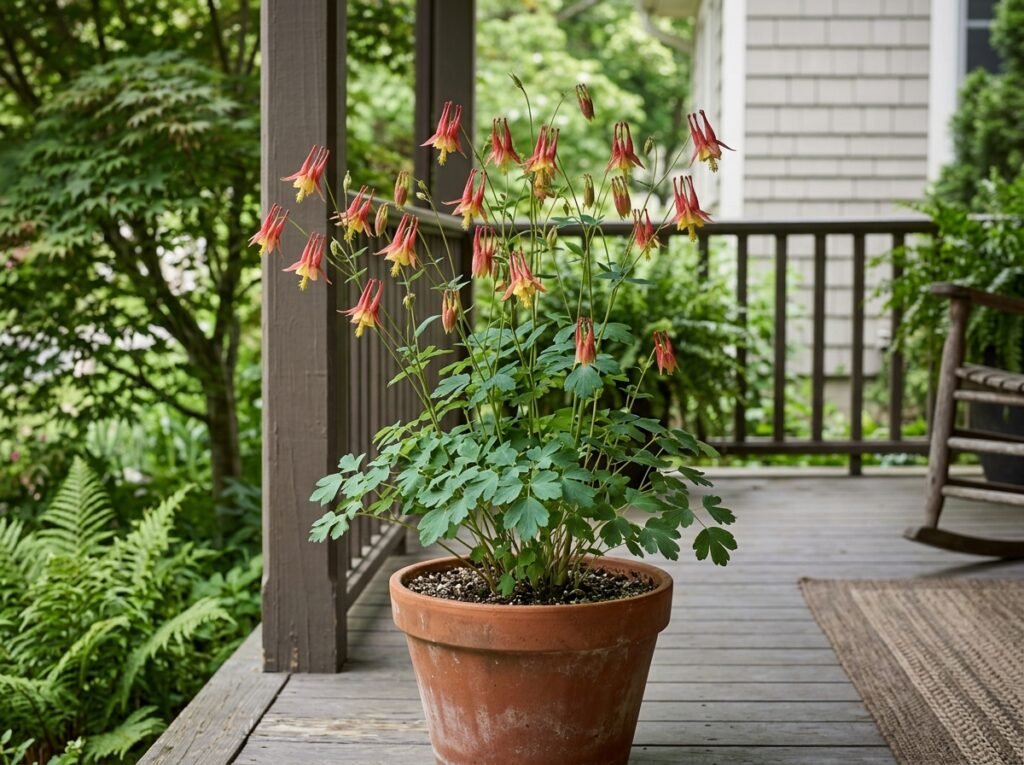
Botanical name: Aquilegia canadensis
Best for: Spring flowers and pollinators
Light: Partial shade
Wild columbine is a North American native with red-and-yellow flowers.
Its tube-shaped flowers attract hummingbirds, butterflies, and bumblebees. NC State Extension recommends it for partial shade, though it prefers richer soil with more moisture than the toughest dry-shade plants in this list.
Use it where the ground gets some moisture, such as farther away from the tree trunk or near the outer part of the canopy.
Wild columbine can also spread by seed when conditions suit it, helping create a loose woodland look over time.
9. White Wood Aster — Best Native Flower for Late Season
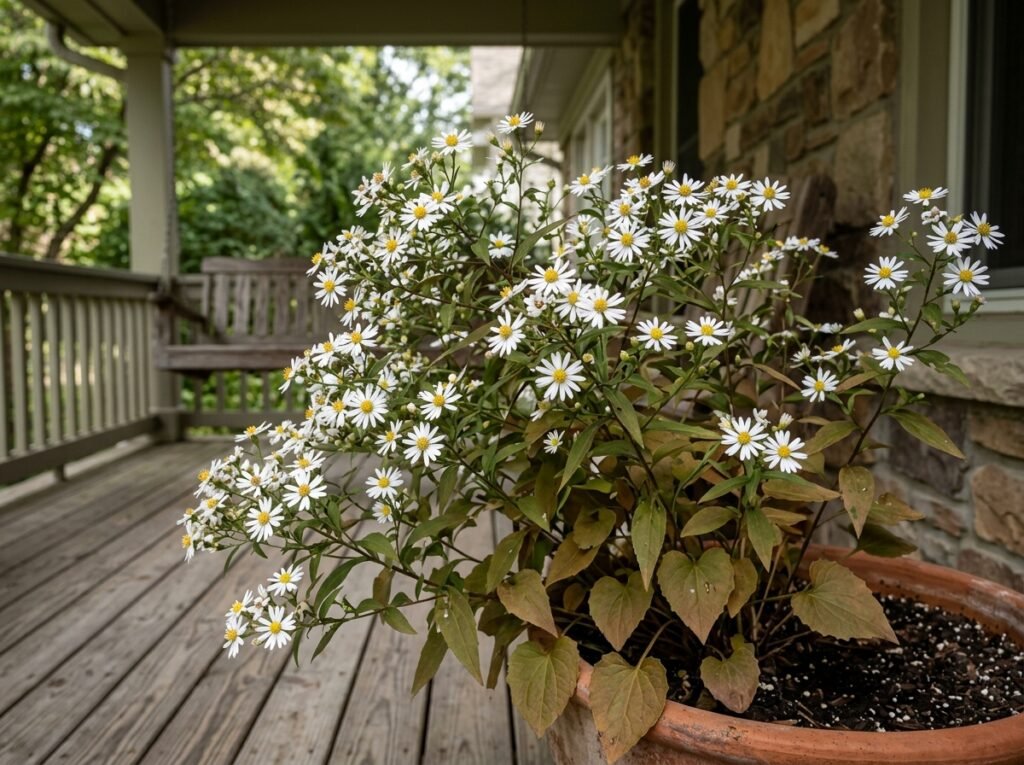
Botanical name: Eurybia divaricata
Best for: Late-summer and fall flowers
Light: Partial to deep shade
Many shade gardens have plenty of spring color but become quiet later in the year. White wood aster helps fill that gap.
This eastern North American native produces clusters of small white flowers in late summer and fall.
NC State Extension lists white wood aster for medium-to-dry, well-drained soil and notes that it tolerates shade and drought.
It can spread through underground stems, so give it space if you want a natural ground-cover effect.
This is also one of the better choices for a native or pollinator-focused shade garden.
10. Solomon’s Seal — Best for Woodland Height
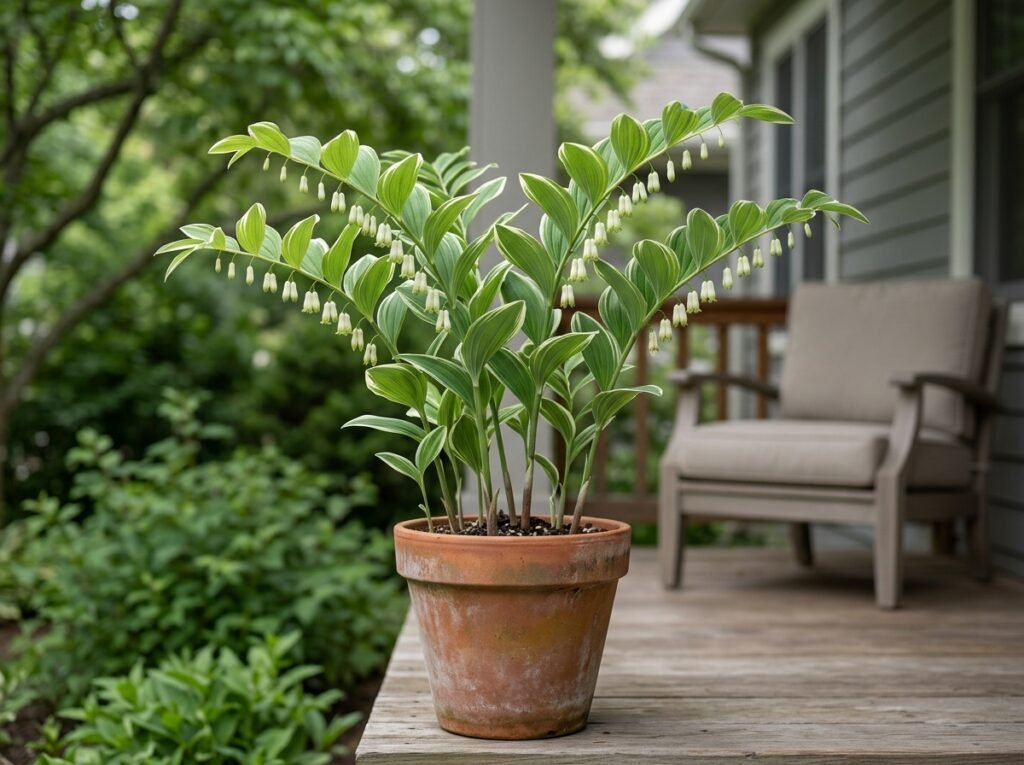
Botanical name: Polygonatum species
Best for: Arching stems and extra height
Light: Partial to full shade
Solomon’s seal has graceful arching stems with pairs of green leaves and small hanging flowers. It adds height beneath a tree without becoming a bulky shrub.
Dry-soil tolerance depends on the species. Fragrant Solomon’s seal, Polygonatum odoratum, is listed by Missouri Botanical Garden as tolerant of heavy shade, drought, and dry soil. However, it grows best in richer woodland soil with some moisture.
Use Solomon’s seal behind lower plants such as epimedium or sedge.
11. Hardy Cyclamen — Best for Fall Color
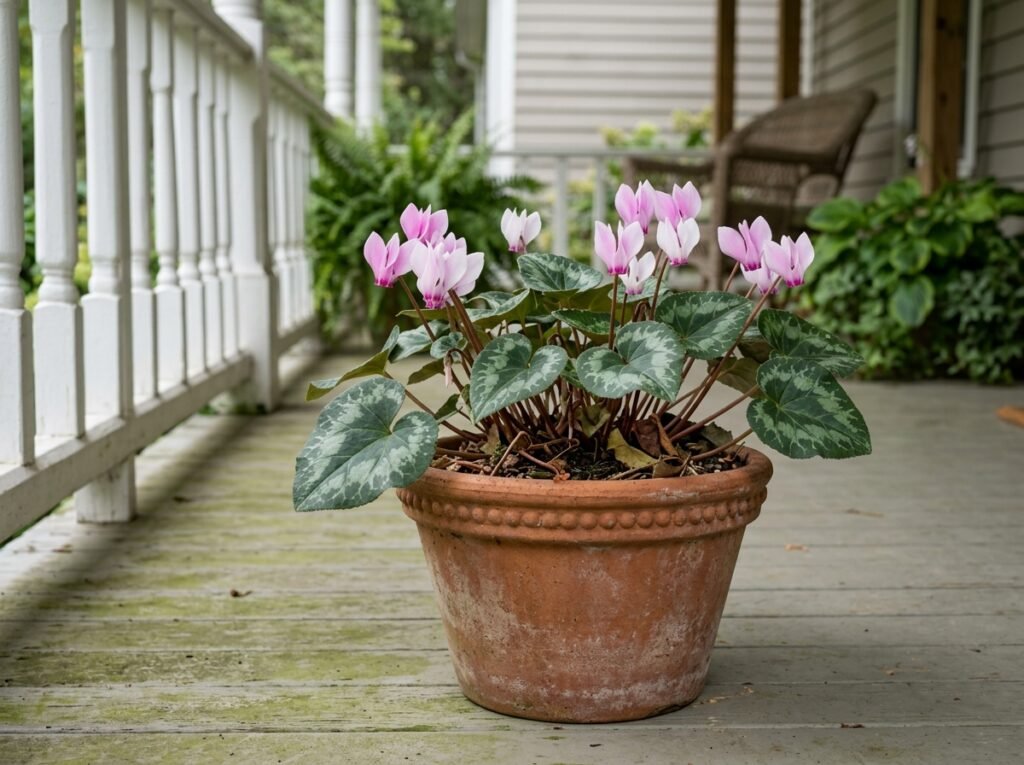
Botanical name: Cyclamen hederifolium
Best for: Fall flowers under deciduous trees
Light: Partial shade
Growth habit: Low-growing perennial
Hardy cyclamen works well beneath deciduous trees because its seasonal growth fits woodland conditions.
Pink or white flowers can appear in fall, followed by patterned leaves. It needs well-drained soil and does not want constantly wet ground in summer.
The RHS includes Cyclamen hederifolium among its recommended plants for growing under trees. Give it time to settle in and avoid planting it where water stands after rain.
12. Liriope — Best Tough Border Plant
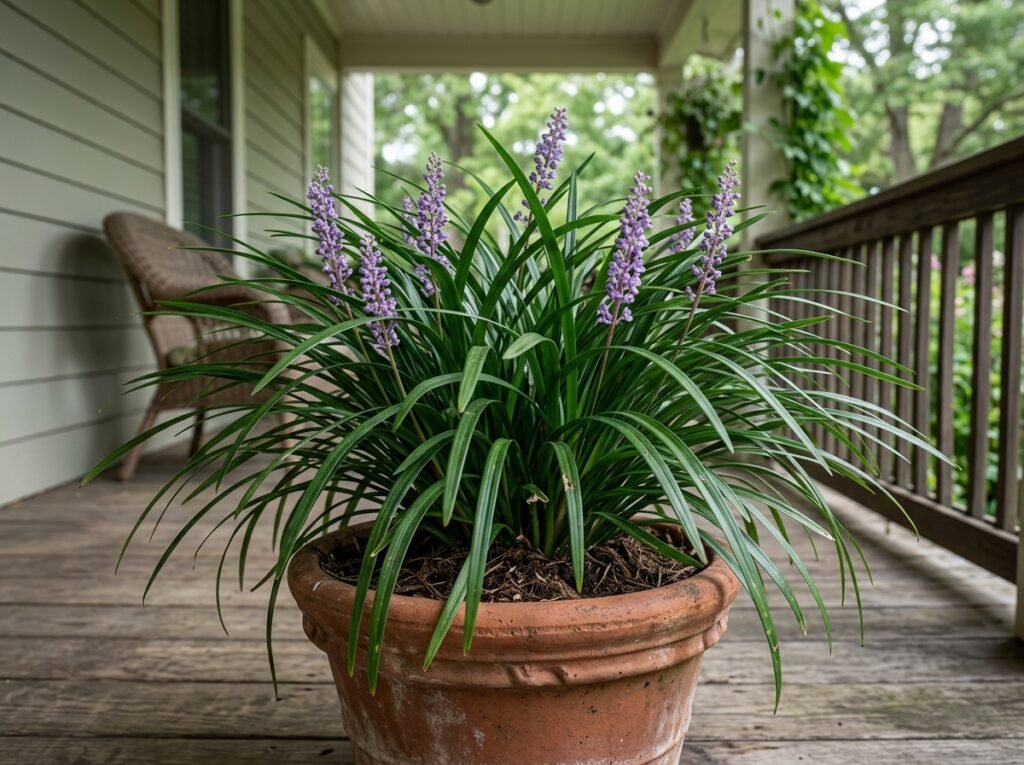
Botanical name: Liriope muscari
Best for: Borders and grass-like leaves
Light: Partial to deep shade
Liriope has narrow leaves that look similar to ornamental grass, although it is not a true grass. It works well along the edge of a tree bed or beside a path.
Choose a clumping Liriope muscari when you want easier control. NC State Extension notes that this species can tolerate heavy shade and drought after it has become established. New plants need regular water during their first year.
Liriope muscari is less aggressive than spreading Liriope spicata, but local rules and invasive-plant concerns can vary. Check local guidance before planting non-native ground covers.
How to Plant Under Trees Without Damaging the Roots
The plant choice matters, but so does how you put it in the ground. A mature tree is already using the soil. Digging large holes, cutting major roots, or piling new soil over the root area can harm the tree.
Start With Small Plants
Use small nursery plants or plugs when possible. They need smaller holes and are easier to fit between existing tree roots than large plants.
They may look small at first, but they can fill the area over time without causing as much disturbance.
Plant Between Tree Roots
Dig carefully with a hand trowel. If you hit a large root, stop and move the planting hole. Do not cut through a major tree root just to fit a perennial into that spot.
If there is almost no open soil between the roots, planting may not be the best choice close to the trunk.
Do Not Add a Deep Layer of Soil
Do not cover the ground beneath a mature tree with several inches of new soil.
Adding too much soil over existing roots can reduce the air that reaches them. Work with the current soil level where possible.
Water New Plants During Their First Season
A plant described as drought tolerant is not drought tolerant the day it is planted.
New roots are still small. Water during dry weather through the first growing season so the plants have time to build a stronger root system.
The RHS also recommends watering new plantings under trees during dry periods while they become established.
Mulch Lightly and Keep It Away From the Trunk
A light layer of organic mulch can slow water loss and reduce weeds.
Keep mulch away from the tree trunk and from the center of each new plant. Do not pile mulch into a mound against the trunk.
A few plants that truly handle dry shade are easier to care for than a crowded bed of plants that need constant watering.
Plants That May Struggle in Very Dry Shade
Not every shade plant is a good dry-shade plant. Astilbe usually performs better when the soil stays moist. Many hostas also look better when they receive steady moisture.
Ferns that need wet soil can struggle under trees unless you water regularly. Brunnera and some bleeding hearts may also prefer richer, moister soil. That does not mean these plants can never grow beneath a tree.
They may work:
- farther from the trunk,
- near the outer edge of the tree canopy,
- beneath a high, open canopy,
- or where irrigation keeps the soil from becoming very dry.
In the driest spots, choose plants from the list above that are specifically noted for strong dry-shade tolerance.
Choose Plants That Fit the Space
The best plants under trees need to handle more than shade. They also have to deal with dry soil, less rainfall, and competition from tree roots.
Choose plants that fit your climate and the light and moisture under your tree. Start with small plants, avoid cutting large roots, and water well during the first growing season.
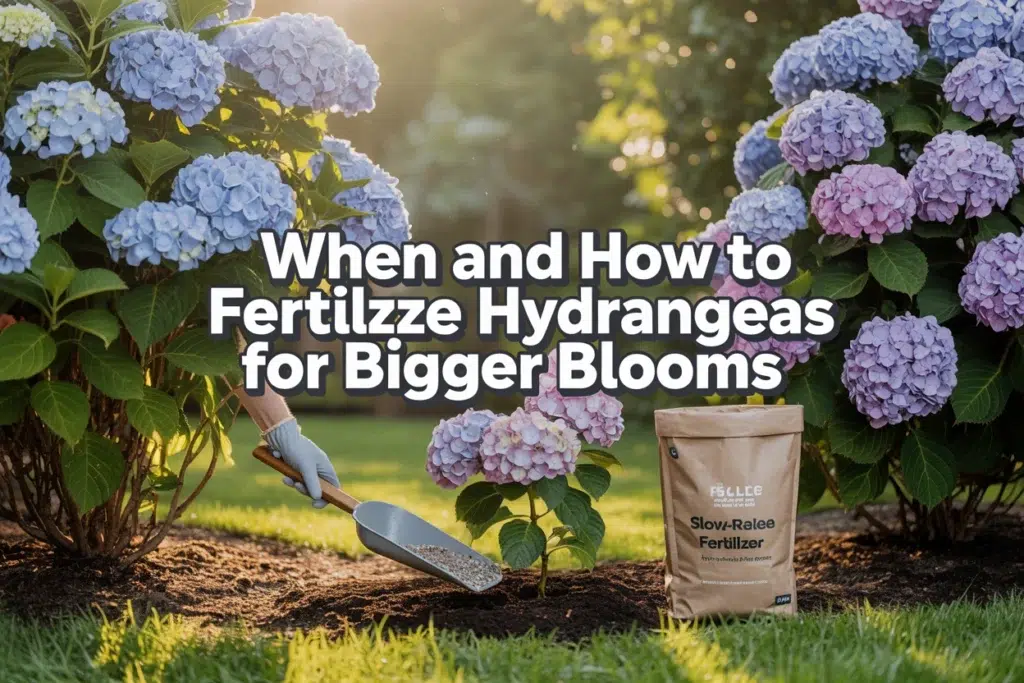
For other flowering plants in your garden, feeding at the right time also matters; see this guide to fertilizing hydrangeas for healthier blooms for practical feeding tips.
If thick surface roots leave little room for planting, do not force plants into the area. A light layer of mulch may be the safer and easier choice.
Frequently Asked Questions
What Is the Best Ground Cover for Dry Shade Under Trees?
Epimedium is one of the best all-around choices for dry shade. Selected varieties handle shade and dry soil well after their roots are established. Pennsylvania sedge is a good grass-like option, while bigroot geranium adds both ground cover and flowers.
What Can I Plant Under a Tree Where Grass Will Not Grow?
Try plants that are better suited to shade instead of repeatedly reseeding turfgrass. Good options include Pennsylvania sedge, epimedium, Christmas fern, hellebores, white wood aster, and bigroot geranium.
Before planting, make sure shade and root competition are really the problem. Standing water, compacted soil, or other site problems can also cause thin grass.
What Plants Grow Well Under Pine Trees?
Planting under pine trees can be difficult because their evergreen branches block light and some rain throughout the year. The ground may also stay very dry.
Christmas fern, epimedium, selected sedges, hellebores, and other woodland plants may work.
What Are the Best Native Plants to Grow Under Trees?
For many parts of the eastern United States, useful native choices include Christmas fern, Pennsylvania sedge, white wood aster, and wild columbine.
Native ranges are different across the country. Check with your state Cooperative Extension office or a trusted native-plant organization before buying a plant only because it is labeled “native.”
Can Flowers Grow in Dry Shade Under Trees?
Yes. Hellebores provide winter or early-spring flowers. Wild columbine adds spring color. Bigroot geranium flowers later, while white wood aster adds blooms near the end of summer and into fall. Very deep shade may reduce the number of flowers.
Do Dry-Shade Plants Need Water After Planting?
Yes. Even drought-tolerant plants need regular water while they build new roots.
Check the soil during the first growing season and water when it starts to dry. After the root system becomes stronger, many dry-shade plants need less extra water.
Can I Plant Directly Over Tree Roots?
Do not cut through large tree roots to create planting holes. Look for open spaces between the roots and use small plants or plugs that need shallow holes.
If large surface roots cover most of the ground, a light mulch layer may be safer close to the trunk. Place plants farther out where there is more open soil.