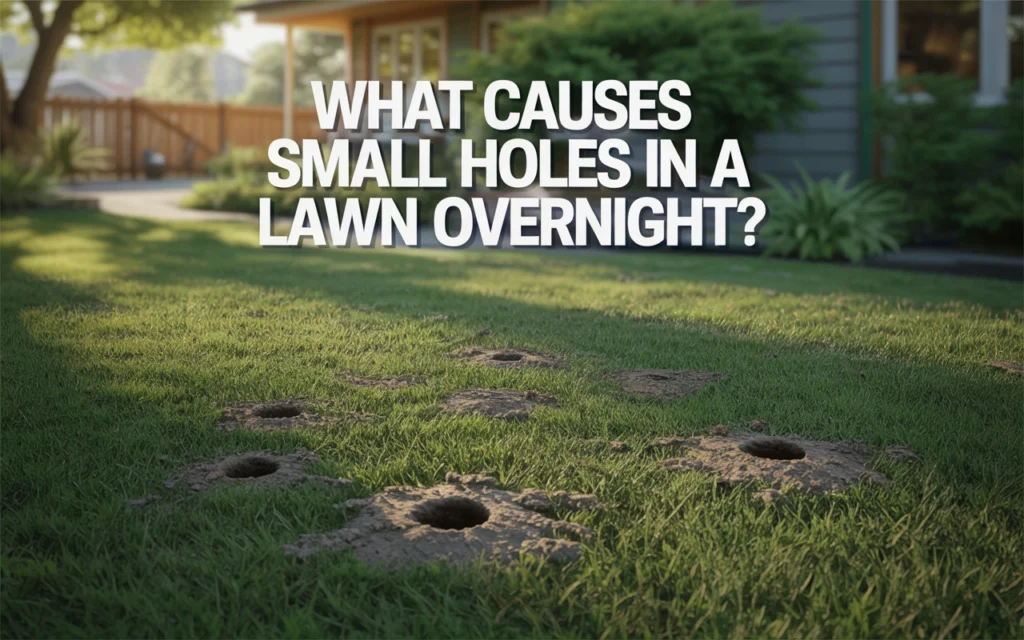
Small holes in lawn overnight are usually caused by animals searching for food, insects emerging from the soil, or small wildlife digging or burrowing. Skunks and raccoons often leave shallow holes while looking for grubs and other insects, while squirrels, birds, ground nesting insects, and small rodents can leave different patterns.
The size, shape, depth, and location of the holes can help you find the likely cause. Before you fill the holes, take a closer look. The pattern of the damage often tells you more than the hole itself.
If you notice thinning, discoloration, or other damage at the same time, see our lawn problem guides for help identifying common issues.
What Causes Small Holes in a Lawn?
A lawn can develop small holes for several reasons, and not all of them mean you have a serious pest problem.
Common causes include:
- Skunks and raccoons searching for insects
- Squirrels and chipmunks digging for food
- Birds probing the soil for insects
- Ground nesting bees and wasps
- Small rodents such as voles
- Moles when tunnels or raised ridges are also present
- Insects emerging from the soil
- Natural soil activity
The hole pattern can give you a useful clue. Below, we’ll look at the most common causes and how to tell them apart.
University of Maryland Extension notes that animals can dig in lawns, often at night or when homeowners are not watching. It also warns against assuming that a lawn full of holes automatically means it has a grub problem.
How to Identify What Made the Holes
You do not need to catch the animal in the act. Start by studying the holes.
Quick Guide: What Hole Size Can Tell You
| What You See | Possible Cause |
| Tiny pin sized openings | Emerging insects or small ground nesting insects |
| Small shallow divots | Skunks, squirrels, birds, or other animals looking for food |
| Around 2 inch openings | Possible chipmunk burrow entrances |
| Holes with surface runways | Voles or other small rodents |
| Raised ridges or soil mounds | Moles |
Hole size alone cannot identify the cause. Look at the shape, surrounding soil, tunnels, and other signs before deciding what made the damage.
Check the Hole Size and Shape
Small, shallow holes that look like little golf divots are often linked with skunks, raccoons, or squirrels. University of Minnesota Extension describes this type of shallow, scattered lawn damage as a clue for these animals.
A very small, clean opening may point toward an insect. Larger openings with tunnels or raised soil suggest a different type of activity.
Look for a Dirt Mound
The soil around the hole is an important clue.
A clean hole with no loose soil could have been made by a bird, squirrel, or some animals searching for food. Small insect holes may have a little mound around the entrance.
For example, University of Minnesota Extension notes that some ant holes have small conical soil mounds, while cicada killer holes can have a larger mound beside the entrance.
Check for Tunnels or Runways
A simple hole is different from a hole connected to an underground tunnel.
Moles usually create raised tunnels and soil mounds rather than leaving only a few isolated holes. Chipmunk entrances are often around 2 inches wide and usually have little or no loose soil around them.
If you see surface runways instead of open holes, small rodents such as voles may be involved.
Look at the Grass Around the Hole
Check whether the surrounding grass is:
- Torn or pulled up
- Flattened
- Missing
- Lifted like a small flap
- Completely normal
Skunks tend to leave scattered shallow holes, while raccoons can lift or roll back pieces of sod while searching for food.
Look for Other Signs
Tracks, droppings, animal paths, disturbed mulch, or insects entering and leaving the holes can help confirm the cause.
If you see fresh damage every morning, take a few photos before repairing the lawn. Comparing the pattern from one day to the next can make the culprit easier to identify.
Common Causes of Small Holes in a Lawn Overnight
1. Skunks Looking for Grubs and Insects
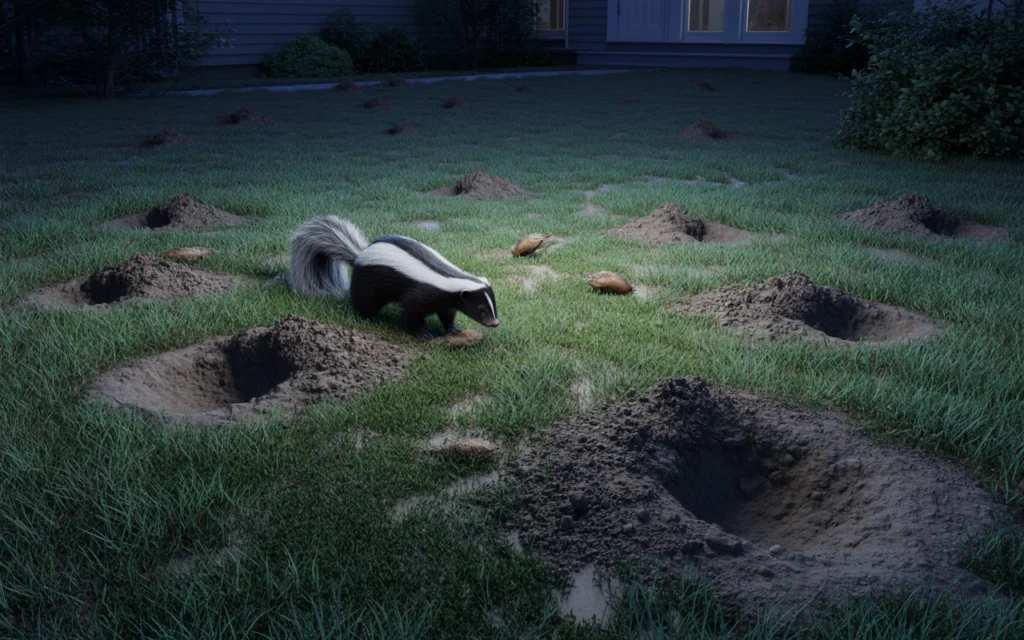
Skunks are a common cause of new lawn holes that appear overnight.
They are active at night and search lawns for earthworms, insects, and insect larvae. Their digging often leaves shallow, cone shaped holes scattered across the lawn.
The holes may look like someone pressed a small garden tool into the soil. Several holes can also appear close together.
University of Maryland Extension says skunks can create cone shaped holes about 3 inches wide and may repeatedly return to the same area while searching for food.
2. Raccoons Searching for Food
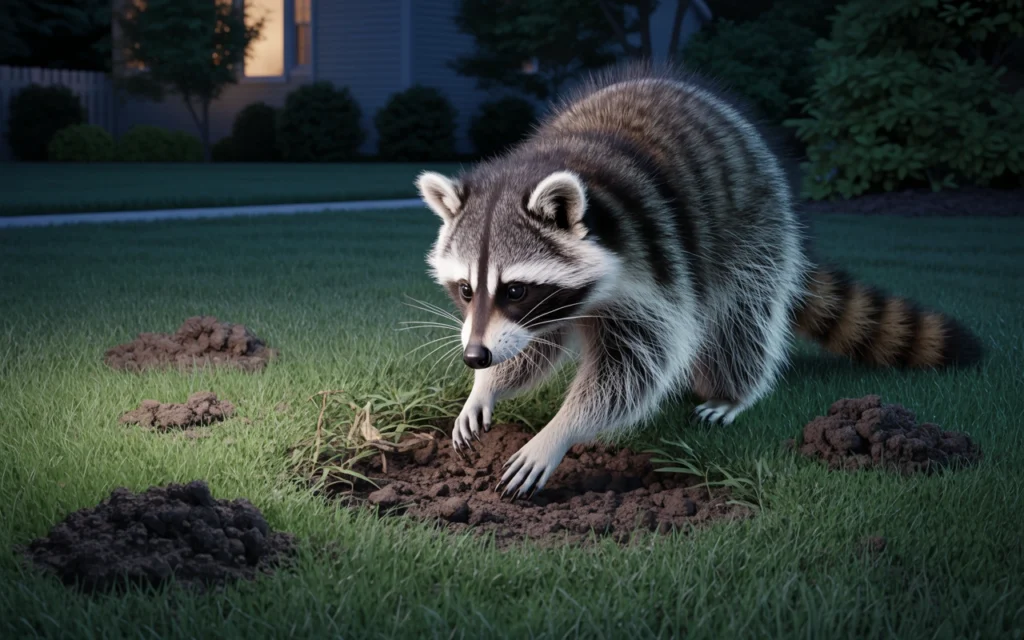
Raccoons can cause more obvious lawn damage than skunks.
Instead of making only small holes, they may pull, lift, or flip sections of turf while searching for grubs, earthworms, and other food.
If you wake up to loose pieces of grass or small sections of sod turned over, raccoons are a strong possibility. Iowa State University Extension notes that raccoon damage can look like turf has been neatly rolled or lifted from the lawn.
3. Squirrels and Chipmunks
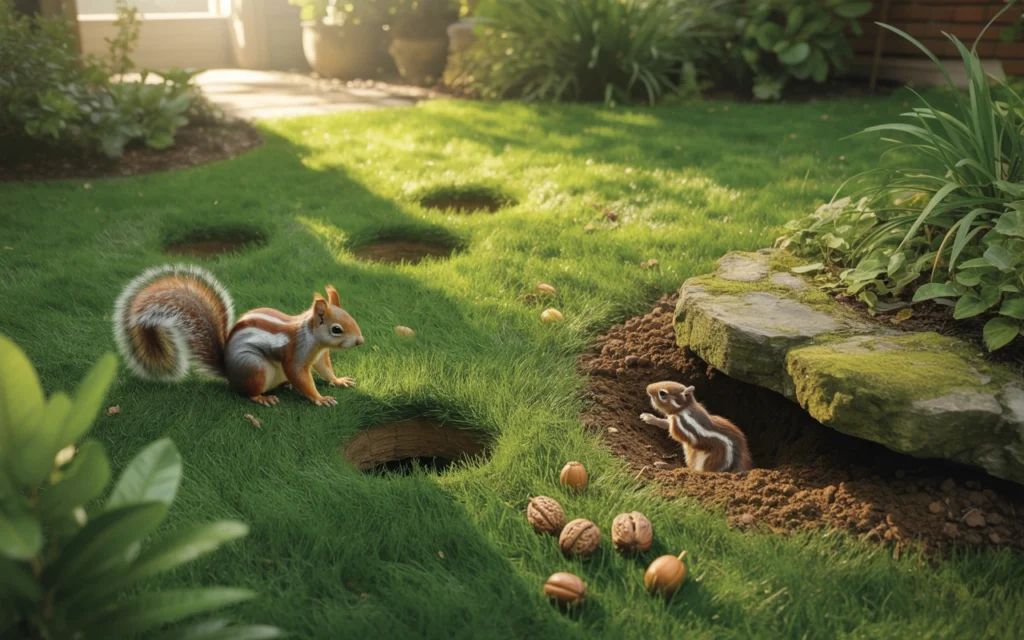
Squirrels often make small holes while burying or recovering nuts and other food.
These holes are usually smaller and neater than the damage caused by a large animal searching for grubs.
Chipmunks are more likely to create an actual burrow entrance. Their burrow entrances may be hidden near rocks, patios, wood piles, or other sheltered areas.
4. Birds Looking for Insects
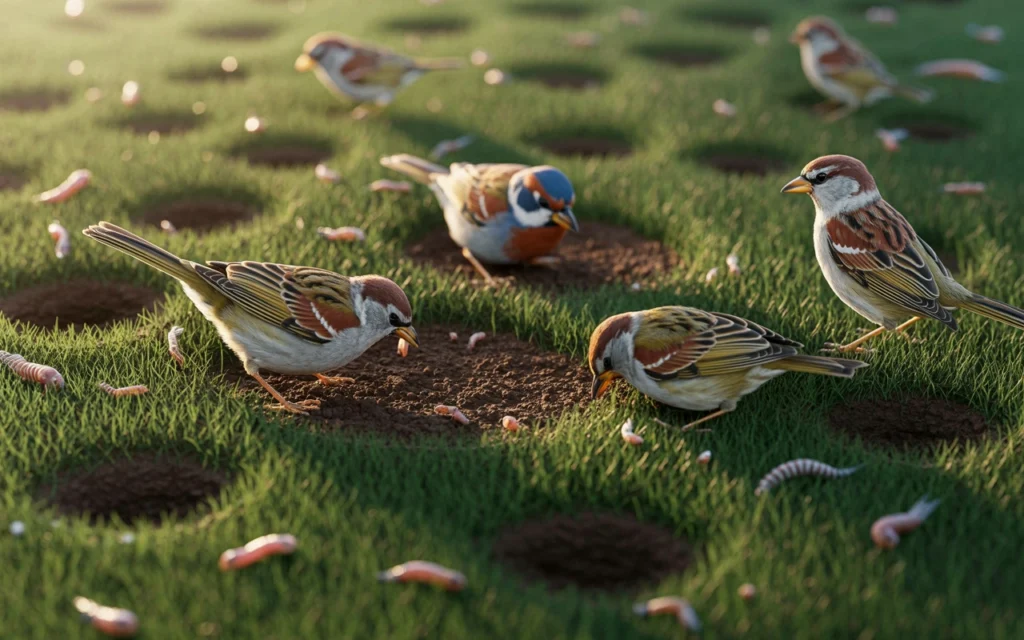
Not every hole is made by an animal that lives underground.
Birds can poke small holes into the lawn while searching for insects and other food in the soil. These holes are often small, neat, and scattered, with no dirt mound around them.
An Ask Extension expert notes that birds may create many similar holes without leaving piles of soil around the openings.
If birds are repeatedly visiting the same part of your lawn, watch what they are doing before treating the area.
5. Ground Nesting Bees and Wasps
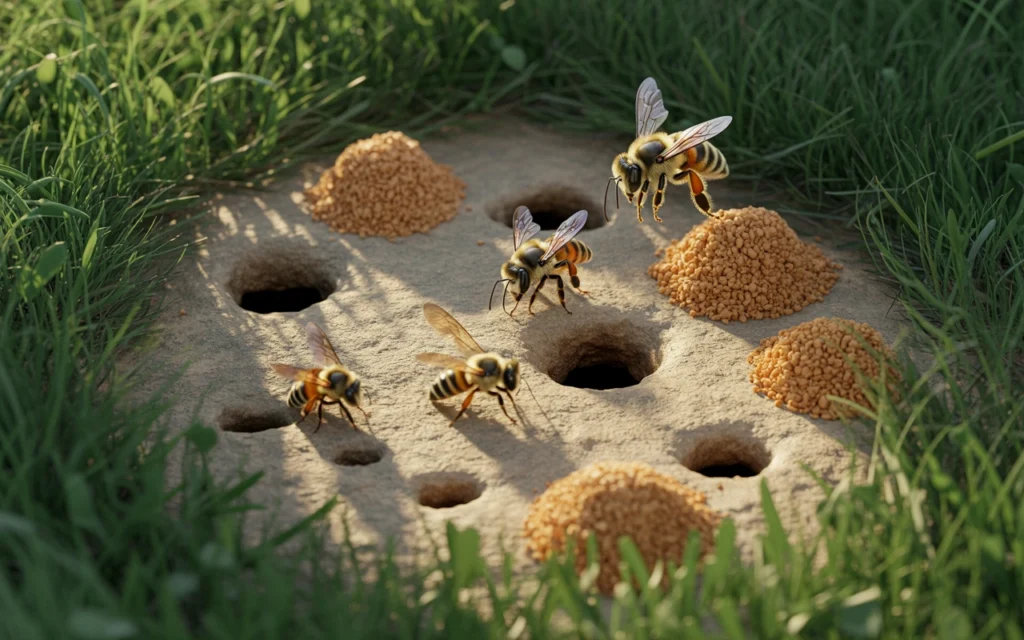
Some bees and wasps make nests underground.
Their entrances are often much smaller than animal foraging holes. You may also notice insects entering and leaving the openings during the day.
Ground nesting insects often prefer open or thin areas of soil. Some species create small soil mounds around their entrances.
Do not treat an unknown hole with an insecticide simply because you see an opening. First check whether insects are actually using it and identify the type if possible.
6. Voles and Other Small Rodents
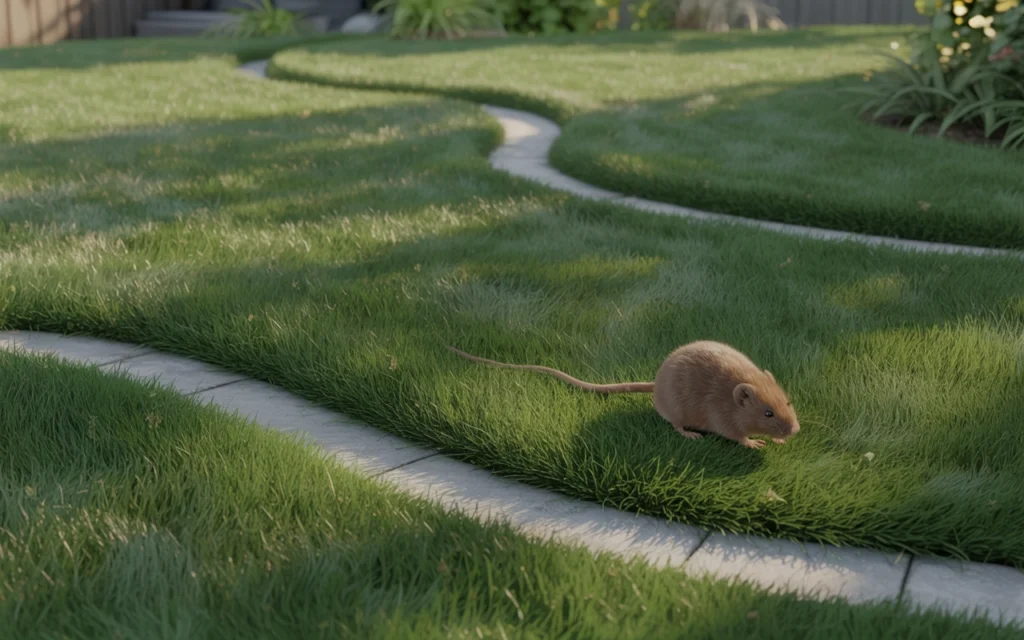
Voles can create small openings and surface runways while searching for food.
Their activity is often easier to spot when grass is thin or when seasonal conditions expose the trails. University of Minnesota Extension describes vole damage more as small surface trails than the raised tunnels associated with moles.
If you see narrow pathways or runways through the grass, small rodents such as voles are more likely than animals that dig isolated holes.
7. Moles
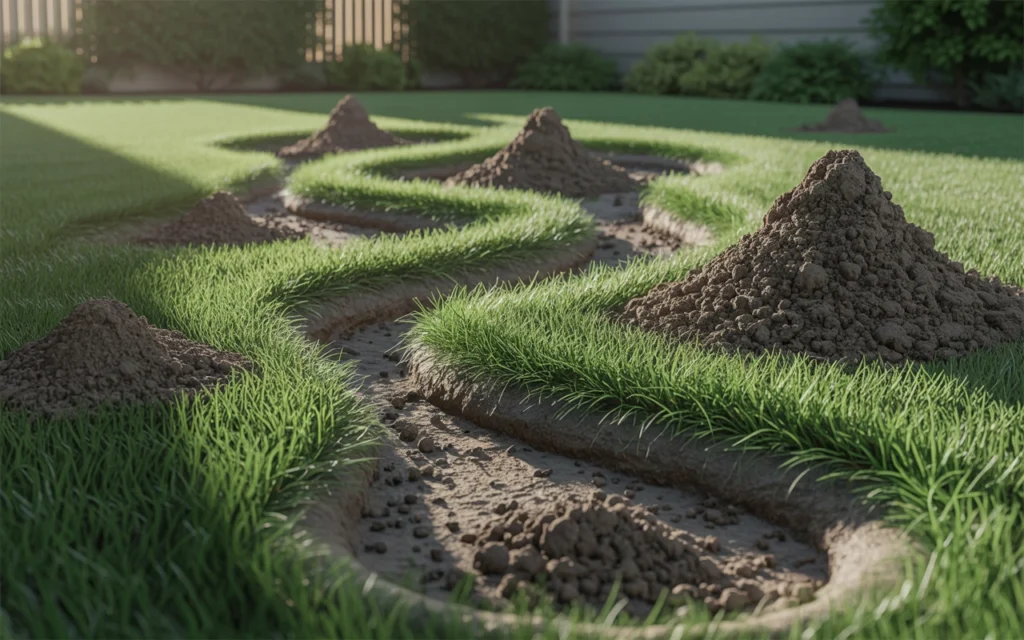
Moles are different from animals that simply poke holes into the lawn. Their biggest clue is tunneling.
Look for raised ridges, surface runs, or piles of soil. Clemson Extension explains that moles create deep tunnels and can push excess soil to the surface, producing volcano shaped molehills.
So if you only have a few shallow holes and no tunnels or ridges, moles are probably not your first suspect.
8. Insects Emerging From the Soil
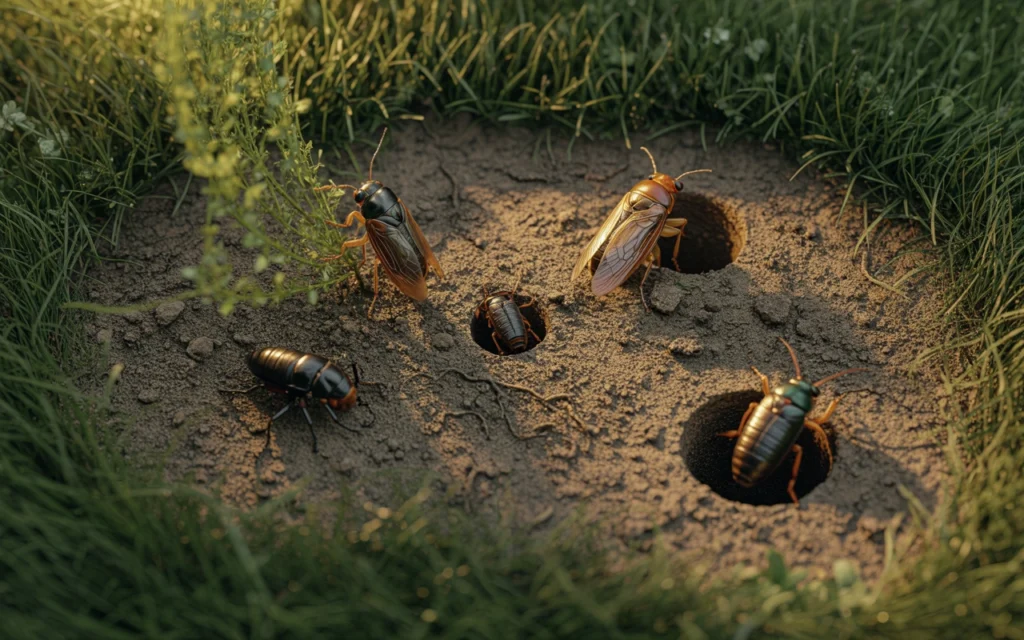
Some insects spend part of their life underground. When adults emerge, they can leave small openings in the lawn.
An Ask Extension expert notes that beetles, cicadas, and other insects can create holes as they emerge from soil.
These holes may be more common at certain times of year and are not automatically a sign that the lawn needs insect treatment.
Small Holes in Lawn With No Dirt Mounds
If you have small holes in lawn with no mounds, do not assume they are from one specific animal.
The lack of a mound can help narrow the possibilities, but you still need to look at the size and pattern.
For example:
| What You See | Likely Cause |
| Shallow, scattered divot like holes | Skunks, raccoons, or squirrels |
| Neat tiny holes with no soil around them | Birds or some insects |
| Small entrance near a structure | Chipmunk |
| Holes with surface trails | Voles |
| Raised tunnels and soil mounds | Moles |
| Tiny holes with insects going in and out | Ground nesting bees or wasps |
These are clues, not guaranteed identifications. Several animals can create similar looking holes.
Are Small Holes in the Lawn a Sign of Grubs?
Not always. Skunks and raccoons may dig while searching for grubs, earthworms, and other soil insects, but holes alone do not prove that grubs are causing the damage.
University of Maryland Extension recommends checking the actual grub population before using grub control products. Grubs can be present in one area and absent in another, so checking more than one spot gives you a better picture.
If the lawn also has grass that pulls up easily, thinning turf, or damaged roots, then checking the soil for grubs makes more sense.
Do not treat the lawn based on holes alone.
How to Stop Animals From Digging Holes in Your Lawn
Once you have a good idea of the cause, focus on the reason the animal is visiting.
Remove Easy Food Sources
Keep pet food indoors and secure outdoor garbage. These simple steps can reduce reasons for wildlife to visit the yard.
If grubs are suspected, check the soil first rather than automatically applying a grub treatment.
Reduce Wildlife Shelter
Keep brush, debris, and dense hiding areas away from places where you want to discourage wildlife.
Trim vegetation where appropriate and keep the lawn maintained so animal activity is easier to spot.
Use Physical Barriers When Needed
For repeated activity around a specific area, exclusion can be more useful than repeatedly filling holes.
University of Maryland Extension lists habitat changes, fencing, and other exclusion methods among options for persistent animal problems. Some wildlife species also have trapping rules, so check local regulations before taking that step.
How to Repair Small Holes in Your Lawn
Do not repair the holes until you are reasonably sure the activity has stopped.
For shallow holes:
- Gently level the disturbed soil.
- Add a small amount of suitable topsoil if needed.
- Press the soil level with the surrounding lawn.
- Reseed areas where grass was damaged.
- Keep the seed evenly moist while it establishes.
If the lawn is being dug up again every night, filling the holes will only create more work.
And if repeated digging has left the lawn thin, bare, or wet, first find the underlying cause. If water is also collecting in the damaged area, you may need to address common yard drainage problems and standing water before repairing the turf.
Common Mistakes to Avoid
Filling the Holes Before Finding the Cause
A filled hole does not stop an animal from returning. Identify the pattern first.
Assuming Every Hole Means Grubs
Animal digging can be related to food, but holes alone do not prove a grub infestation.
Using Pesticides Without Identifying the Problem
A pesticide will not solve a wildlife problem, and treating beneficial or harmless insects can create a new problem.
Treating Every Hole Like a Burrow
Some holes are simply feeding marks or insect entrances. Look for tunnels before assuming an animal is living underground.
When Should You Be Concerned About Lawn Holes?
A few scattered holes may not need immediate action, but repeated or spreading damage is worth investigating.
Pay closer attention when:
- The number of holes keeps increasing.
- Large sections of turf are being torn up.
- You see spreading tunnels or runways.
- Grass is dying around the damaged areas.
- An animal is digging close to your home.
- You find an active nest or burrow.
- The damage continues even after you remove obvious food sources.
If you cannot identify the cause, your local Cooperative Extension office can often help identify lawn pests, insects, or wildlife damage.
Conclusion
Small holes in lawn overnight are easier to deal with once you know what is causing them. Before using a treatment or repairing the grass, look at the hole pattern and check for other signs such as tunnels, loose soil, tracks, or damaged turf.
Skunks, raccoons, squirrels, birds, insects, and small rodents can all leave different clues. Identifying those clues first can help you avoid unnecessary treatments and choose the right solution for your lawn.
Once the activity has stopped, repair any damaged areas and keep an eye on the lawn for new holes.
Frequently Asked Questions
What animal digs small holes in lawns overnight?
Skunks and raccoons are common causes of overnight lawn digging, especially when they are searching for grubs, earthworms, or other insects. Squirrels and other wildlife can also create smaller holes. The shape and pattern of the holes are important clues.
Why are there small holes in my lawn but no dirt mounds?
Small holes without dirt mounds can come from birds searching for insects, squirrels, skunks, or some other animals. Ground nesting insects can also create small openings. Look at the hole size, depth, and surrounding grass before deciding on a cause.
What causes small round holes in a lawn?
Small round holes can be caused by wildlife searching for food, insects emerging from the soil, or ground nesting insects. Shallow scattered holes often point toward animals such as skunks, raccoons, or squirrels, while tiny clean holes may be linked with insects or birds.
Should I fill small holes in my lawn?
Yes, but only after the activity has stopped. Level shallow holes, add a little soil if needed, and reseed damaged grass. If new holes keep appearing, identify and address the cause first.
How do I stop animals from digging holes in my lawn?
Start by removing easy food sources and reducing places where wildlife can hide. If you suspect grubs, confirm that they are present in meaningful numbers before treating the lawn. Persistent wildlife problems may require exclusion or help from a qualified wildlife professional.
Can grubs cause small holes in a lawn?
Grubs do not usually create visible holes by themselves. However, animals such as skunks and raccoons may dig holes while searching for grubs and other insects in the soil. Check the soil before using a grub treatment.