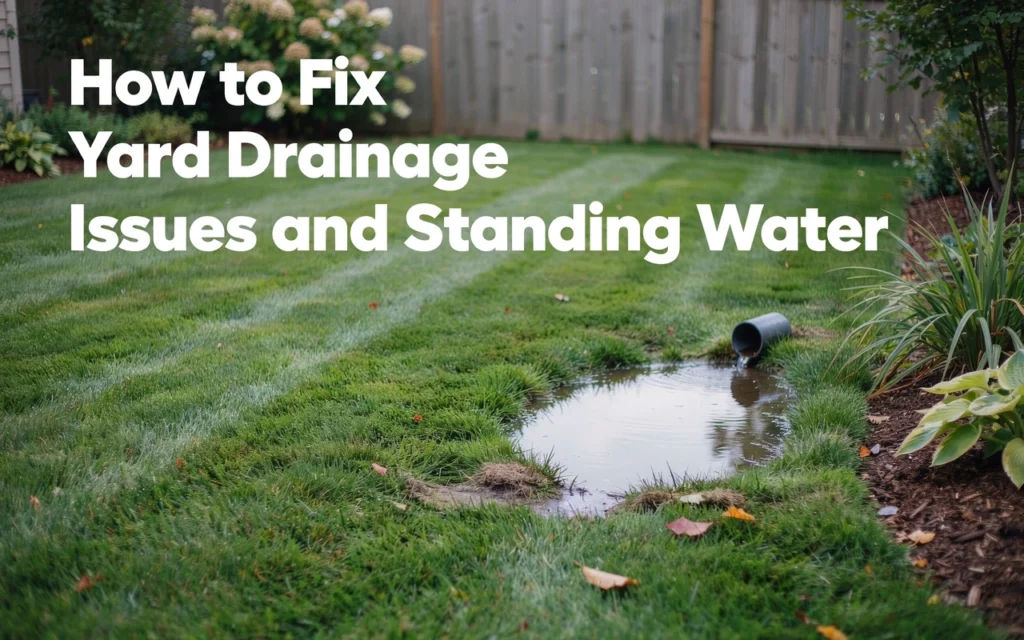
Standing water in your yard is more than an ugly puddle. It can leave grass thin, create muddy areas, wash away soil, and make parts of the lawn hard to use.
The right fix depends on why the water is collecting. A puddle below a downspout needs a different solution from a low spot in the lawn or water flowing downhill toward your house.
If you want to know how to fix yard drainage issues, start by watching where the water comes from during or just after rain. In many cases, the solution is simple: extend a downspout, correct a small low spot, or loosen compacted soil. Larger problems may need grading or a drainage system.
At Lawn Savy, we share practical lawn and garden care tips to help you solve common yard problems and keep your outdoor space healthy.
Find Out Why Water Is Standing in Your Yard
Do not start by digging a French drain. First, find the cause.
Walk around the yard after a normal rain and look at where water starts, where it moves, and where it stops.
Common causes include:
- A low spot in the lawn
- Compacted soil that feels hard and pressed down
- Heavy clay soil
- Poor grading
- Roof water from downspouts
- Runoff from patios or driveways
- Water coming from higher ground
- Too much irrigation
- A blocked or poorly placed drain
More than one problem can happen at the same time. Oklahoma State University Extension notes that landscape drainage problems may involve soil, grading, slope, runoff, vegetation, and saturated ground. Their guide to yard drainage problems is a useful reference when the cause is not obvious.
A small puddle after a very heavy storm does not always mean you need a drainage system. The problem is more concerning when water collects after lighter rain or remains for a long time. UC Agriculture and Natural Resources describes standing water after light to moderate rain, or water that remains for more than a day, as a sign of a more serious drainage issue.
Match the Problem to the First Fix
| What You Notice | Possible Cause | Start With |
| Water below a downspout | Roof runoff | Extend the downspout |
| One shallow puddle | Low spot | Correct the low area |
| Hard soil and slow drainage | Compaction | Core aeration |
| Water runs toward the house | Poor grade | Regrading |
| Water moves across the lawn | Surface runoff | Swale or dry creek |
| Water collects in one fixed spot | Concentrated runoff | Catch basin |
| Ground stays wet in a larger area | Poor drainage below soil | French drain or professional check |
| A low area gets wet only after storms | Natural runoff collection | Rain garden or dry well |
This table gives you a starting point. The exact solution still depends on your soil, slope, and where the water can safely go.
How to Fix Yard Drainage Issues
Start with the easiest and least expensive fix that matches the problem. A large drainage project should not be your first choice if moving a downspout solves the issue.
Before You Dig, Check Utilities and Local Rules
Some drainage fixes require digging for pipes, basins, or changes to the yard. Before putting a shovel in the ground, use the 811 before-you-dig service to have buried utility lines marked. Also check local rules before changing where stormwater leaves your property.
You should also know where the water will go before you dig. A drain that collects water without a safe outlet can create another wet area instead of solving the problem.
1. Clean and Extend Downspouts
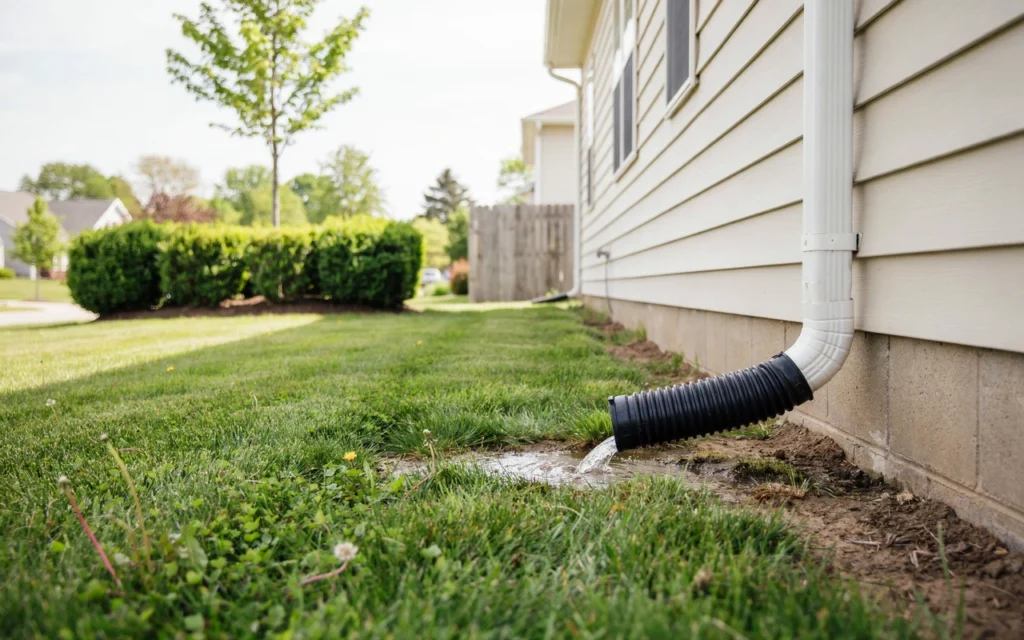
If the wet area is close to the house, check the gutters and downspouts first.
A downspout can send a large amount of roof water into one small area. If that water empties beside the foundation or into a low lawn, puddles can form quickly.
Make sure gutters are clear and water can move freely through the downspout. Then direct the outlet farther away to a safe area where water can spread out or drain.
Do not simply move the problem to another part of the yard or toward a neighbor’s property.
For many homes, this is one of the cheapest drainage fixes to try before digging trenches or changing the lawn.
2. Correct Small Low Spots
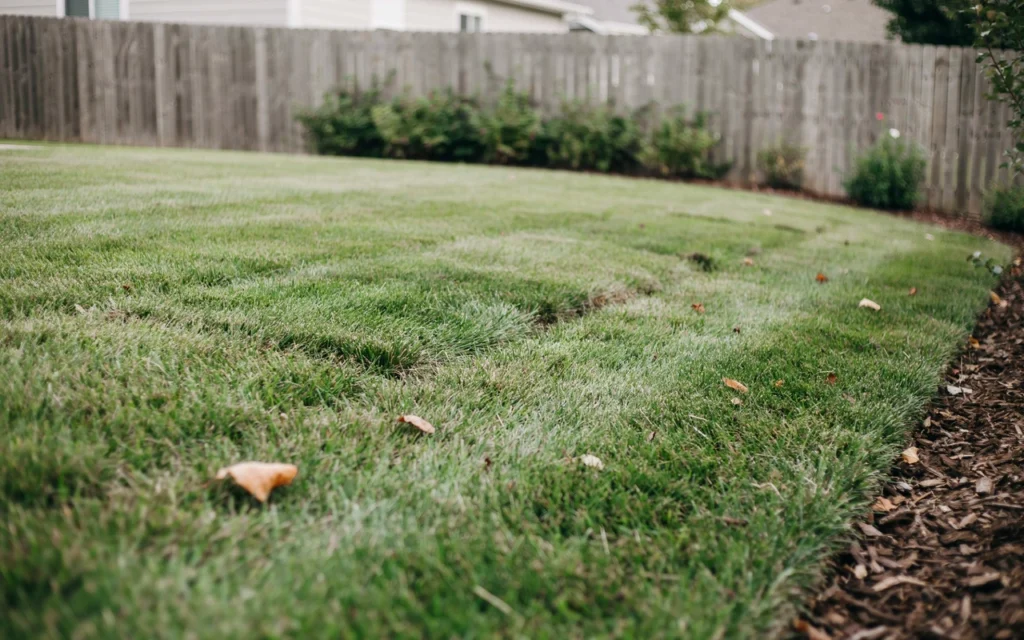
A shallow depression can collect water even when the rest of the lawn drains well. If the low area is small, you may be able to raise it gradually with suitable soil and restore the grass afterward.
The goal is to remove the bowl shape so water can move away instead of sitting in one place. Be careful around mature trees. Do not bury large roots under a deep layer of soil just to raise the grade.
Also look beyond the puddle itself. If water keeps rushing into the same low spot from a roof, driveway, or higher yard, filling the depression alone may only move the puddle somewhere else.
Once a low spot is corrected and the soil begins to dry properly, check the affected area for unwanted growth. Thin or stressed lawn areas often give weeds more room to establish. If you notice plants that look almost like your turf, grass-like weeds that blend into the lawn can be difficult to identify without a closer look.
3. Aerate Compacted Lawn Soil
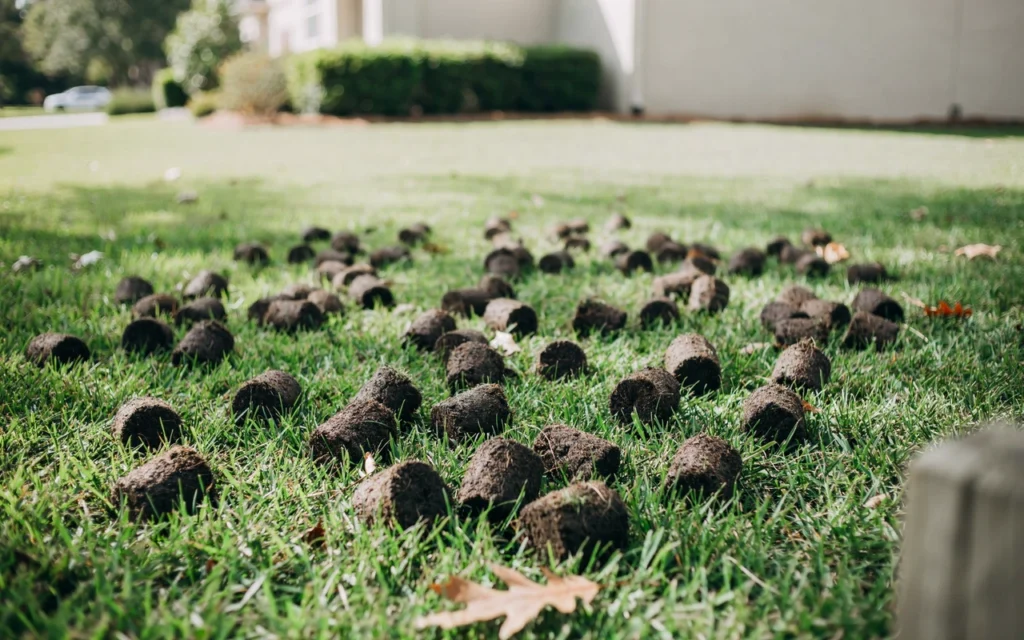
If the lawn feels hard underfoot and water is slow to soak in across a broad area, soil compaction may be part of the problem.
Core aeration removes small plugs of soil from the lawn. This creates openings for air and water and can improve conditions in compacted turf.
Aeration is most useful when compaction is actually the cause. It will not fix a yard that slopes toward the house, a broken drainpipe, or a low area that receives more water than the soil can handle.
If the drainage problem has been addressed but the lawn still looks pale or yellow, do not assume excess water is the only cause. Yellowing grass can have several causes, including watering problems, soil conditions, nutrient issues, and other types of lawn stress.
4. Fix the Yard Slope When Water Flows the Wrong Way
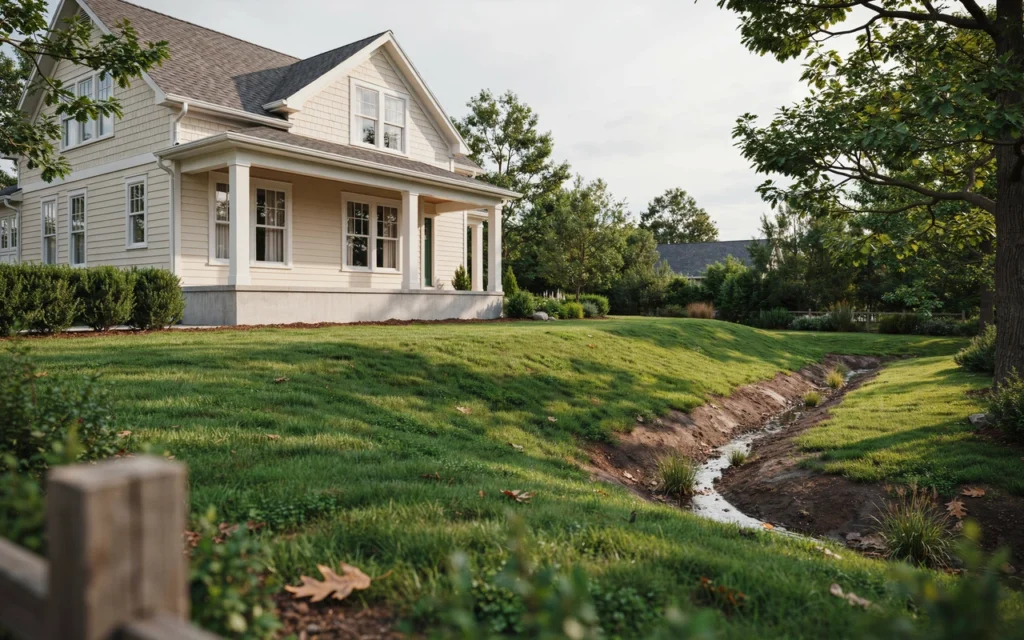
Sometimes the soil is not the main problem. The shape of the yard is sending water to the wrong place.
The yard should slope so surface water moves toward a safe drainage area instead of collecting beside the house or in the lawn.
Small grade corrections may be manageable around a simple lawn depression.
Reshaping a large part of the yard is a bigger project. It can change where large amounts of water travel and may affect foundations, neighboring properties, buried utilities, or local drainage rules.
If you see water regularly moving toward your foundation, treat that as more important than fixing a soggy patch of grass.
5. Install a French Drain for Water Below the Surface
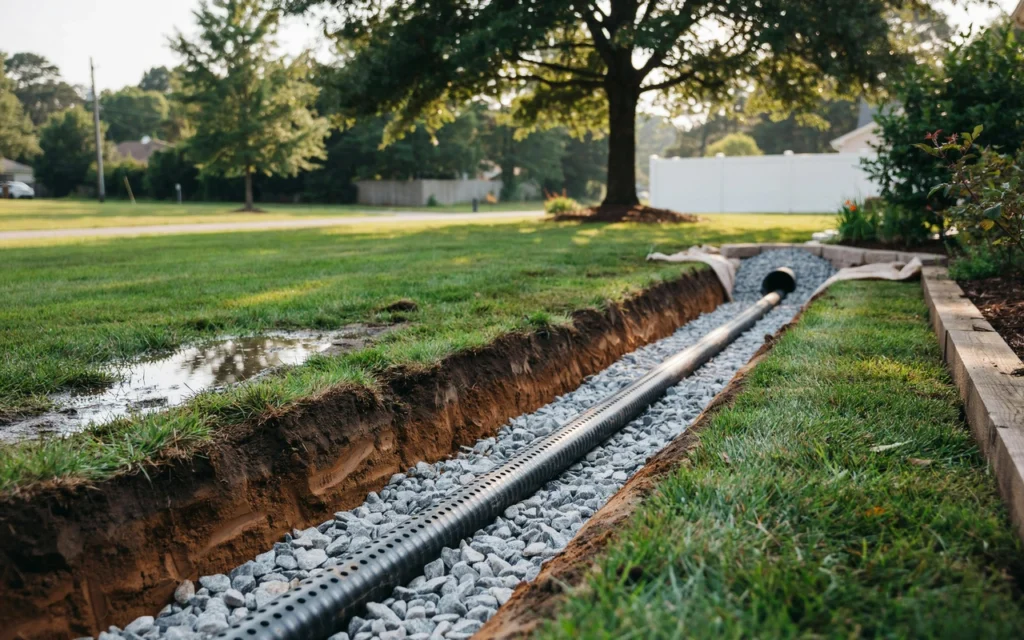
A French drain can help in some yards where the soil stays soaked or water repeatedly moves through the ground.
It normally uses a drainpipe with small holes, surrounded by gravel. Water enters the gravel and pipe, then moves toward a suitable outlet. Oklahoma State Extension describes French drains as buried perforated pipes that collect excess water and carry it toward a discharge point.
The important part is the outlet.
A pipe that collects water but has nowhere suitable to release it will not solve the drainage problem.
French drains also require digging, the correct slope, proper materials, and a safe route. Have underground utilities marked before you dig.
For a small wet area, a French drain may be useful. For a complicated yard with no clear outlet, get professional advice before digging a long trench.
6. Add a Catch Basin for a Fixed Low Point
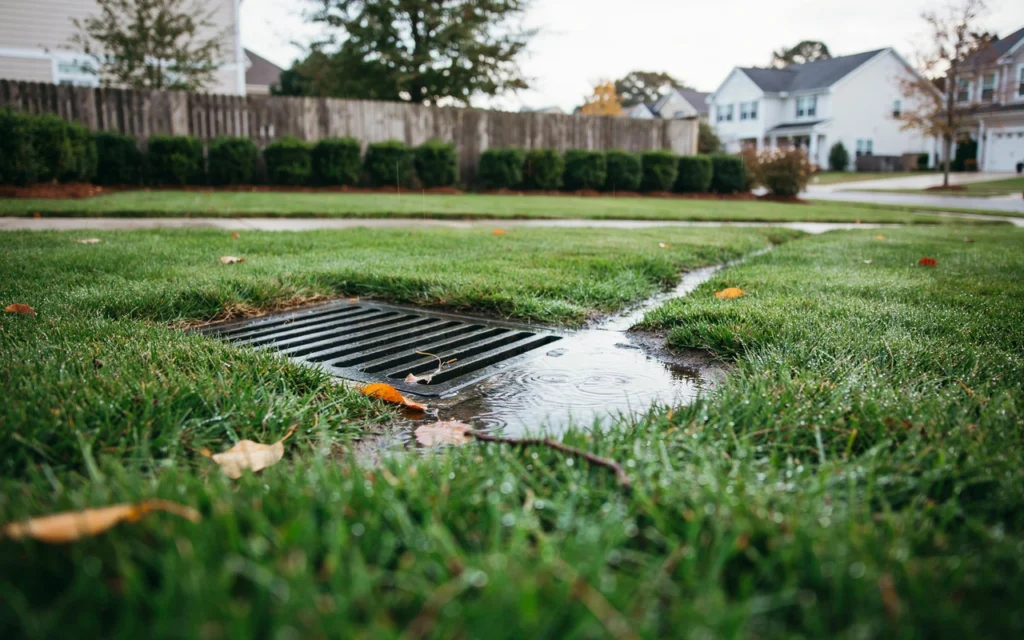
A catch basin is useful when surface water repeatedly collects in one clear spot.
The basin sits below ground with a grate at the surface. Water enters through the grate and travels through underground drainage pipe to an approved outlet.
This works differently from aeration.
Aeration tries to help water soak into compacted soil. A catch basin is designed to collect surface water and move it away.
It may work well in a low lawn area or where runoff from a hard surface collects, as long as the basin can drain to a safe outlet.
Keep the grate clear of leaves, grass clippings, and other debris so water can enter freely.
7. Guide Runoff With a Swale or Dry Creek Bed
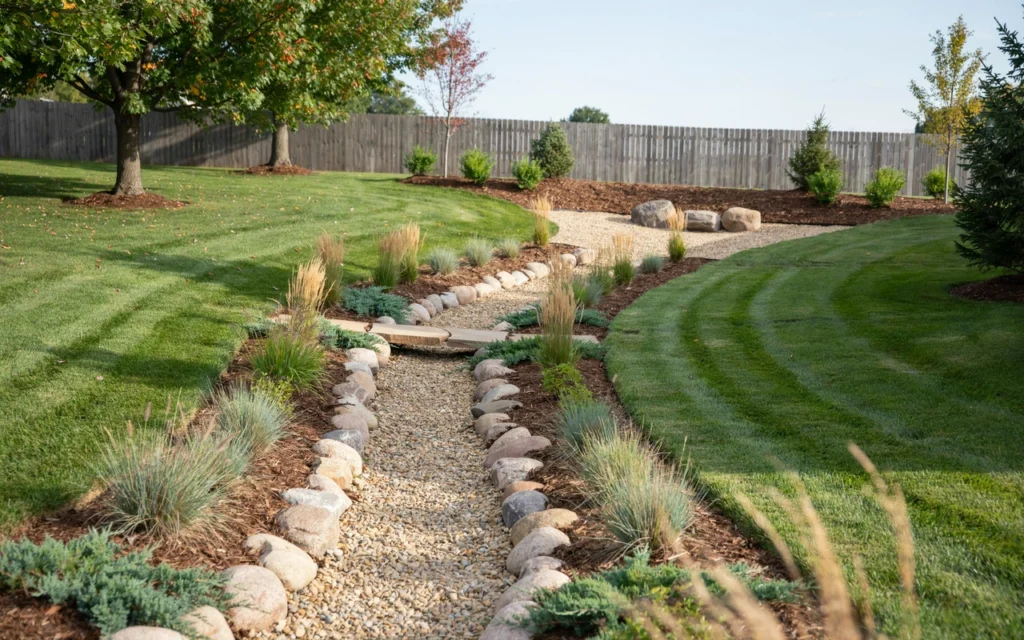
Not every drainage problem needs an underground pipe.
If water naturally flows across the yard during storms, a shallow swale can help guide it along a planned route.
A swale is a wide, shallow channel shaped into the landscape. It can be covered with grass or plants.
A dry creek bed uses stone to create a similar route while also becoming part of the landscape design.
Both options work best when there is a safe place for the water to go.
The goal is to slow and guide runoff, not send it quickly toward another property or structure.
8. Use a Rain Garden or Dry Well When Water Can Soak In Safely
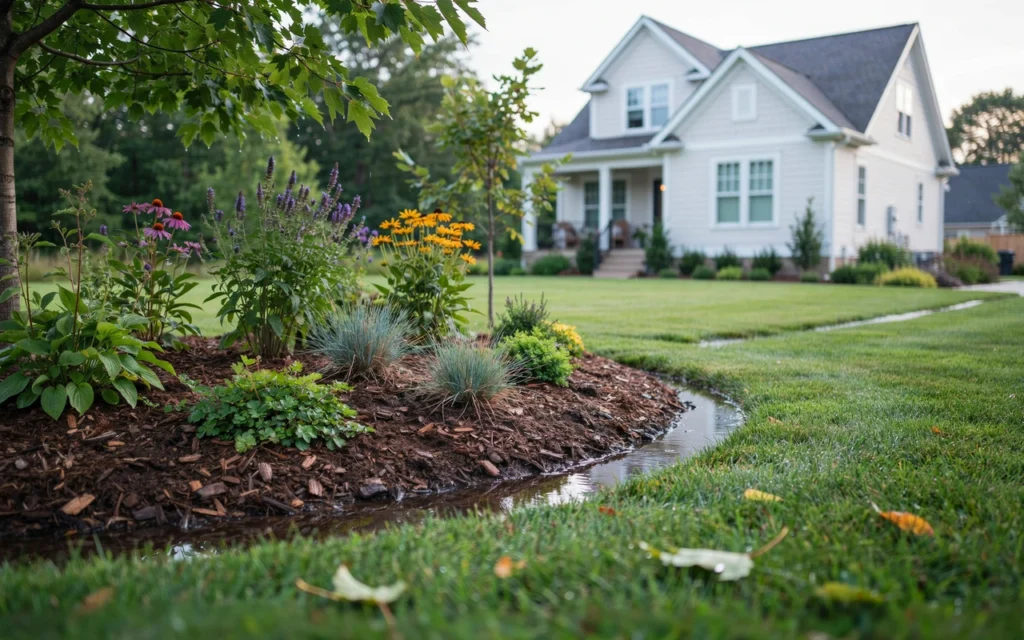
Sometimes water does not need to be carried far away. It can be collected and allowed to soak into the ground in a suitable part of the yard.
A rain garden is a shallow planted area that temporarily holds runoff and lets it soak into the soil. It should be placed where it can catch runoff before the water reaches an existing problem area, not simply in the wettest part of the yard.
The soil must also drain well enough for the water to soak in between storms. A site that stays wet for long periods may not be suitable for a rain garden.
A high water table, soil that drains very slowly, or a large amount of runoff can make rain gardens and dry wells poor choices.
The UC ANR guide to correcting yard drainage problems includes grading, French drains, dry wells, and rain gardens among possible solutions for more serious drainage problems.
Neither option is right for every property. A high water table, very slow-draining soil, or large amounts of runoff can limit how well infiltration-based solutions work.
When a Yard Drainage Problem Needs Professional Help
Small drainage problems may have simple fixes, but water near a foundation, septic system, buried pipe, or large unstable area deserves extra care.
Consider professional help if:
- Water regularly collects against the foundation
- Water is entering a basement or crawl space
- A large part of the property needs regrading
- You cannot find a safe place for drainage water to go
- Standing water appears even without recent rain
- Soil stays saturated for long periods
- You suspect a broken underground water or sewer line
- A septic area stays unusually wet
- Severe erosion is removing soil
- The project needs major trenching or underground drainage
Persistent wet soil can have causes that are not visible from the surface. High groundwater, compacted layers below the soil, grading, and subsurface water movement can all contribute to serious drainage problems.
Also check local rules before changing where stormwater flows. A solution should protect your property without creating a new drainage problem somewhere else.
Conclusion
The best way to fix poor yard drainage is to find the source of the water before choosing a solution.
Start simple. Extend a downspout if roof runoff is the problem. Correct a small low spot if water has nowhere to leave. Aerate if compacted soil is keeping water from soaking into the ground. , a French drain, catch basin, swale, rain garden, or dry well only when that solution matches the way water is moving through your yard.
You do not need the biggest drainage system. You need the right fix for the problem you actually have.
Frequently Asked Questions
How Do I Get Rid of Standing Water in My Yard?
First find out why the water is collecting. Check downspouts, low spots, compacted soil, and the direction the yard slopes.
Small problems may be fixed by extending a downspout, correcting a low spot, or aerating compacted soil. Repeated pooling may need grading or a drainage system.
Does Aerating a Lawn Help With Drainage?
Aeration can help when compacted soil is preventing water from soaking into the lawn.
It will not solve every drainage problem. If water is collecting because of poor grading, a low spot, roof runoff, or groundwater, you need to fix that cause instead.
What Is the Cheapest Way to Improve Yard Drainage?
Start with simple fixes such as cleaning gutters, extending downspouts, reducing excess irrigation, aerating compacted lawn soil, or correcting a small low spot.
Do not install an expensive underground drain until you know that a cheaper solution will not fix the cause.
How Do You Drain a Flat Yard With No Slope?
A flat yard needs either a safe place for water to soak into the soil or an outlet that the water can reach. Depending on the site, a rain garden, dry well, catch basin, or drainage pipe may help. If there is no safe outlet and the soil drains poorly, get a drainage assessment before installing an underground system.
When Does a Yard Need a French Drain?
A French drain can make sense when excess water repeatedly moves through or collects in saturated soil and there is a suitable place to discharge it.
It is not the first fix for every puddle. Check downspouts, grading, low spots, and soil compaction before deciding that an underground drain is necessary.