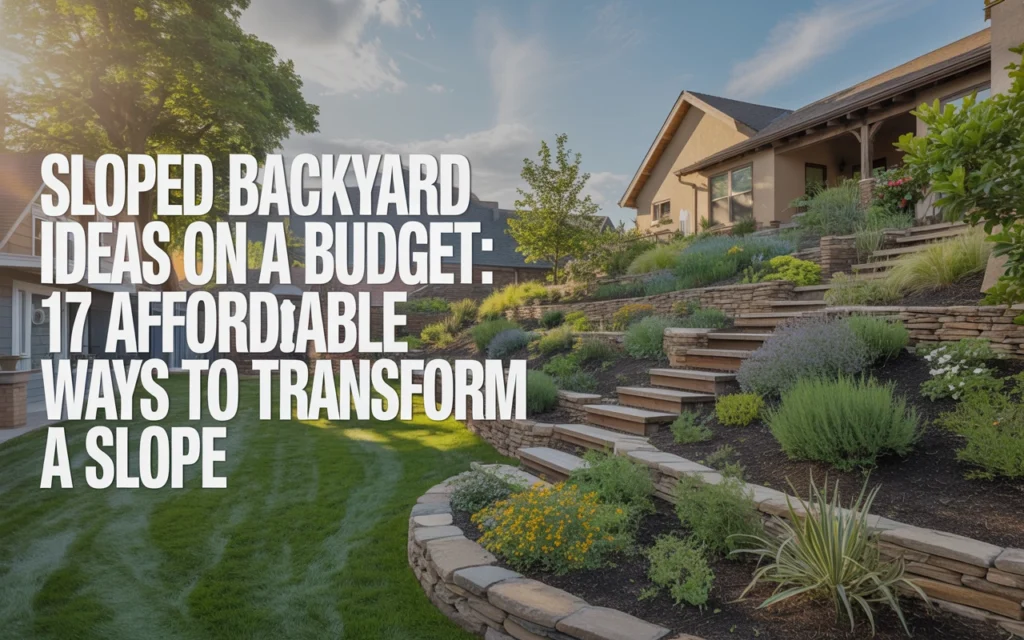
A sloped backyard can be hard to mow, walk across, or use for everyday outdoor living. You do not always need expensive grading or a large retaining wall. Many sloped backyard ideas on a budget work with the land you already have instead of trying to flatten it.
Groundcovers, native plants, mulch, simple paths, small terraces, and rock gardens can all make a slope easier to manage. Before spending money, first check how steep the yard is, where rainwater flows, and whether any soil is already washing away.
Quick Picks for a Sloped Backyard
- Cheapest starting point: Seed or small starter plants
- Best for a gentle slope: Mulch and layered planting
- Best for low maintenance: Native grasses, shrubs, and perennials
- Best for erosion: Deep-rooted plants with temporary erosion protection
- Best without a retaining wall: Groundcovers, shrubs, rocks, and natural planting
- Best for easier access: A switchback path
- Best for usable space: Small terraced beds
- Best for a steep slope: Stabilize soil and drainage before adding decorative features
Check Your Slope Before You Spend Money
Start with the yard you have. A solution that works on a gentle hill may not be a good choice for a steep slope.
If the slope is safe to walk on, notice how easy it is to stand, mow, and move around. Avoid walking on loose, badly eroded, or slippery soil. A gentle slope gives you more freedom with mulch, planting, paths, and seating. A steeper slope needs more attention to soil stability, drainage, and safe access.
Next, look at the yard after rain. Small channels in the soil, exposed roots, washed-out mulch, bare patches, or soil collecting at the bottom can all point to erosion or drainage problems.
Also think about what you actually want from the area. You may only need to stop mowing it. Or you may want better access, more flowers, less maintenance, or one small place to sit.
Working with the existing slope is often cheaper than trying to make the whole yard flat. Put your first dollars toward drainage, erosion, and safe access. Decorative changes can come later. At Lawn Savy, we focus on practical lawn and garden care ideas that help you make smart choices for the space you already have.
17 Sloped Backyard Ideas on a Budget
Cost levels below are only a rough guide. Material prices, yard size, and labor costs can vary a lot by location.
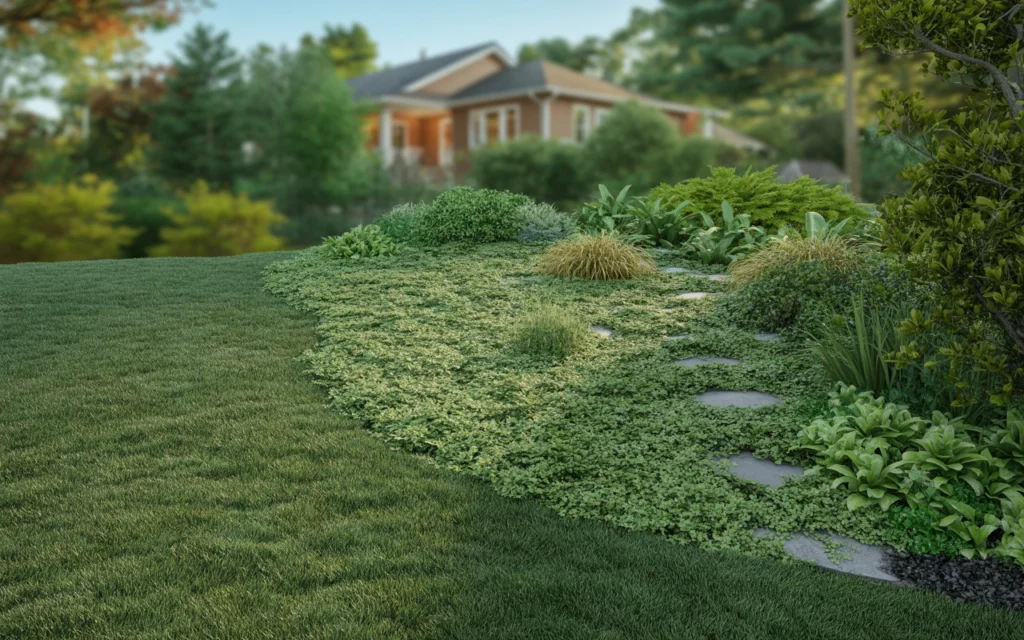
1. Replace Hard-to-Mow Grass With Groundcovers
Best for: Bare or difficult-to-mow slopes
DIY level: Easy to moderate
Maintenance: Low once established
Grass is not always the best plant for a hill. It can dry out, thin out, or become difficult to mow safely.
Groundcovers spread across the soil and can reduce how much lawn you need to maintain. Look for plants that match your sunlight, soil moisture, and climate.
Small starter plants usually cost less than mature ones. You can also plant one section first and allow it to fill in before expanding the bed.
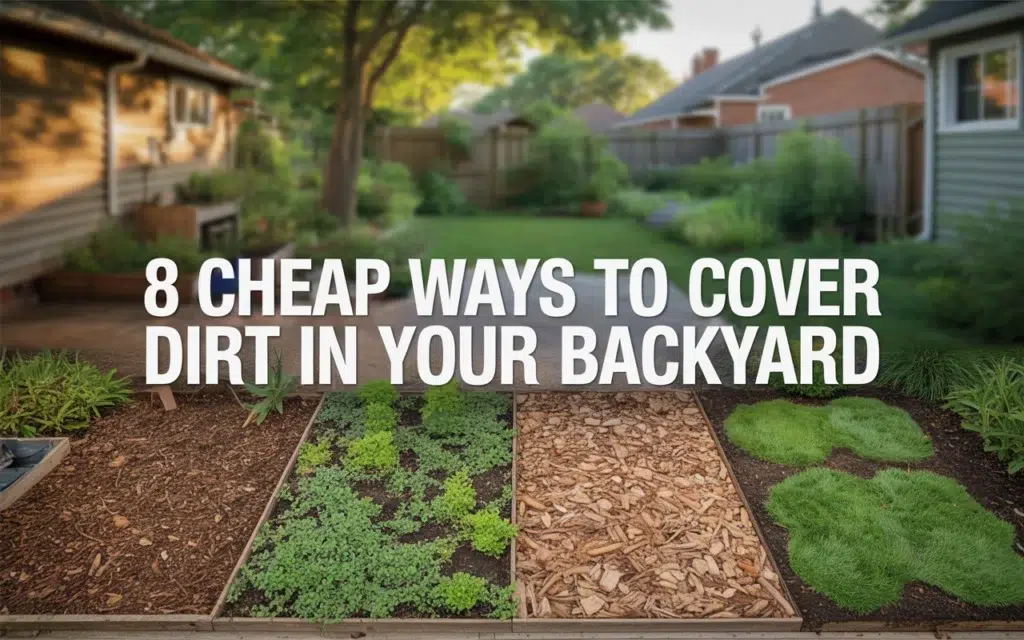
If you are starting with a completely bare area, you do not have to cover the entire slope with plants right away. Budget-friendly ways to cover bare soil include mulch, wood chips, grass seed, gravel, and other simple materials that can protect exposed ground while you build out the landscape over time.
Avoid choosing a plant only because it spreads quickly. Some fast-growing groundcovers can become difficult to control or invasive in certain areas.
2. Plant Native Grasses, Shrubs, and Perennials
Best for: Low-maintenance slopes
DIY level: Easy
Maintenance: Low to moderate
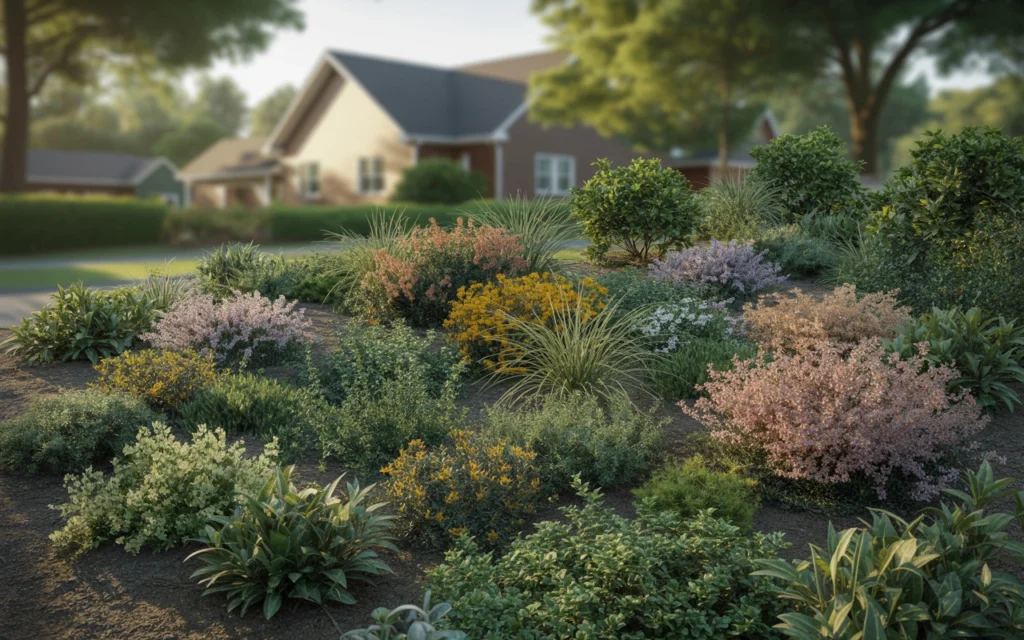
A mix of plants can make a slope look full without needing a formal landscape design.
Try combining low plants near the front with taller grasses, perennials, and a few small shrubs. Different root systems can also help keep soil covered.
Native plants from your region are worth considering because they are adapted to local growing conditions.
You do not need to fill the whole hillside in one day. Start with the bare or troublesome areas and add more plants as your budget allows.
3. Mulch a Gentle Slope
Best for: Gentle slopes and planting beds
DIY level: Easy
Maintenance: Moderate
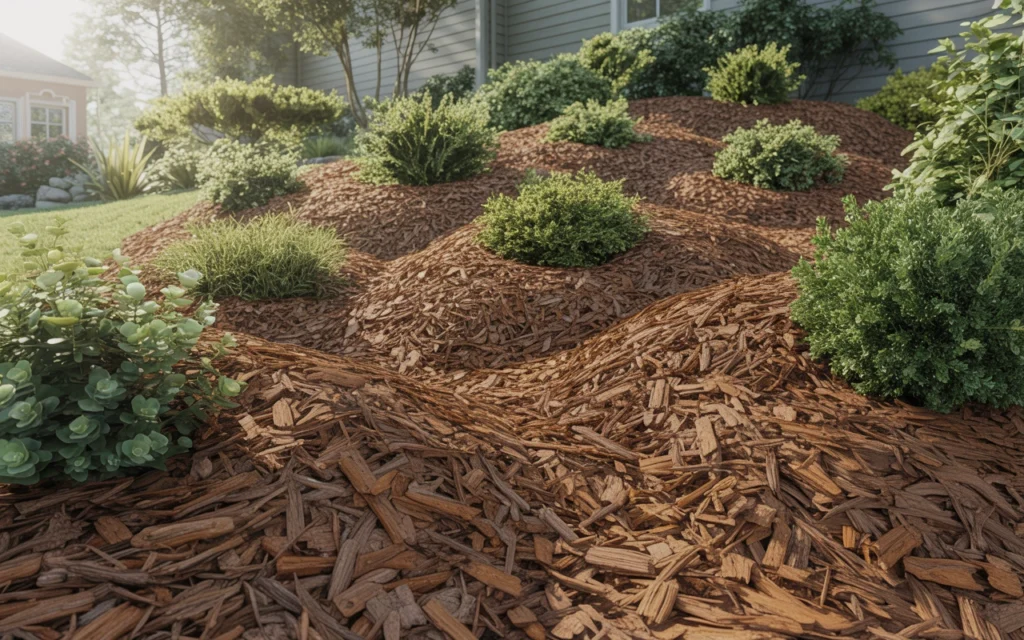
Mulch can quickly make a bare slope look cleaner while helping cover exposed soil.
It can also reduce weeds and slow moisture loss around plants.
Shredded wood mulch usually stays together better than large, lightweight pieces. Apply it around plants rather than piling it against stems or tree trunks.
Mulch is less reliable on very steep slopes. Heavy rain can move it downhill, so use plants or another erosion-control method where runoff is strong.
4. Turn the Slope Into a Rock Garden
Best for: Sunny, dry, or hard-to-mow areas
DIY level: Moderate
Maintenance: Low
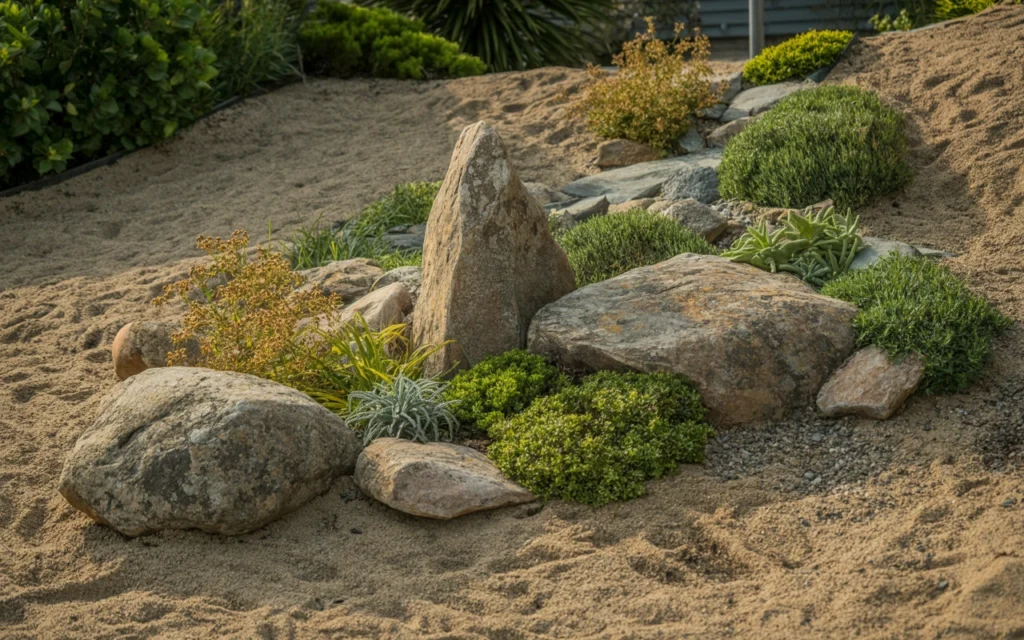
A rock garden can make an awkward hillside look intentional.
Start with a few larger stones rather than covering the entire area with small rocks. Then add plants around and between them.
Using stone already on your property can keep costs down. Local stone may also be less expensive than decorative material brought in from far away.
Choose plants that fit the site. A sunny, dry slope needs very different plants from a cool, shaded hill.
5. Create a Wildflower or Pollinator Slope
Best for: Sunny slopes and larger areas
DIY level: Easy to moderate
Maintenance: Low to moderate after establishment
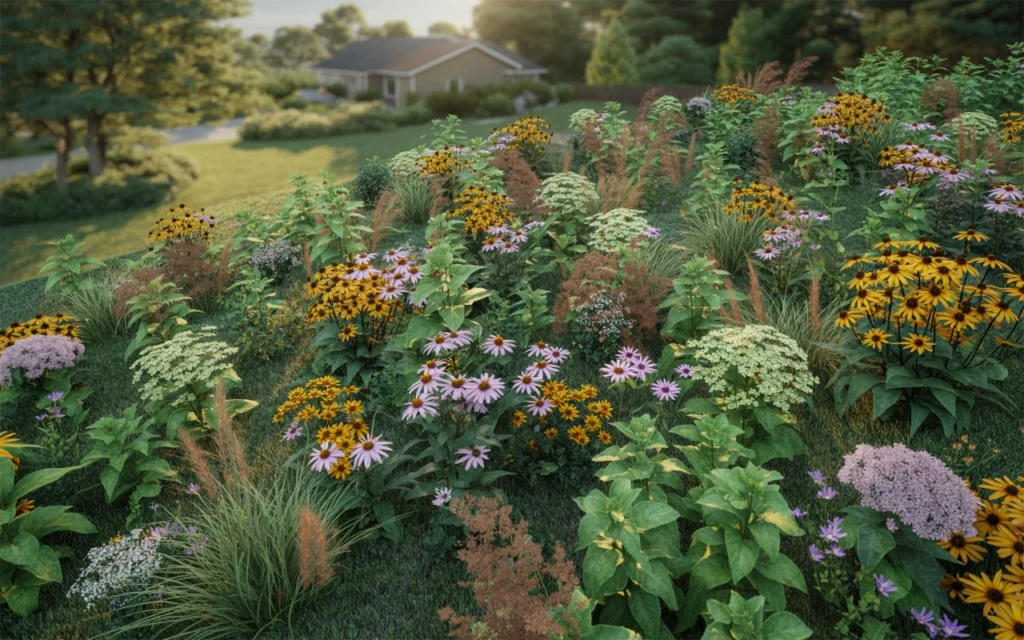
A wildflower area can replace part of a lawn that is difficult to mow.
Use a seed mix suited to your region and light conditions. Native flowering plants are often a better long-term choice than a generic mix made for many climates.
Do not simply throw seed over thick grass and expect it to fill in. Existing turf and weeds may need to be removed or weakened first.
The area may look less formal during the first growing season, but it can become fuller as the plants establish.
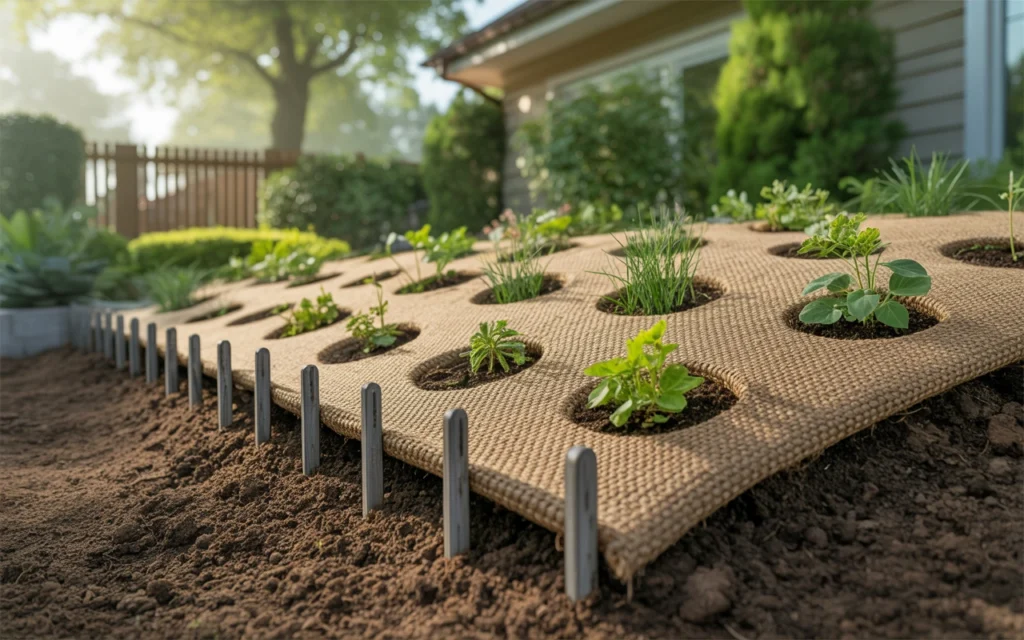
6. Use an Erosion-Control Blanket While Plants Grow
Best for: Newly planted or seeded slopes
DIY level: Moderate
Maintenance: Low
Young plants need time to develop roots. During that period, bare soil can still wash away. A biodegradable erosion-control blanket made from materials such as jute or coir can help protect the soil while plants establish.
The blanket should be secured properly so water does not simply run underneath it. Think of it as temporary help, not the finished landscape. Plants, roots, and healthy soil should provide the long-term cover.
Keeping the soil covered is also important after the temporary blanket is gone. The USDA Natural Resources Conservation Service explains that year-round soil cover helps protect soil from wind and water erosion.
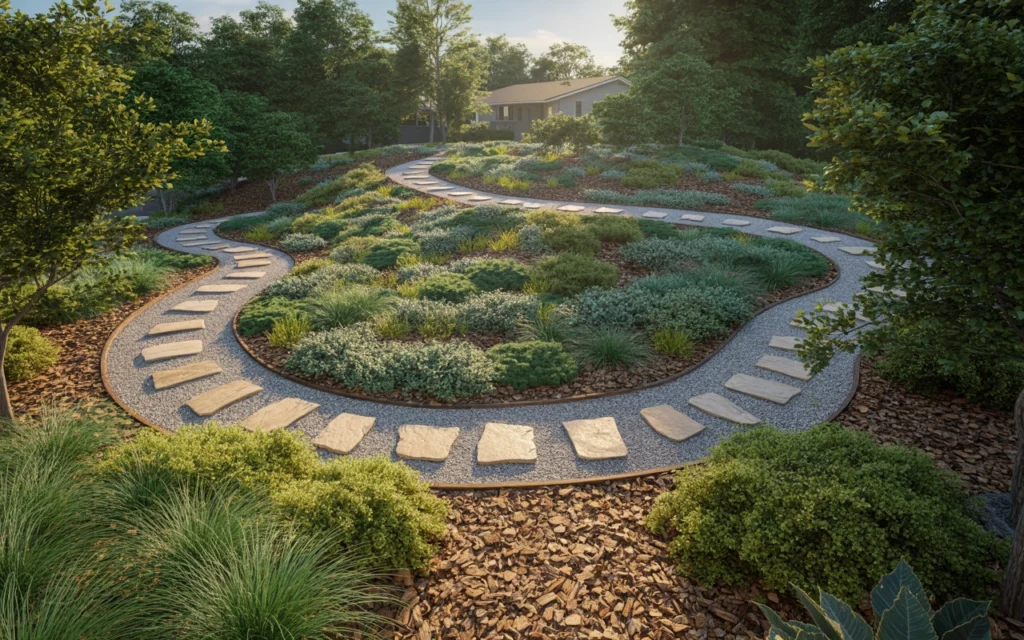
7. Make a Simple Switchback Path
Best for: Improving access
DIY level: Moderate
Maintenance: Moderate
Walking straight up a hill can be tiring and may create a worn path where water starts to run.
A switchback path moves gradually from side to side instead.
Budget materials can include wood chips, gravel, stepping stones, or simple pavers. The best material depends on the grade and how much rain the area receives.
Add edging where loose material may move downhill. On a steeper or heavily used path, choose a firm, stable surface rather than loose material that may shift underfoot.
A curved path can also make a small slope look more interesting without changing the shape of the land.
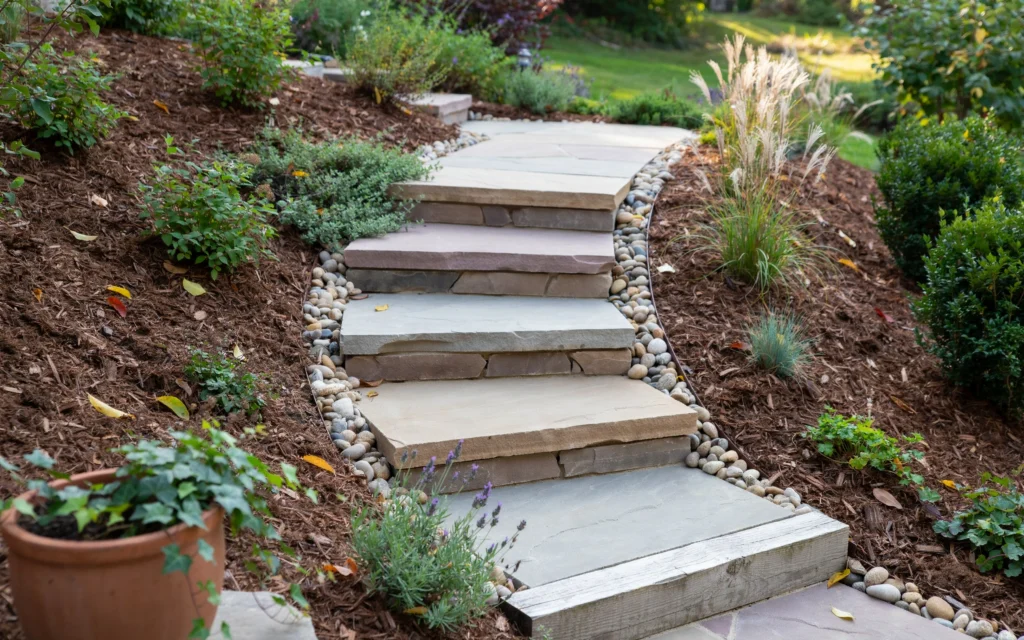
8. Add Simple Steps
Best for: Frequently used routes
DIY level: Moderate
Maintenance: Low to moderate
If everyone already walks through the same part of the hill, a few stable steps can make the yard safer and easier to use.
Flat stone, landscape blocks, or suitable outdoor step materials can work for small projects.
Keep each step stable and pay attention to drainage. Water should not cut around the sides or collect underneath.
A long staircase on a very steep hill is a bigger project. Get professional help if the soil moves easily or if major excavation is required.
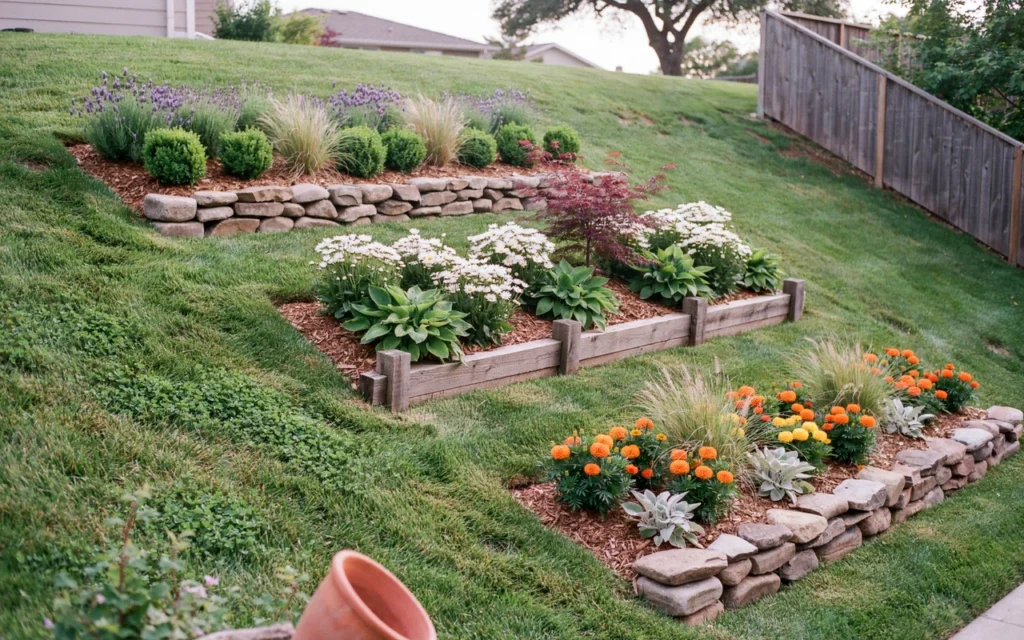
9. Create Small Terraced Garden Beds
Best for: Flowers, herbs, and small planting areas
DIY level: Moderate
Maintenance: Moderate
You do not need to terrace the entire backyard.
One or two small level planting areas can make a big difference while using much less material than a full hillside rebuild.
Small terraces can hold flowers, herbs, grasses, or compact shrubs.
Keep structural work simple and realistic. If a terrace must hold back a large amount of soil, it becomes more than a basic garden project and may need professional design.
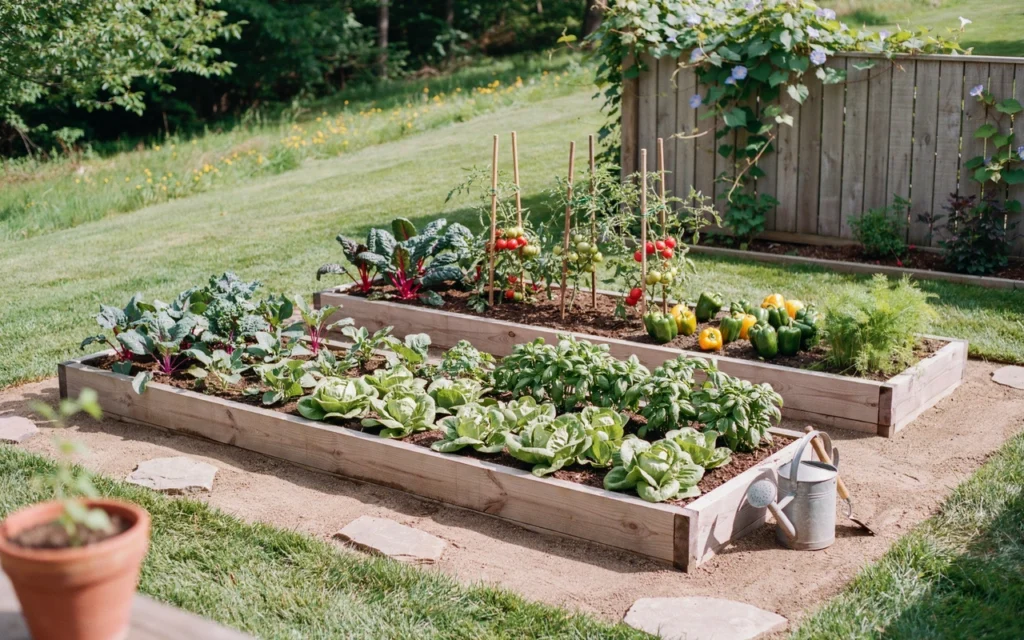
10. Grow Vegetables in Raised Beds Across the Slope
Best for: Sunny slopes
DIY level: Moderate
Maintenance: Moderate to high
A sunny hillside can sometimes become useful growing space.
Set each raised bed level rather than letting it tilt with the hill. When practical, place the long side of the bed across the slope instead of pointing it straight downhill. This can make planting, watering, and harvesting easier.
Leave a safe path between beds and make sure you can reach each area without slipping.
Start small. Two well-placed beds are usually easier to care for than trying to turn the entire hill into a vegetable garden.
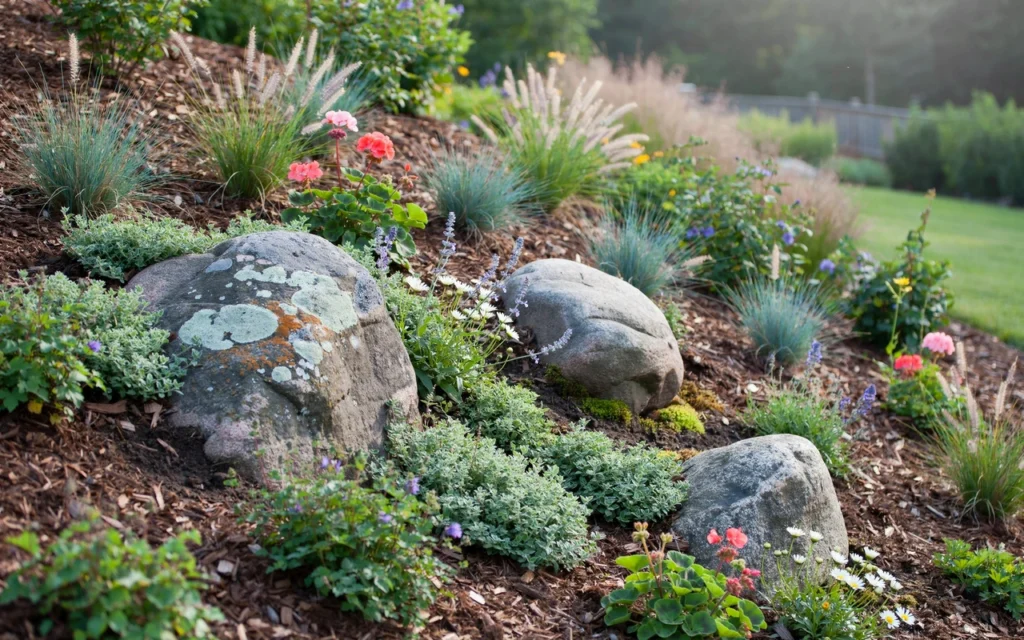
11. Use Large Rocks as Focal Points
Best for: Breaking up a large planted slope
DIY level: Moderate to professional
Maintenance: Low
A few rocks can add shape and structure to a hillside.
Place them near a bend in a path, beside a group of plants, or around a small garden bed.
Plants growing around the rocks help the design look natural.
Large boulders can be very heavy. Do not try to move or place them by hand if proper equipment is needed. A badly placed rock on a slope can become a safety problem.
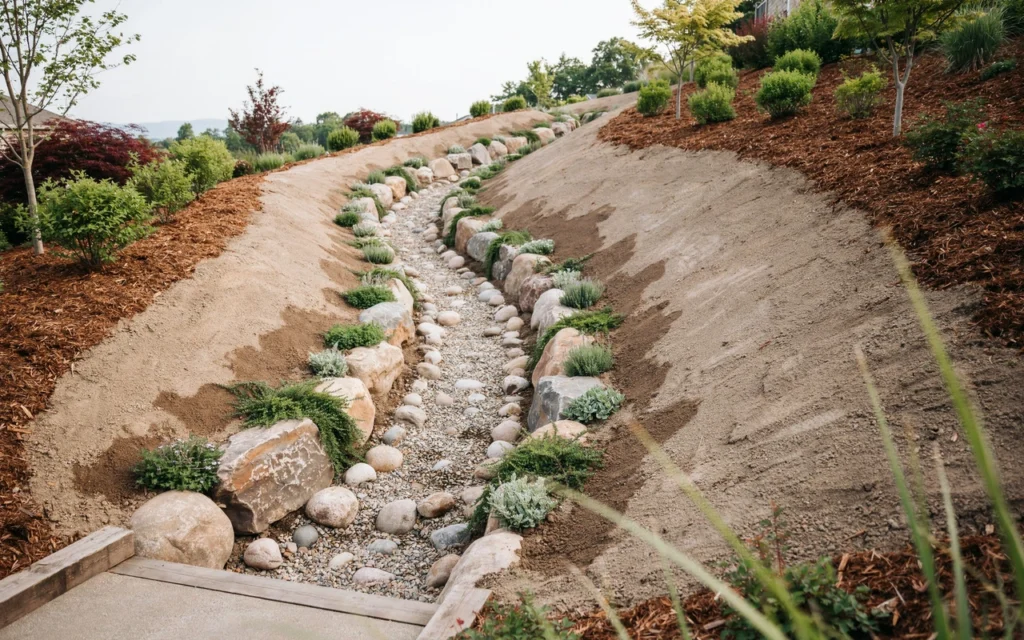
12. Create a Dry Creek Bed
Best for: Areas where runoff already follows one route
DIY level: Moderate
Maintenance: Low to moderate
If rainwater naturally follows the same path down your yard, a dry creek bed can turn that route into a landscape feature.
Use larger stones along the edges and smaller rock or gravel through the middle. Plants around the sides can soften the look.
The goal is not simply to decorate a drainage problem. Water still needs somewhere safe to go.
Do not redirect runoff toward your house, a neighbor’s property, or another area where it can cause erosion.
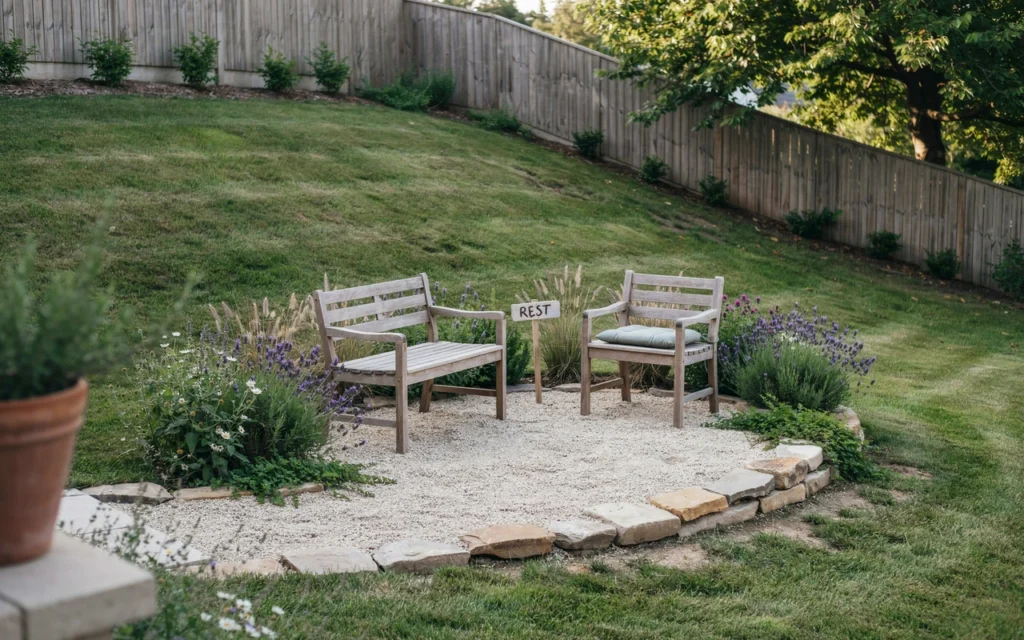
13. Make a Small Seating Nook
Best for: Creating usable space without major grading
DIY level: Easy to moderate
Maintenance: Low
Look for a part of the slope that is already close to level.
Make sure the seating surface itself is level, firm, and stable before adding chairs or a bench.
You can also make a small seating area feel more established by adding a carefully chosen tree nearby. For a smaller yard, compact trees for a front or backyard landscape can provide shade and structure without overwhelming the space, but always check the mature size and available root space before planting on or near a slope.
Add a few plants around the edges to make the space feel finished. Using the easiest part of the yard can save far more money than trying to flatten a large area.
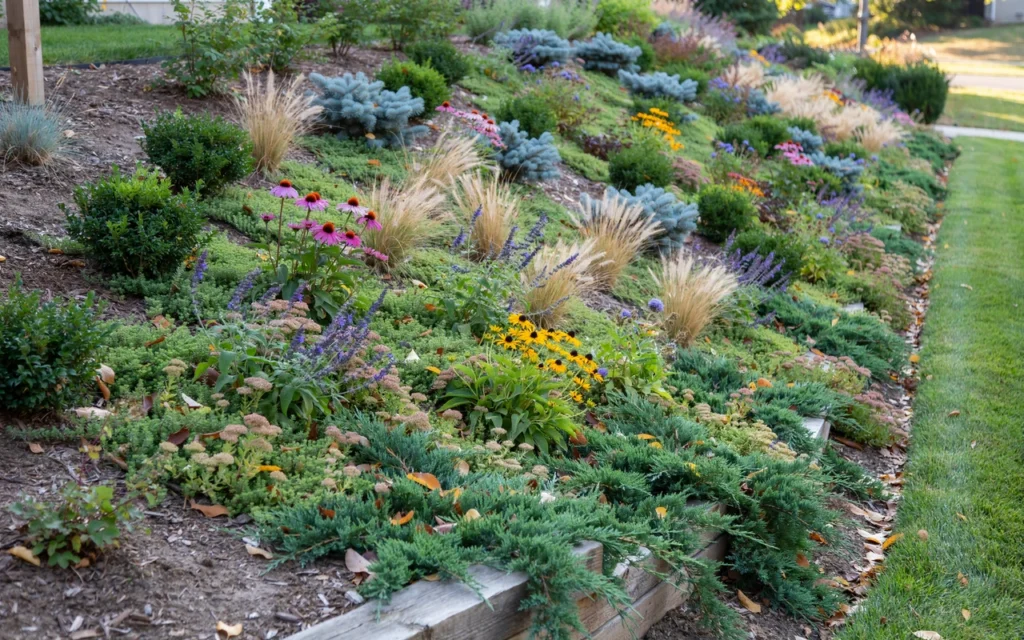
14. Replace Lawn With a Low-Mow Planting Area
Best for: Slopes that are tiring or unsafe to mow
DIY level: Easy
Maintenance: Low
If mowing is the main problem, you may not need to change the shape of the slope at all.
Replace some turf with groundcovers, grasses, perennials, or shrubs that do not need weekly cutting.
This can reduce mowing, trimming, watering, and fertilizing.
Choose plants for your actual climate and soil. A low-maintenance plant in one part of the country may need constant care somewhere else.
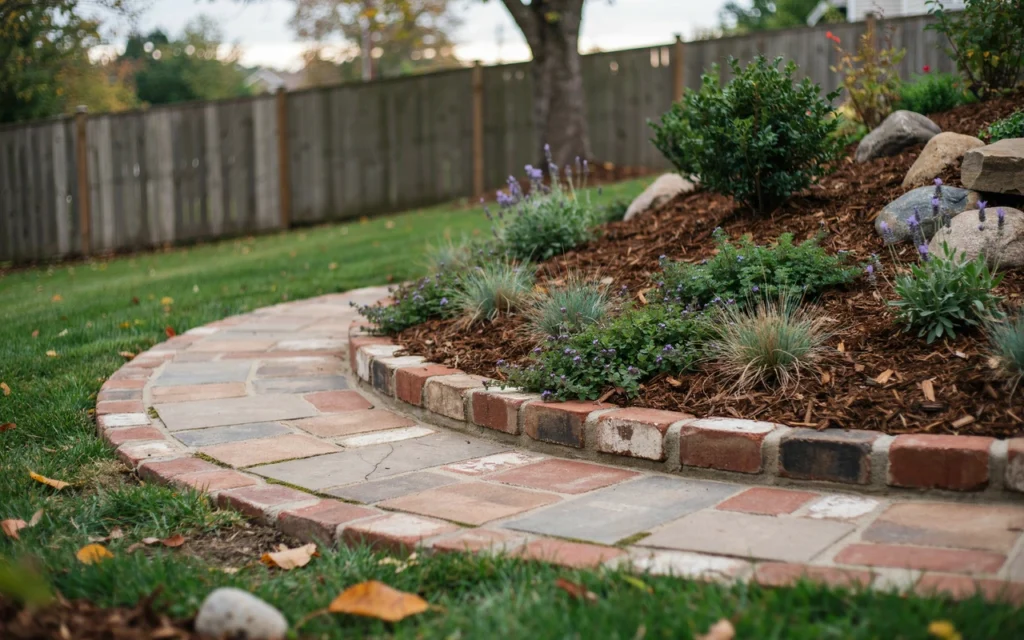
15. Reuse Materials for Small Landscape Features
Best for: Paths, borders, and small beds
DIY level: Easy to moderate
Maintenance: Varies
Before buying new materials, check what you already have.
Sound bricks, pavers, stones, or leftover landscape materials may work for a short path, garden edge, or small planting area.
Reusing materials can also give a backyard a more natural, established look.
Be selective. Old materials that are fine for decoration may not be safe for a wall or other feature that must hold back soil or carry weight.
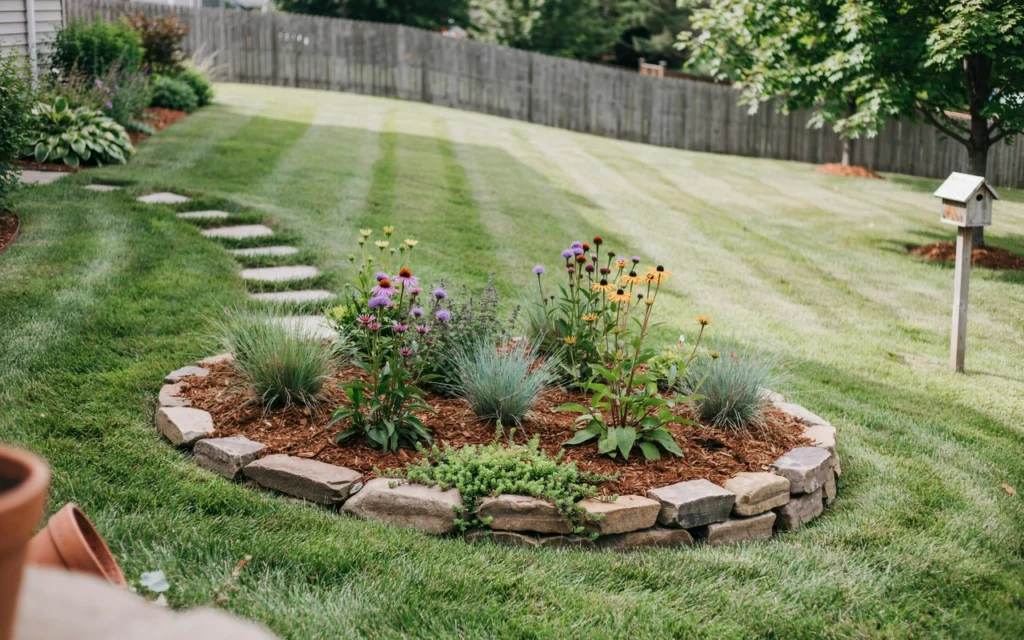
16. Add a Rain Garden in the Right Place
Best for: A safe, flatter area where runoff collects
DIY level: Moderate
Maintenance: Moderate
A rain garden is a planted area that temporarily collects runoff and allows it to soak into the ground.
In a sloped yard, it may work in a flatter area that receives runoff, but do not assume the wettest low spot is suitable. The soil needs to drain well enough for the garden to empty between storms. Choose plants that can handle both wet and dry periods.
Location matters. Keep the rain garden away from foundations, wells, septic systems, unstable soil, and other sensitive areas based on local guidance. If you are dealing with a large amount of runoff, get local drainage advice first.
Site choice matters as much as the plants you use. The University of Minnesota Extension rain garden guide recommends placing a rain garden where it can collect runoff and give the water time to soak into suitable soil.
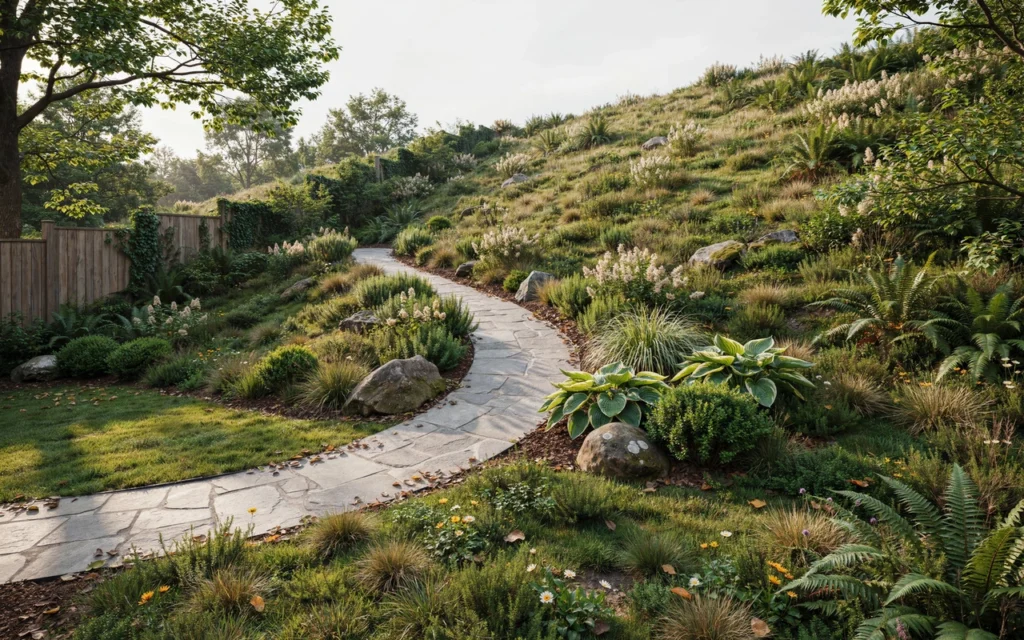
17. Leave Part of the Slope Natural
Best for: Keeping the project affordable
DIY level: Easy
Maintenance: Low
You do not have to landscape every square foot.
If part of the slope is stable and already covered with healthy plants, leaving it alone may be the smartest choice.
Spend your budget on the areas that actually need help, such as bare soil, erosion, unsafe paths, or hard-to-mow grass.
A partly natural hillside can still look planned when you add a simple path, a few grouped plants, and one or two clear focal points.
Best Ideas by Slope Type
The steeper your yard is, the more important it becomes to choose a solution that fits the slope.
Gentle Slopes
Gentle slopes usually offer the most affordable options.
Good choices include:
- Mulch beds
- Groundcovers
- Wildflowers
- Rock gardens
- Simple paths
- Small seating areas
- Mixed shrubs and perennials
You may also be able to keep some lawn if mowing still feels comfortable and safe.
Moderate Slopes
Moderate slopes need more attention to runoff and bare soil.
Useful options include:
- Deep-rooted planting
- Groundcovers
- Erosion-control blankets
- Switchback paths
- Simple steps
- Small terraces
- Dry creek beds
Keep exposed soil covered as much as possible, especially during rainy periods.
Steep Slopes
A steep hillside should be treated as a soil and drainage problem before it becomes a decorating project.
Start with stability, erosion, runoff, and safe access.
Groundcovers, shrubs, and other low-maintenance plants may reduce the need to mow, but do not assume planting alone will fix a serious slope problem.
Large retaining walls, major grading, moving soil, or severe erosion may require professional help.
Sloped Backyard Ideas Without a Retaining Wall
A retaining wall can be useful, but not every slope needs one.
If your hillside is stable and you are not trying to hold back a large amount of soil, you may be able to improve it with simpler landscaping.
Options include:
- Groundcovers
- Native grasses
- Shrubs
- Wildflowers
- Rock gardens
- Small boulders
- Erosion-control blankets
- Switchback paths
- Dry creek beds
- Mulched planting areas on gentle grades
Several ideas can work together.
For example, you could plant shrubs near the top, use groundcovers across the middle, and create a simple curving path through the area.
This can make the slope look finished without building one large wall.
Do not remove an existing retaining wall simply because you want a cheaper design. If a wall is holding back soil, replacing or repairing it should be treated as a structural project.
Common Budget Mistakes to Avoid
Leveling More of the Yard Than You Need
A completely flat backyard sounds useful, but major grading can quickly become expensive.
It may involve excavation, extra soil, drainage changes, wall construction, and equipment.
Instead, decide how much flat space you actually need. One small sitting area or garden terrace may be enough.
Decorating Before Fixing Drainage
Flowers, mulch, and stone will not solve a serious runoff problem.
Watch where water goes during rain before spending money on finishing touches.
If soil is already washing downhill, deal with that problem first.
Using Loose Mulch on a Steep Slope
Mulch is affordable and useful, but it does not stay in place equally well on every hill.
On a steep grade, rain can carry lightweight material downhill.
Use it on suitable slopes and combine it with plants rather than depending on mulch alone.
Keeping Grass Where Mowing Is Difficult
A lawn is not low maintenance if every mowing session feels risky.
If you struggle to push or control a mower on the hill, consider replacing part of the turf with groundcovers, shrubs, or another low-mow planting.
You may save time every week, not just money during the project.
Choosing Plants Before Checking the Site
Do not buy a plant simply because it looks good in a photo.
Check:
- Sun or shade
- Soil moisture
- Drainage
- Climate
- Mature plant size
A plant that fits the site is usually easier and cheaper to keep healthy.
Trying to Finish Everything at Once
A sloped yard does not need to be a one-weekend project.
Start with the most important problem.
Start with active erosion and runoff. Cover bare soil while you fix drainage and safe access. After that, add permanent plants and decorative features.
Working in stages spreads the cost and gives you time to see how the yard responds.
DIYing Structural Work That Is Too Large
Saving money is not worth creating a bigger repair bill later.
Simple planting, mulch, and small paths may be good DIY projects. High retaining walls, major grading, unstable soil, and very large boulders are different.
Check local rules and get qualified help when the project goes beyond basic landscaping.
Conclusion
A sloped backyard does not have to be flattened or rebuilt to become easier to use.
Start with the problems that matter most. Control runoff, cover bare soil, and make walking or mowing safer. Then add affordable features such as groundcovers, native plants, mulch, rocks, paths, or small terraces.
The best sloped backyard ideas on a budget often keep the natural shape of the land. Improve one area at a time, and spend money where it will make the biggest difference.
Frequently Asked Questions
What Is the Cheapest Way to Landscape a Sloped Backyard?
Groundcovers, seed, native plants, and mulch on gentle slopes are usually among the lowest-cost choices. You can also save money by keeping the existing grade instead of trying to flatten the whole yard.
Start with the worst area first rather than landscaping the entire slope at once.
Can I Landscape a Slope Without a Retaining Wall?
Yes. A stable slope may be improved with groundcovers, shrubs, grasses, rock gardens, paths, and erosion-control materials.
A retaining wall may still be needed if a large amount of soil must be held back or the slope has a structural problem.
What Is the Best Low-Maintenance Landscaping for a Slope?
A mix of groundcovers, native grasses, shrubs, and perennials is often easier to maintain than turfgrass on a slope.
Choose plants that match your sunlight, soil moisture, and climate so they need less watering and replacement later.
How Do I Stop Erosion in a Sloped Backyard?
Keep bare soil covered and slow down runoff. Deep-rooted plants, groundcovers, temporary erosion-control blankets, and proper drainage can all help.
If the soil is moving, deep channels are forming, or nearby structures could be affected, have the slope professionally assessed.
What Can I Do With a Very Steep Backyard?
Start with soil stability, drainage, and safe access rather than decorative features.
You may be able to replace hard-to-mow grass with suitable plants, but major grading, large retaining walls, and serious erosion problems are better handled with professional guidance.