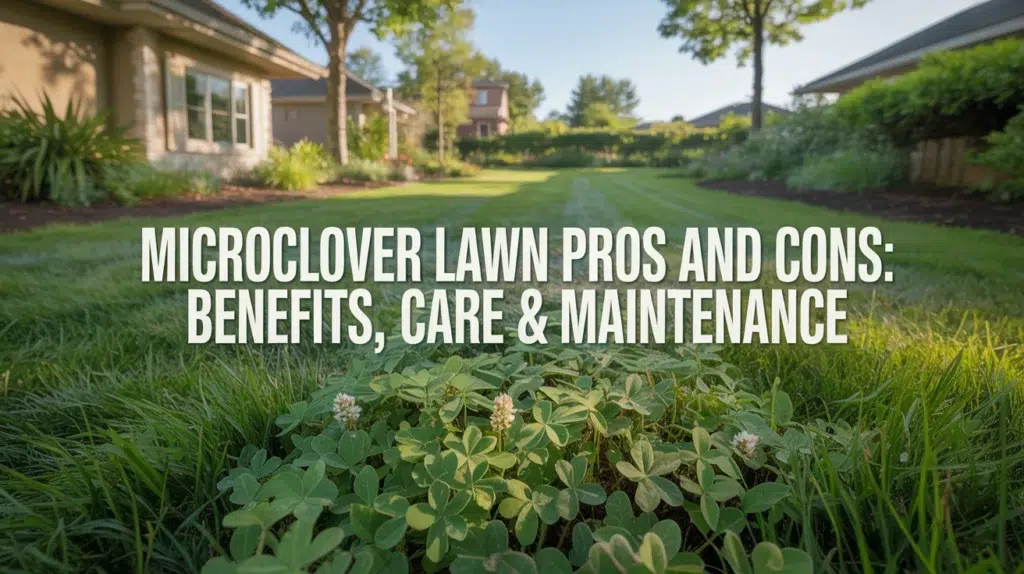
Microclover lawn pros and cons are worth understanding before you replace your grass. Microclover can reduce mowing and nitrogen fertilizer needs while giving your yard a soft, green look. But it is not maintenance-free. It can struggle with deep shade, heavy foot traffic, high heat, and drought, and may die back during winter in colder areas.
For many homeowners, mixing microclover with grass is a more practical option than growing microclover alone. Before planting, consider your sunlight, climate, and how you use the lawn.
Microclover Lawn Pros and Cons at a Glance
| Pros | Cons |
| Can reduce nitrogen fertilizer needs | Poor shade tolerance |
| Requires less mowing | Struggles with high heat and drought |
| Adds nitrogen to the lawn system | Can die back in winter |
| Has a fine, low-growing appearance | May need reseeding |
| Flowers provide food for bees | Less suitable for heavy traffic |
| Works well with some turfgrasses | Broadleaf herbicides can kill it |
| Can reduce some lawn inputs | Seed is less common and can cost more |
Keep in mind: A lower-maintenance lawn still needs the right conditions. Microclover may reduce some routine work, but it can still need watering, mowing, weed management, and reseeding.
What Is a Microclover Lawn?
Microclover comes from smaller-leaved varieties of white clover, including cultivars such as ‘Pirouette’ and ‘Pipolina.’ Compared with regular white clover, it has smaller leaves, fewer flowers, and a lower growth habit.
It is often mixed with turfgrass rather than grown as a complete replacement for grass. Microclover is a legume, meaning it works with soil bacteria to fix nitrogen from the air into a form plants can use.
This can reduce the need for some nitrogen fertilizer, although the actual benefit depends on the grass, soil, climate, and amount of microclover in the lawn.
Pros of a Micro clover Lawn
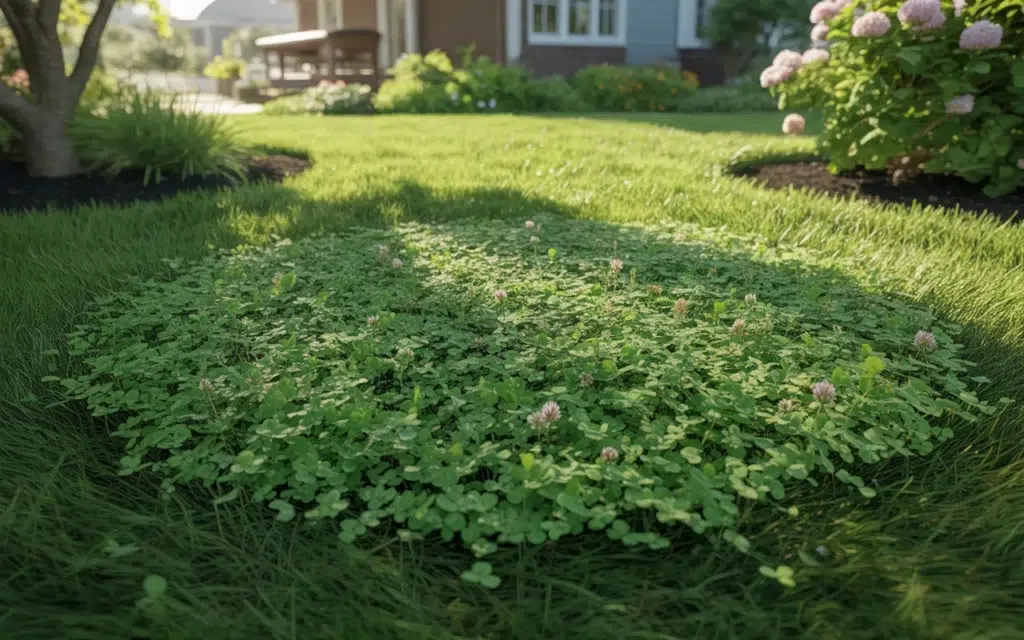
1. It Can Reduce the Need for Nitrogen Fertilizer
One useful benefit of microclover is its ability to fix nitrogen.
Unlike grass, clover is a legume. With the help of soil bacteria, it converts nitrogen from the atmosphere into a form plants can use. Research from the University of Maryland found that microclover used with turfgrass can provide an organic nitrogen source and may reduce one nitrogen application per year.
That does not mean you should stop fertilizing every lawn that contains microclover. Soil, grass type, climate, and the amount of microclover all matter.
But it can change how much nitrogen your lawn needs.
2. You May Need to Mow Less
Microclover has a low-growing habit, which makes it attractive to homeowners who are tired of frequent mowing.
It does not grow like tall turfgrass, so a lawn containing microclover can require less mowing than a traditional grass-only lawn.
Still, don’t think of it as a true no-mow lawn. If you want a tidy appearance, some mowing or trimming will still be part of the routine.
The amount of mowing also depends on how much grass is mixed into the lawn.
3. It Gives the Lawn a Fine, Soft Appearance
Microclover has smaller leaves than regular white clover, so it tends to look more refined in a lawn.
When mixed properly with turfgrass, it can create a more even, lawn-like appearance . University of Maryland research found that microclover can mix well with turf-type tall fescue and Kentucky bluegrass.
This makes it a better fit for homeowners who want something different from a traditional lawn without giving up a lawn-like appearance completely.
4. It Adds Flowers and Supports Bees
Microclover produces flowers that provide food for bees and other pollinators.
That gives it an advantage over a traditional grass-only lawn, which does not offer the same type of flowering resource.
There is one tradeoff: if you or someone in your household has a serious bee-sting allergy, flowering clover around frequently used areas deserves extra thought. University of Maryland Extension specifically lists bees attracted to microclover flowers as a potential concern for people with bee-sting allergies.
5. It Can Reduce Some Lawn Inputs
Because microclover can contribute nitrogen and reduce mowing needs, it has the potential to make certain lawns less input-heavy.
That is one reason homeowners interested in low maintenance lawn alternatives are looking at clover-based lawn mixes.
However, the benefit depends heavily on the site. A plant that is poorly suited to your climate will not become low-maintenance just because it is called microclover.
Cons of a Microclover Lawn
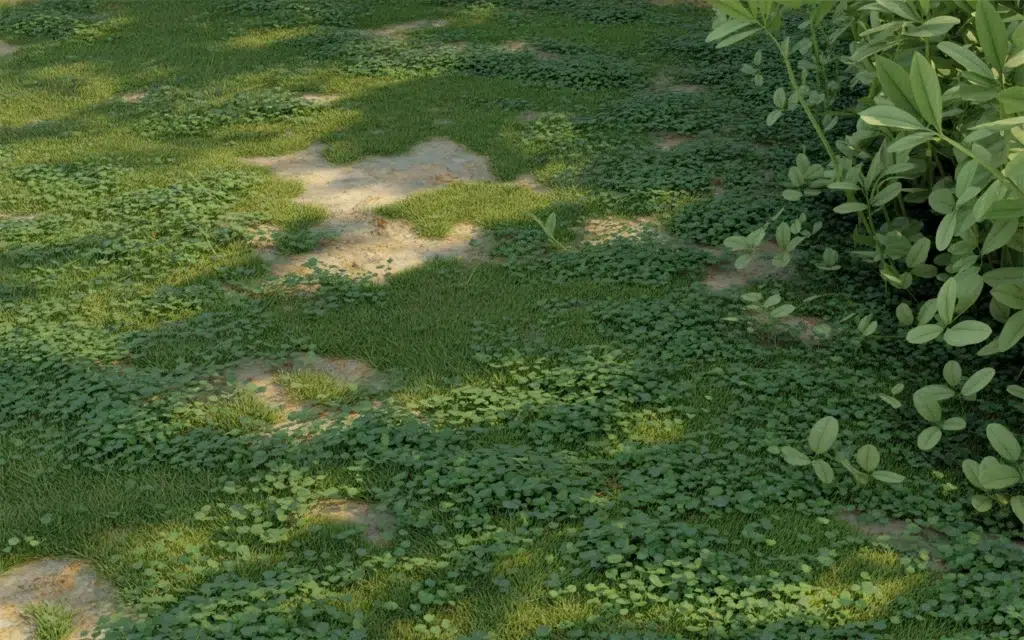
1. Microclover Does Not Like Deep Shade
This is one of the biggest limitations that gets overlooked.
Microclover has poor shade tolerance, according to University of Maryland Extension. If your yard has large areas under dense trees or buildings, microclover is unlikely to be the easy lawn solution you are looking for.
Before planting, look at how much direct sunlight the area actually gets throughout the day.
2. High Heat and Drought Can Be a Problem
Microclover is sometimes promoted as a drought-friendly lawn choice, but that description needs some context.
Established plants still have limits. University of Maryland research reports that microclover does not tolerate high heat and drought well and can die back when cool-season turf enters summer dormancy.
So if you live in a hot, dry region, do not assume microclover will stay lush with little water.
Your local climate matters.
3. It Can Die Back in Winter
Microclover is not guaranteed to stay green through winter.
In colder areas, its top growth can die back. This can leave thin or bare-looking areas until growth returns. University of Maryland Extension notes that winter dieback can also create opportunities for weeds and erosion.
If a perfectly green lawn through every season is your goal, microclover may disappoint you.
4. Heavy Foot Traffic Can Thin It Out
A microclover lawn is not the best choice for every active backyard.
If the area is used constantly for:
- Kids running and playing
- Sports
- Frequent parties
- Heavy dog traffic
- Regular walking paths
a grass-based lawn may hold up better.
For a lightly used decorative lawn, microclover is more attractive.
5. You May Need to Reseed
This is another reason not to treat microclover as a plant-and-forget solution.
Because microclover can thin or die back under stressful conditions, reseeding may be needed to keep enough of it in the lawn. University of Maryland Extension specifically identifies reseeding as a requirement for maintaining microclover persistence in its research.
This is especially important when deciding whether its lower mowing and fertilizer needs are worth the tradeoffs.
6. Weed Control Is More Complicated
This is a major difference from a traditional grass lawn.
Many broadleaf herbicides used in turf can also kill clover. University of Maryland Extension notes that most broadleaf herbicides labeled for tall fescue will kill microclover.
That means you cannot simply treat a microclover lawn like a grass lawn and use the same weed-control products.
If weed control is important to you, always check the product label and make sure the treatment is compatible with your lawn mixture.
How Much Does a Microclover Lawn Cost?
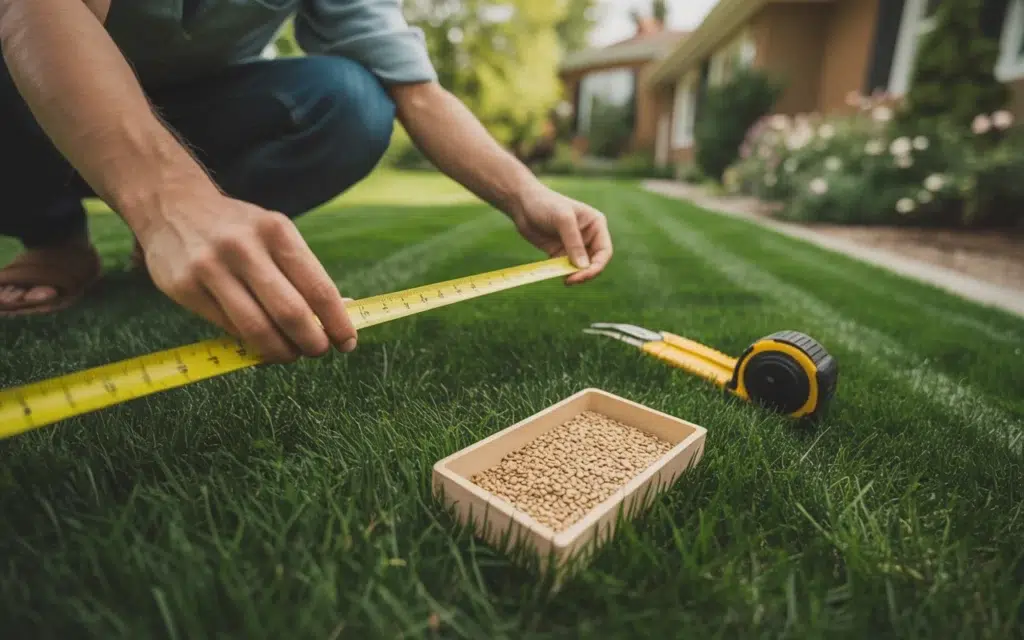
There is no single cost that applies to every microclover lawn.
The total depends on how much area you are covering, whether you use pure microclover or a grass blend, the condition of the existing lawn, and how much preparation you do yourself.
Microclover seed can also be harder to find than common grass seed. University of Maryland Extension notes that microclover seed tends to be expensive and is not as readily available in retail stores.
The main cost factors are:
- Microclover seed
- Grass seed if you use a blend
- Removing existing turf
- Soil preparation
- Weed control during establishment
- Watering while the lawn gets established
- Overseeding or reseeding later
- Professional installation, if you do not DIY
How to Estimate the Cost of a Microclover Lawn
To estimate the cost, start with the size of the area and the seeding rate listed on the product you plan to use. Then add any costs for soil preparation, grass seed, weed removal, watering, and reseeding.
A small DIY patch will usually cost much less than replacing an entire lawn. A microclover and grass mix may also be more practical than using pure microclover across a large area.
Is Microclover Cheaper Than Grass?
Not necessarily.
A microclover lawn can save money over time through lower fertilizer needs and potentially less mowing, but the seed itself can cost more than common grass seed.
For that reason, compare the whole lawn cost, not just the price of one bag of seed.
If you are working with a limited budget, starting with one section of the yard is a smart way to test how microclover performs before changing the entire lawn.
Microclover vs. Grass: Which Is Better?
Neither is automatically better. They solve different lawn problems.
| Feature | Microclover | Grass Lawn |
| Nitrogen needs | Can reduce fertilizer needs | Usually needs added nitrogen |
| Mowing | Less frequent | More frequent |
| Heavy traffic | Less suitable | Usually better |
| Shade | Poor | Depends on grass type |
| Heat/drought | Can struggle | Depends on grass type |
| Winter appearance | Can die back | Depends on grass type |
| Flowers | Yes | Usually no |
| Weed control | More limited | More treatment options |
| Lawn appearance | Fine, natural | Traditional uniform lawn |
If your priority is a classic, durable play lawn, grass is still a strong choice.
If your priority is reducing mowing and fertilizer inputs and you have suitable growing conditions, microclover becomes more interesting.
If microclover does not fit your site, exploring different grass alternatives for the backyard can help you find a better match for your space.
Microclover vs. White Clover
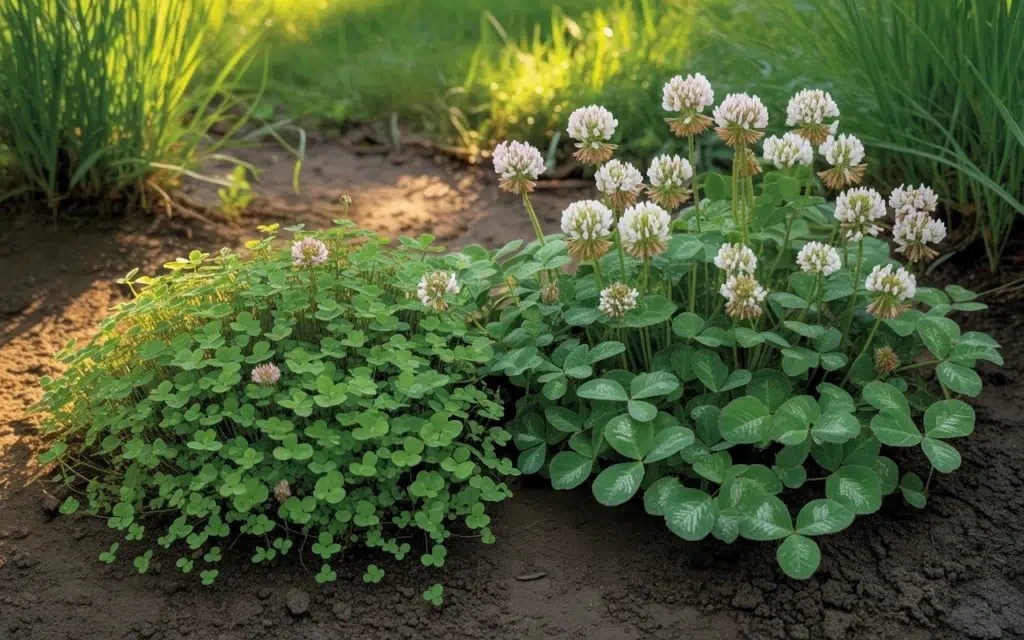
Microclover and white clover are related, but they are not exactly the same thing.
Microclover
- Smaller leaves
- Fewer flowers
- Lower growth habit
- Less aggressive growth
- Designed with lawn use in mind
- Often mixed with turfgrass
White Clover
- Larger leaves
- More noticeable flowers
- More traditional clover appearance
- Creeping growth habit
- Commonly found naturally in lawns
University of Maryland Extension identifies microclover as smaller varieties of white clover with smaller leaves, fewer flowers, and a lower growth habit.
So if you want a lawn that looks more like traditional turf, microclover is generally the more subtle option.
How to Maintain a Microclover Lawn
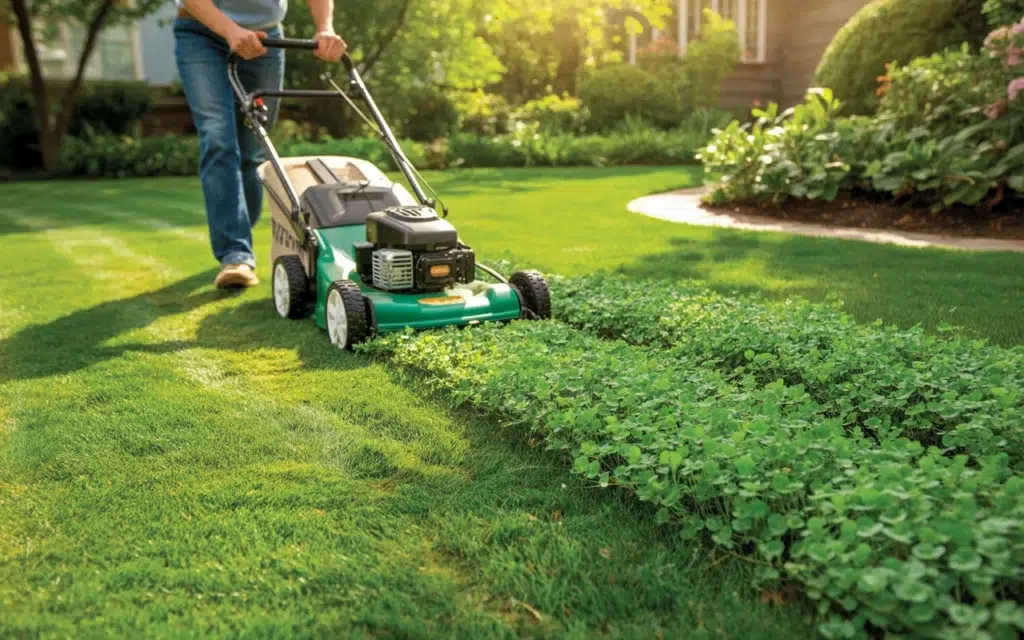
Microclover does not need the same level of care as a high-input grass lawn, but it still needs regular attention. Mowing, watering, weed control, and reseeding needs will depend on your climate and whether microclover is growing alone or with grass.
Mowing
Microclover’s low growth habit means you generally do not need to mow as often as a conventional grass lawn.
If you have a grass and microclover mix, however, mow according to the needs of the grass as well. The goal is to keep the entire lawn healthy rather than simply trying to avoid mowing.
Watering
New microclover needs regular moisture while it establishes.
Once established, you may be able to reduce watering, but don’t assume it is drought-proof. High heat and drought can cause microclover to decline.
Good soil and site conditions still matter.
Fertilizing
This is where microclover has one of its biggest advantages.
Because it fixes nitrogen, a microclover lawn does not need to be treated like a grass-only lawn with heavy nitrogen applications. Research from the University of Maryland found that microclover in turfgrass mixes may reduce the need for one nitrogen application per year.
Do not assume that means zero fertilizer forever. Your grass type, soil fertility, and local conditions still matter.
A soil test is a better starting point than guessing.
Weed Control
Weed control takes more care because common broadleaf herbicides can damage or kill microclover.
This means prevention and good lawn management become more important.
A dense, healthy lawn leaves less room for weeds to establish. If you need chemical control, check the label carefully before applying anything.
Reseeding
If microclover becomes thin after winter, heat, drought, or other stress, reseeding may be necessary.
This is one of the biggest differences between the idea of a low-input lawn and a no-maintenance lawn.
Microclover can reduce some routine work, but you still need to watch the lawn and respond when coverage starts to decline.
Is a Microclover Right for Your Lawn?
Microclover is worth considering if you:
- Want to mow less often
- Want to reduce nitrogen fertilizer use
- Prefer a softer, natural-looking lawn
- Have good sunlight
- Have light or moderate foot traffic
- Like the idea of flowers and pollinators
- Are comfortable with some seasonal changes
Think twice if you:
- Have deep shade
- Have very hot and dry conditions
- Need a lawn for constant heavy play
- Want a perfectly uniform green surface all year
- Do not want to reseed
- Depend heavily on broadleaf herbicides
This is also why Lawn Savy treats lawn alternatives as a site-specific decision rather than a one-size-fits-all replacement for grass.
Common Microclover Lawn Mistakes to Avoid
1. Assuming Microclover Is Maintenance-Free
It still needs watering during establishment, weed management, and sometimes reseeding.
2. Planting It in Deep Shade
Microclover has poor shade tolerance. Choose a plant that matches the light conditions instead.
3. Expecting It to Handle Constant Traffic
A busy family play area or sports lawn needs a surface that can take repeated wear.
4. Using the Same Herbicides You Use on Grass
Many broadleaf herbicides can kill microclover. Always check the product label first.
5. Expecting It to Stay Green in Every Season
Winter dieback is a real limitation in colder areas. Plan for seasonal changes instead of expecting the lawn to look identical year-round.
Conclusion
A microclover lawn can work well if you want to reduce mowing and nitrogen fertilizer use without giving up a green, lawn-like yard. However, it is not the right choice for every property.
Before planting, consider your sunlight, climate, foot traffic, and willingness to reseed. For many homeowners, a mix of microclover and turfgrass offers a more practical balance than using microclover alone.
If your yard has deep shade, constant heavy traffic, or very hot and dry conditions, another lawn option may be a better fit.
If you are also comparing other lawn alternatives, you can explore how to grow creeping thyme lawn or look at these budget-friendly no-grass backyard ideas to find an option that fits your yard.
Frequently Asked Questions
Is microclover better than grass?
It depends on your yard. Microclover can reduce mowing and nitrogen fertilizer needs, but it is less suitable for deep shade, heavy traffic, and areas with high heat or drought. Traditional grass is often a better choice when durability is the priority.
Does microclover come back every year?
Microclover is a perennial form of white clover, but that does not mean it will look the same throughout the year. In colder conditions, the top growth can die back during winter, and stressed lawns may need reseeding to maintain good coverage.
Does a microclover lawn need fertilizer?
It may need less nitrogen fertilizer because microclover fixes nitrogen. University of Maryland research found that it may reduce one nitrogen application per year when used with certain turfgrasses. Soil and grass conditions still determine the actual fertilizer needs.
Does a microclover need to be mowed?
It needs less mowing than many traditional turf lawns, but it is not necessarily a no-mow lawn. If a microclover is mixed with grass, the grass will still determine much of the mowing routine.
Can a microclover grow in shade?
Microclover has poor shade tolerance. It performs better where it receives adequate sunlight, so a deeply shaded yard is not a good place to rely on microclover.