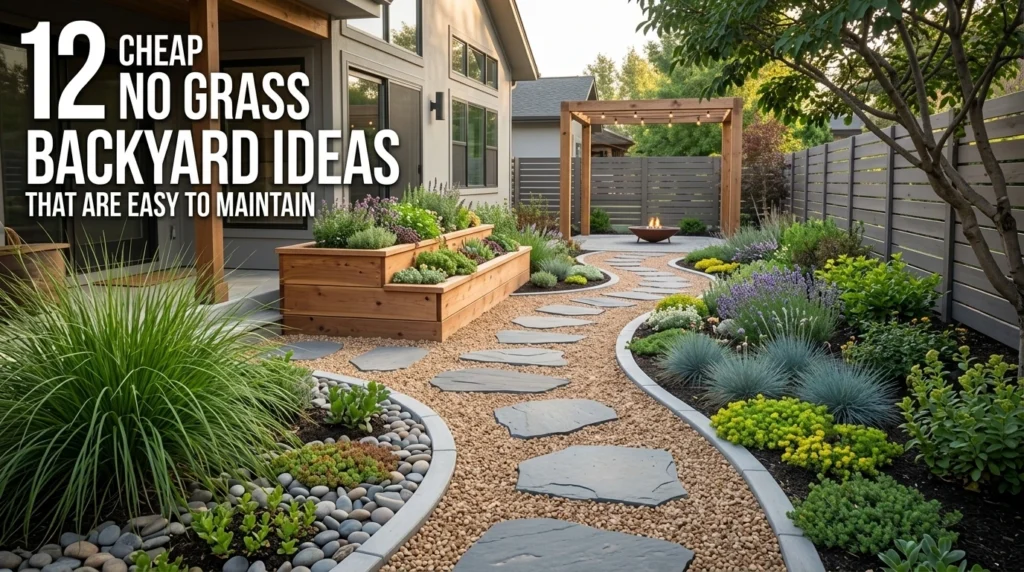
A backyard does not need a lawn to look neat and useful. Some of the best cheap no grass backyard ideas use gravel, wood chips, mulch, reclaimed pavers, ground cover plants, or a mix of these materials. They cut down on mowing and can also reduce watering.
The best choice depends on how you use your yard. A seating area needs a firm surface, while a shady corner may be better with mulch or ground covers. Before removing grass, also check drainage, sunlight, and foot traffic. A simple plan usually costs less and is easier to maintain.
Cheapest No-Grass Backyard Ideas at a Glance
| Idea | Starting Cost | Upkeep | Best For |
| Wood chips | Very low | Low | Natural paths and large areas |
| Mulch | Low | Low | Shady areas and planting beds |
| Pea gravel | Low | Very low | Paths and seating spaces |
| Reclaimed pavers | Low to moderate | Very low | Small patios and walkways |
| Ground covers | Low to moderate | Low after they fill in | A softer, green look |
| Rock garden | Low to moderate | Very low | Sunny, dry areas |
| Containers | Low | Low to moderate | Small yards and renters |
| Xeriscape area | Varies | Low after plants settle in | Dry climates |
| Raised beds | Low to moderate | Moderate | Useful garden space |
| Gravel fire pit area | Low to moderate | Low | Outdoor seating |
These are relative cost levels, not fixed prices. The final cost depends on yard size, materials, local availability, and how much work you do yourself. Doing the work yourself can lower the cost, but jobs involving drainage, grading, utilities, or fire features may need professional help. For more practical ideas on creating a lower-maintenance yard, explore the landscaping and lawn care guides from Lawn Savy.
12 Cheap No Grass Backyard Ideas
1. Cover Part of the Yard With Pea Gravel
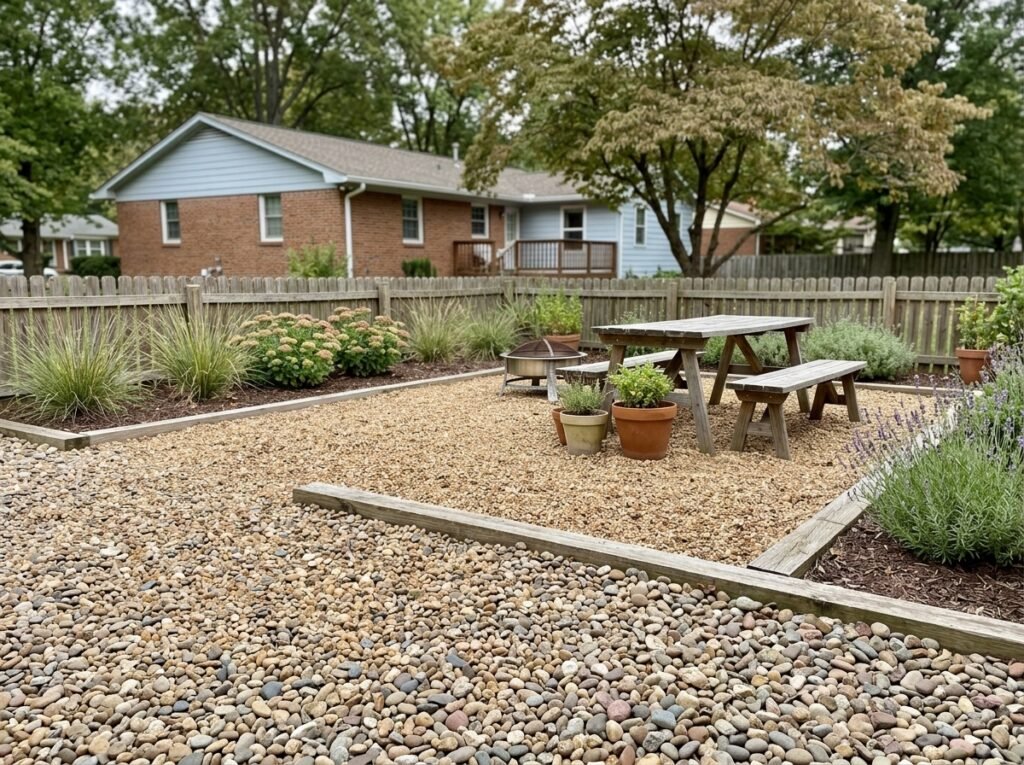
Pea gravel is one of the simplest ways to cover bare ground without growing grass. It works well for paths, small patios, seating areas, and spaces around raised beds.
The main job is preparing the ground first. Remove weeds, level the area, and use edging to keep the gravel from moving into beds or walkways.
Gravel needs little regular care, but it is not completely maintenance-free. You may need to rake it back into place and pull a few weeds.
In very hot, sunny yards, remember that stone can absorb heat and make nearby areas hotter .
2. Use Free or Cheap Wood Chips
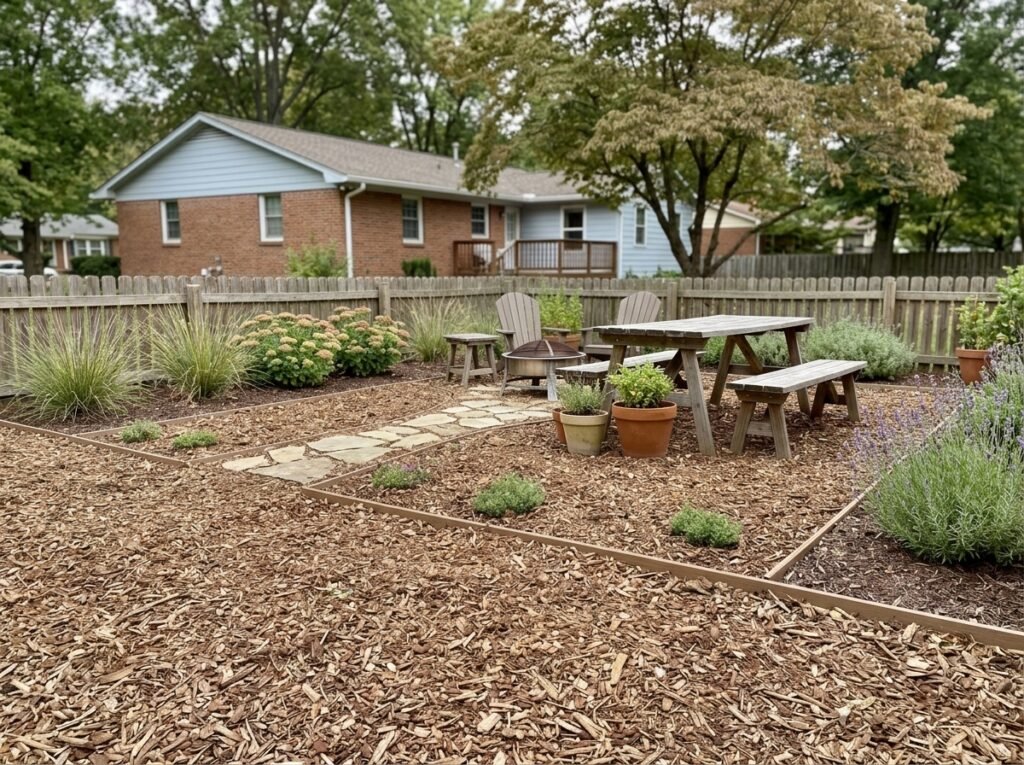
Wood chips are a good choice when you need to cover a larger area without buying a lot of hardscape material.
They work well for:
- Informal paths
- Shady backyard areas
- Spaces between garden beds
- Areas around shrubs
- Informal sitting areas
Local tree services sometimes have wood chips available after tree work, so it is worth checking nearby sources before buying bags.
Wood chips slowly break down, so you will need to add more over time. That is also a benefit because organic mulch can help improve the soil as it decomposes.
3. Make Mulch Beds Bigger
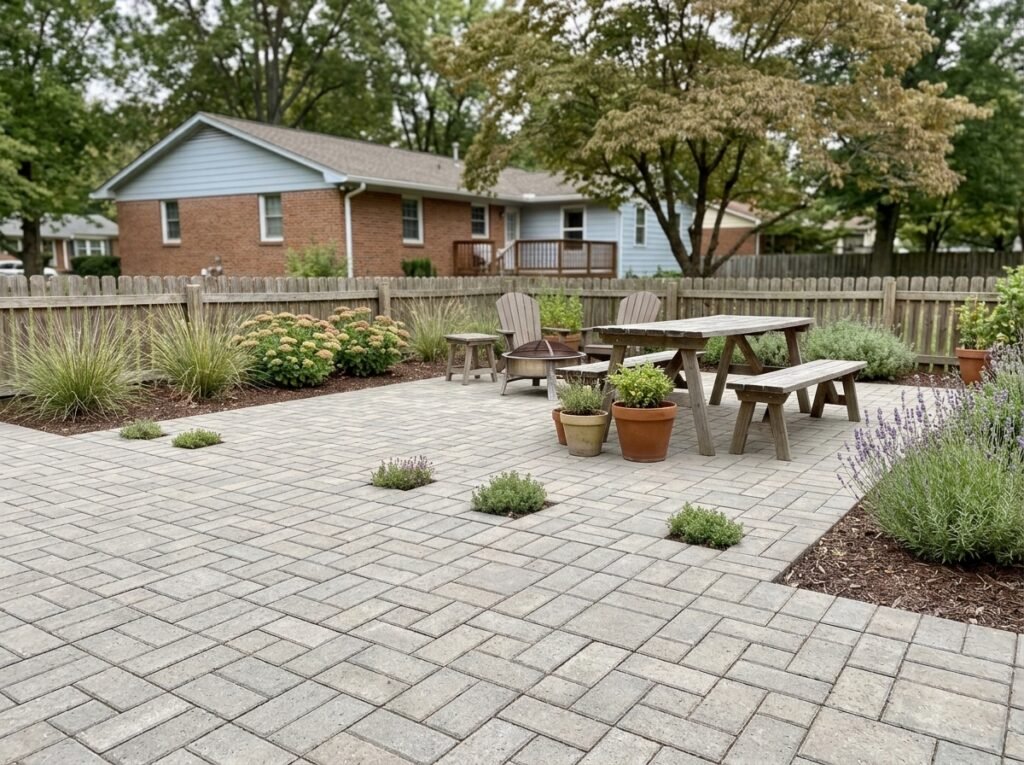
You do not have to replace the whole lawn at once.
A simple way to reduce grass is to make existing planting beds wider. Add mulch around shrubs, trees, flowers, and other plants, leaving less turf to mow.
Mulch can help slow moisture loss, reduce weeds, protect soil, and give the backyard a cleaner look. The EPA’s guidance on using mulch in water-smart landscapes also notes that organic materials such as wood chips can improve soil as they break down.
Keep mulch away from the base of tree trunks and plant stems. A deep pile pressed against a trunk can hold too much moisture.
4. Make a Path With Stepping Stones and Gravel
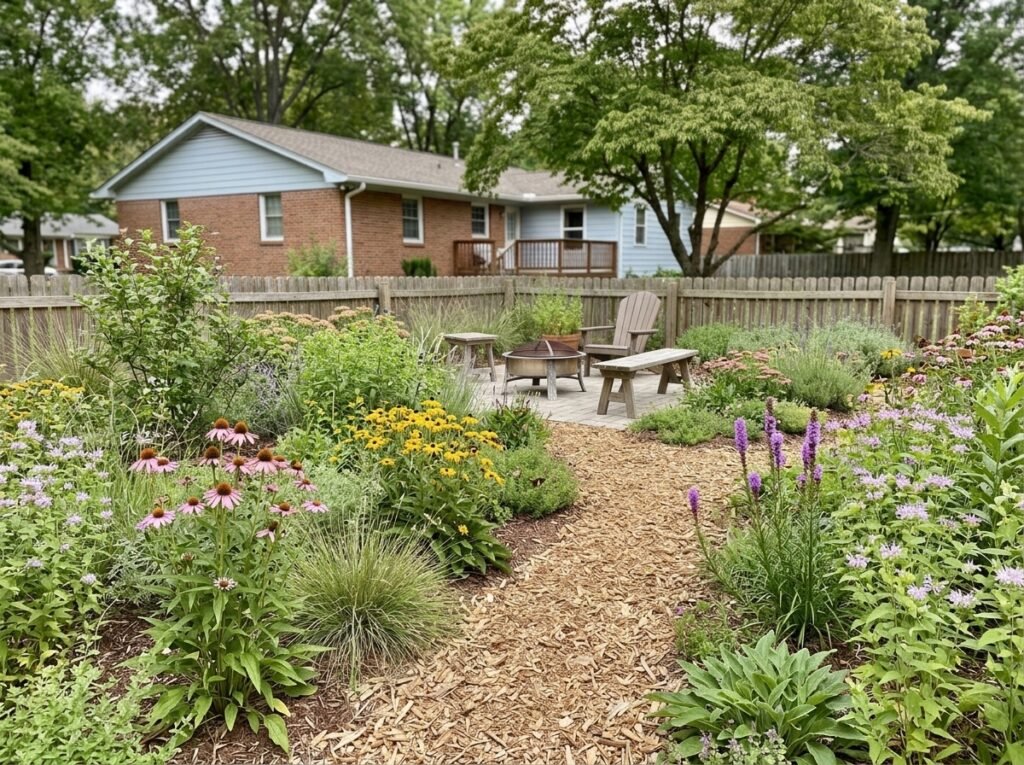
A full paved patio can use a lot of material. A spaced stepping-stone path uses much less.
Lay flat stones or pavers where people naturally walk, then fill the spaces around them with gravel.
This idea works well between:
- A back door and patio
- Raised beds
- A shed
- A fire pit
You can also use leftover or reclaimed pavers instead of buying matching new pieces. Different shapes can still look good when the spacing stays consistent.
5. Build a Small Patio With Reclaimed Pavers or Bricks
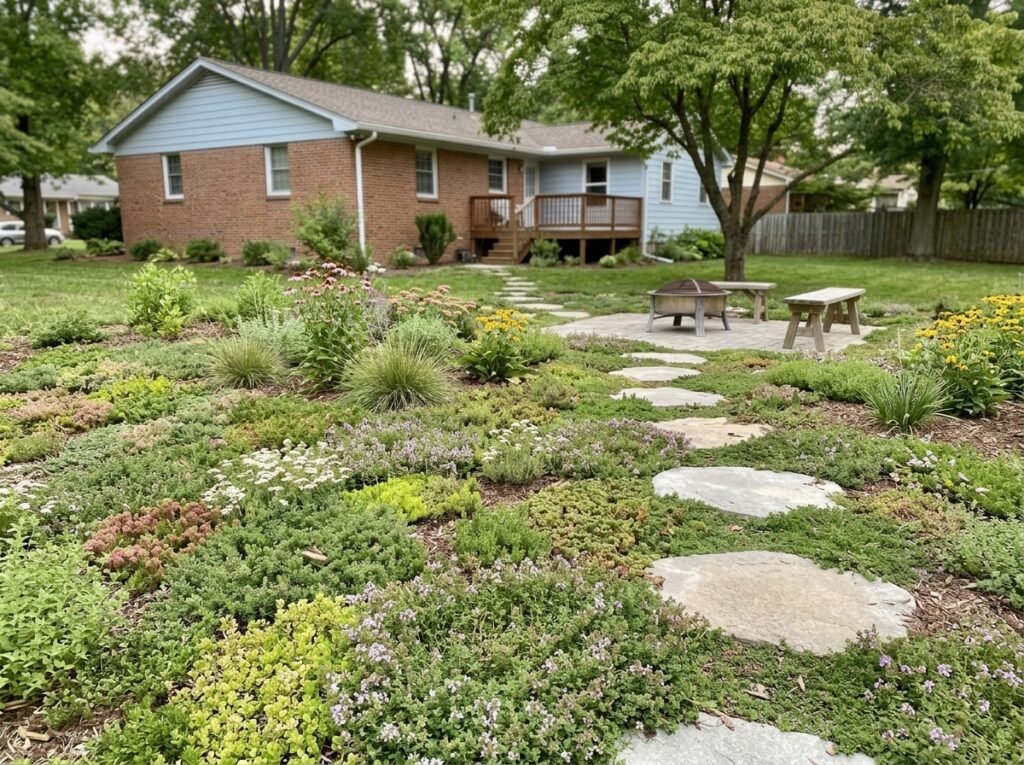
Instead of covering a large backyard, create one small area for chairs and a table.
Used bricks and pavers may be available from local reuse stores, neighborhood groups, demolition projects, or people removing an old patio. Make sure the material is still sound and suitable for outdoor use.
Keep the design simple. A basic square or rectangle is easier to install than a complicated pattern.
Good ground preparation matters more than fancy pavers. An uneven base can lead to rocking, sinking, and weeds between joints.
6. Create a Simple Rock Garden
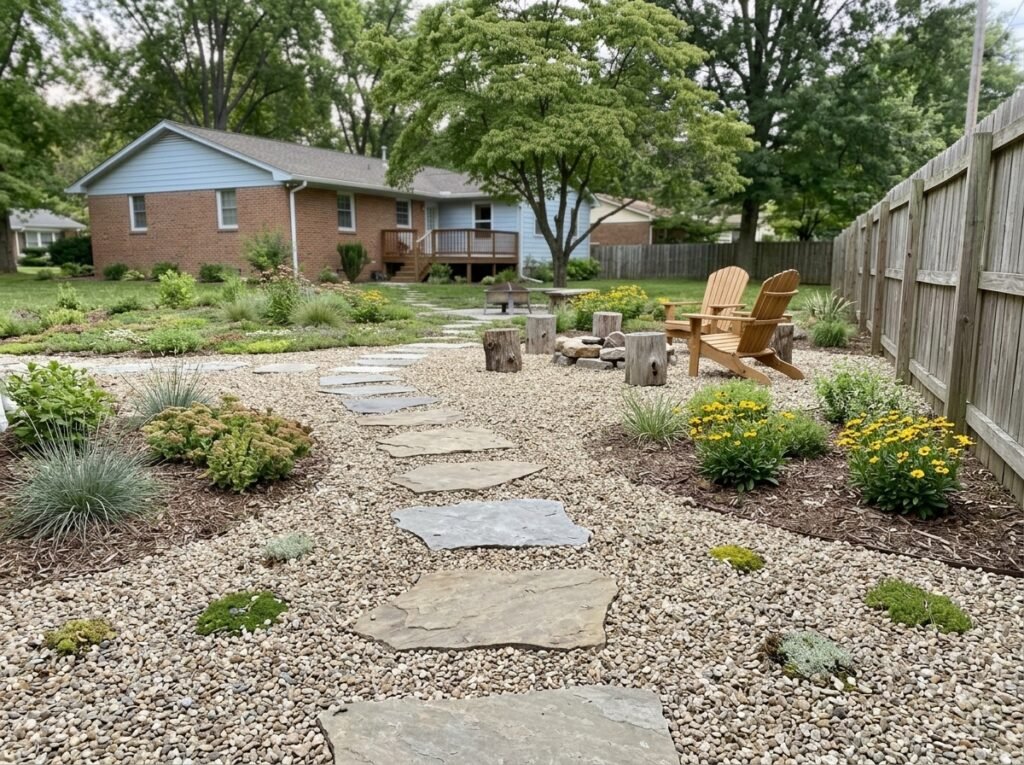
A rock garden can work well in a dry, sunny area where grass needs too much water or does not grow well.
You do not need dozens of plant types. Start with:
- A few larger stones
- Smaller gravel
- Several plants suited to your climate
- Open space between plants
The result can look clean without needing regular mowing.
Choose plants based on your soil, sunlight, and climate rather than selecting them only because they are called “drought tolerant.” Even low-water plants need regular watering while they grow new roots.
Colorado State University Extension explains that water-wise landscapes still need proper plant selection and establishment care before they become lower maintenance. CSU guide to converting a yard to xeriscape.
7. Replace Grass With Low-Growing Ground Covers
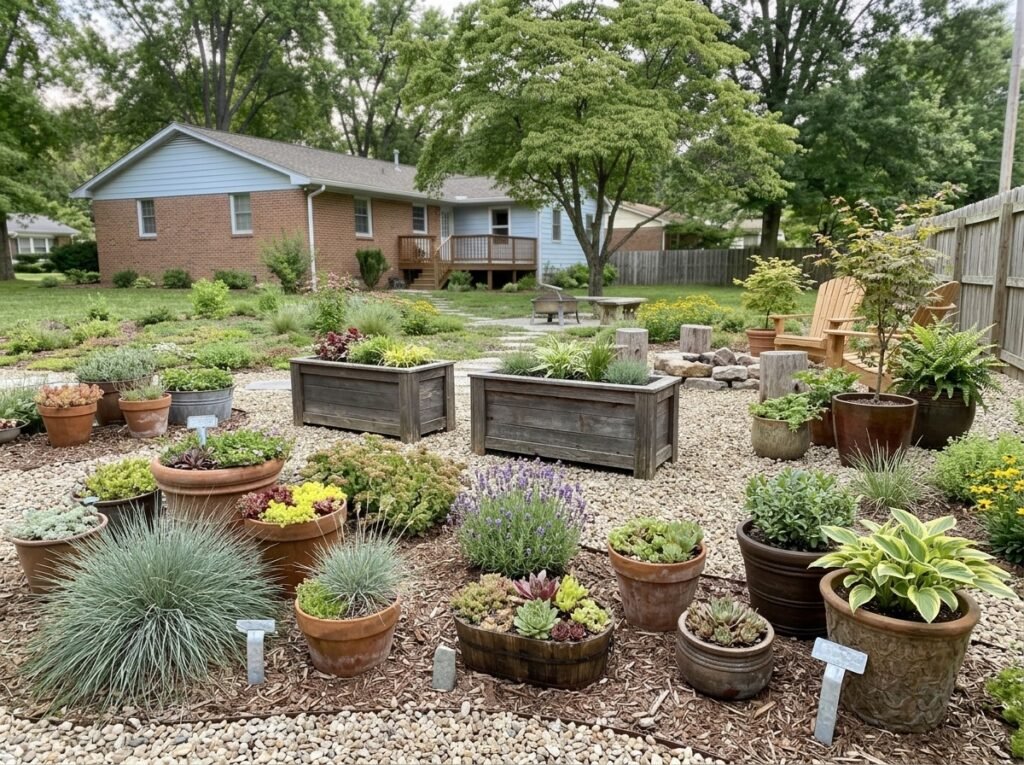
If you still want green growth but do not want a traditional lawn, ground covers may work in some parts of the yard.
Depending on your climate and site, choices may include:
- Creeping thyme
- Native sedges
- Low-growing native perennials
- other spreading plants recommended for your area
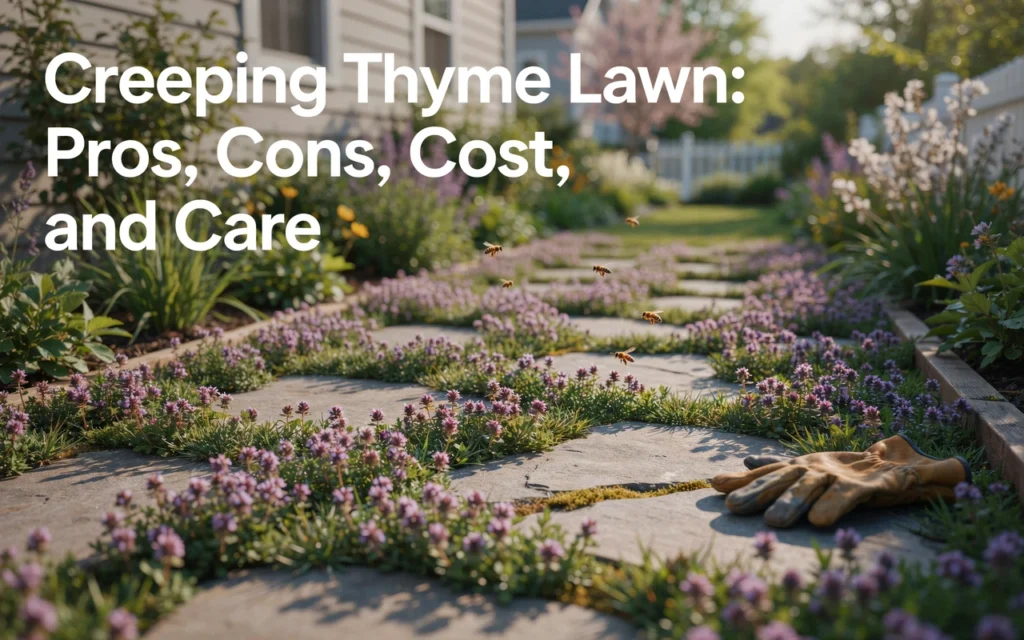
If you want a flowering option for a sunny, well-drained area, low-growing thyme as a lawn alternative is worth considering. It stays short and needs much less mowing than traditional turf, but it is not a good fit for wet soil or areas with heavy foot traffic.
Do not assume every ground cover can handle walking. Many are better between paths, around stepping stones, on slopes, or in spaces where people rarely walk.
Colorado State University Extension notes that ground covers can replace turf in areas that are difficult to mow or water. It also warns that some spreading plants can become invasive. CSU ground cover guide
Always check local recommendations before planting a fast-spreading species.
8. Try a Small Xeriscape (designing an area to need less extra water ) Area
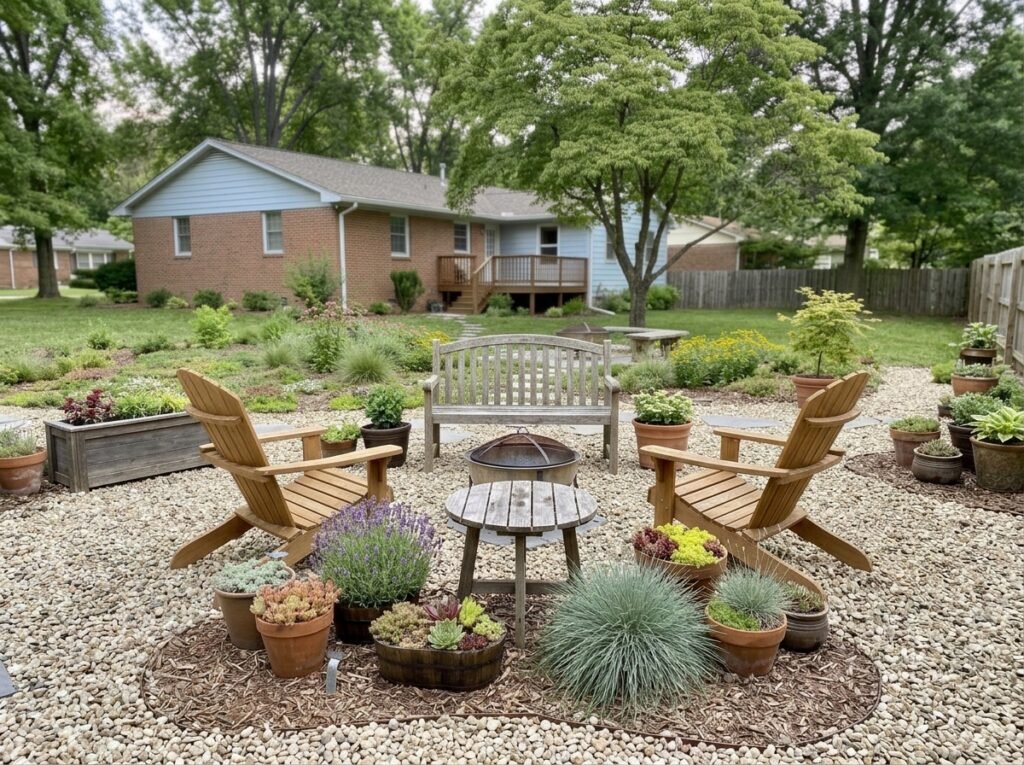
You do not need to redesign the whole backyard to use xeriscaping ideas.
Start with one sunny section. Remove the grass and use a mix of:
- Plants suited to your region
- Mulch or gravel
- Rocks
- Simple paths
The goal is not to fill the yard with stones. The goal is to match plants and materials to the site so they need less extra water and care.
9. Use Containers Instead of a Lawn Bed
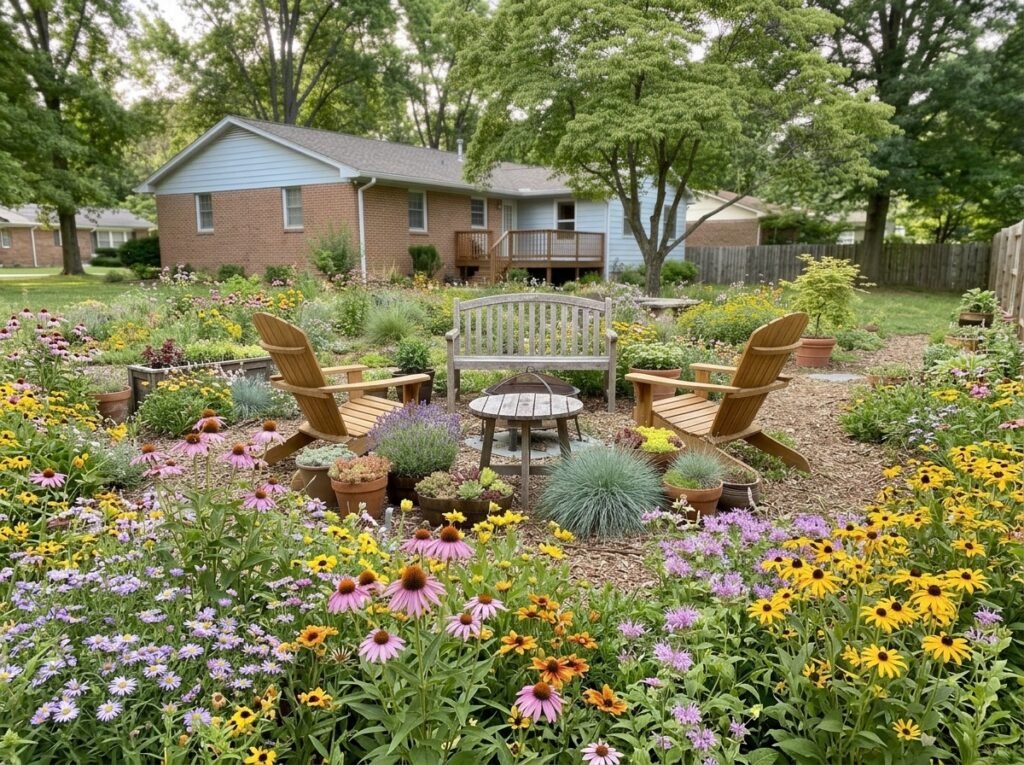
Containers are useful when you want plants without making permanent garden beds.
They are especially practical for:
- Small backyards
- Patios
- Rental homes
- Poor soil
- Spaces where you may change the layout later
Use pots for herbs, flowers, compact shrubs, or small ornamental grasses that match your climate.
You do not need every pot to match. A few simple containers in similar sizes or colors can look more organized than many small pots placed around the yard.
Remember that containers usually dry faster than plants growing in the ground, so they are not always the lowest-maintenance choice for a large space.
10. Add Raised Beds With Gravel or Mulch Paths
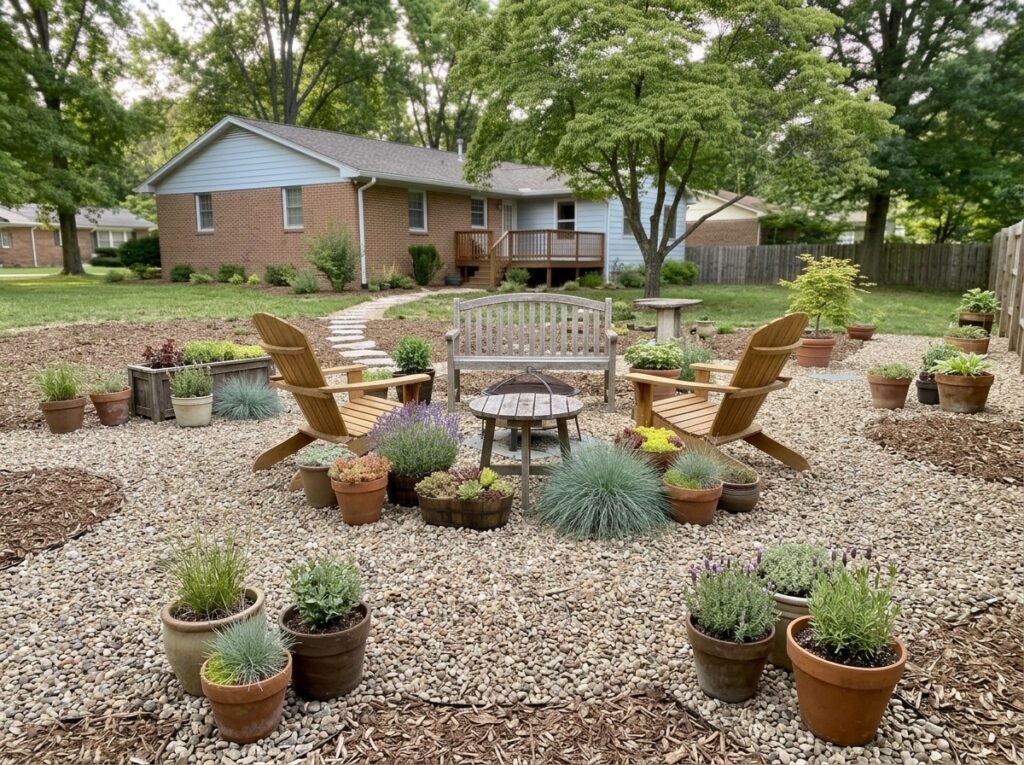
Raised beds can replace a section of lawn while giving the space a clear purpose.
Instead of grass between the beds, use:
- Wood chips
- Mulch
- Gravel
- Stepping stones
This removes narrow strips of turf that are hard to mow.
Raised beds can hold vegetables, herbs, flowers, or a mix. Keep the number of beds realistic. A backyard filled with garden beds may require more work than the lawn you removed.
11. Create a Simple Fire Pit Area
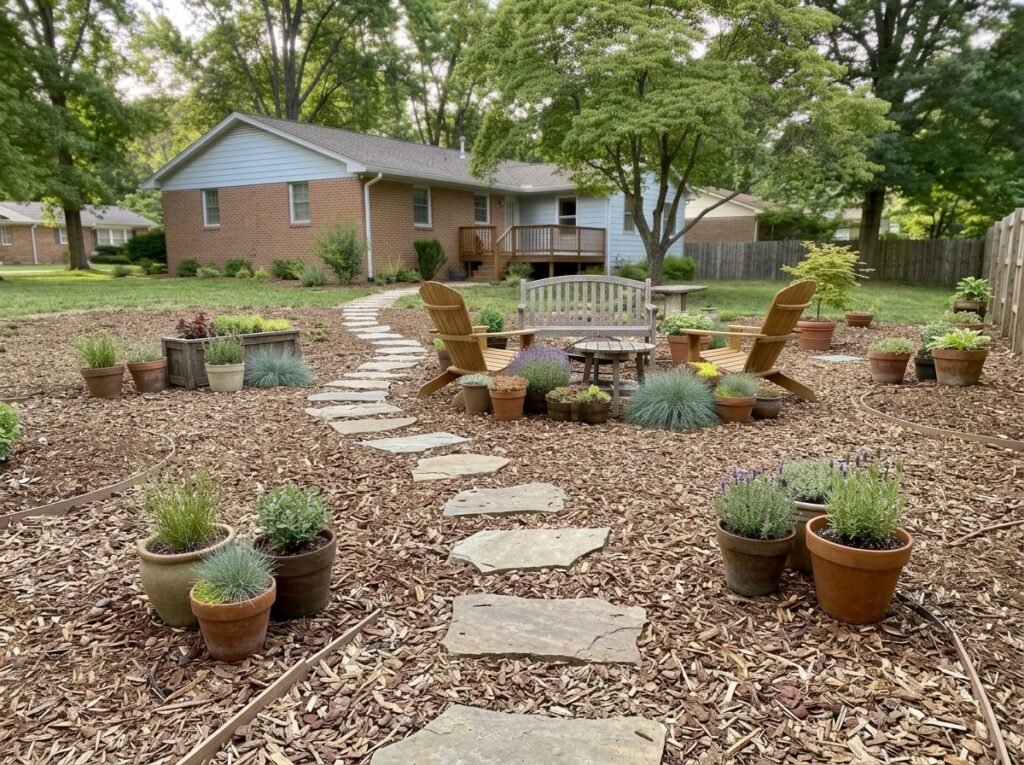
A small fire pit area can turn part of a grass lawn into a useful seating space.
A simple setup may include a fire pit, seating, and a surface allowed by the fire pit manufacturer and local fire rules. Check required clearances from buildings, fences, trees, and other materials that can burn.
Do not place a fire pit wherever it looks best without checking safety first. Local rules can limit where outdoor fires are allowed and how far a fire feature must be from buildings, fences, trees, or other materials that can burn.
Also check the fire pit manufacturer’s instructions before choosing the surface underneath it.
12. Mix Two Low-Cost Materials
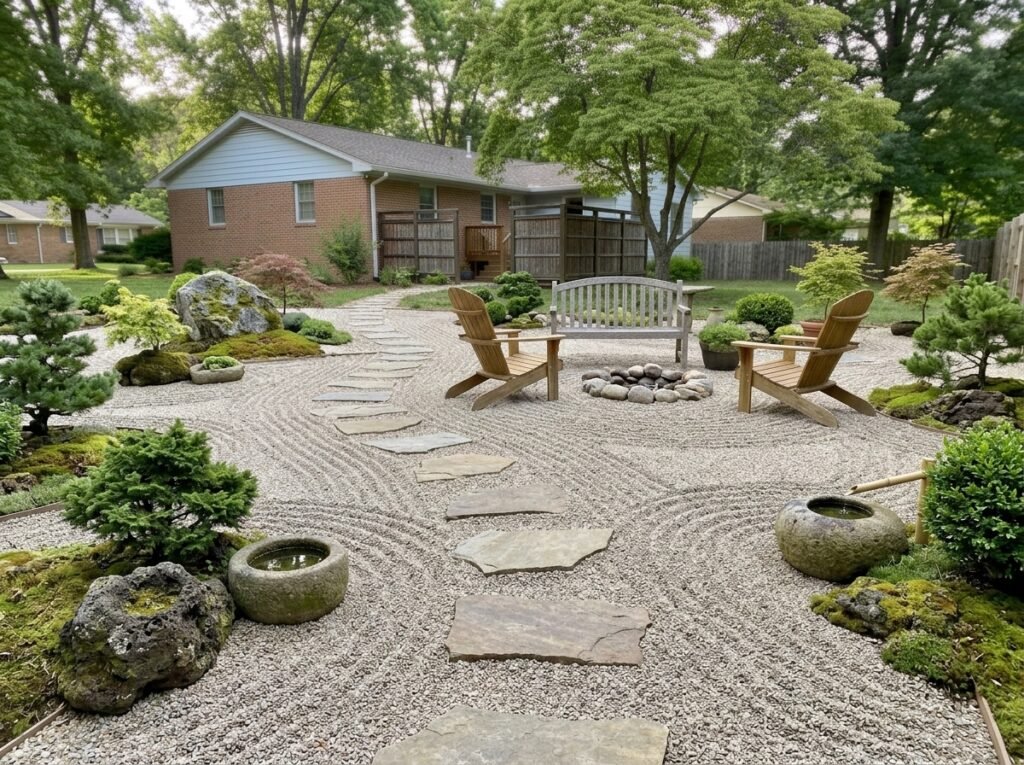
You do not have to cover the whole backyard with one material.
In fact, mixing two simple materials can save money and make the yard more useful.
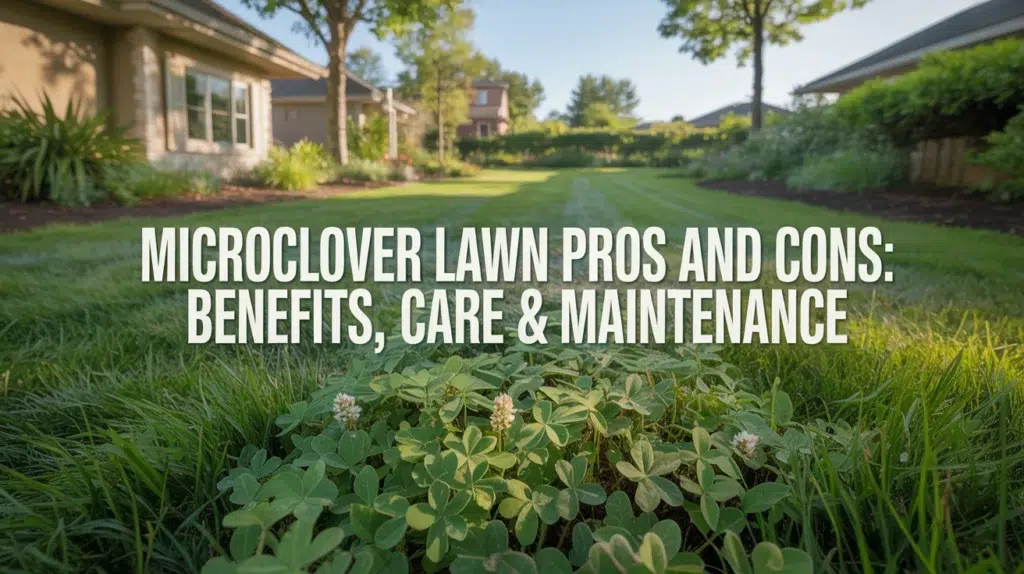
If you still want a soft, green surface instead of replacing grass with hardscape, microclover mixed into a lawn or used as a grass alternative is another option to explore. It can give a yard a greener appearance while reducing some of the mowing and maintenance associated with traditional turf.
Try:
Gravel + mulch: Use gravel for the sitting area and mulch around plants.
Pavers + gravel: Place pavers where people walk and gravel between them.
Wood chips + planting beds: Good for a natural backyard.
Ground covers + stepping stones: Gives you greenery without a full lawn.
Gravel + containers: A simple choice for a small backyard.
This is the approach Lawn Savy favors for many budget yards: give each part of the backyard a job instead of replacing every square foot of grass with one expensive surface.
How to Keep a No-Grass Backyard Low Maintenance
Removing grass does not remove all yard work. The goal is to replace mowing and lawn care with simpler jobs.
Start With Good Edging
Edging keeps gravel, mulch, and wood chips where they belong. It also stops nearby grass from creeping back into the area.
Use simple edging that fits your yard. It does not have to be decorative.
Fix Drainage Before Covering the Ground
Do not cover a wet spot with gravel and assume the problem is fixed.
Watch the yard after heavy rain. Check for water that collects near the house, low areas that stay wet, and runoff that moves soil or mulch.
Drainage problems are much easier to correct before adding paths, patios, or planting areas.
Choose Plants for Your Climate and Light
A plant that fits the site usually needs less help.
Consider:
- Sun or shade
- Soil type
- Summer heat
- Winter cold
- Normal rainfall
- Mature plant size
The EPA provides state and regional plant resources that can help homeowners find plants suited to local conditions. WaterSense plant finder resources
Control Weeds Early
A few small weeds are easier to remove than a large patch.
Pull weeds before they flower and spread seed. Mulch can also help reduce new weed growth. Penn State Extension notes that organic mulches such as wood chips and shredded bark can help with weed control when used correctly.
Keep the Design Simple
Two or three main materials are usually enough.
For example:
- Gravel
- Mulch
- Plants
or:
- Pavers
- Ground covers
- Containers
A simple layout is easier to clean, repair, and keep looking neat.
Common Mistakes to Avoid
Assuming Artificial Turf Is Always a Cheap Option
Artificial grass removes mowing, but the full project can include ground preparation, base materials, drainage work, edging, installation, and future cleaning.
Compare the full job before assuming it is the cheapest grass alternative.
Covering a Drainage Problem
Mulch, gravel, pavers, and artificial turf will not repair poor grading.
Find out why water is collecting before covering the ground.
Choosing Ground Covers Without Checking Your Area
A ground cover that works well in one state may struggle or spread too aggressively in another.
Look for plants suited to your climate and check local invasive-plant guidance.
Turning the Whole Backyard Into Hardscape
More concrete or stone does not always mean less trouble.
Large hard surfaces can become hot and may increase runoff if water cannot soak into the ground. Keeping some planted or permeable areas can make the backyard cooler and help manage rainwater.
Which Cheap No-Grass Option Is Best for Your Yard?
Use this quick guide to narrow down your choice:
- Lowest starting cost: Wood chips or mulch
- Very little regular upkeep: Gravel or properly installed pavers
- Want the yard to stay green: Suitable low-growing ground covers
- Hot and dry backyard: A small xeriscape or rock garden
- Small backyard: Gravel with containers
- Shady backyard: Mulch, wood chips, or shade-tolerant ground covers
- Want a seating area: Gravel or a small paver patio
- Renting: Containers and other easy-to-remove materials
- Want several uses in one yard: Mix two or three simple materials
Keep the Backyard Simple and Useful
You do not need an expensive patio or a full landscape makeover to remove some of your lawn. Start with the part of the backyard that causes the most work, then choose an option that fits how you use the space.
For many yards, the best budget solution is a simple mix of two or three materials. Good drainage, clear edges, and the right plants will usually matter more than using expensive materials.
Frequently Asked Questions
What Is the Cheapest Way to Cover a Backyard Without Grass?
Wood chips and mulch are often among the lowest-cost choices, especially when you can get suitable local material in bulk. Gravel can also be budget-friendly for a small area and usually lasts longer than organic mulch.
The cheapest option depends on what is available near you and whether you do the work yourself.
What Can I Put in My Backyard Instead of Grass?
Common grass alternatives include gravel, wood chips, mulch, pavers, ground covers, native planting beds, raised beds, rock gardens, and small patios.
You can also combine several options rather than replacing the whole lawn with one material.
Is Gravel Cheaper Than Artificial Grass?
Gravel is often a simpler material for a basic backyard area, while artificial turf normally needs more ground preparation and a more detailed installation.
The better choice also depends on how you use the yard. Gravel works well for paths and seating. Artificial turf may suit people who specifically want the look and feel of a lawn without mowing.
What Is the Lowest-Maintenance No-Grass Backyard Option?
A well-prepared gravel or paver area can need very little regular work. You may still need to remove weeds, clean the surface, or rake loose gravel.
Plant-based options need more care while they become established, but well-chosen ground covers and native plants can become easier to maintain later.
How Can I Make a Dirt Backyard Look Better Without Spending a Lot?
Start with one small area rather than the whole yard.
You might create a wood-chip path, add a simple gravel sitting area, expand a mulched planting bed, or use a few containers. Clear edges and a simple layout can make low-cost materials look planned rather than temporary.
What Is the Best No-Grass Idea for a Small Backyard?
A mix of gravel or pavers with a few containers works well in many small yards. It gives you a usable surface without filling the space with plants that need constant care.
Ground covers between stepping stones can also work when you want a softer look.
Do No-Grass Backyards Still Get Weeds?
Yes. Gravel, mulch, pavers, and ground covers can reduce weeds, but none makes a yard completely weed-free.
Remove existing weeds before installing the new surface, keep edges neat, and pull new weeds while they are small. Dense ground covers and correctly used mulch can also reduce open soil where weed seeds can grow.