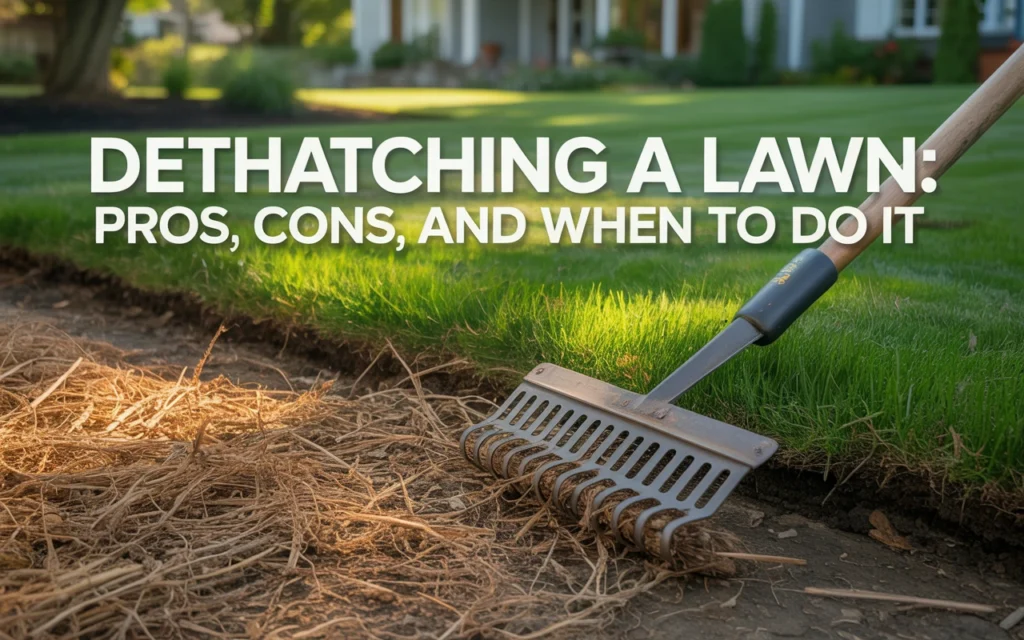
The pros and cons of dethatching lawn depend on one thing first: whether your lawn actually has too much thatch. Dethatching can improve water, air, and nutrient movement when the thatch layer is excessive, but it can also stress healthy grass if done too aggressively or at the wrong time. A thin layer of thatch is normal and useful, so check the lawn before deciding to remove it.
If you are unsure whether your lawn needs work, start with these practical lawn care tips before reaching for a dethatching rake.
Dethatching can help a lawn when the thatch layer is too thick and is blocking water, air, or nutrients from reaching the soil. However, dethatching can also stress healthy grass and is unnecessary when the thatch layer is thin. Check your lawn before deciding to dethatch.
What Is Lawn Thatch?
Thatch is a layer of dead and living plant material that builds up between the green grass and the soil. It can include stems, roots, and other parts of the grass plant.
A small amount is normal. In fact, a thin thatch layer can cushion the lawn, help moderate soil temperature, and reduce water loss. UC Agriculture and Natural Resources notes that a layer under about ½ inch can be beneficial.
The problem starts when thatch becomes too thick.
Excessive thatch can slow the movement of water, air, and nutrients into the soil. It can also create conditions that favor some pests and lawn diseases.
Quick Look: Pros and Cons of Dethatching Lawn
Dethatching can help when thatch is too thick, but it is not something every lawn needs.
| Pros | Cons |
| Improves water and air movement | Can stress healthy grass |
| Helps nutrients reach the root zone | Can remove useful thatch |
| Helps new seed reach the soil | Can expose soil to weeds |
| Reduces problems caused by thick thatch | Aggressive dethatching can damage turf |
| Can improve lawn recovery when thatch is excessive | Requires the right timing and technique |
The goal is not to remove all thatch. You only want to remove enough to correct excessive buildup without damaging healthy grass.
You do not need to remove all thatch. The goal is simply to remove excess buildup without harming healthy grass.
Pros of Dethatching Your Lawn
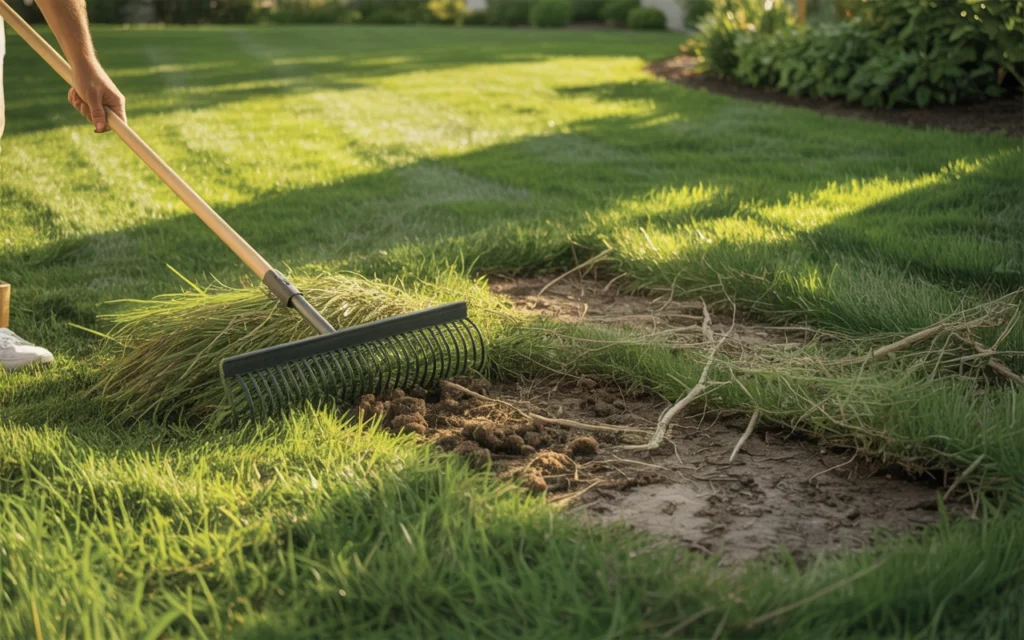
Improves Water, Air, and Nutrient Movement
A thick thatch layer can act like a barrier between your grass and soil.
When that layer becomes excessive, water may have trouble reaching the root zone. Air and nutrients can also move less freely through the lawn.
Removing excess thatch opens the surface and helps these resources reach the soil more effectively. UC ANR explains that thick thatch can restrict water, air, and nutrient movement and reduce root growth.
Helps New Grass Seed Reach the Soil
If you plan to overseed a lawn with excessive thatch, removing some of that material can help seed make better contact with the soil.
This matters because grass seed needs good soil contact to establish properly.
UC ANR includes dethatching as part of lawn renovation before overseeding when excessive thatch is a problem.
If overseeding is part of your plan, follow a proper grass overseeding routine rather than treating dethatching as a standalone fix.
Reduces Problems Linked to Excessive Thatch
Too much thatch can hold moisture near the grass surface and create a favorable environment for some pests and fungal problems.
Removing excessive thatch can improve the growing conditions around the turf and soil.
However, dethatching does not replace proper mowing, watering, or fertilizing. It addresses one specific problem: excessive thatch buildup.
Supports Healthier Turf When Thatch Is Excessive
When thick thatch is limiting water movement, restricting roots, or making the lawn feel spongy, removing some of it can help the grass recover.
The University of Maryland Extension explains that a thin layer of about ¼ to ½ inch can benefit a lawn, while excessive thatch around 1 inch or more can create problems.
That difference is important.
More thatch is not always better, and less is not always better.
Cons of Dethatching Your Lawn
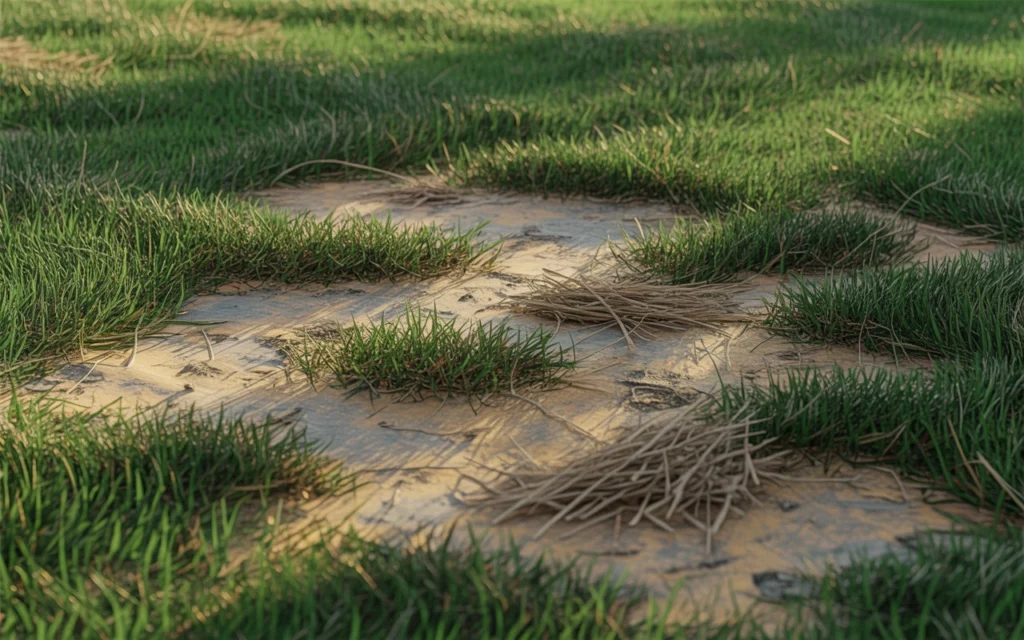
It Can Stress or Damage Grass
Dethatching is more aggressive than normal lawn maintenance.
Mechanical dethatchers pull organic material from the turf, and some living grass can come out with it. If you remove too much or use the wrong setting, you can leave the lawn thin and stressed.
Illinois Extension warns that mechanical dethatching can be destructive because grass roots may be growing within the thatch layer.
It Can Encourage Weed Growth
Dethatching can expose more bare soil.
That gives new grass seed a better place to grow, but it also creates an opportunity for weed seeds to establish if conditions are right.
UC ANR specifically recommends avoiding dethatching when weeds are germinating because disturbing the surface can encourage weed invasion.
It Removes Some Useful Thatch
A common mistake is thinking that all thatch is bad.
It isn’t. A thin layer can protect the soil surface and provide cushioning for the lawn. Removing healthy thatch simply because it is present can do more harm than good.
It Requires Proper Timing and Technique
Even if your lawn needs dethatching, the timing matters.
Grass that is dormant, drought-stressed, or struggling with extreme weather has a harder time recovering from the disturbance.
The right approach depends on the grass type and local growing conditions.
Does Your Lawn Actually Need Dethatching?
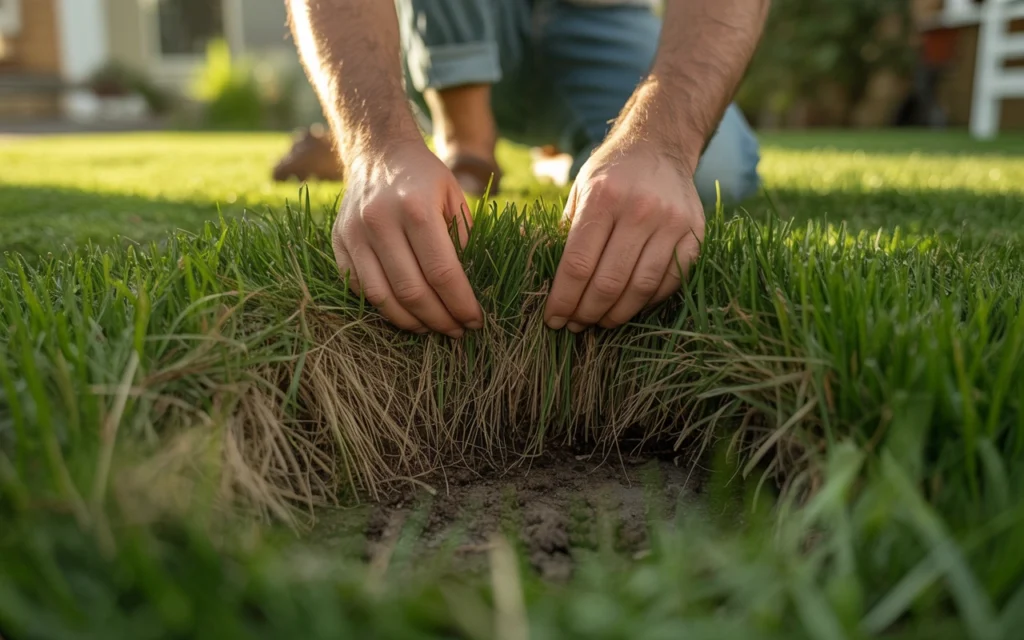
Before dethatching, check the thatch layer instead of relying only on how the lawn looks.
Cut a small square of turf with a spade and look at the brown, spongy material between the green grass and soil. Measure that layer at several spots because thatch can vary across the lawn. Measure from the soil surface to the bottom of the green grass layer.
As a general guideline, a thatch layer around ½ inch or less usually does not need removal. UC ANR recommends considering dethatching when thatch becomes excessive when the layer is more than ½ inch thick, while University of Maryland Extension notes that problems become more likely when excessive thatch reaches about 1 inch or more.
So don’t treat ½ inch as a hard rule for every lawn. Your grass type, soil, climate, and lawn condition also matter.
Signs Your Lawn May Need Dethatching
Look for:
- A thick brown layer above the soil
- A noticeably spongy or bouncy feel
- Water struggling to reach the soil
- Poor response to watering or fertilizer
- Thin patches despite otherwise good care
- A thatch layer that is clearly excessive when measured
If the soil itself is compacted, dethatching may not be the answer.
When Is the Best Time to Dethatch a Lawn?
The best time to dethatch depends on your grass type.
In general, dethatch when the grass is actively growing and has enough time to recover.
UC ANR recommends mid-to-late spring or early fall for both cool- and warm-season lawns, while other Extension guidance points to timing based on the specific turfgrass and its active growth period.
Cool-Season Grasses
Cool-season grasses generally recover best when they are actively growing during favorable spring or fall conditions.
Avoid dethatching during summer heat or when the lawn is already under drought stress.
Warm-Season Grasses
Warm-season grasses grow most actively during warm weather, so their best dethatching window can differ from cool-season turf.
For example, Purdue Extension notes that Kentucky bluegrass is best dethatched during active spring or fall growth, while zoysiagrass can be dethatched during its active summer growth period.
When You Should Not Dethatch
Avoid dethatching when the lawn is:
- Dormant
- Severely dry
- Heat-stressed
- Waterlogged
- Already weak or heavily damaged
A lawn needs enough growing power to recover after this type of disturbance.
What Can You Use to Dethatch a Lawn?
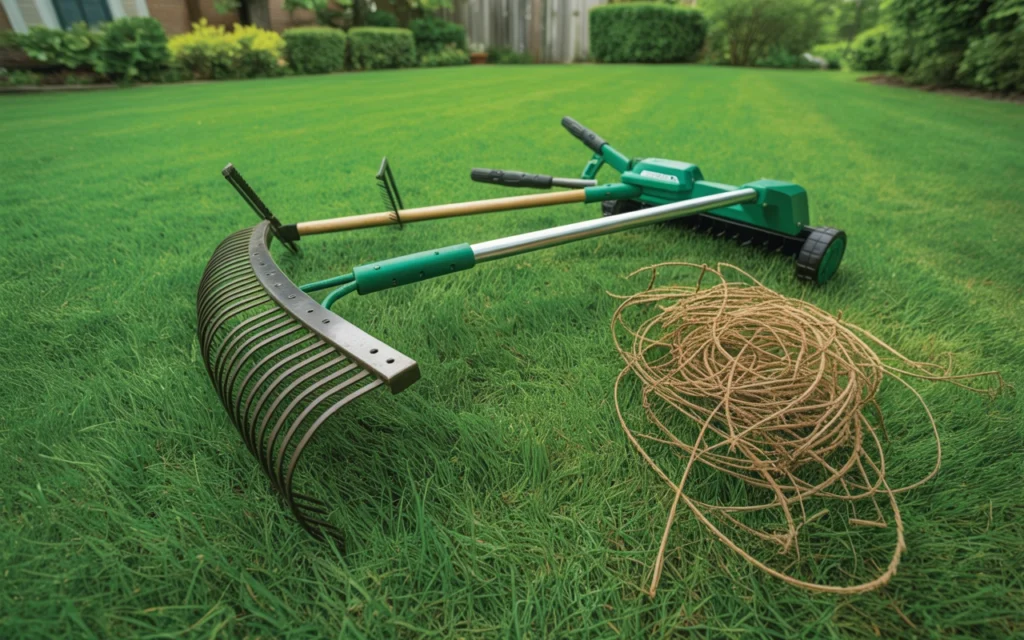
A lawn can be dethatched with different tools depending on the size of the problem.
- Dethatching rake: Best for very small areas.
- Manual scarifying rake: Useful for small lawns with light thatch.
- Power dethatcher: Better for larger lawns or thicker thatch.
- Professional equipment: May be useful when the lawn has severe buildup.
The tool matters less than the depth and timing. Removing too much thatch can damage healthy grass.
Dethatching vs. Aerating: Which Does Your Lawn Need?
Dethatching and aeration solve different problems.
| Lawn problem | Better first step |
| Thick thatch layer | Dethatching |
| Compacted soil | Core aeration |
| Poor water movement from compacted soil | Core aeration |
| Excessive thatch plus compaction | Assess both problems |
Dethatching removes excess organic material above the soil. Core aeration removes small plugs of soil to open the root zone.
If your main problem is compacted soil rather than excessive thatch, dethatching may not solve it.
In fact, Illinois Extension notes that core aeration can address soil problems such as compaction and poor drainage and may help reduce the reasons thatch builds up.
If your lawn is growing in heavy soil, improving grass growth in clay soil may be more useful than repeatedly removing thatch.
How to Avoid Excess Thatch Buildup
Dethatching is not the only way to manage thatch.
Avoid Excessive Fertilizer
Too much nitrogen can encourage fast growth and contribute to thatch buildup. Follow soil-test recommendations rather than applying fertilizer simply because the lawn looks weak.
Water Properly
Frequent, shallow watering can encourage shallow roots and contribute to lawn problems.
Established turf generally benefits from deeper, less frequent watering when conditions require irrigation. UC ANR lists overwatering and excessive fertilization among factors that can contribute to faster thatch buildup.
Mow Correctly
Keep mowing consistent and avoid removing too much of the grass blade at one time.
Healthy mowing habits help the lawn grow steadily without putting unnecessary stress on the turf.
Keep Your Soil Healthy
Healthy soil organisms naturally help break down organic material. Compaction, excess moisture, and other soil problems can slow this process.
Conclusion
The Pros and Cons of Dethatching Lawn depend on whether your lawn actually has too much thatch. A thin layer is normal and does not need to be removed.
If excessive thatch is affecting water movement, root growth, or lawn health, dethatching may help. Check the thatch layer first, choose the right time for your grass type, and avoid removing more material than necessary.
Dethatching is not a yearly task for every lawn. It works best as a targeted solution when your lawn truly needs it.
FAQs:Pros and Cons of Dethatching Lawn
Is dethatching good or bad for a lawn?
Dethatching is useful when excessive thatch is limiting water, air, or nutrient movement. It can be harmful when done unnecessarily or too aggressively. A thin layer of thatch is normal and can benefit the lawn.
How do I know if my lawn needs dethatching?
Check the brown layer between the grass and soil. Measure it in several areas. If the layer is excessively thick, especially around or above ½ inch, dethatching may be appropriate depending on your grass and lawn conditions.
How thick should thatch be before dethatching?
There is no single number that fits every lawn, but around ½ inch is a common guideline for considering dethatching. University of Maryland Extension notes that more serious problems are associated with excessive layers around 1 inch or more.
Can You Dethatch a Lawn Too Often?
Yes. Dethatching too often can damage healthy grass and remove useful organic material. Only dethatch when your lawn has excessive thatch buildup rather than doing it every year on a fixed schedule.
What is the best time to dethatch a lawn?
Dethatch during active grass growth when the lawn has enough time and suitable conditions to recover. The best season varies by grass type and climate.
Does dethatching damage grass?
It can. Mechanical dethatching removes organic material by pulling it from the turf, and some living grass can be damaged or removed in the process. Using the wrong timing, depth, or technique increases the risk.
Is dethatching better than aerating?
Neither is always better. Dethatching is designed to remove excessive thatch, while core aeration is better for compacted soil. Identify the main lawn problem before choosing between them.
How long does a lawn take to recover after dethatching?
Recovery depends on the grass type, weather, severity of dethatching, and lawn condition. A healthy actively growing lawn generally recovers faster than stressed turf. Avoid dethatching when the grass cannot recover well.