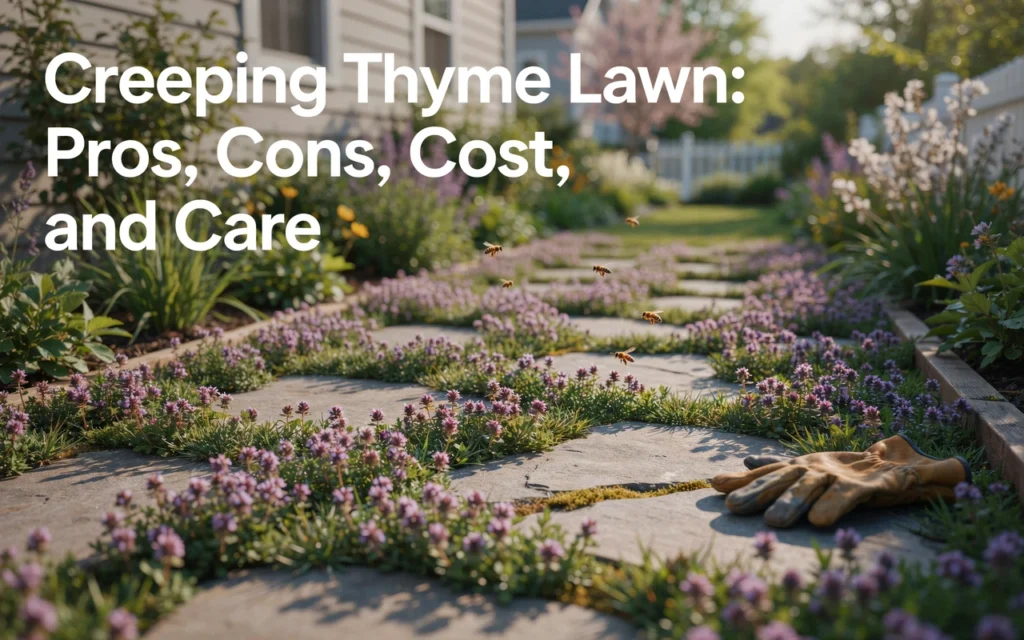
A creeping thyme lawn can be a good alternative to grass if you have a sunny yard, well-drained soil, and do not need a surface for heavy play. It stays low, produces small flowers, needs little mowing, and can use less water once established.
But it is not an easy replacement for every lawn. Creeping thyme can cost more to establish than grass seed, takes time to fill bare ground, and does poorly in wet soil. It also handles less foot traffic than a typical turf lawn.
Before removing your grass, make sure your yard has the right conditions for creeping thyme. At Lawn Savy, we focus on practical lawn and garden care to help you choose plants and lawn alternatives that fit your yard.
Is a Creeping Thyme Lawn Right for Your Yard?
Creeping thyme is a low-growing plant that comes back year after year and spreads outward to form a mat. Some creeping types stay only a few inches tall, making them useful as groundcovers and lawn substitutes.
It is a much better fit for some yards than others.
Creeping thyme may work well if you have:
- At least six hours of direct sun
- Soil that drains quickly
- Light foot traffic, with some types handling moderate traffic once established
- A small lawn or one section of a larger lawn
- A dry part of the yard where grass struggles
- Time to care for young plants while they fill in
Think twice if the area stays wet after rain, gets heavy shade, or is used every day by running children or pets.
This matters because creeping thyme likes full sun and good drainage. Thymus praecox, one of the plants commonly called creeping thyme, can tolerate dry and poor soil but is sensitive to wet, poorly drained conditions. The NC State Extension creeping thyme guide also lists it as a low-maintenance groundcover that can handle moderate foot traffic once established.
Pros and Cons of a Creeping Thyme Lawn
Pros
Little mowing
Low-growing creeping thyme usually does not need the regular mowing that turfgrass does. You may still trim it occasionally if stems become untidy or woody.
Lower water needs once established
Creeping thyme is well suited to dry conditions. Young plants still need water while their roots establish, but mature plants handle dry soil much better.
Flowers and fragrance
Depending on the type, creeping thyme can produce pink, purple, red, or white flowers. The leaves are also aromatic, especially when brushed or stepped on.
Good for difficult dry areas
Sandy, rocky, or lean soil can be a problem for some lawn grasses. Creeping thyme often performs well in these conditions as long as drainage is good.
Supports pollinators
The small flowers attract bees and butterflies. That can make a thyme lawn useful if you want more flowering plants around your yard.
Can fill spaces around paths
Creeping thyme works especially well around stepping stones, patios, rock gardens, and other areas where a full turf lawn is not necessary.
Cons
It can cost more to start
Grass seed can cover a large area cheaply. A thyme lawn planted with individual plugs needs many plants, so the starting cost can rise quickly.
It takes time to fill in
A newly planted thyme lawn will not look like a finished green carpet right away. Gaps between plants need time to close.
Young lawns need weeding
Open soil between new plants gives weeds room to grow. You may need to weed regularly until the thyme spreads into a denser mat.
Heavy traffic can damage it
Some creeping thyme can handle occasional or moderate walking, but it is not a good choice for a busy play lawn, sports area, or main path that gets constant traffic.
Wet soil can cause problems
Poor drainage is one of the biggest reasons creeping thyme fails. Constantly wet soil can lead to root rot.
It needs plenty of sun
A thyme lawn is usually a poor solution for a deeply shaded yard. Other groundcovers are better suited to low-light areas.
How Much Does a Creeping Thyme Lawn Cost?
There is no useful single price per square foot for every thyme lawn. Your cost depends mostly on how you plant it, how large the area is, and how much preparation the existing lawn needs.
Seed Can Have the Lowest Upfront Cost
If suitable creeping thyme seed is available, it can be the lowest-cost way to start a larger area.
The tradeoff is the time and care needed to get it growing. Creeping thyme can be harder to establish evenly from seed, and you need to keep weeds from taking over while seedlings are small.
Plugs Cost More but Give You More Control
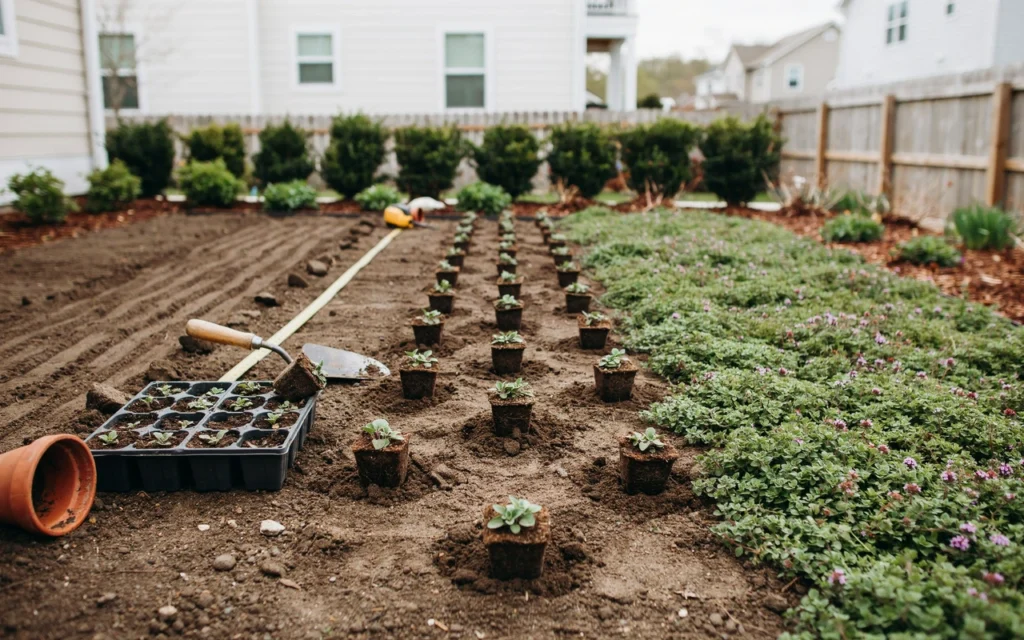
Plugs are small established plants spaced evenly across the planting area.
They cost more than seed, but you can see exactly where each plant is growing. This makes plugs a practical choice for smaller lawns or areas where you want more reliable coverage.
University of Minnesota Extension notes that creeping thyme can be tricky to establish from seed. Small seedlings, called plugs, may be easier to use in small areas, although they usually cost more than seed.
Larger Plants Make More Sense for Small Areas
Buying mature nursery plants gives you an instant head start, but it is usually the most expensive way to cover a whole lawn.
They make more sense for small patches, around stepping stones, or when you only need a few plants to expand later.
Estimate Your Own Plug Cost
A simple way to budget is:
Number of plugs needed × local price per plug = estimated plant cost
For example, planting on roughly 12-inch centers works out to about one plant for each square foot before allowing for borders and irregular spaces.
So a 100-square-foot area may need around 100 plugs at that spacing.
If your local plugs cost $2 each, that example would be about $200 for plants alone. This is only a budgeting example, not a national price. Grass removal, soil work, delivery, and labor can all increase the total.
For a large yard, replacing only part of the lawn can be a much cheaper way to test creeping thyme before committing to the whole space.
Seed or Plugs: Which Should You Choose?
For most homeowners, this is the main cost decision.
| Seed | Plugs | |
| Upfront cost | Lower | Higher |
| Establishment | Less predictable | More controlled |
| Initial appearance | Very sparse | Plants visible immediately |
| Weed control | More important | Still needed |
| Best for | Tight budgets | Small to medium areas |
If your yard is small and you want fewer establishment problems, plugs are usually easier to manage.
If the area is large and cost matters most, seed may be worth trying, but expect more patience and early care.
Whichever method you choose, check the exact plant or seed you are buying. “Creeping thyme” can refer to more than one species and many varieties, and they do not all grow at the same height or rate.
How to Plant a Creeping Thyme Lawn
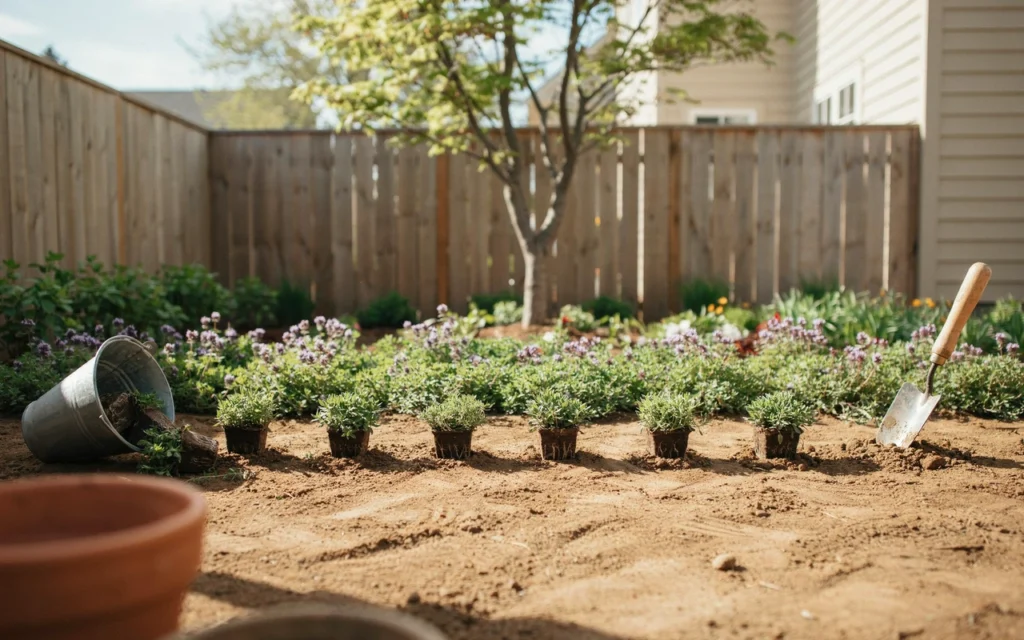
The hardest part is often preparing the ground, not planting the thyme.
1. Remove Existing Grass and Weeds
Do not plant thyme plugs into a thick lawn and expect them to take over quickly.
Remove the existing turf and as many perennial weeds and roots as possible. Starting with clean ground reduces competition while the thyme is young.
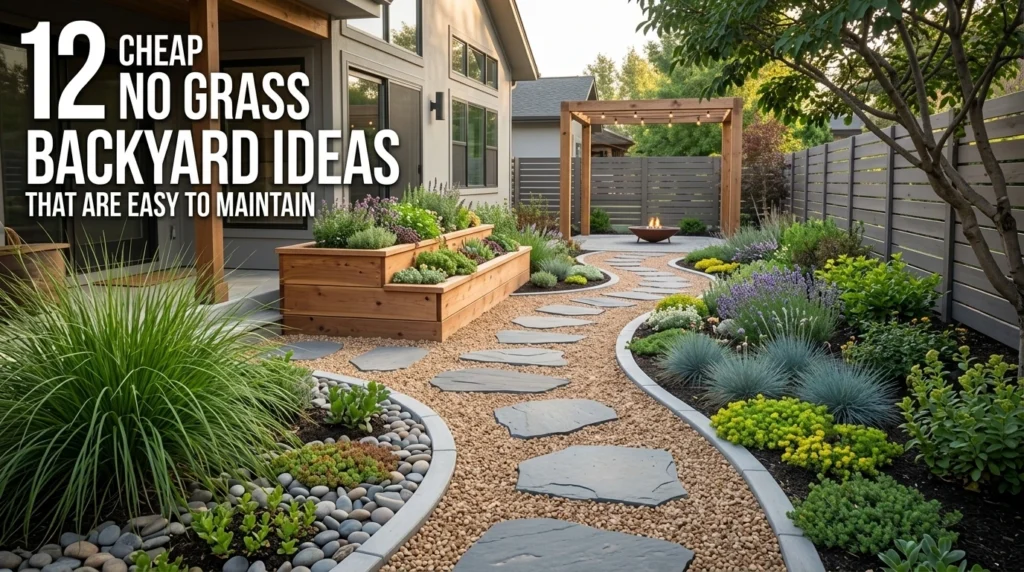
Removing turf does not mean you have to replace every part of the yard with another lawn substitute. If your goal is simply to reduce mowing and keep the project affordable, you can also combine planted areas with affordable no-grass backyard options such as mulch, gravel, groundcovers, or simple outdoor spaces.
2. Check the Drainage
After rain, look for puddles or areas that stay soggy.
If the site holds water for long periods, fix the drainage problem before planting. Adding creeping thyme will not solve wet soil.
3. Prepare the Soil
Thyme does not need rich, heavily fertilized ground.
Loose, well-drained soil is more important. Avoid adding large amounts of rich compost or fertilizer just to make the soil “better.”
4. Plant Seed or Plugs
Follow the spacing listed for the exact creeping thyme variety you buy.
With plugs, closer spacing costs more but closes the gaps sooner. Wider spacing reduces the starting cost but leaves more open ground while plants spread.
If using seed, follow the package directions rather than guessing at the seeding rate.
5. Water While Plants Establish
Do not treat a new thyme lawn as drought tolerant on day one.
Keep young plants from drying out while roots become established. Once the plants are growing strongly, watering can be reduced.
Creeping Thyme Lawn Care
One reason homeowners choose creeping thyme is its lower maintenance, but most of that benefit comes after the plants fill in.
Water Less After Establishment
Once established, creeping thyme prefers conditions on the drier side.
Water when needed rather than keeping the soil constantly wet. Overwatering is more dangerous than allowing an established plant to experience some dry soil.
Keep Weeds Out Early
Check the gaps between young plants regularly.
Pulling a few weeds each week is much easier than letting them mature and compete with the thyme. As coverage becomes denser, there should be less open soil for new weeds.
Do Not Overfeed It
A thyme lawn does not need the same feeding schedule as a heavily managed turf lawn.
Unless a soil test or clear plant problem suggests otherwise, avoid pushing growth with frequent fertilizer.
Trim When Needed
You usually do not need to mow a creeping thyme lawn like grass.
However, older thyme can develop woody or untidy stems. Light pruning can help remove untidy or woody growth and keep the plants looking neat.
Expect Winter Appearance to Vary
Do not assume your thyme lawn will look bright green through every winter.
Some creeping thyme may stay evergreen in mild winters, but winter color and growth depend on the type of thyme and your local climate.
Creeping Thyme vs. Grass
If you are choosing between thyme and a normal lawn, think about how you use the space.
| Feature | Creeping Thyme | Turfgrass |
| Regular mowing | Little or none | Usually yes |
| Heavy foot traffic | Not ideal | Usually better |
| Flowers | Yes | Usually no |
| Full sun | Preferred | Depends on grass type |
| Wet soil | Poor fit | Depends on grass type |
| Upfront cost | Can be higher | Seed can be cheaper |
| Water after establishment | Low | Varies by grass and climate |
| Best use | Decorative, low-traffic lawn | Active-use lawn |
Creeping thyme is not automatically “better” than grass. It is better for a different kind of yard.
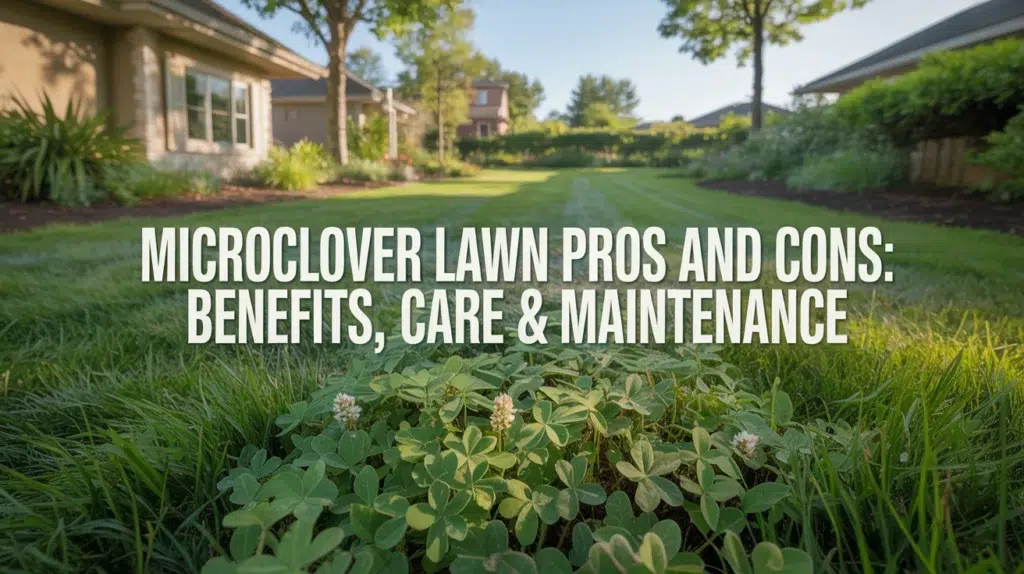
If you are looking for another low-growing alternative to traditional turf, microclover is also worth comparing. It offers a different balance of appearance, maintenance, and growing conditions, so looking at the benefits and drawbacks of microclover lawns can help you decide which option fits your yard better.
Conclusion
A creeping thyme lawn works best when you match it to the right site.
Choose it for sunny, well-drained areas where traffic is light and you are willing to give the plants time to fill in. In return, you can get a low-growing, fragrant lawn with colorful flowers and much less mowing.
The main mistake is expecting creeping thyme to behave exactly like grass. It costs more to establish with plugs, needs extra attention when young, and does not suit wet, shady, or heavily used yards.
For many homeowners, starting with a small section of lawn is the safest and most affordable way to see if it works.
Frequently Asked Questions
Can You Walk on a Creeping Thyme Lawn?
Yes. Established creeping thyme can handle some walking. NC State lists Thymus praecox as tolerating moderate foot traffic, but tolerance can vary by type. Creeping thyme is still better for occasional walking than constant running or heavy use.
How Long Does Creeping Thyme Take to Fill a Lawn?
There is no single fill-in time because it depends on the variety, starting plant size, spacing, climate, and growing conditions. Closer plug spacing usually gives a fuller look sooner, while wider spacing saves money but leaves gaps longer.
Will Creeping Thyme Choke Out Grass?
Do not rely on creeping thyme to kill an established lawn. Existing turf can compete with young thyme for water, light, and space. Removing grass and weeds before planting gives the thyme a much better start.
Does Creeping Thyme Grow in Shade?
Creeping thyme may tolerate a little less sun in some locations, but it performs best in full sun. A deeply shaded yard is not a good place for a thyme lawn.
Does Creeping Thyme Stay Green in Winter?
Sometimes, but not everywhere. Some creeping thyme remains evergreen through mild winters. In colder climates, its winter appearance may change, so do not choose it expecting the same green color in every season.