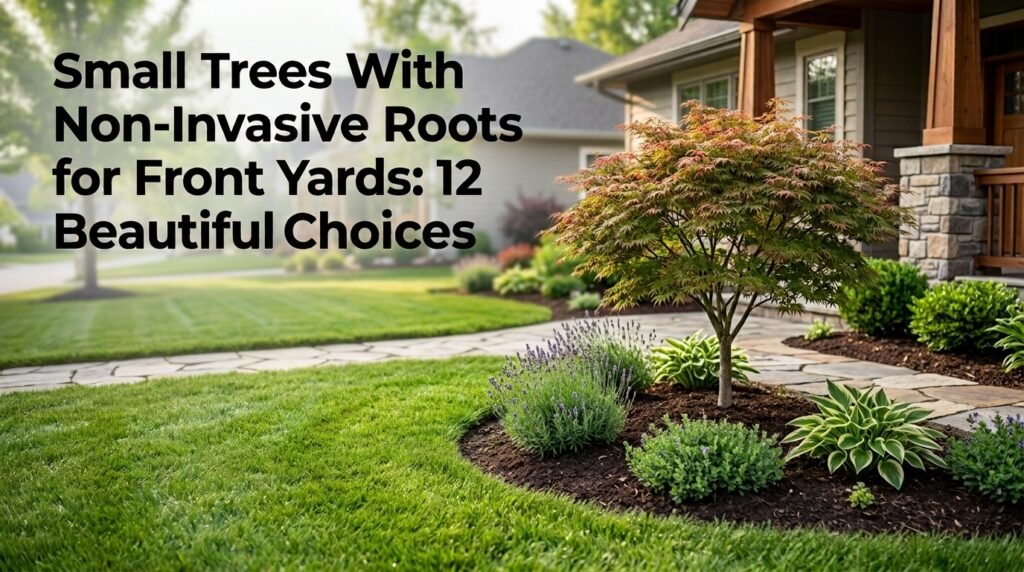
A small tree can add flowers, fall color, shade, and shape to a front yard without taking over the space. Some of the best small trees with non-invasive roots include Japanese maple, serviceberry, eastern redbud, Kousa dogwood, star magnolia, and dwarf Korean lilac.
Still, no tree has completely risk-free roots. Even a small tree can cause trouble if it is planted too close to a sidewalk, driveway, foundation, or underground line. The safest choice is a tree that stays small at maturity and has enough open soil for its roots to grow.
What Does “Non-Invasive Roots” Really Mean?
When people search for a tree with non-invasive roots, they usually want a tree that is less likely to lift pavement, crowd a foundation, or send large surface roots across the lawn.
The term does not mean the roots stay close to the trunk. Tree roots can spread well beyond the canopy, and limited root space can increase problems around pavement. Penn State recommends choosing a tree based on its mature size, available root space, nearby sidewalks, roads, and overhead lines.
The shape of your yard matters too. If the planting area sits on a slope, think about how rainwater moves through the space before choosing a tree or other landscaping features. Budget-friendly ideas for sloped yards can help you work with the existing grade while keeping bare soil covered and making the area easier to manage.
For Lawn Savy, the better way to think about these trees is small trees with less aggressive root systems when they are given enough space. Always check the mature width before planting, not just the size of the tree at the nursery.
12 Small Trees With Non-Invasive Roots for Front Yards
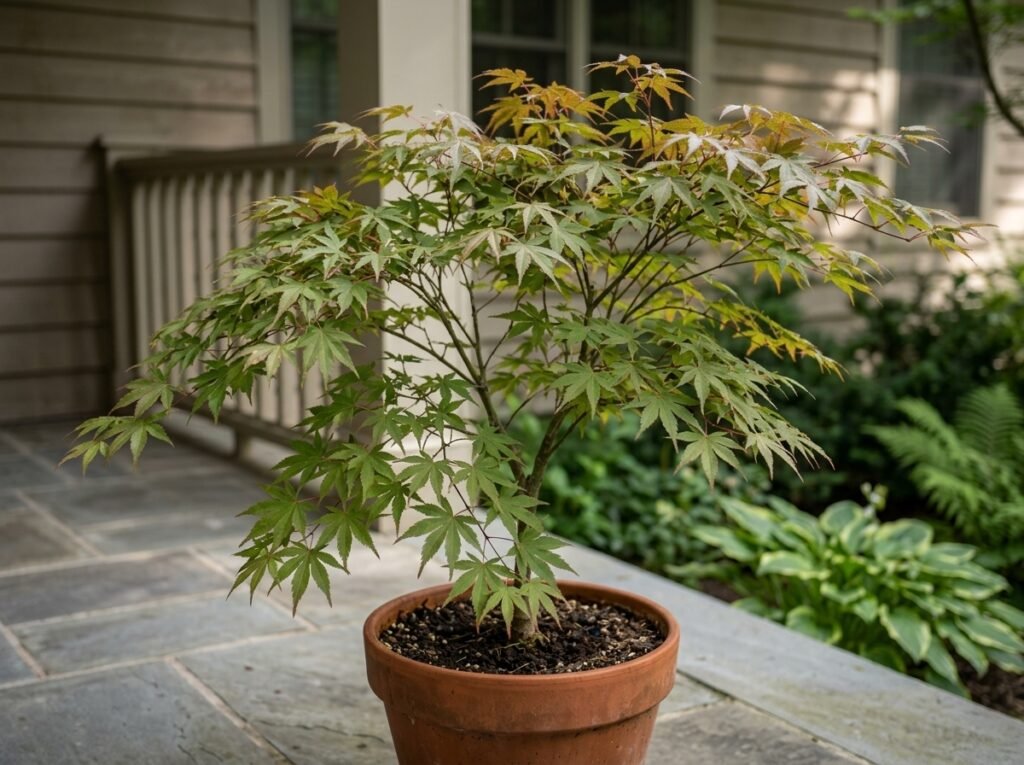
1. Japanese Maple — Best Overall for Small Front Yards
Botanical name: Acer palmatum
USDA zones: 5–8 for many cultivars
Mature size: Often 15–25 feet; compact cultivars can stay much smaller
Light: Dappled shade to partial sun
Best feature: Fine leaves and strong fall color
Japanese maple is one of the best choices when you need a tree that looks good without growing into a huge canopy. It has a graceful shape and comes in green, red, purple, orange, and gold-leaved forms.
The exact mature size depends heavily on the cultivar. For example, some compact types stay below 10 feet, while others reach 20 feet or more. NC State lists the species at about 15 to 25 feet tall and recommends moist, well-drained soil and protection from drying conditions. See Japanese maple growing details from NC State Extension.
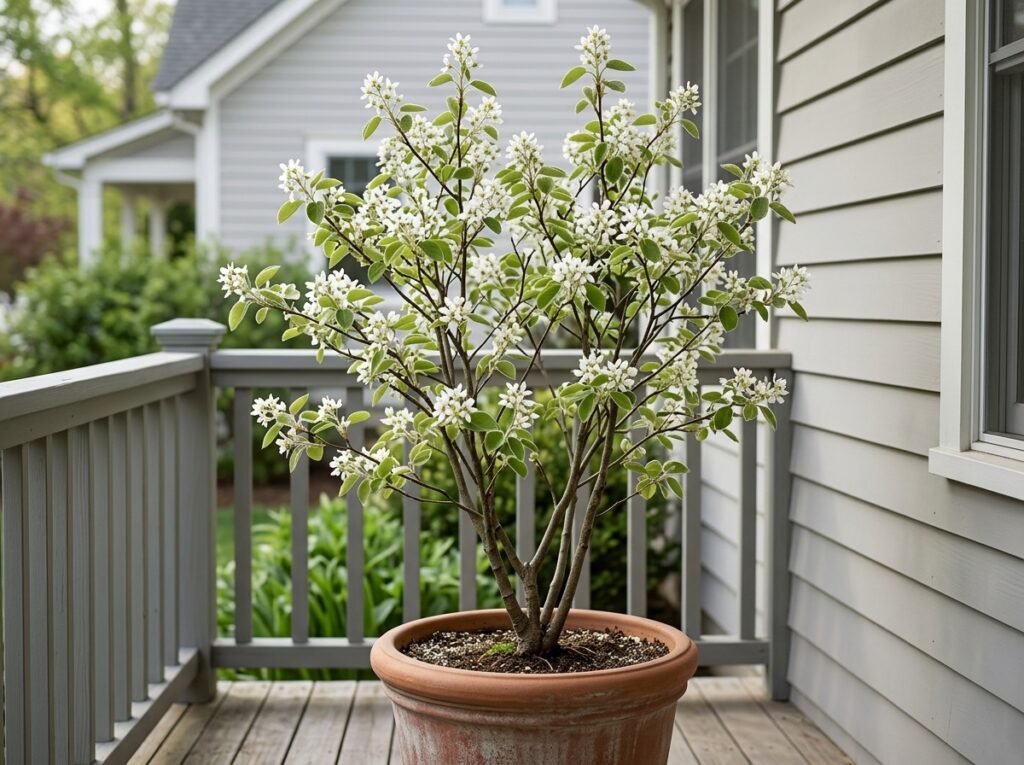
2. Serviceberry — Best Native Tree for Multi-Season Interest
Botanical name: Amelanchier species
USDA zones: About 3–8 for Canadian serviceberry
Mature size: About 15–25 feet
Light: Full sun to partial shade
Best feature: Flowers, berries, and fall color
Serviceberry gives you more than one season of interest. White flowers appear in spring, berry-like fruits follow, and the leaves can turn red or orange in fall.
It is also native to parts of North America and provides food for wildlife. Canadian serviceberry can grow about 15 to 25 feet tall and handles several soil types, including some clay.
Give it enough width if you choose a multi-stem form because some serviceberries grow more like a large shrub than a narrow tree.
3. Eastern Redbud — Best for Early Spring Color
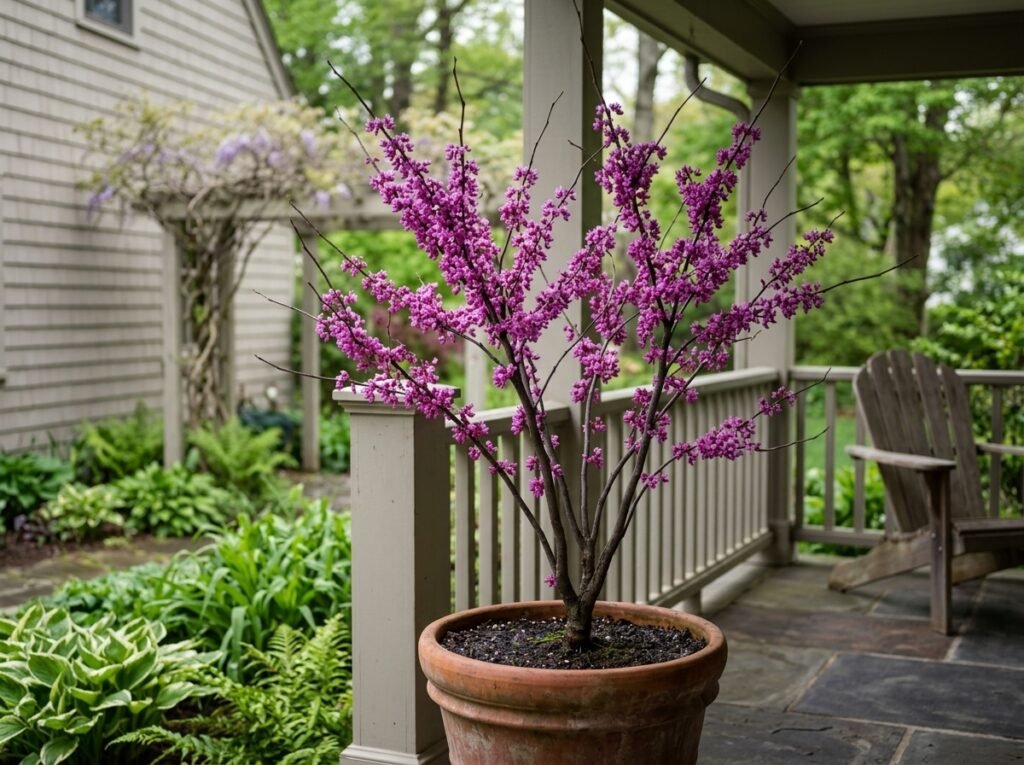
Botanical name: Cercis canadensis
USDA zones: About 4–9
Mature size: Usually 20–30 feet
Light: Full sun to partial shade
Best feature: Pink spring flowers
Eastern redbud is covered with pink to purple flowers before its leaves fully open in spring. After flowering, heart-shaped green leaves fill the branches.
It is native to eastern North America and works well as a small ornamental tree where it has enough room to spread. NC State notes that redbud may reach 20 to 30 feet tall and can grow in full sun or part shade. It does not like waterlogged soil or major root disturbance.
For a smaller front yard, look for compact redbud cultivars rather than choosing the largest standard form.
4. Kousa Dogwood — Best Flowering Dogwood for a Small Yard
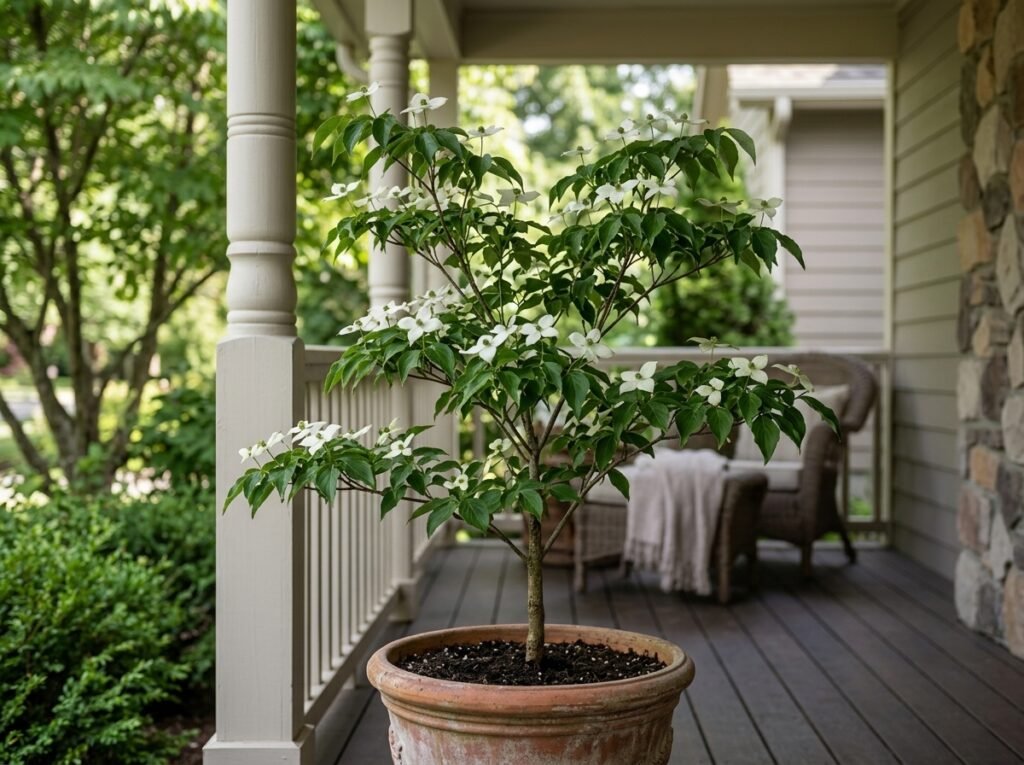
Botanical name: Cornus kousa
USDA zones: About 5–8
Mature size: About 20–30 feet
Light: Full sun to partial shade
Best feature: White spring flowers and fall interest
Kousa dogwood has a neat shape, showy white bracts, colorful fall foliage, and attractive fruit. It can work as a lawn specimen or near the front of a home when there is enough room for its mature canopy.
It grows slowly and prefers acidic, well-drained soil. NC State lists Kousa dogwood at roughly 20 to 30 feet tall and 15 to 30 feet wide. It also has better resistance to some dogwood diseases than native flowering dogwood.
Its width matters. Do not squeeze a full-size Kousa dogwood into a narrow strip beside a driveway.
5. Star Magnolia — Best for Early Spring Flowers
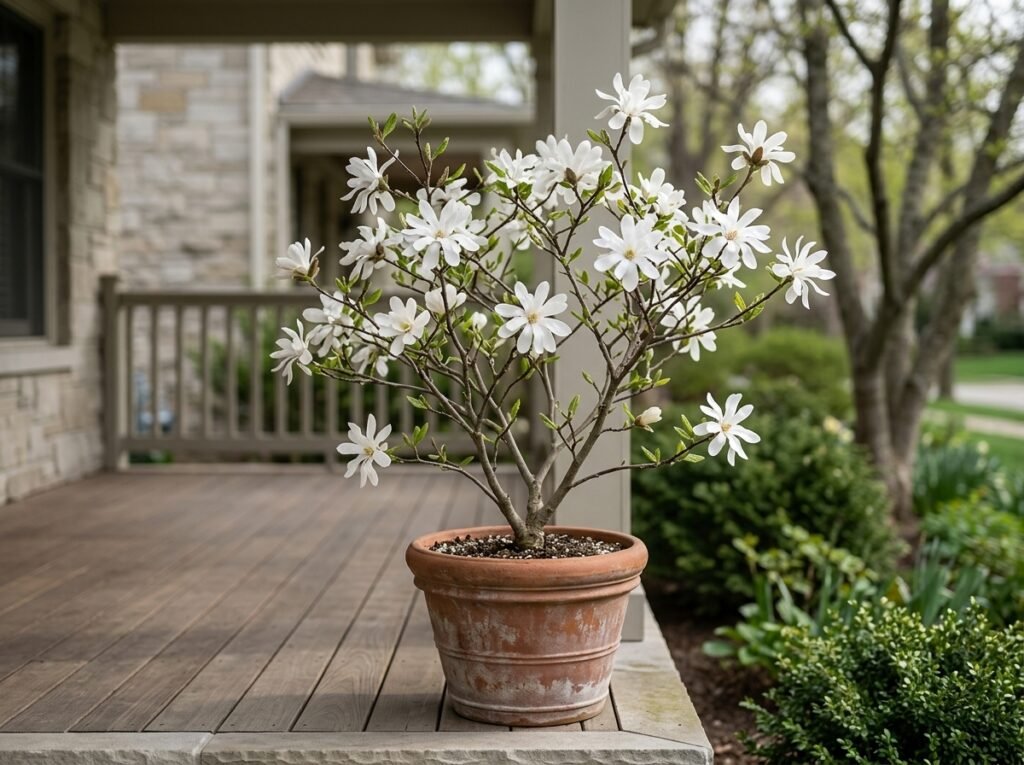
Botanical name: Magnolia stellata
USDA zones: About 4–8
Mature size: Around 15–20 feet tall and 10–15 feet wide
Light: Full sun to partial shade
Best feature: White, star-shaped flowers
Star magnolia is much smaller than many other magnolias. Its white flowers open very early in the year, often before the leaves appear.
Its compact size makes it useful beside a lawn, near an entrance, or in a small planting bed. NC State gives its mature size as roughly 15 to 20 feet tall and 10 to 15 feet wide.
Keep in mind that the early flowers can sometimes be damaged by a late frost.
6. Dwarf Korean Lilac — Best for Very Small Front Yards
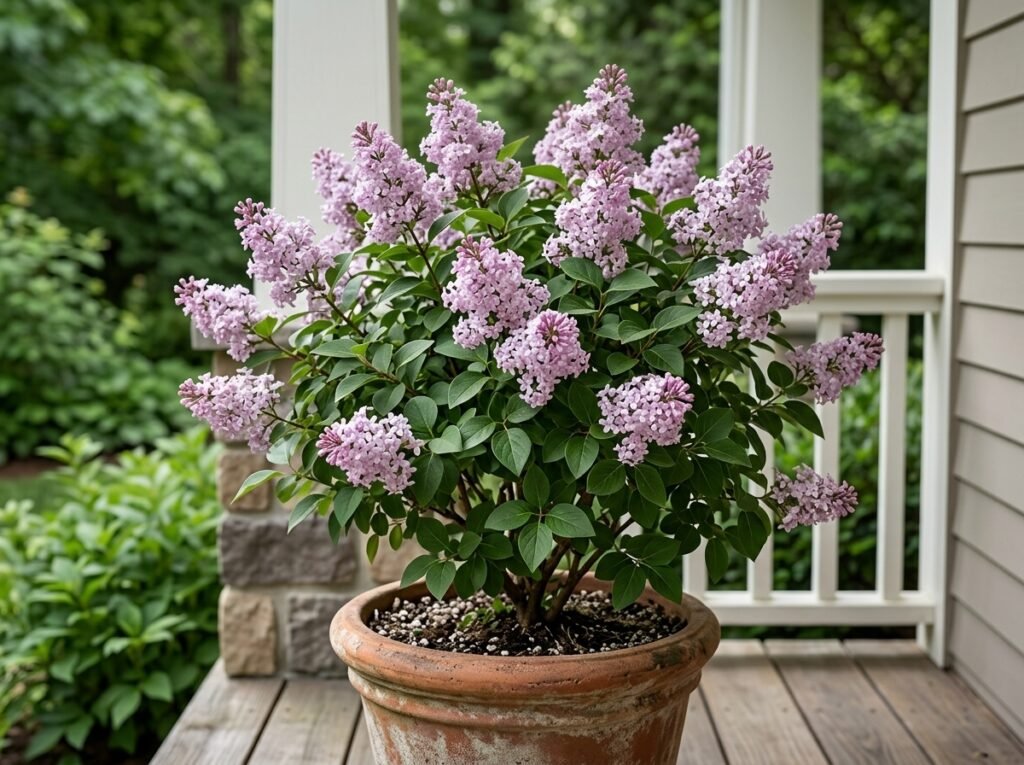
Botanical name: Syringa meyeri ‘Palibin’
USDA zones: 3–7
Mature size: About 4–5 feet as a shrub; tree forms may reach around 8 feet
Light: Full sun to light shade
Best feature: Fragrant spring flowers
Dwarf Korean lilac is a good option when even a 20-foot tree feels too large. ‘Palibin’ is often sold in tree form with a single trunk and rounded top.
Its pale purple flowers are fragrant and appear in spring. The plant performs best in well-drained soil and flowers most heavily with plenty of sun. NC State notes that Meyer/Korean lilac has good mildew resistance and handles urban conditions better than many lilacs.
It is a practical choice beside an entry walk or in a small lawn bed where a larger canopy would feel crowded.
7. American Fringetree — Best Native Tree With White Flowers
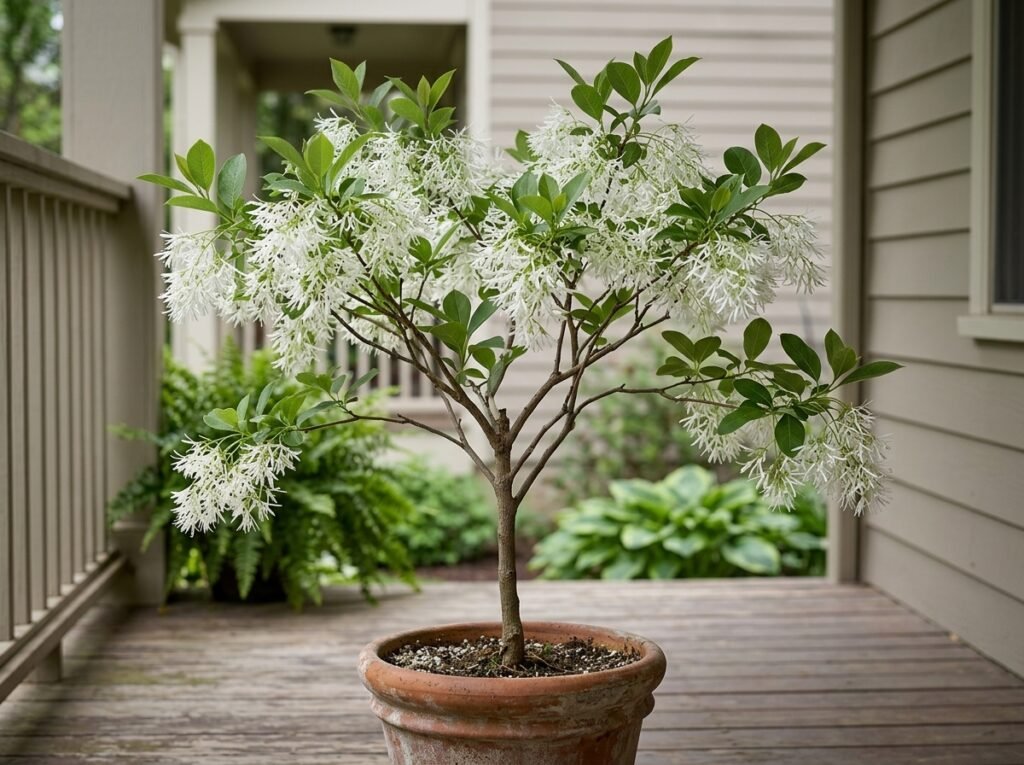
Botanical name: Chionanthus virginicus
USDA zones: About 3–9
Mature size: Roughly 12–30 feet tall and 12–20 feet wide
Light: Full sun to partial shade
Best feature: Soft white flowers
American fringetree has loose clusters of narrow white flowers that look almost like fringe. It is native to the eastern United States and attracts wildlife.
It grows slowly and can be used as a small specimen tree. More sun usually gives better flowering, while some afternoon shade can help in hotter areas. NC State lists it as a low-maintenance tree that can also tolerate clay soil.
8. Compact Crabapple — Best for Flowers and Wildlife
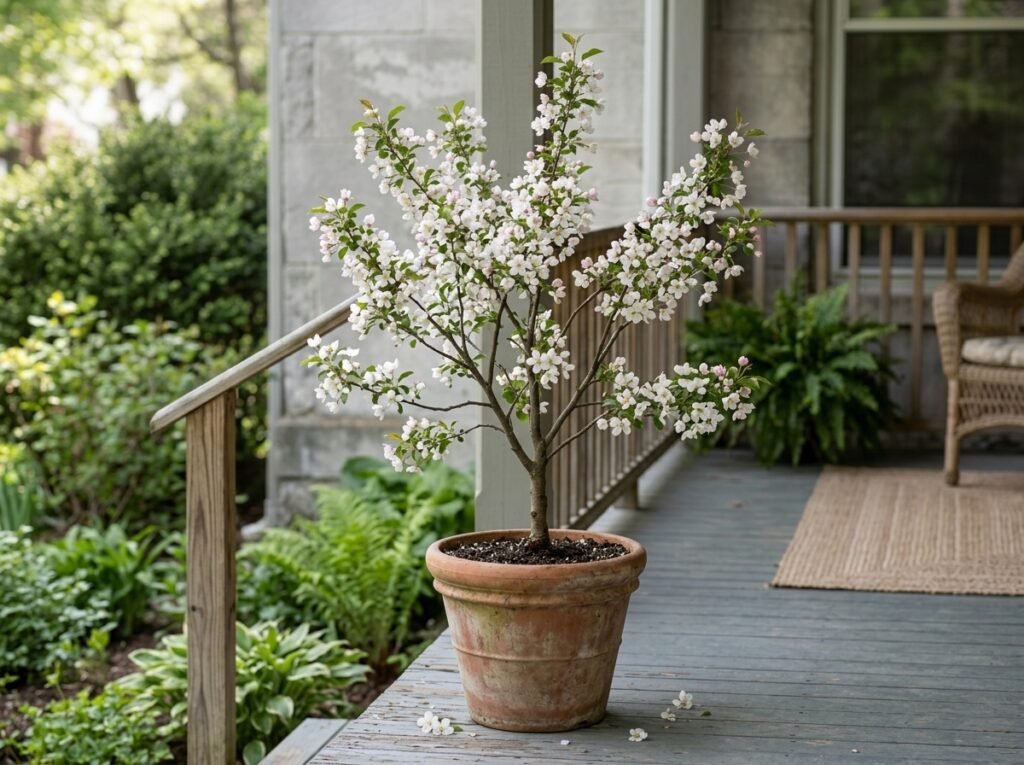
Botanical name: Malus cultivars
USDA zones: Vary by cultivar
Mature size: Often 15–25 feet; dwarf forms are smaller
Light: Full sun
Best feature: Spring flowers and small fruits
Flowering crabapples can be excellent front-yard trees, but cultivar choice matters. Some become broad trees, while others stay compact.
Look for a small, disease-resistant cultivar. ‘Royal Raindrops’, for example, reaches around 15 to 20 feet tall and 12 to 16 feet wide and has good resistance to several common crabapple diseases.
Crabapple fruits can attract birds, but some varieties may also drop fruit near walks and driveways. Check the cultivar before buying.
9. Paperbark Maple — Best for Year-Round Bark Interest
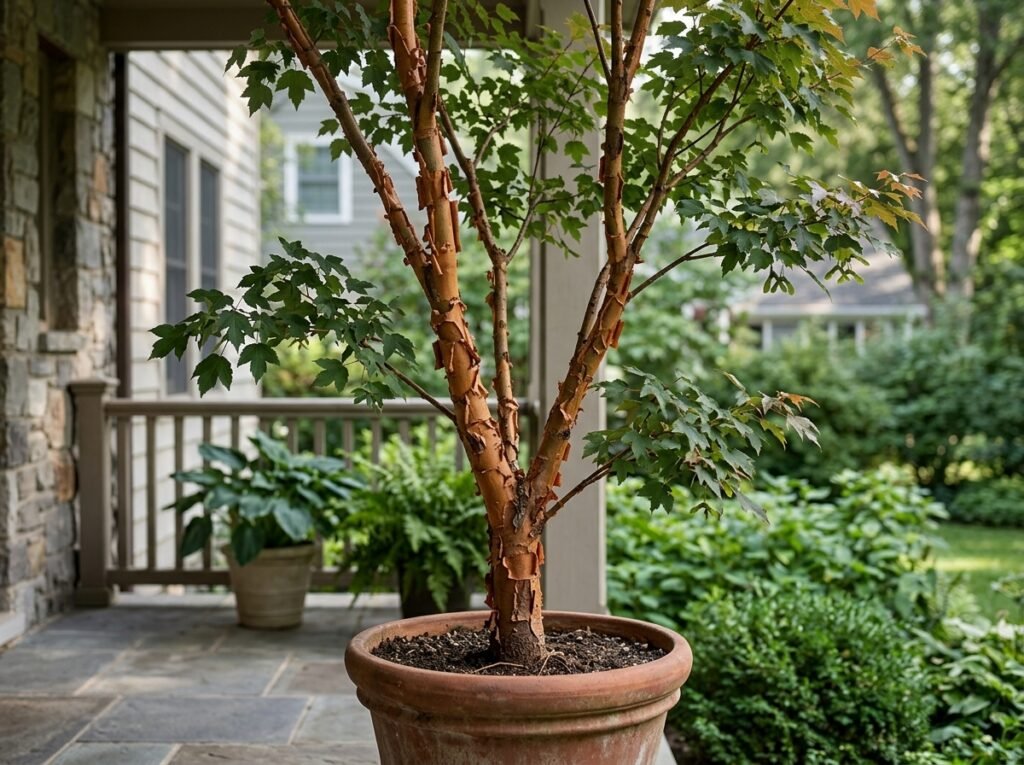
Botanical name: Acer griseum
USDA zones: About 4–8
Mature size: About 20–30 feet tall and 15–25 feet wide
Light: Full sun to partial shade
Best feature: Peeling cinnamon-colored bark
Paperbark maple grows slowly and has one of the most attractive trunks among small landscape trees. Its reddish-brown bark peels in thin curls, giving the tree winter interest after the leaves fall.
It also produces fall color and can handle several soil types as long as drainage is good. NC State lists it as well suited to smaller landscapes and hardscape areas when enough planting space is provided.
10. Japanese Snowbell — Best for Graceful White Flowers
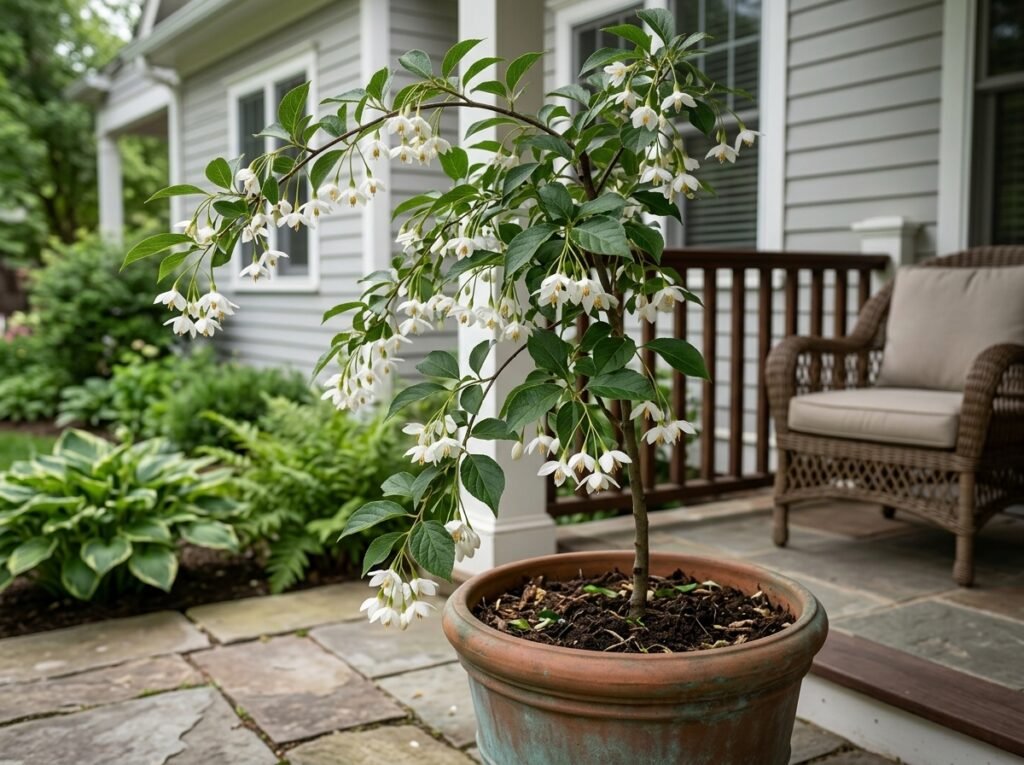
Botanical name: Styrax japonicus
USDA zones: About 5–9
Mature size: Varies, often around 20–30 feet
Light: Full sun to partial shade
Best feature: Hanging white flowers
Japanese snowbell has small white bell-shaped flowers that hang beneath its branches in late spring. Its horizontal branching gives it a soft, graceful look.
This tree prefers moist, acidic, well-drained soil. It does not handle severe heat or drought as well as some other choices, so it is better for a site where the soil does not dry out quickly.
11. Compact Crape Myrtle — Best for Hot, Sunny Front Yards
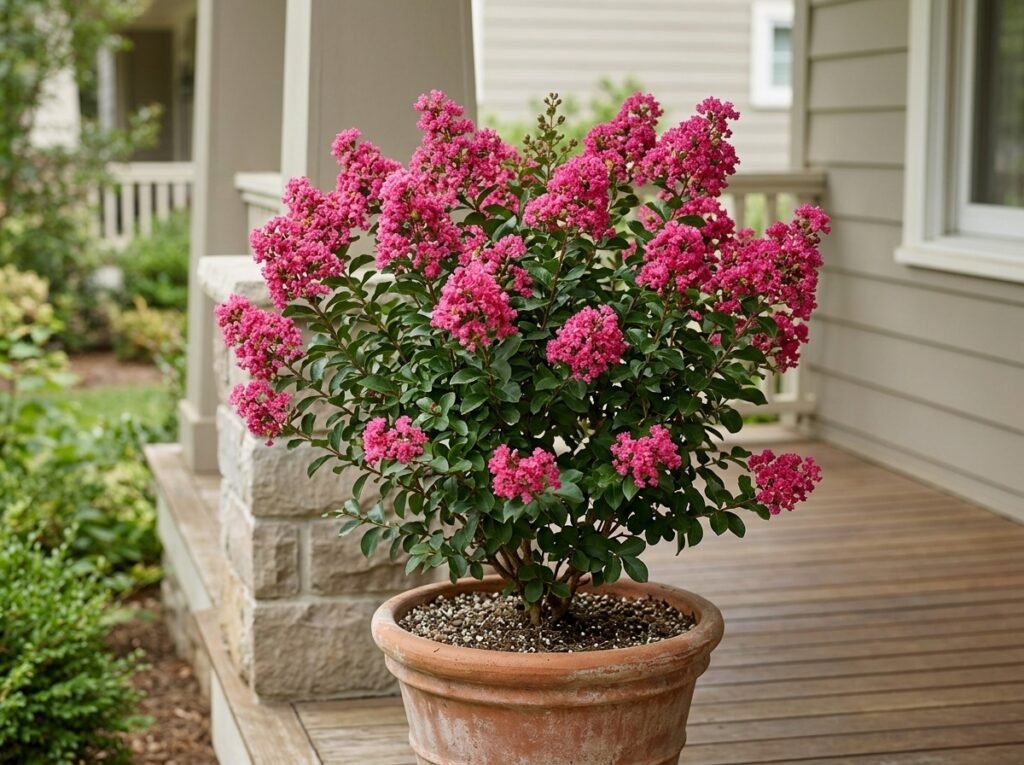
Botanical name: Lagerstroemia cultivars
USDA zones: Often 6–9, depending on cultivar
Mature size: From a few feet to more than 20 feet depending on cultivar
Light: Full sun
Best feature: Long summer bloom
Crape myrtles are especially useful in warm parts of the United States. Their flowers can last through much of summer, and many varieties also have attractive bark.
The key word here is compact. Crape myrtle cultivars vary greatly in size. NC State lists cultivars ranging from only a few feet tall to 20 or 30 feet.
For a small front yard, choose one with a clearly listed mature height rather than relying on pruning to keep a large tree small. Give it full sun for the strongest flowering.
12. Red Buckeye — Best Native Choice for Hummingbirds
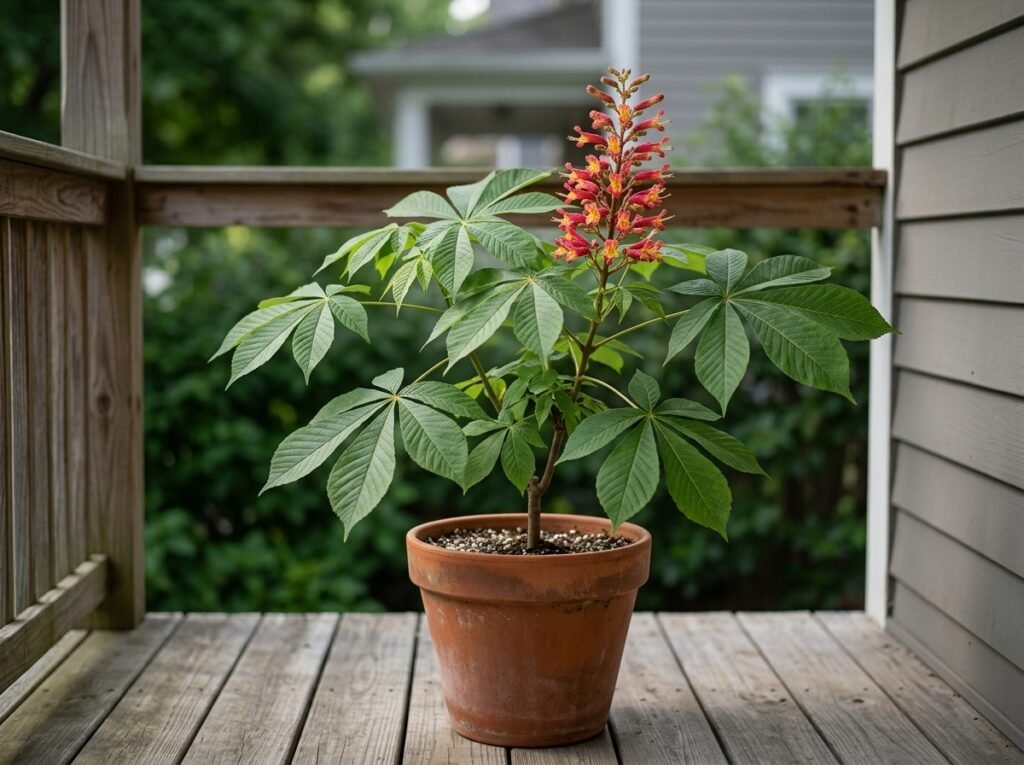
Botanical name: Aesculus pavia
USDA zones: About 4–8
Mature size: Around 15–25 feet
Light: Partial shade; can handle more sun with enough moisture
Best feature: Red spring flowers
Red buckeye is a small native tree with upright clusters of red to orange-red flowers. The blooms attract hummingbirds and butterflies.
It usually grows 15 to 25 feet tall and prefers moist, well-drained soil. Strong summer sun can scorch the foliage in hot areas, so partial shade can be helpful.
One caution: red buckeye is poisonous if eaten. It may not be the best choice where young children or pets could chew the seeds or other plant parts.
How to Choose the Right Small Tree for Your Front Yard
A pretty tree is not always the right tree for the space. Check these five things before buying. Know your USDA zone. Choose a tree that can handle your normal winter temperatures.
Measure the available space. Look at both height and width. A tree that reaches only 20 feet tall may still spread 20 feet wide. Check the mature size, not the nursery size. A young tree can look tiny when you bring it home but become much wider as it ages.
Match the light and soil. Japanese maple can handle some shade, while crape myrtle flowers best in full sun. Some trees also need much better drainage than others.
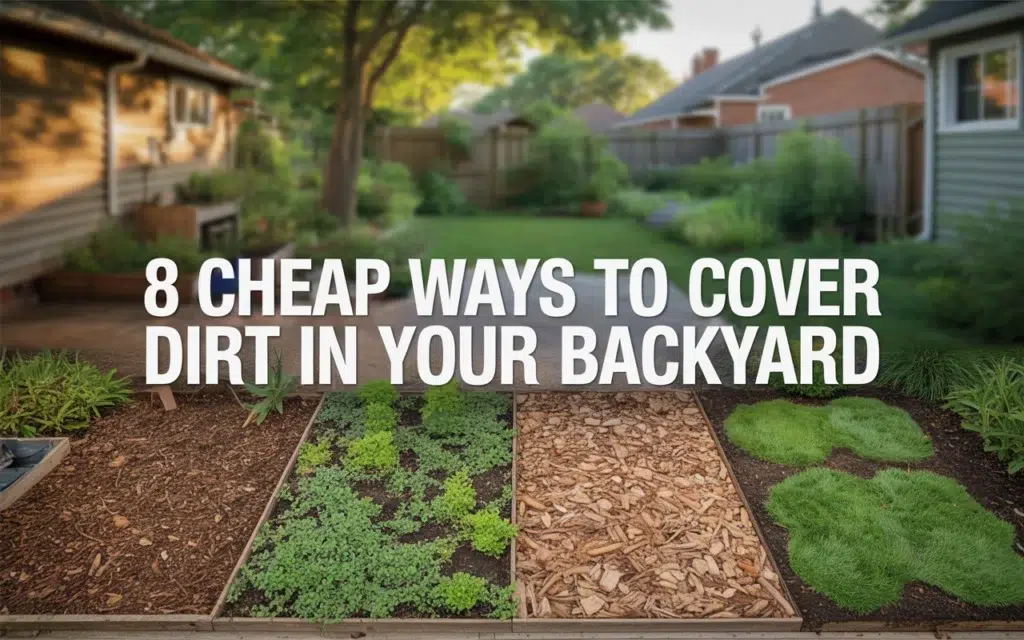
If the area around your new tree has exposed soil, you do not have to leave it bare while the landscape fills in. Low-cost ways to cover bare ground such as mulch, wood chips, ground covers, or grass can help protect the soil and make the planting area look finished while the tree becomes established.
Leave room around hard surfaces. Do not assume that a tree called “non-invasive” can be planted right against concrete. UGA Extension notes that limited root space and compacted soil can cause roots to grow close to the surface and increase conflicts with sidewalks and driveways.
Before planting near a house or driveway: Check the mature canopy width, underground utilities, drainage, and the amount of open soil around the tree. A smaller tree still needs space for healthy roots.
Conclusion: Choose a Tree That Fits the Space
The best small trees with non-invasive roots are not simply the trees with the smallest root systems. A better choice is a tree that stays a sensible size and has enough soil around it to grow without fighting nearby pavement or structures.
Japanese maple works well in smaller and partly shaded yards. Serviceberry and redbud are strong native choices, while star magnolia and dwarf Korean lilac suit tighter spaces. Match the tree to your climate, sunlight, soil, and available width before you plant.
At Lawn Savy, we recommend planning for the tree you will have in 10 or 20 years, not the small tree you see at the garden center today.
Frequently Asked Questions
What Small Trees Have the Least Aggressive Roots?
Japanese maple, serviceberry, star magnolia, dwarf Korean lilac, fringetree, and compact crabapple are good small-tree choices when they are planted with enough root space. No tree should be treated as completely root-safe.
What Is the Best Small Tree to Plant Near a House?
A compact Japanese maple, dwarf Korean lilac tree, or star magnolia may work well where space is limited. Check the cultivar’s mature width and keep enough open space between the trunk, foundation, and hard surfaces.
How Far Should a Small Tree Be Planted From a House?
There is no single distance that works for every tree. A 6-foot dwarf tree and a 25-foot spreading tree need very different amounts of space. Use the tree’s mature width, local planting guidance, and the location of underground utilities when choosing the planting spot. Penn State recommends selecting trees according to both above-ground and below-ground space.
Are Japanese Maple Roots Invasive?
Japanese maples are not normally chosen for aggressive surface roots, but their roots still spread beyond the trunk. Give the tree open soil and avoid planting it in a tiny space between concrete surfaces.
What Small Flowering Trees Are Good Near a Front Walkway?
Star magnolia, dwarf Korean lilac, compact crabapple, fringetree, serviceberry, and smaller redbud cultivars can all work near a front walkway when their mature width fits the available space.
Which Small Tree Is Best for a Sunny Front Yard?
Compact crape myrtle is a strong choice in warm climates with full sun. Crabapple, fringetree, and many redbuds also flower well with good sunlight. Always check the tree’s climate range before planting.
Which Small Tree Is Best for a Partly Shaded Front Yard?
Japanese maple is one of the strongest choices for partial shade. Serviceberry, Kousa dogwood, red buckeye, and Japanese snowbell can also handle some shade when their soil and climate needs are met.