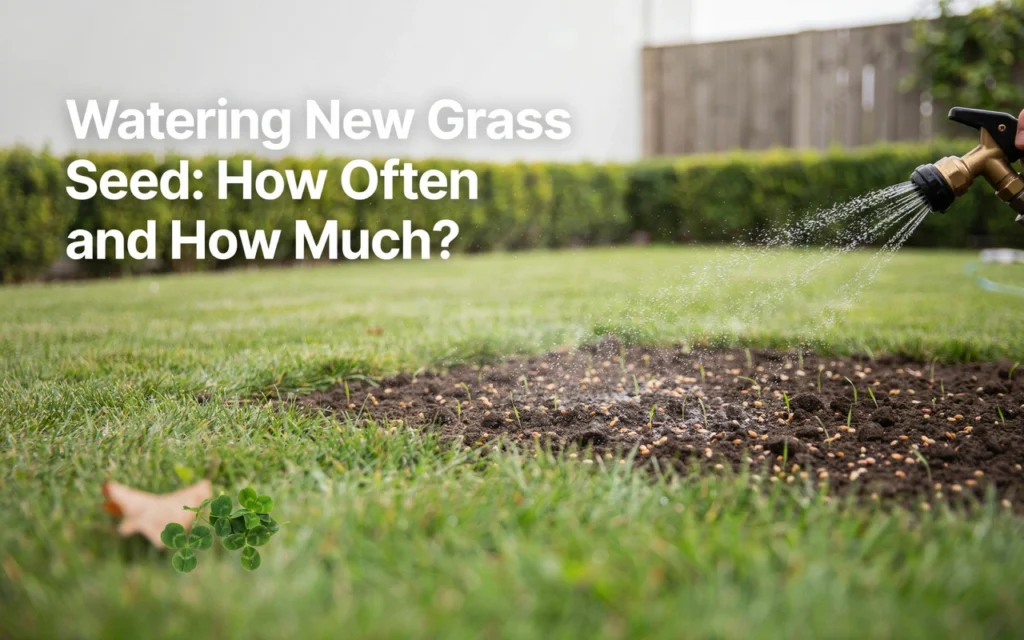
Watering new grass seed is less about following an exact number of minutes and more about keeping the seedbed—the top layer of soil where the seed sits—evenly moist. Before the seed sprouts, the top layer of soil should stay damp without becoming muddy or flooded.
In many yards, this means light watering one to three times a day during germination. Hot, dry, or windy conditions may require another light watering if the surface starts to dry. Hot, dry, or windy weather may require more frequent checks, while cool weather or rain may mean less watering. Once seedlings begin growing, slowly switch to deeper and less frequent watering so the roots start growing down into the soil.
At Lawn Savy, we focus on practical lawn-care tips that make tasks like watering, growing, and maintaining a healthy lawn easier to understand and follow.
Quick Watering Schedule for New Grass Seed
Use this as a starting point rather than a strict calendar. Your soil and weather should decide when the next watering is needed.
| Growth Stage | How Often to Water | What to Aim For |
| Before seeding | Water deeply once | Moist soil below the surface |
| Right after seeding | Water gently | Wet seed and soil without runoff |
| Before germination | 1–3 times daily as needed | Keep the surface evenly moist |
| After seedlings appear | Slowly reduce frequency | Keep the soil around young roots moist |
| As grass gets taller | Water less often and deeper | Encourage deeper roots |
| After establishment | Move toward normal lawn watering | Deep, less frequent watering |
The University of Minnesota Extension lawn-seeding guide recommends moistening the soil 4 to 6 inches deep before seeding, followed by light, frequent watering as needed. As the grass germinates and roots grow deeper, watering should gradually become less frequent. .
How Often Should You Water New Grass Seed?
New grass seed usually needs frequent, light watering until it germinates.
For many lawns, watering once in the morning and checking the soil later in the day is a good place to start. A second or third light watering may be needed if the surface begins drying out.
Do not water again simply because the clock says it is time. Touch or look at the soil first.
The surface should look darker than dry soil and feel damp. If it is still moist, you may not need more water.
During hot or windy weather, the soil surface can dry much faster. Newly seeded areas in full sun may also need more attention than a protected area that receives some afternoon shade.
If you are watering a lawn after adding new seed to an existing turf area, the preparation you do before watering also matters. Overseeding a thin lawn involves getting the seed to the soil, choosing a suitable grass type, and then keeping the seedbed consistently moist as it starts to grow.
Rain changes the schedule too. If the seedbed is already moist after a steady rain, do not add more water just to stay on schedule.
The goal is simple:
Keep the seed moist without keeping the soil soaked.
How Much Water Does New Grass Seed Need?
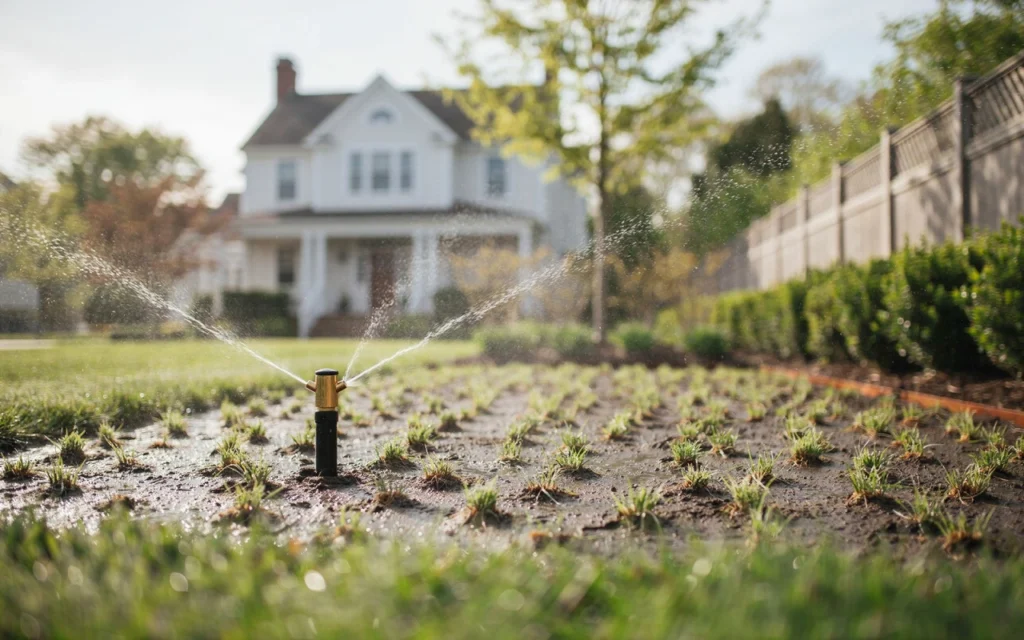
The amount changes as the grass moves from seed to seedling.
Before the Seed Germinates
At this stage, moisture near the soil surface matters most because that is where the seed is sitting.
Use gentle watering that moistens the seedbed without moving the seed. Avoid a strong sprinkler stream that creates puddles, washes soil downhill, or pushes seed into small piles.
The University of Maryland Extension guide to starting a new lawn gives about ¼ inch of water per irrigation session as a general guide for grass seed. However, stop sooner if water begins to puddle or run off. Soil, weather, sprinkler output, and slope can all change how much water your yard needs.
You do not need to measure every watering. Once you know roughly how your sprinkler performs, use the soil as your main guide.
Too dry: The surface becomes pale, dusty, or crusty.
About right: The soil is evenly damp.
Too wet: Water sits on the surface, soil becomes muddy, or runoff starts.
How to Check How Much Water Your Sprinkler Applies
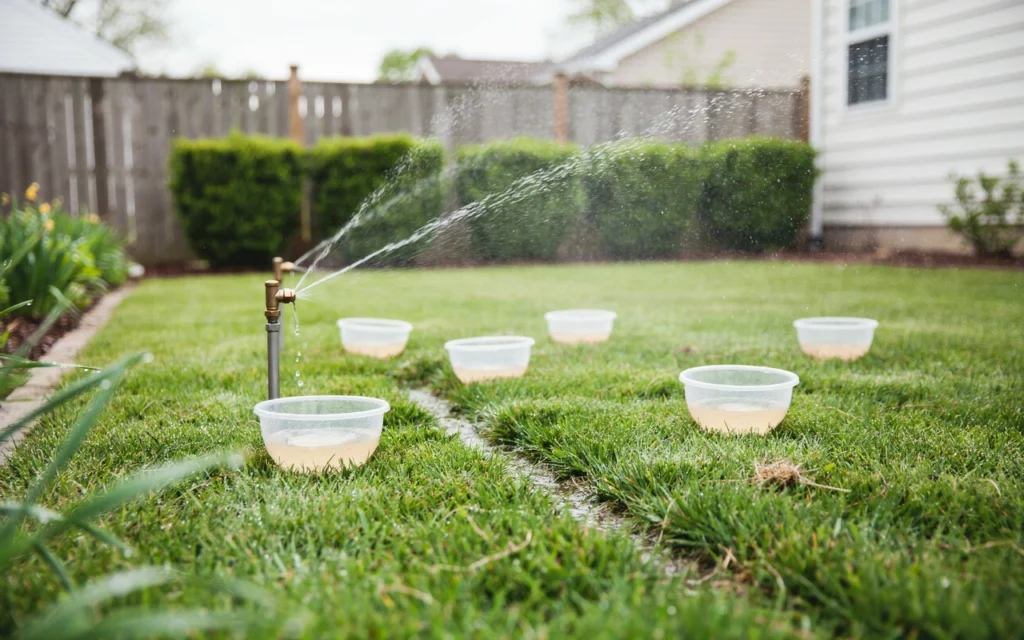
You do not need to guess how much water your sprinkler puts down. Place a rain gauge or a few shallow, straight-sided containers around the seeded area and run the sprinkler normally. Check how much water collects inside.
This is more useful than following a fixed number of minutes because different sprinklers apply water at different rates. For new seed, the soil itself is still your best guide: stop if puddles form, runoff begins, or the surface becomes muddy.
After the Grass Starts Growing
Once seedlings emerge, roots begin reaching farther into the soil.
This is when you should slowly move away from constant surface watering.
Water a little deeper and allow slightly more time between sessions. As the roots grow deeper, allow a little more time between waterings. The surface can begin to dry slightly as long as the soil around the young roots stays moist.
Do not make the change overnight. Reduce watering gradually as the grass becomes stronger.
When Should You Change the Watering Schedule?
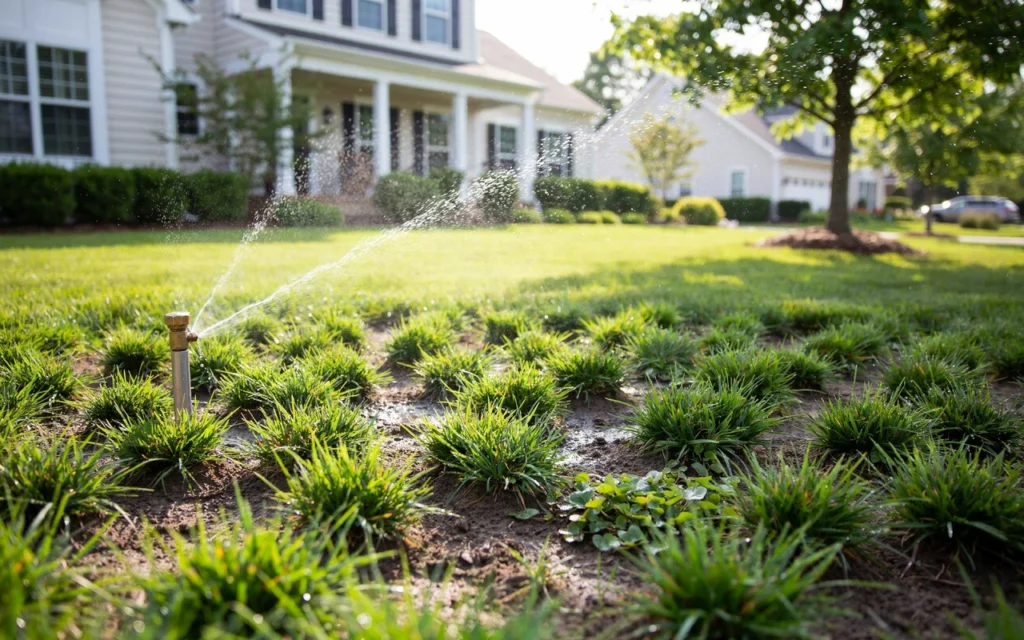
One of the easiest mistakes is using the same watering schedule from seeding until the lawn is fully grown.
The needs of the grass change as it develops.
Before You See Any Grass
Keep the seedbed consistently moist.
Do not let newly planted seed repeatedly dry out and then soak it again. Light watering is better than flooding the soil.
When Seedlings Start Appearing
Continue watching moisture closely, but begin reducing how often you water.
Do not stop frequent watering just because the first few green shoots appear. Grass seed does not all germinate on the same day, and young seedlings still have very small root systems.
This is especially important with seed mixes. Some grass types sprout much faster than others, so the first green shoots do not mean every seed is finished germinating. Keep checking moisture until the slower grasses have had time to emerge.
As more of the lawn fills in, start watering deeper.
As the New Grass Gets Taller
The goal now changes from keeping seed moist to helping roots grow deeper.
Reduce the number of watering sessions and increase how deeply each watering reaches.
Eventually, the new lawn should move away from daily light watering and toward the deeper, less frequent pattern used for established turf.
By the time most of the new grass is reaching mowing height, you should be moving toward fewer, deeper watering sessions. If your seed mix contains slower-germinating grass, do not rush the change.
What Is the Best Time to Water New Grass Seed?
Early morning is usually the best time for the main watering.
The University of Minnesota Extension recommends watering in the early morning, when less water is lost and grass has more time to dry during the day.
New seed is a special case because the surface may need to stay moist throughout the day.
If the seedbed starts drying during hot weather, give it another light watering rather than waiting until the next morning.
Try not to make late-night watering your normal routine. Keeping grass and soil wet for long periods overnight can create less favorable conditions for young turf.
The practical rule is more useful than watching the clock:
Water early when possible, then check the seedbed later and water again only if it is beginning to dry.
Adjust Watering for Weather, Soil, and Slopes
No watering schedule works exactly the same in every yard.
Hot or Windy Weather
Heat, direct sun, low humidity, and wind can dry the seedbed quickly.
Check the soil more often rather than automatically adding a long watering session. A brief extra watering may be enough to restore surface moisture.
Rainy or Cool Weather
Cool, cloudy weather slows water loss.
If rain keeps the seedbed moist, reduce or skip irrigation. Adding water to already wet soil does not help germination.
Sandy Soil
Sandy soil drains quickly and usually dries faster.
You may need to check it more often during germination, but each watering should still be gentle enough to avoid washing seed away.
Clay Soil
Clay soil absorbs and drains water more slowly. Long watering sessions may create puddles or runoff before water moves into the soil. Use shorter watering cycles and give the water time to soak in before watering again.
If you are trying to establish new grass in heavy clay, watering is only part of the process. Preparing clay soil for grass helps create better conditions for seed germination and root growth, especially when the soil is compacted or drains slowly.
Sloped Areas
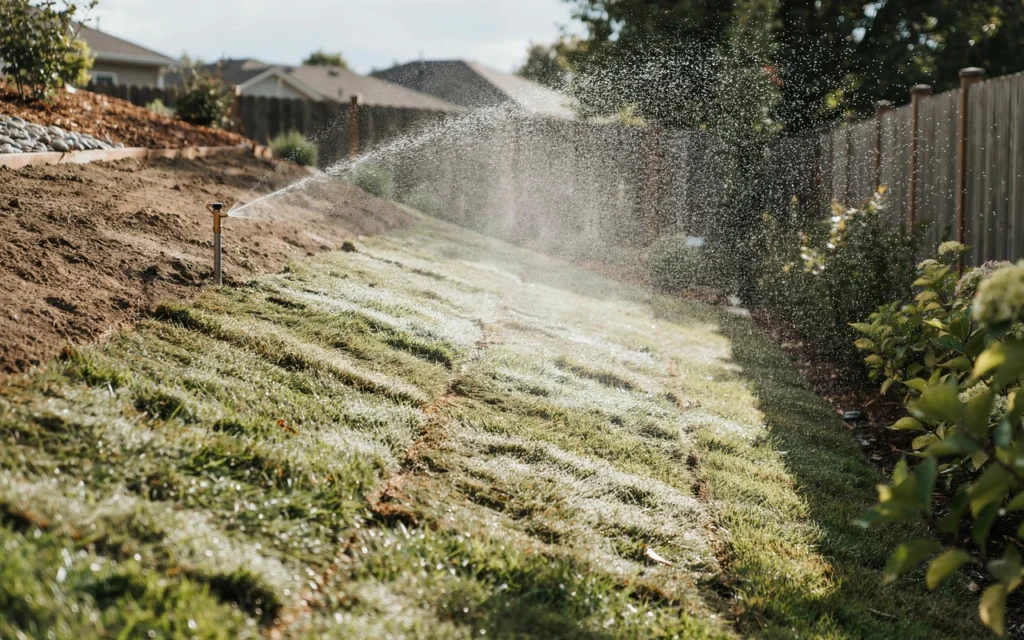
A slope can be difficult because water may run downhill before soaking in.
Use gentle sprinkler settings and shorter watering cycles. If water starts flowing downhill, stop and let it soak in before watering again.
Signs You Are Watering Too Much or Too Little
You do not need special tools to spot many new-lawn watering problems.
Signs of Too Much Water
Look for:
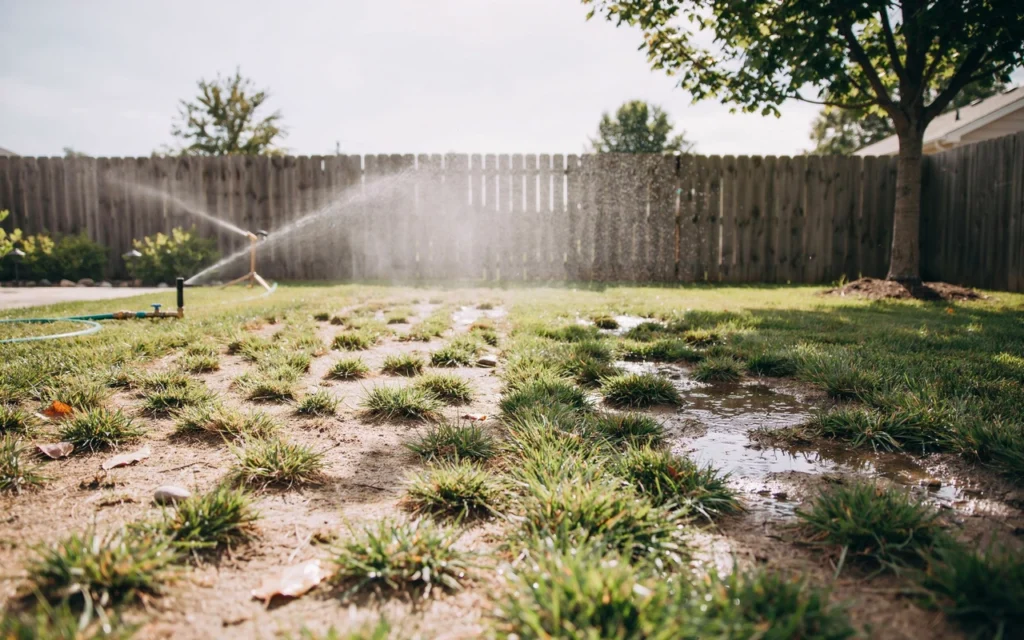
- Puddles that remain after watering
- Muddy or constantly soggy soil
- Water running off the lawn
- Grass seed collecting in low spots
- Soft soil that stays saturated
- Young grass starting to look weak or yellow
More water does not mean faster germination.oo much water can move seed, leave less air around young roots, and keep the soil too wet.
Signs of Too Little Water
You may not be watering enough if:
- The soil surface becomes light and dusty
- A hard dry crust forms
- Seedlings begin wilting
- New grass dries soon after emerging
- Germination appears very patchy
Patchy grass does not always mean lack of water. Seed-to-soil contact, temperature, seed quality, and other growing conditions also affect germination.
Use moisture as your first check, not your only diagnosis.
Common New Grass Seed Watering Mistakes
Letting the Seedbed Dry Out
Freshly seeded soil needs close attention during germination.
If the surface is drying quickly, use small amounts of water more often rather than waiting until the soil becomes completely dry.
Soaking the Lawn in One Long Session
A heavy watering does not replace several light waterings during germination.
Too much water at once can create runoff or move seed out of place.
Use a gentle sprinkler pattern and stop when the soil is evenly moist.
Keeping the Same Schedule After Germination
Frequent surface watering is useful for seed, but it should not become a permanent lawn routine.
Frequent light watering is useful during germination, but it should not become the permanent schedule. As roots grow, slowly switch to fewer, deeper waterings.
Ignoring Rain
An automatic sprinkler does not know how much rain your yard received unless the system has a working sensor.
After rain, check the soil before watering again. If it is already moist, wait.
Using Too Much Water on a Slope
If water is running down the hill, continuing to run the sprinkler wastes water and may move seed and soil.
Use shorter cycles and allow time for water to soak in between them.
Conclusion
The key to watering new grass seed is keeping the seedbed moist without turning it soggy.
Water lightly and frequently while the seed is germinating. Check the soil instead of depending only on a timer, and adjust for heat, wind, rain, and soil type.
Once seedlings are growing, slowly switch to deeper and less frequent watering. That change helps the young grass develop stronger roots and prepares it for a normal lawn watering routine.
Frequently Asked Questions
Can You Overwater New Grass Seed?
Yes. Too much water can leave the soil soggy, wash seed away, and create poor growing conditions.
If you see puddles or runoff, stop watering and allow the soil to absorb the moisture. The goal during germination is damp soil, not mud.
Should I Water Grass Seed Every Day?
Newly planted seed often needs water every day during dry weather, and the seedbed may need more than one light watering on hot or windy days.
Rain and cool weather can reduce that need. Check soil moisture instead of following the same schedule every day.
When Should I Stop Watering New Grass Seed Every Day?
Do not choose a fixed day on the calendar. As most seedlings grow taller and move toward mowing height, gradually reduce the number of watering sessions and water a little deeper.
What Happens If I Miss One Day of Watering Grass Seed?
It depends on whether the seedbed actually dries out.
A cool or rainy day may cause no problem. During hot, dry weather, however, the soil surface can lose moisture quickly.
If you miss a watering, check the soil and water gently if it is dry. Do not flood the area to “make up” for the missed session.
Can I Water New Grass Seed at Night?
An occasional evening watering is not likely to ruin a new lawn, especially if the seedbed is drying out.
For regular watering, early morning is a better choice. If the soil needs more moisture later in the day during germination, use a light watering rather than routinely soaking the lawn late at night.