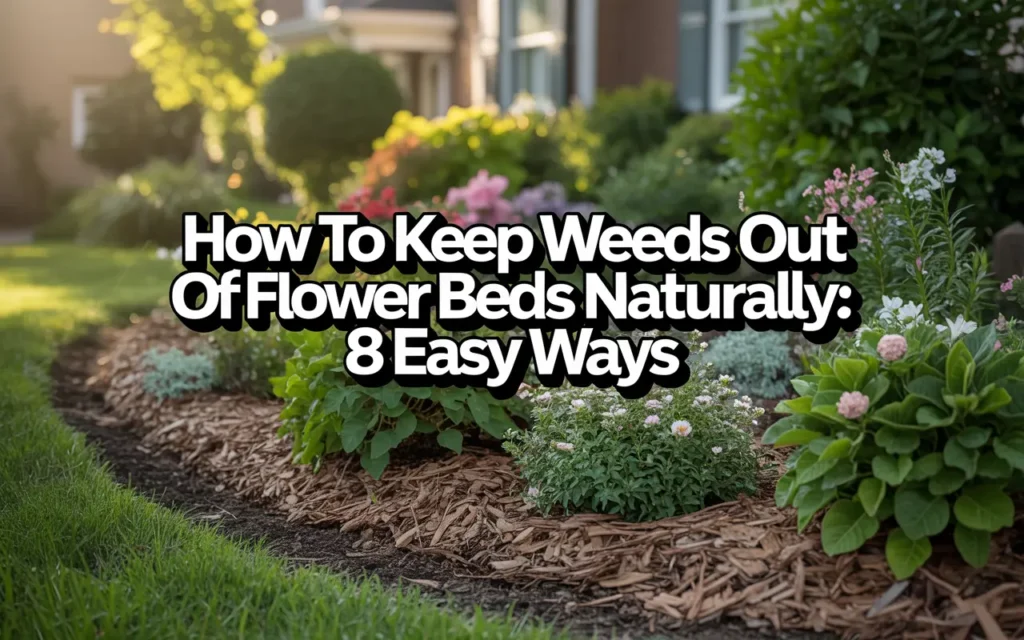
If you want to know how to keep weeds out of flower beds, the best approach is to stop them before they spread. Pull existing weeds while they are small, cover bare soil with mulch, fill open spaces with healthy plants, and remove new weeds before they make seed.
You do not need to spray the whole flower bed. A few simple habits can control weeds while protecting your flowers, soil, and nearby plants. At Lawn Savy, we focus on practical lawn and garden care tips that help you keep outdoor spaces healthy with simple, effective methods.
8 Natural Ways to Prevent Weeds in Flower Beds
1. Pull Existing Weeds Before They Spread
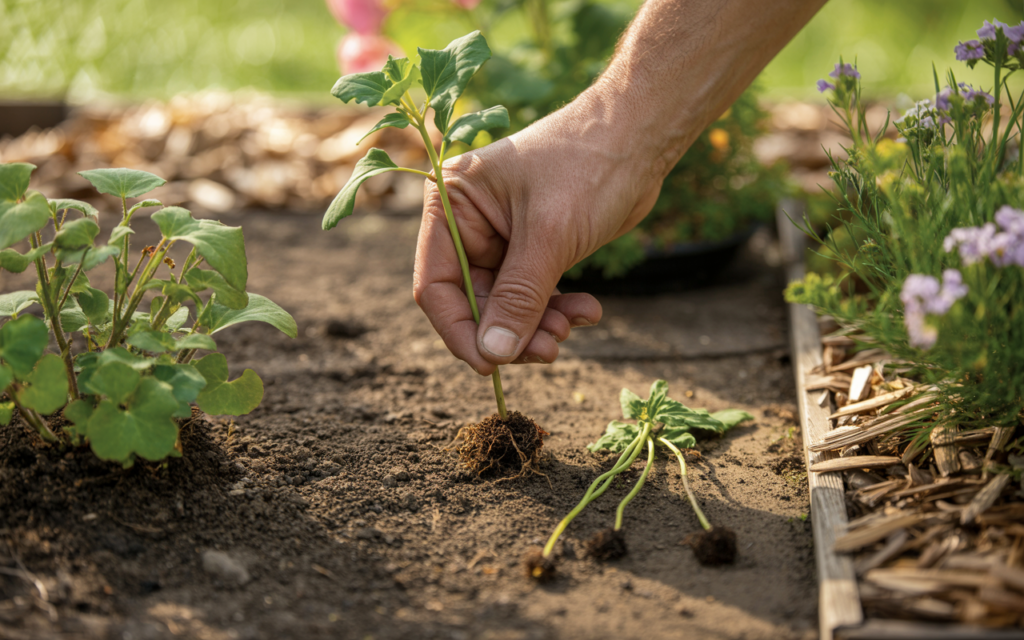
Start with the weeds that are already in the bed. Pulling is easiest when the soil is slightly moist, such as after rain or watering. Hold the weed close to the soil and pull slowly so you remove as much of the root as possible.
Young weeds are much easier to remove than mature ones. NC State Extension also recommends hand-pulling weeds while they are small and before they produce flowers or seeds.
Pay extra attention to perennial weeds. Some can grow back fromroots, underground stems, or other plant parts left in the soil.
A garden fork or hand weeder can help loosen deep-rooted weeds without digging up the whole flower bed.
Try to remove weeds before they go to seed. A weed that makes seed today can give you many more weeds later.
2. Cover Bare Soil With Organic Mulch
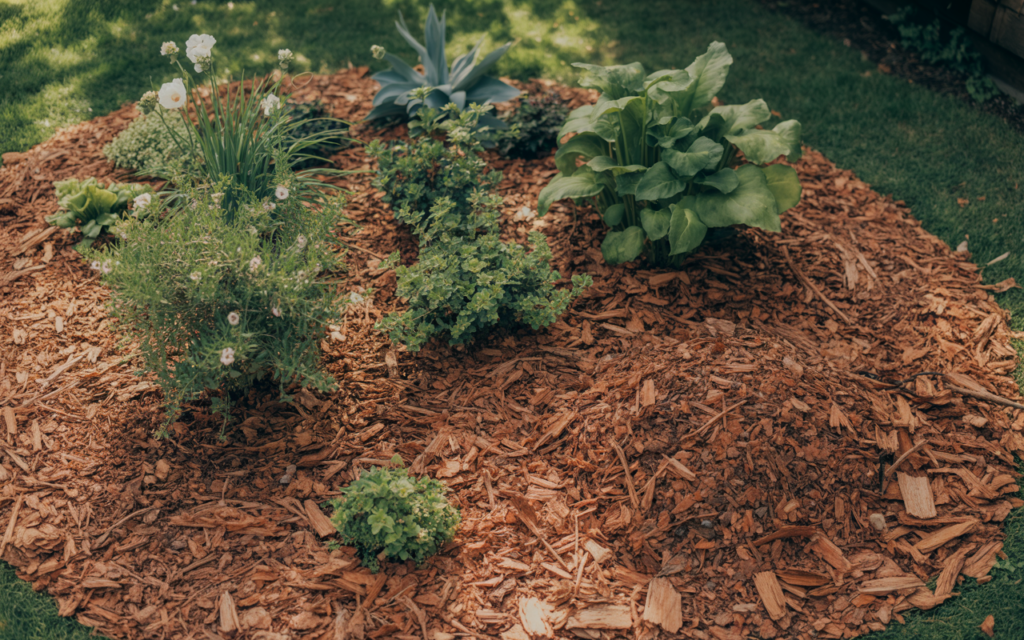
Bare soil gives weed seeds light and room to grow. Mulch covers that soil and makes it harder for many weed seeds to sprout.
Good natural mulch choices include:
- Shredded bark
- Wood chips
- Pine bark
- Pine needles
- Shredded leaves
- Leaf mold
For many established flower beds, a layer of about 2 to 3 inches works well. Some perennial beds may benefit from a little more, depending on the mulch material and plants. NC State’s guide to herbaceous ornamentals recommends organic mulch for flower beds and notes that mulch also makes any weeds that appear easier to pull.
Do not pile mulch against flower stems or crowns. Leave a little breathing room around each plant.
Mulch also breaks down with time, so check it once or twice a year and add more when the layer becomes thin.
How Much Mulch Should You Use?
Do not assume that more is always better. A thick pile of mulch can hold too much moisture near plant stems and may make it harder for water and air to move where they are needed.
For common organic mulches such as shredded bark or leaf mold, about 2 to 3 inches is a useful starting point for many established flower beds.
3. Use Cardboard Under Mulch in Large, Weedy Areas
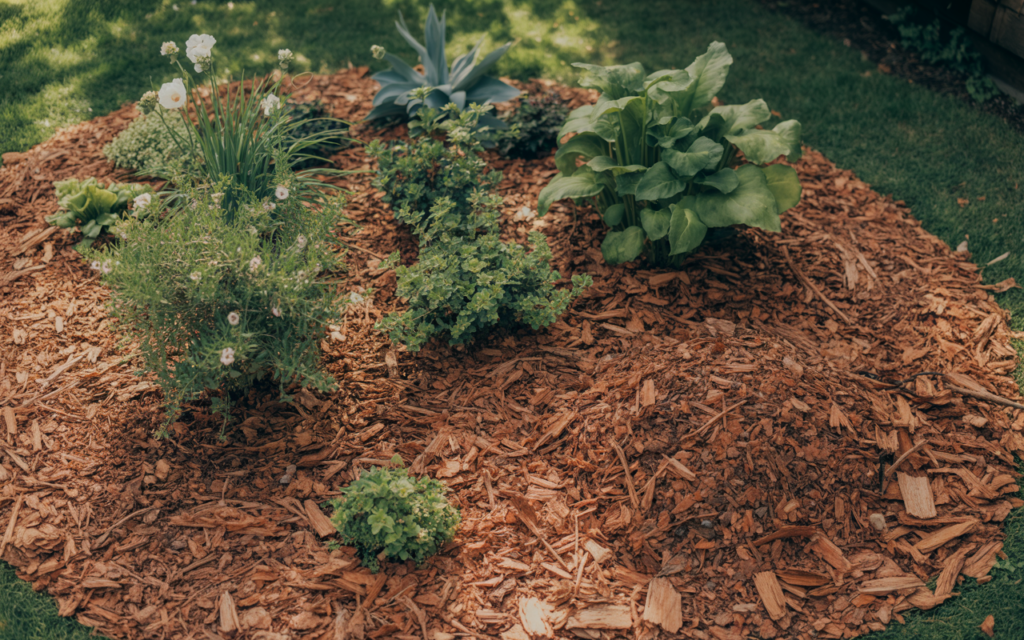
If you have a large open part of the flower bed with heavy weed growth, cardboard can add another layer of weed control.
Use plain brown cardboard without glossy coatings. Remove:
- Tape
- Labels
- Staples
- Plastic
Lay the cardboard over the soil and overlap the edges so weeds cannot easily grow through the gaps. Wet it to help keep it in place, then cover it with mulch.
The Penn State sheet-mulching guide uses cardboard and organic mulch to smother unwanted plants without herbicides. Oregon State Extension also notes that cardboard can block light from weeds and then break down over time.
Cardboard works best in open spaces or when creating a new bed. In a crowded flower bed, placing sheets around many small plants can be more trouble than it is worth.
Do not cover the crowns of existing flowers, and remember where spring bulbs or self-seeding flowers are expected to come up.
4. Fill Empty Spaces With Flowers and Ground Covers
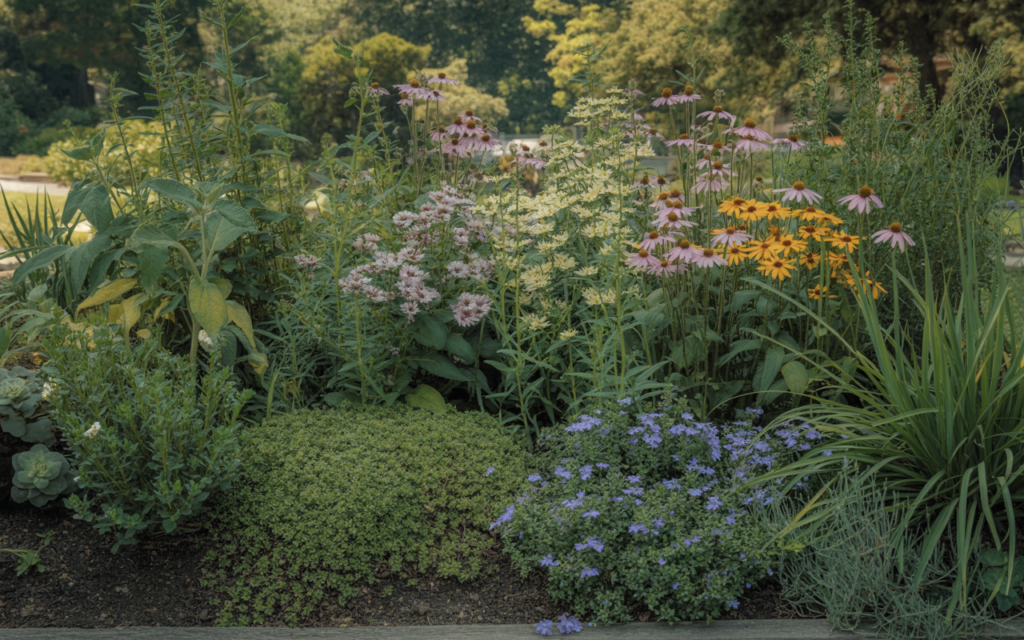
Weeds take advantage of open soil. As your flower bed matures, use the right plant spacing so your flowers and ground covers shade more of the soil. Less open space means fewer good places for new weeds to grow.
NC State Extension explains that closely spaced plants can reduce weed problems because their leaves block light from reaching the soil surface.
This does not mean crowding plants together. Give each plant enough room to reach its mature size. The goal is to create a healthy bed that gradually covers more bare soil without crowding plants or blocking airflow
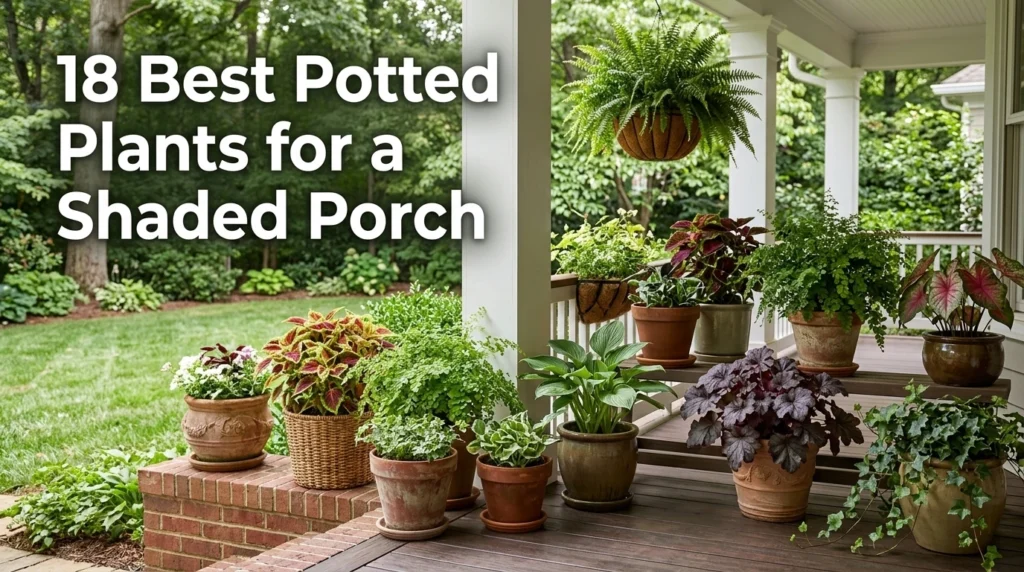
The same principle applies to other outdoor planting areas: choose plants based on the amount of sunlight and growing conditions they receive. For shaded spaces, these shade-loving plants for pots can help you choose suitable low-light options.
Choose plants that match:
- Your USDA zone
- Sun exposure
- Soil moisture
- Mature size
- Existing flowers
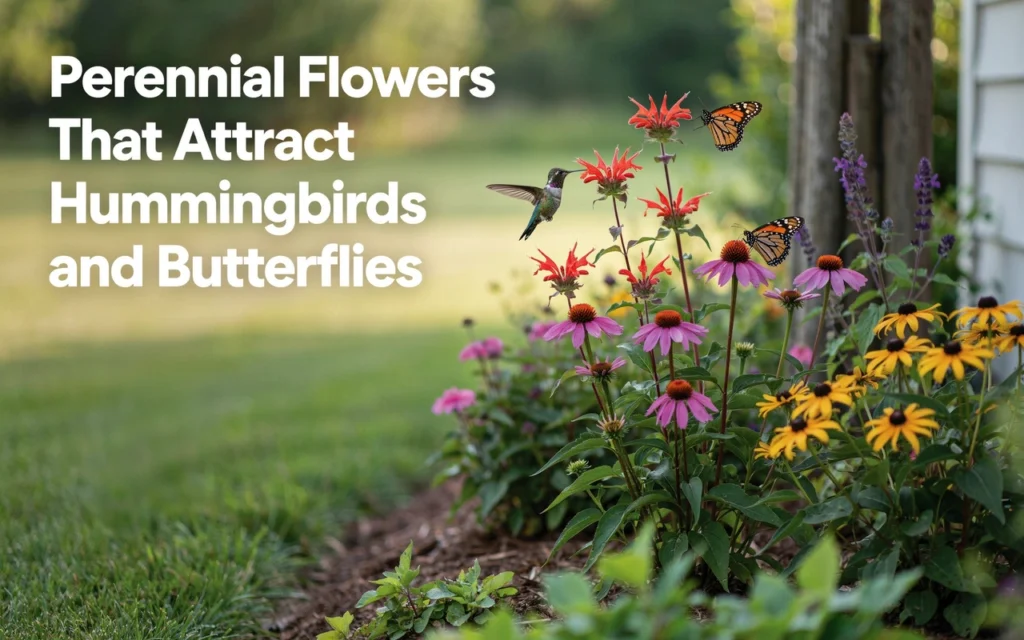
If you want to choose flowering perennials that also support pollinators, explore these perennial flowers that attract hummingbirds and butterflies for ideas that fit a flower-bed planting plan.
5. Water the Flowers, Not the Whole Bed
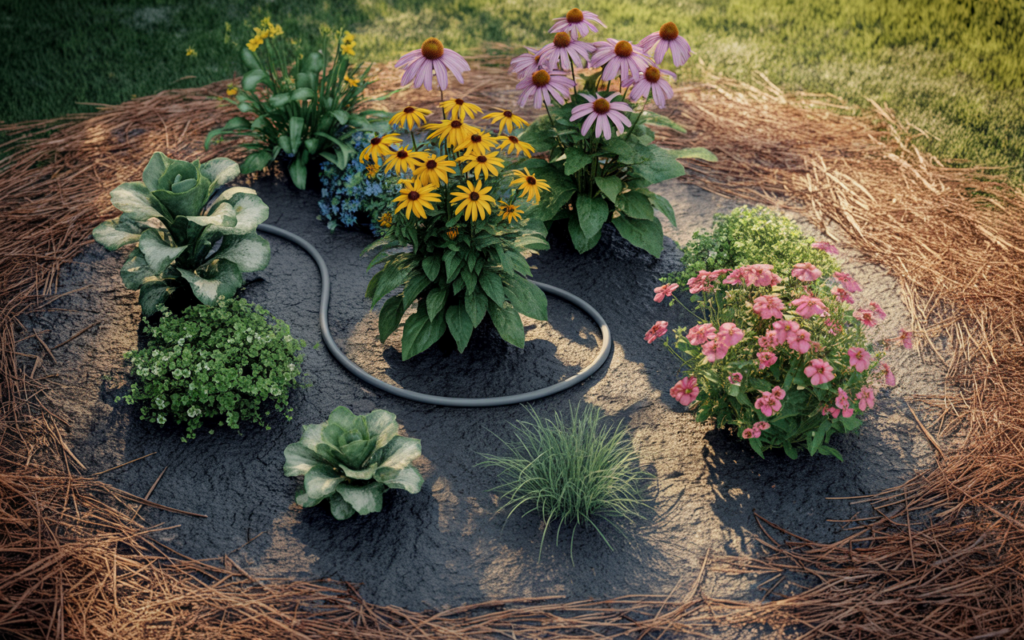
Water can encourage weeds just as easily as it helps flowers.
If possible, use drip irrigation or a soaker hose to place water close to your flowers instead of soaking every inch of bare soil.
NC State Extension notes that drip or trickle irrigation can discourage weeds because water is placed near wanted plants rather than in empty spaces where weeds could grow.
You can also water individual plants by hand in a small bed.
This does not mean keeping the rest of the bed completely dry. Your flowers still need enough water for healthy roots. The goal is simply to avoid watering unused areas more than necessary.
6. Edge the Flower Bed to Stop Grass From Creeping In
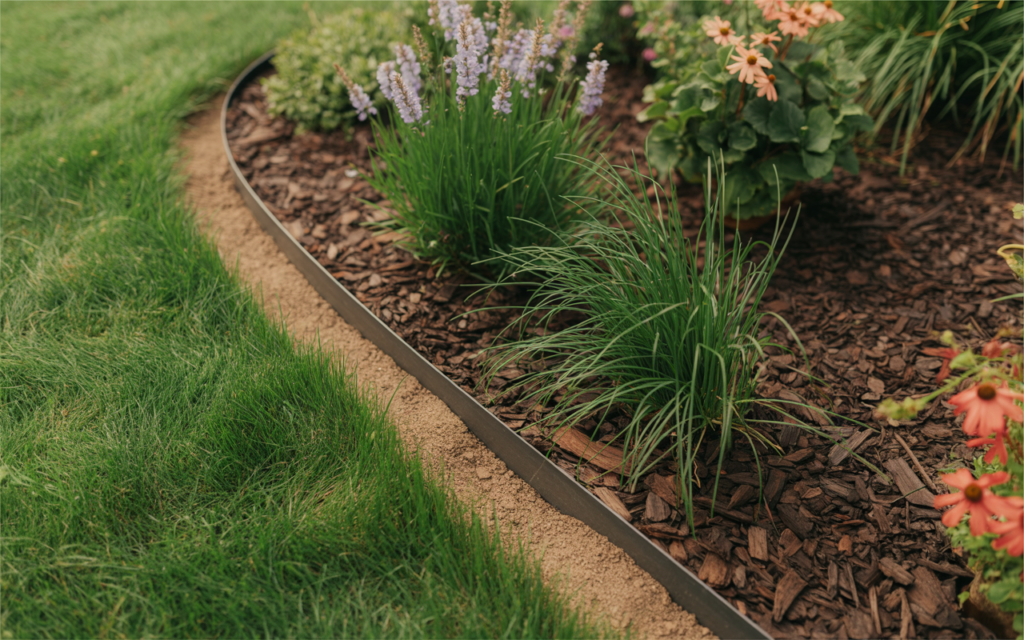
Not every “weed” starts from a seed. Lawn grasses can slowly spread into flower beds from the edges. Once grass grows between perennial roots, removing it becomes much harder.
A clear border can slow this spread.
Common edging choices include:
- A clean spade-cut edge
- Metal edging
- Brick
- Stone
- Suitable landscape edging
Check the border every few weeks during the growing season. Cut back grass runners before they become established inside the bed.
Some spreading grasses can grow through or under shallow barriers, so edging still needs occasional maintenance.
7. Disturb the Soil as Little as Possible
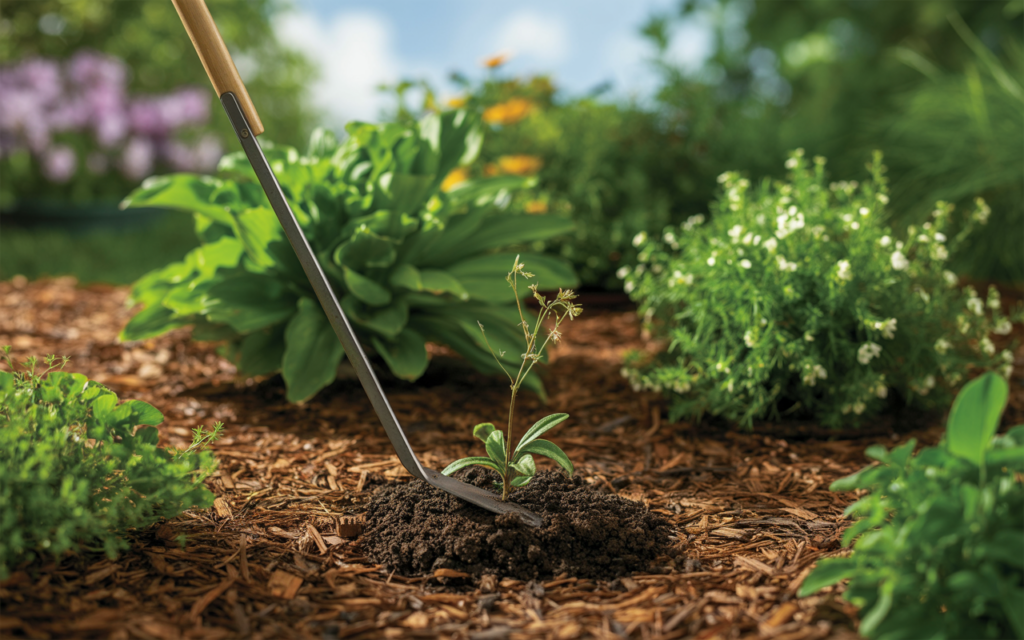
Digging every time you see a weed can create another problem. Weed seeds can remain buried in the soil. When the soil is turned over, some of those seeds may be brought closer to the surface, where they have better conditions for germination.
NC State Extension notes that repeatedly digging or hoeing the soil can bring buried weed seeds closer to the surface.
For small weeds, use shallow cultivation instead of deep digging. Scrape just below the surface with a hoe or hand tool, or pull the weed by hand. For deep-rooted perennial weeds, dig only around the weed you need to remove.
8. Remove New Weeds Before They Make Seed
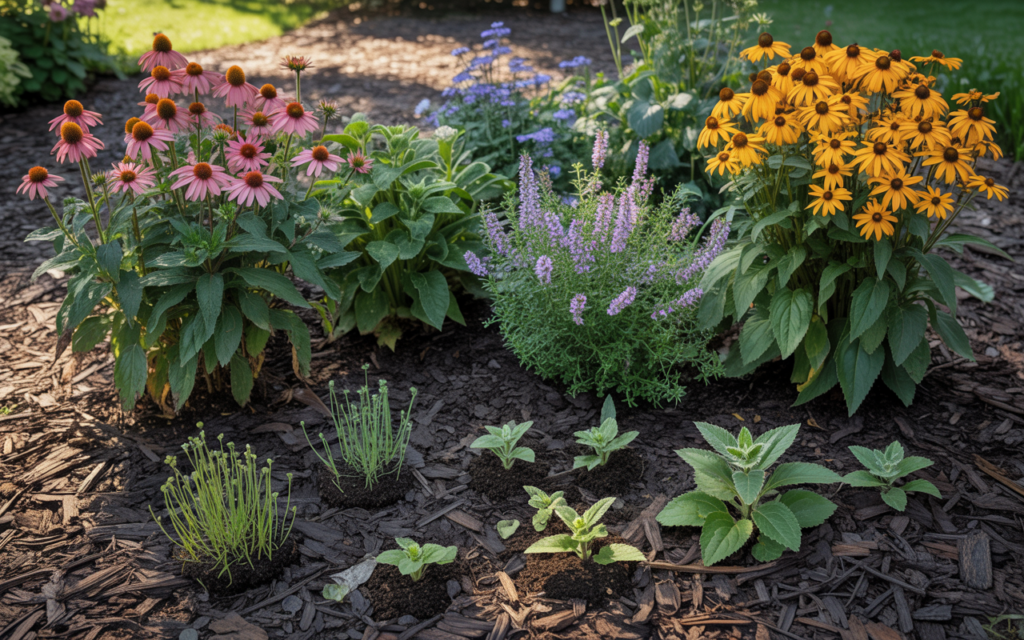
Natural weed control does not mean you will never see another weed. The easier goal is to catch weeds while they are small.
Walk through the flower bed once a week during active growth. Pull the small weeds you see before they get large.
This usually takes only a few minutes when you stay ahead of the problem. NC State recommends regular scouting and pulling young weeds before they produce seed.
If you cannot remove a mature weed immediately, at least cut off its flower or seed head so it cannot spread more seed through the bed.
Natural Weed Killers to Avoid Around Flowers
Many homemade weed-killer recipes sound simple because they use common kitchen products. That does not mean they are safe for your flower bed. A product that burns a weed can also burn your flowers.
Vinegar
Vinegar can damage green plant tissue that it touches, but it is not a selective weed killer. That means spray that lands on a flower may injure the flower too.
Household vinegar is also much more useful on very young weeds than on established perennial weeds. Oregon State Extension explains that vinegar-based products mainly act as contact treatments, damaging leaves rather than reliably killing deep perennial roots.
For weeds growing between your flowers, hand removal is usually a safer choice.
Stronger horticultural vinegar is not the same as kitchen vinegar. It can also cause skin and eye injuries, so do not treat it as a harmless home remedy.
Salt
Do not use salt to kill weeds in a flower bed. Salt does not know which plant you want to keep.
It can damage flower roots, dry out plants, and build up in soil. Penn State warns that salt-based homemade weed killers can harm nearby flowers and make future planting harder. High salt levels can also interfere with normal water uptake by plants.
Salt can also move into nearby soil with water. A weed may disappear, but you could create a larger soil problem in the process.
Boiling Water
Boiling water can kill small weeds by damaging their leaves and stems.
It may work on weeds growing in:
- Driveway cracks
- Paving joints
- Gravel paths
It is a poor choice inside a planted flower bed.
Hot water can damage the roots and crowns of nearby flowers just as easily as it damages weeds. Use hand pulling or mulch when wanted plants are close to the weed.
A Simple Routine for a Naturally Weed-Free Flower Bed
You do not need a complicated weed-control calendar. Use this simple routine.
Early in the Growing Season
Remove existing weeds before they become large. Once the soil is moist and your flowers are established, cover exposed soil with organic mulch.
During the Growing Season
Check the bed about once a week. Pull small weeds when you see them. It is much easier to remove five tiny weeds now than dozens of mature weeds later. Water close to your flowers rather than soaking empty soil where possible.
When the Mulch Gets Thin
Mulch breaks down and can move after rain, watering, or garden work. Rake it back into place and add more where bare soil starts to show.
Along the Bed Edges
Watch for lawn grass and spreading weeds creeping into the bed. Cut them back before they reach the roots of your flowers.
This kind of simple prevention is the approach Lawn Savy favors: deal with a small weed problem early instead of waiting until the whole bed needs to be cleared again.
Keep the Soil Covered and Catch Weeds Early
Keeping weeds out of flower beds naturally is mostly about prevention. Pull the weeds already there, cover bare soil with mulch, give your flowers enough space to fill in, and catch new weeds while they are small.
You do not need salt, harsh homemade mixtures, or constant digging. A well-mulched bed and a few minutes of regular weeding can save much more work later while keeping your flowers safe and the bed looking clean.
FAQs: How to Keep Weeds Out of Flower Beds
What Is the Best Natural Way to Keep Weeds Out of Flower Beds?
Start by pulling existing weeds. Then cover exposed soil with organic mulch and remove new weeds while they are small. Healthy flowers and ground covers can also fill open spaces so weed seedlings receive less light.
What Is the Best Mulch to Stop Weeds in Flower Beds?
Shredded bark, pine bark, wood chips, pine needles, and shredded leaves can all work. Choose a mulch that fits the look of your bed and is easy to replace. Organic mulch should be kept away from flower stems and crowns.
Can I Put Cardboard Under Mulch in a Flower Bed?
Yes, especially in open areas with a lot of weeds. Use plain cardboard, remove tape and staples, overlap the sheets, wet them, and cover them with mulch. Avoid covering flower crowns or places where wanted plants need to emerge.
Does Vinegar Kill Weeds Without Hurting Flowers?
No. Vinegar can damage any green plant tissue it touches. It may burn small weeds, but it can also burn nearby flowers. Established perennial weeds may grow back because vinegar does not always kill their roots.
How Do I Stop Grass From Growing Into My Flower Beds?
Create a clear edge between the lawn and flower bed, then check it often. Pull or cut grass runners as soon as they cross the border. Once spreading grass becomes tangled with flower roots, removal takes much more work.
Will Mulch Stop All Weeds?
No. Mulch can greatly reduce annual weeds, but some weeds may still grow through it or germinate on top as the mulch breaks down. Pull those weeds while they are small and refresh thin areas of mulch when soil becomes exposed.
How Often Should I Weed My Flower Beds?
A quick check once a week during active growth is a good habit. You may need to weed more often in spring or after rain when many seedlings appear. Regular checks keep the job small and help you remove weeds before they produce seed.