If a plant in your lawn looks like grass but grows differently from the rest, it may be a weed—or even a different type of grass or sedge. The tricky part is telling them apart.
Types of weeds that look like grass include crabgrass, annual bluegrass, yellow nutsedge, goosegrass, foxtail, dallisgrass, quackgrass, and nimblewill. Some are easy to spot, while others can blend into your lawn until they grow taller or produce a seed head.
Before you pull or spray anything, compare the plant with the grass around it. Look at the leaf, stem, seed head, growth pattern, roots, and the time of year. These clues can help you narrow down what you are seeing.
How to Tell a Grass-Like Weed From Your Lawn
Before trying to name the weed, compare it with the grass around it.
Look at these features:
- Color: Is it lighter, darker, blue-green, or yellow-green?
- Leaf blade: Is it wide, narrow, soft, rough, shiny, or hairy?
- Stem: Is it round, flat, or triangular?
- Growth pattern: Does it form a clump, low mat, or spreading patch?
- Seed head: Is it fuzzy, finger-shaped, round, or branched?
- Roots: Does it have fibrous roots, underground runners, or small tubers?
- Growth speed: Does it stand above the lawn soon after mowing?
A seed head can make identification much easier, but you do not always have to wait for one. Cornell’s Turf and Landscape Weed ID tool lets you narrow down grass-like weeds by the plant traits you can clearly see.
One other point matters: not every plant that looks like grass is actually a grass. Nutsedge and kyllinga are sedges. That difference matters when you later decide how to manage them. University of Maryland Extension separates grassy weeds and sedges in its lawn weed identification resources for the same reason.
Quick Identification Guide to Weeds That Look Like Grass
| Weed | Easiest Clue | Growth Style | Most Noticeable |
| Crabgrass | Wide blades spreading from a center | Low, spreading clump | Warm weather |
| Annual bluegrass | Light green with pale seed heads | Small clumps | Cool spring weather |
| Yellow nutsedge | Bright green with a triangular stem | Fast, upright growth | Summer |
| Goosegrass | Flat growth with a pale center | Low rosette | Summer |
| Foxtail | Fuzzy, bottlebrush-like seed head | Upright clump | Summer |
| Dallisgrass | Coarse blades and tall branched seed stalks | Large clumps | Warm weather |
| Quackgrass | Clasping auricles and underground rhizomes | Spreading patches | Cool season |
| Nimblewill | Fine, pale-green mat that turns brown in cold | Spreading patches | Summer |
| Creeping bentgrass | Very fine, dense patches | Creeping by stolons | Cool season |
| Orchardgrass | Coarse, light blue-green bunch | Upright clump | Cool season |
| Green kyllinga | Small round green seed head | Dense spreading mat | Warm season |
| Clumping tall fescue | Wide, coarse blades in a tight bunch | Dense clump | Much of the growing season |
12 Common Types of Weeds That Look Like Grass
1. Crabgrass
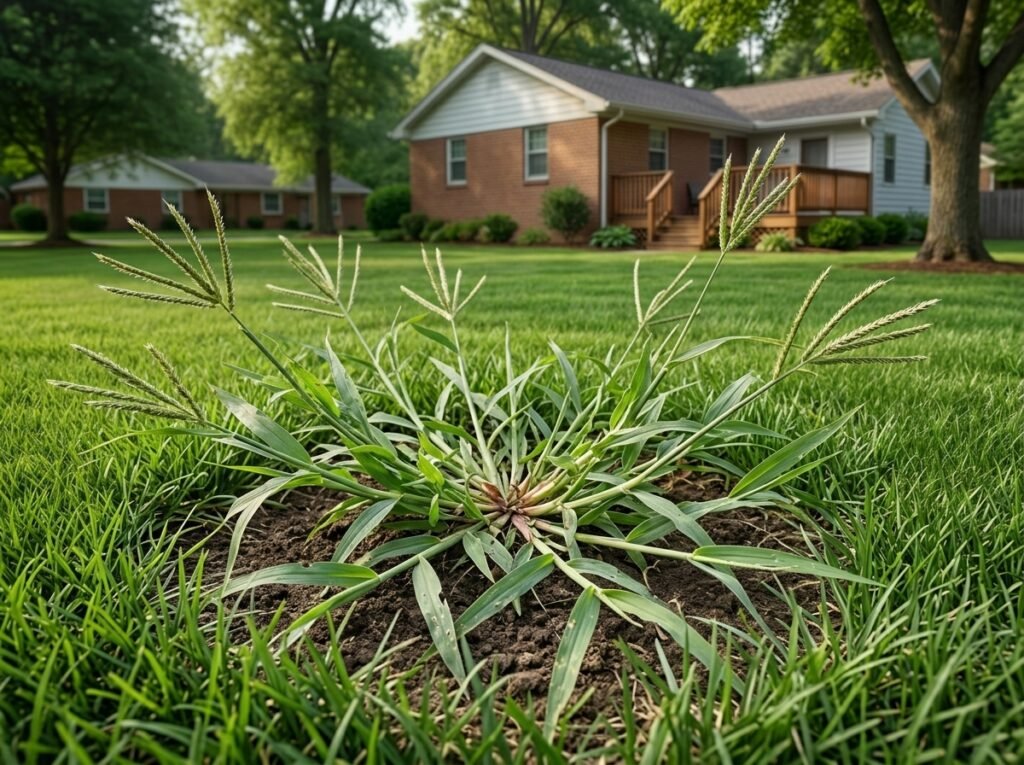
Crabgrass is one of the easiest grassy weeds to recognize once it has had time to spread.
It usually grows outward from a central point, creating a low, open clump. The leaves are wider and coarser than many common lawn grasses. Depending on the species, the leaves may be smooth or hairy.
Later in the season, crabgrass develops seed heads with several thin branches that spread like fingers.
Crabgrass is a summer annual. It grows from seed as temperatures warm and normally dies after frost. UC IPM notes that smooth and large crabgrass are common lawn and landscape weeds and can easily be confused with goosegrass and other grasses.
Key clue: Look for low, spreading stems and finger-like seed heads.
2. Annual Bluegrass
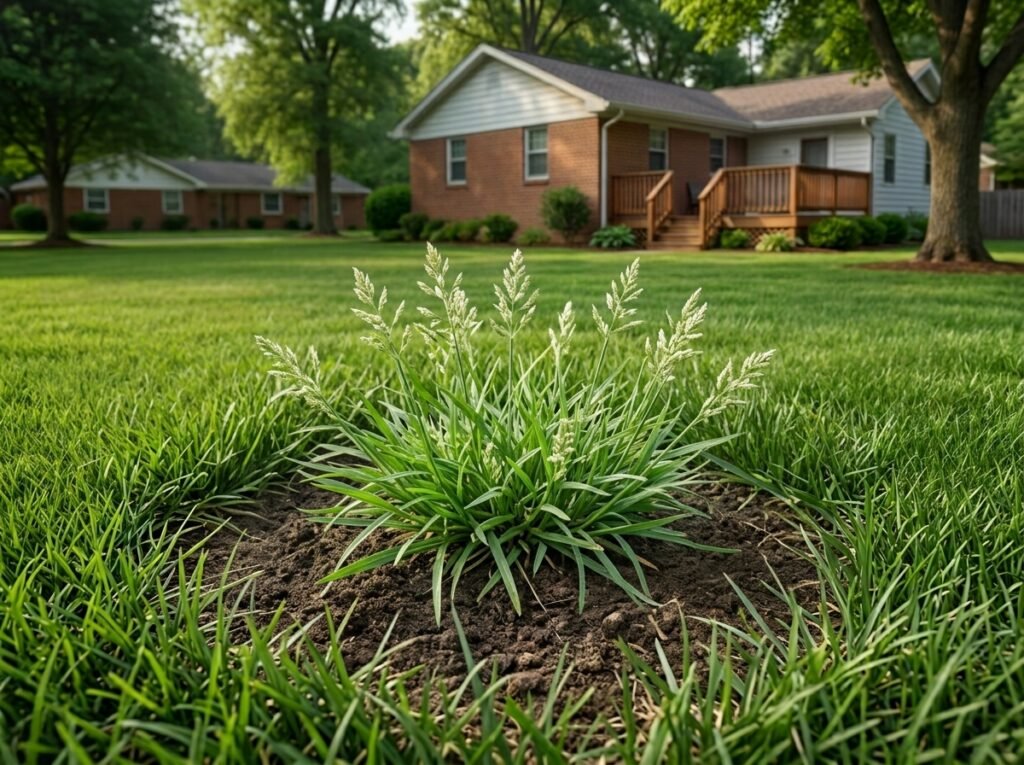
Annual bluegrass, or Poa annua, often shows up as small patches of light green grass inside darker turf.
One of the clearest signs is the seed head. Annual bluegrass can produce small pale or whitish seed heads even when the lawn is being mowed.
Look closely at the tip of a leaf blade. Like other Poa grasses, annual bluegrass has a boat-shaped leaf tip.
It prefers cool, moist conditions and is often easy to notice in spring. Compacted, wet areas can favor its growth.
Key clue: Light green clumps with boat-shaped leaf tips and pale seed heads.
3. Yellow Nutsedge
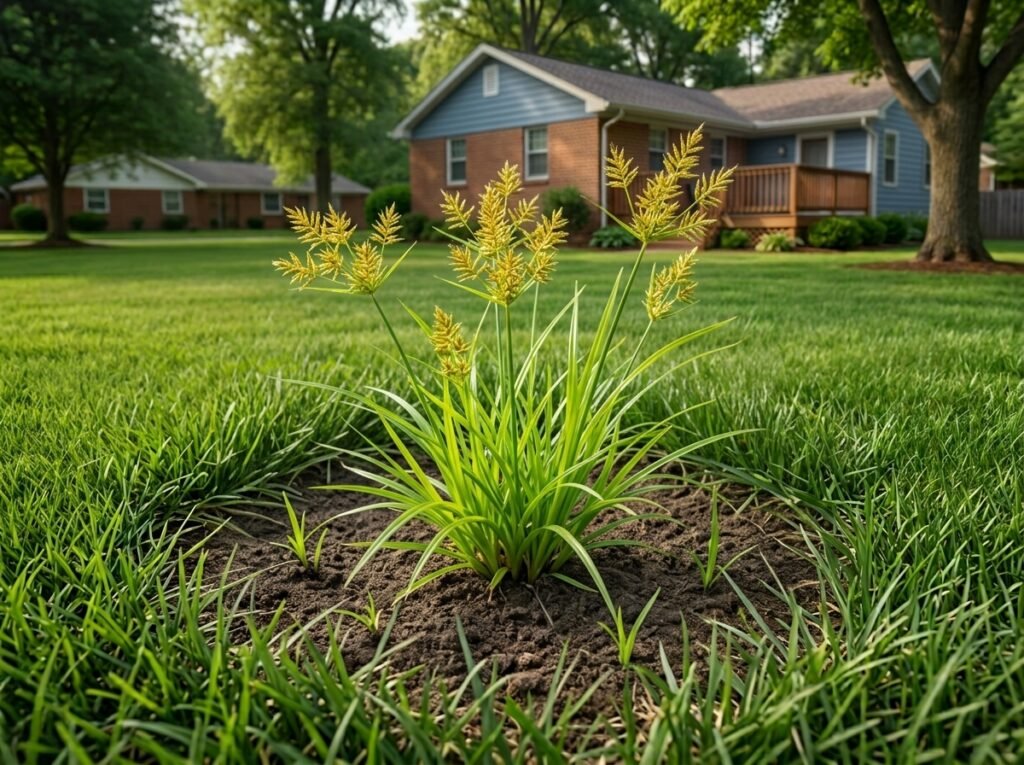
Yellow nutsedge is often called a grassy weed, but it is actually a sedge.
It tends to be brighter yellow-green than the turf around it and often grows faster. A few days after mowing, nutsedge may already stand above the lawn again.
The easiest way to check it is to feel the stem between your fingers. Yellow nutsedge has a three-sided, triangular stem. Its leaves are narrow, shiny, and grass-like.
It also spreads through underground structures, including rhizomes and small tubers called nutlets. Wet or poorly drained areas often favor it.
Key clue: Bright green growth with a triangular stem.
4. Goosegrass
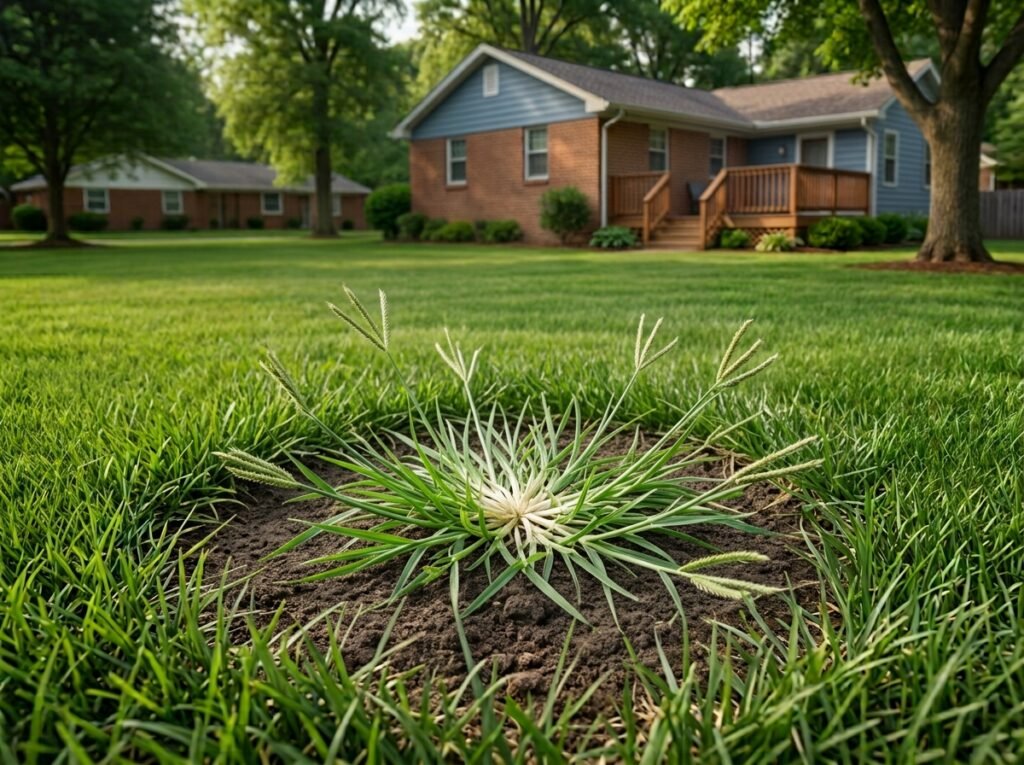
Goosegrass can look like crabgrass from a distance, but the center of the plant gives you a useful clue.
The stems spread close to the ground and form a flattened clump. The base of the plant is often light green, silver, or almost white.
When it produces seed, several flattened spikes spread outward like fingers.
Goosegrass is a summer annual and is often found where turf is thin or stressed. University of Maryland describes the plant as flattened with a light green to white stem base.
Key clue: Look for a low, flat clump with a pale or whitish center.
5. Foxtail
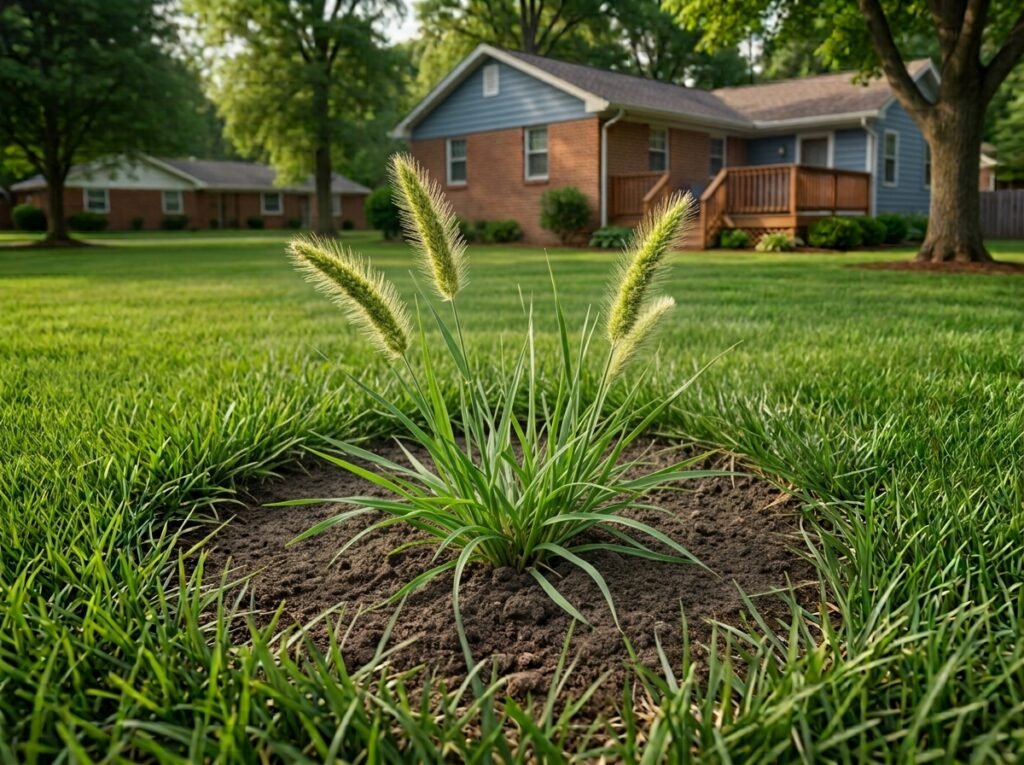
Foxtail becomes much easier to identify once the seed head appears.
The seed head looks like a soft, fuzzy bottlebrush or a fox’s tail. Depending on the species, it may stay upright or droop.
Common types include green foxtail, yellow foxtail, and giant foxtail. Their leaves and stems have small differences, but the bristly seed head is the easiest clue for most homeowners.
Foxtail and crabgrass can look similar before seed heads appear. Once mature, crabgrass has finger-like branches, while foxtail has a dense, bristly head.
Key clue: A fuzzy, bristled seed head.
6. Dallisgrass
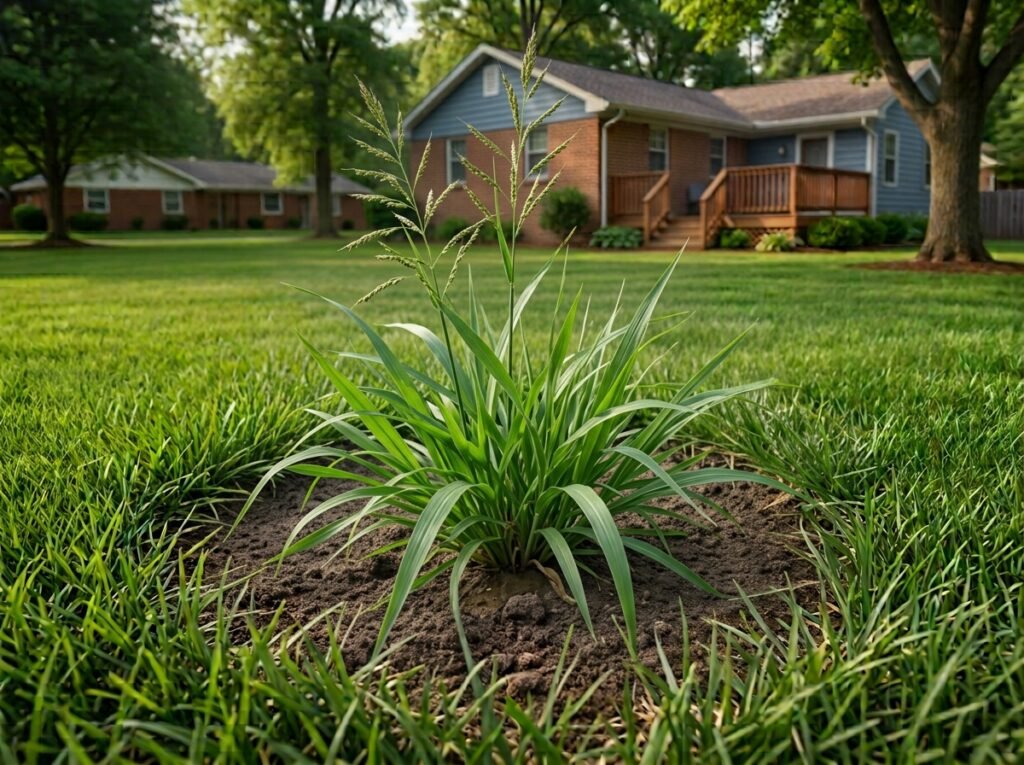
Dallisgrass forms large, coarse clumps that stand out from a finer lawn.
The leaves can reach about half an inch wide and have a clear midrib. The plant often grows faster and taller than the turf around it.
Its seed stalk is another strong clue. Instead of one fuzzy head, dallisgrass produces several loose, spike-like branches along a taller stem.
Unlike annual crabgrass and goosegrass, dallisgrass is a perennial, so the same clump can return and grow larger each year. It can also do well in areas with poor drainage.
Key clue: A coarse perennial clump with several seed branches along one stalk.
7. Quackgrass
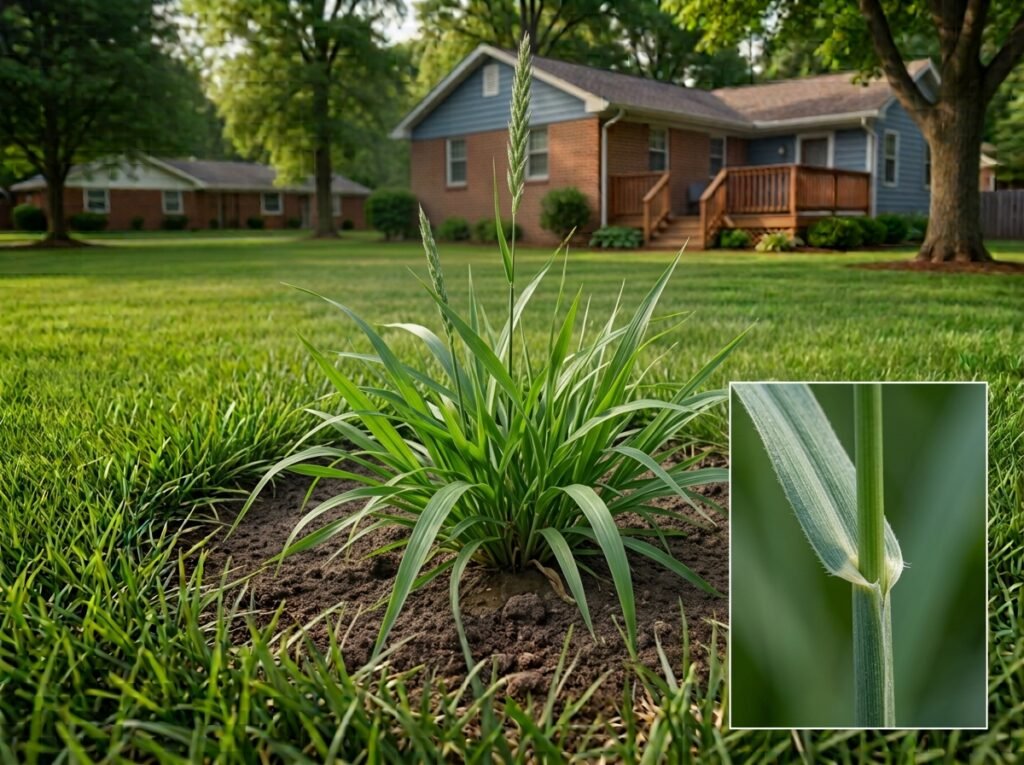
Quackgrass can be difficult to notice in a cool-season lawn because its leaves look much like turfgrass.
The blades are blue-green and may feel rough. For a closer check, look at the point where the leaf joins the stem. Quackgrass has small auricles that wrap or clasp around the stem.
It also spreads underground through strong, pointed rhizomes. This helps it form patches rather than staying in one neat clump.
Its mature seed head looks more like a narrow wheat spike than a crabgrass or foxtail seed head.
Key clue: Small clasping auricles and underground rhizomes.
8. Nimblewill
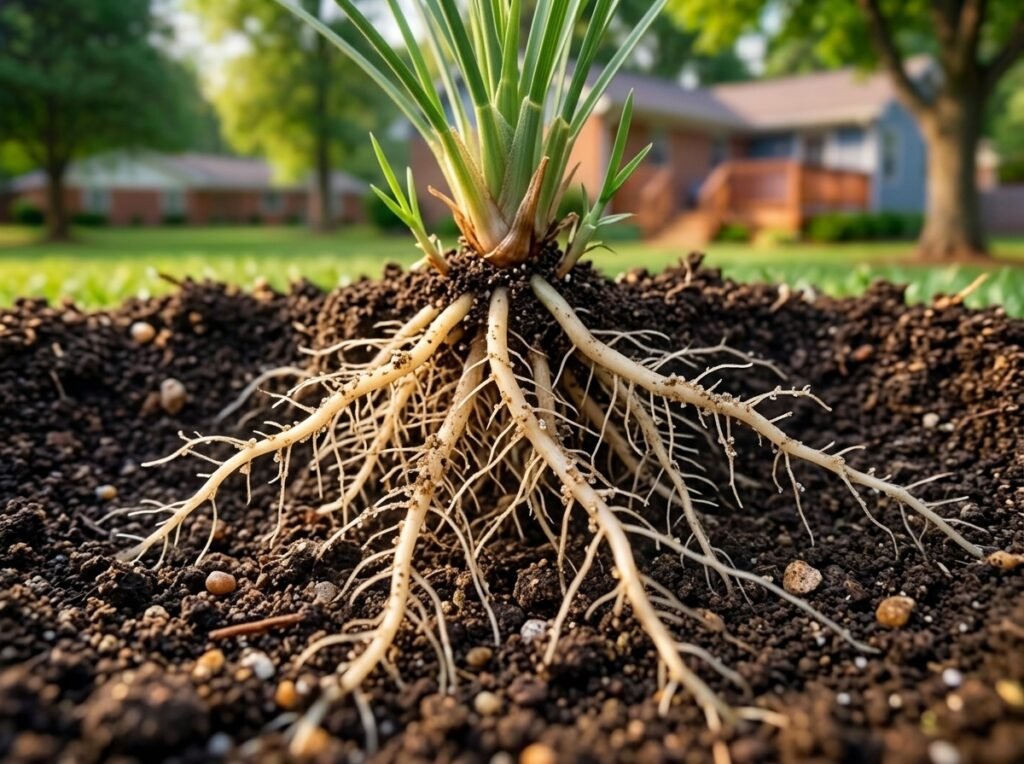
Nimblewill is a fine-textured grass that can form soft, spreading patches in a lawn.
During summer, it may look pale green or slightly blue-green. Because it is a warm-season grass, one of its best identification clues appears when temperatures fall.
Nimblewill turns brown and goes dormant earlier than surrounding cool-season grasses. This can leave round or uneven straw-colored patches while the rest of the lawn remains green.
It spreads through stolons, which are stems that run along or near the soil surface.
Key clue: Fine summer growth that turns straw-brown while nearby cool-season grass stays green.
9. Creeping Bentgrass
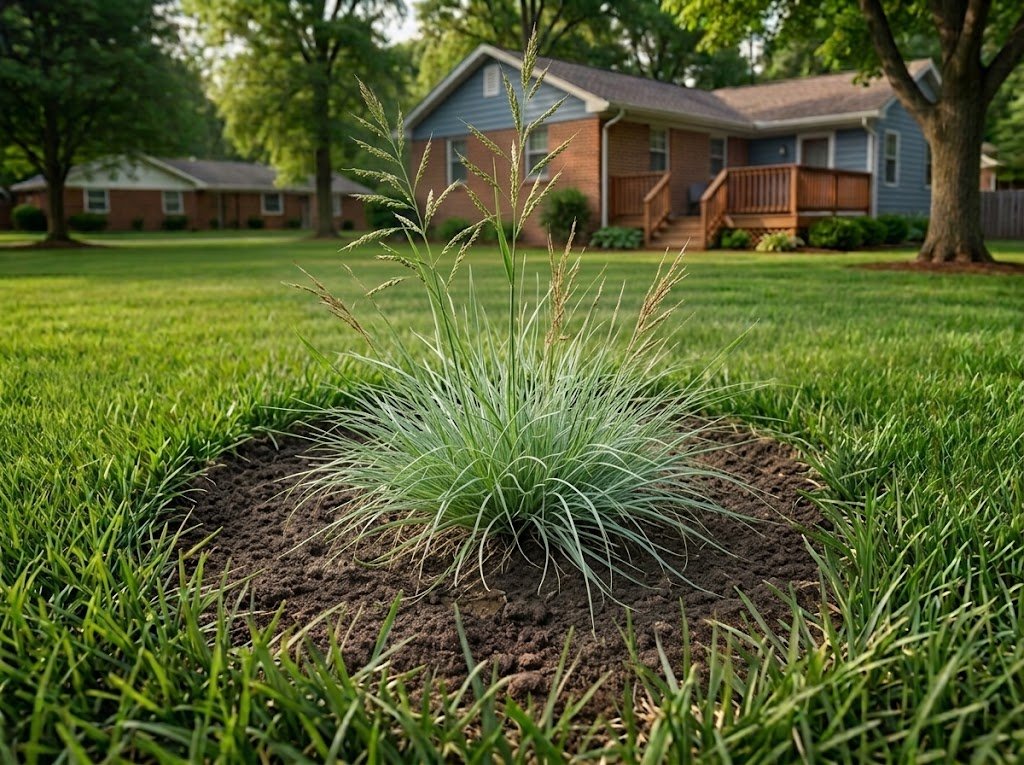
Creeping bentgrass is not always a weed. It is widely used on golf course greens, but it can become unwanted when it spreads into a home lawn.
It has very fine leaves and forms dense, soft patches. It spreads through above-ground stems called stolons.
A patch may first look like a different shade or texture of lawn grass. Over time, it can spread across and over the turf around it.
Creeping bentgrass is sometimes confused with nimblewill. One useful seasonal clue is that creeping bentgrass is a cool-season grass, while nimblewill turns brown during cold weather. Purdue Extension also notes that creeping bentgrass forms dense circular patches through stolons.
Key clue: Very fine, dense creeping patches that remain active in cool weather.
10. Orchardgrass
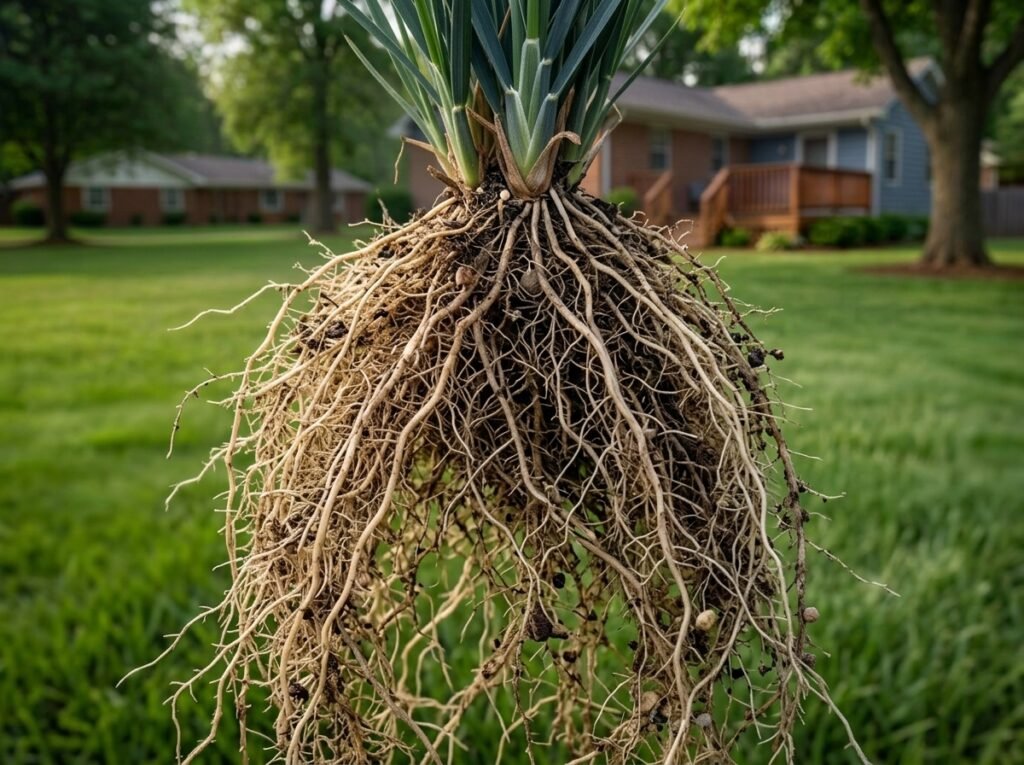
Orchardgrass is a useful forage grass in the right place, but a coarse clump of it can look like a weed inside a lawn.
It grows in bunches rather than spreading evenly. The leaves are wider and coarser than many lawn grasses and often have a light blue-green color.
Another easy clue is growth speed. Orchardgrass can stand above surrounding turf soon after mowing.
It is a cool-season perennial and spreads by seed. University of Maryland notes that unwanted orchardgrass may enter lawns through contaminated grass seed or straw.
Key clue: Coarse, fast-growing light blue-green clumps.
11. Green Kyllinga
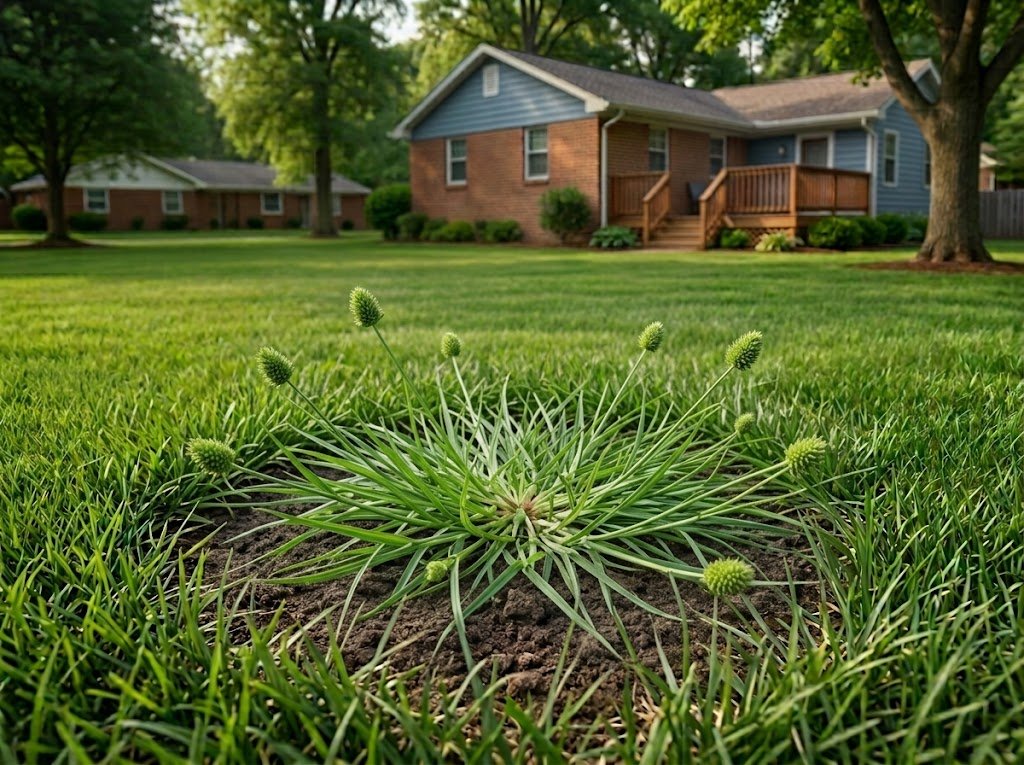
Green kyllinga looks like a short grass, but it belongs to the sedge family.
It has narrow leaves and spreads into dense mats through underground rhizomes. Unlike yellow nutsedge, which often appears as taller individual shoots, kyllinga tends to stay lower and spread across the lawn.
When allowed to flower, it produces a small, round green seed head. Its stem is also triangular.
Green kyllinga often becomes more noticeable in lawns that stay wet from poor drainage or frequent irrigation.
If your lawn regularly stays wet or develops puddles, it is worth finding the cause before treating the weed. Learn how to identify and fix common yard drainage problems and standing water before the moisture creates bigger lawn issues.
Key clue: Low mats with triangular stems and small round green seed heads.
12. Clumping Tall Fescue
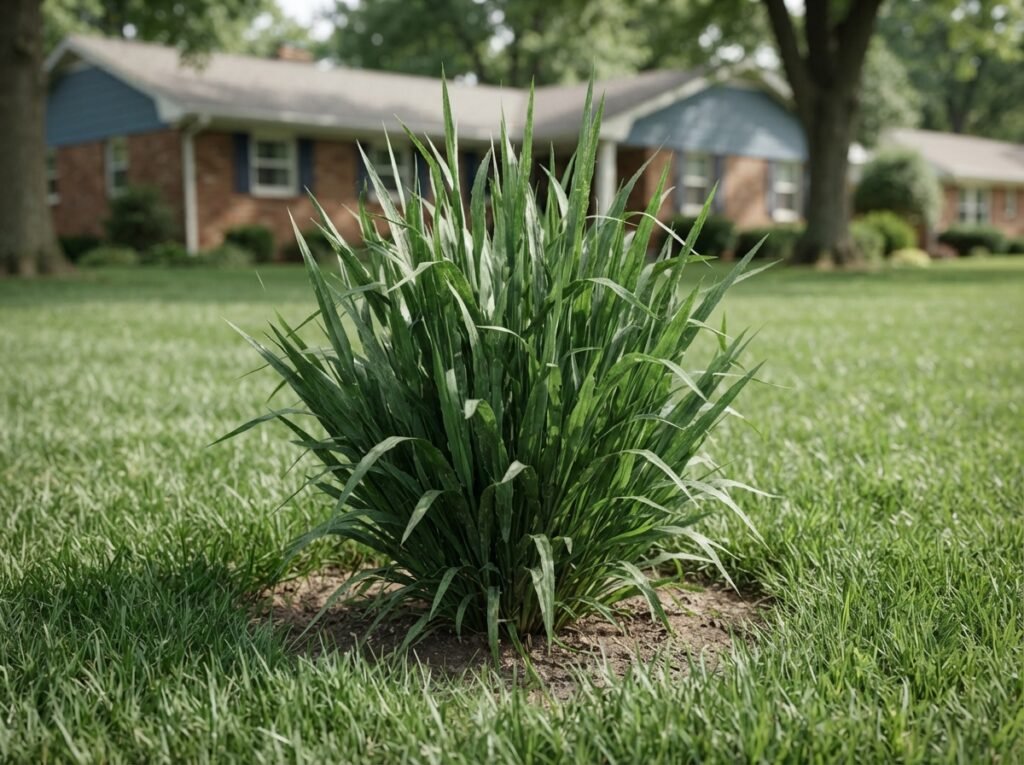
Tall fescue is a normal and useful lawn grass in many parts of the United States. But a few coarse clumps can be unwanted when they grow inside a finer-textured lawn.
The blades are wider and rougher than Kentucky bluegrass or many fine fescues. Tall fescue grows in bunches, so an unwanted plant often stays as a noticeable dark green clump instead of spreading smoothly through the lawn.
This is a good example of why the word “weed” depends on location. A tall fescue lawn is not weedy, but a coarse tall fescue clump can be unwanted inside another turf type.
Key clue: A dense bunch of wide, coarse blades that looks different from the rest of the lawn.
Grass, Sedge, or Lawn Grass? Use These Quick Checks
You do not need to know every plant term to make a useful first identification.
Feel the Stem
A round or flattened stem usually points toward a true grass.
A clearly triangular stem is a strong sign that you may have a sedge such as nutsedge or kyllinga.
Look at How It Spreads
A single clump may point toward a bunch-type grass.
Plants spreading across the surface may use stolons. Plants spreading underground may use rhizomes.
Wait for the Seed Head
Seed heads are often one of the clearest clues.
For example:
- Crabgrass has finger-like branches.
- Foxtail has a fuzzy seed head.
- Goosegrass has flattened finger-like spikes.
- Kyllinga has a small round head.
- Quackgrass develops a narrow wheat-like spike.
Watch It After Mowing
Some weeds grow faster than the lawn around them.
Nutsedge and orchardgrass may stand above the turf soon after mowing. A different growth rate can help you find a plant that was hard to see before.
Watch It Through the Seasons
Season can also help.
Annual bluegrass stands out during cooler weather, while warm-season nimblewill becomes especially easy to spot when it turns brown among green cool-season turf.
Color changes are not always caused by a weed. If large areas of your lawn are turning yellow, check other possible lawn problems before assuming a grass-like weed is responsible. See why your grass may be turning yellow for common causes and what to check first.
Before You Try to Remove It, Confirm the ID
Do not spray a plant simply because it looks different from the rest of your grass.
A weed killer made for broadleaf weeds may not work on a grassy weed. A product used for some grasses may not control sedges. Some treatments can also injure the lawn you want to keep.
Take clear photos of:
- The whole plant
- One leaf blade
- The base of the stem
- Any seed head
- The roots or runners, if you can see them
Then compare those features with a trusted weed guide. The University of Maryland’s weed identification photo guide includes annual bluegrass, crabgrass, dallisgrass, foxtail, goosegrass, kyllinga, nimblewill, orchardgrass, quackgrass, and other lawn weeds. Accurate identification should come before choosing a management method.
Know What Is Growing Before You Treat It
Grass-like weeds are hard to identify because many of them blend into a lawn until they grow taller or produce seed heads. Start with the simplest clues: blade shape, stem, seed head, roots, growth pattern, and season.
At Lawn Savy, we believe identifying the plant first is more useful than guessing at a treatment. Once you know whether you have crabgrass, nutsedge, goosegrass, quackgrass, or another grass-like plant, you can decide what to do next without putting healthy turf at unnecessary risk.
FAQs: Types of weeds that look like grass
What Are the Most Common Weeds That Look Like Grass?
Common grass-like lawn weeds include crabgrass, annual bluegrass, goosegrass, foxtail, dallisgrass, quackgrass, nimblewill, orchardgrass, and creeping bentgrass. Yellow nutsedge and green kyllinga also look like grasses, although both are sedges rather than true grasses.
What Is the Bright Green Weed That Grows Faster Than My Grass?
Yellow nutsedge is a common possibility. It often has a brighter yellow-green color and may grow above the lawn soon after mowing. Check the stem before deciding. Yellow nutsedge has a triangular, three-sided stem.
How Can I Tell Nutsedge From Grass?
Roll the stem gently between your fingers. A nutsedge stem has three sides instead of the round or flattened stem found on most grasses. Yellow nutsedge also has shiny yellow-green leaves and often grows upright in wet areas.
How Can I Tell Crabgrass From Goosegrass?
Both grow low and spread outward. Goosegrass usually has a flattened shape and a pale or whitish center at the base. Crabgrass usually looks more open and spreading without the same white center. Their mature seed heads are also different.
What Weed Looks Like Grass but Has a Fuzzy Seed Head?
Foxtail is the most likely answer. Green, yellow, and giant foxtail all develop bristly seed heads. The exact shape, size, and amount of hair on the leaves can help separate the different species.
What Grass-Like Weed Turns Brown While the Rest of the Lawn Stays Green?
Nimblewill is one possibility, especially in a cool-season lawn. It is a warm-season perennial, so it goes dormant and turns straw-colored during cold weather while nearby cool-season grasses may remain green.
Can Regular Lawn Grass Become a Weed?
Yes. Grass can be useful in one lawn and unwanted in another. Tall fescue, creeping bentgrass, and some other turfgrasses may be desirable when planted on purpose but stand out as weeds when they form patches inside a different lawn type. Purdue Extension notes, for example, that creeping bentgrass is desirable on golf courses but can be considered a weed in higher-mowed turf.