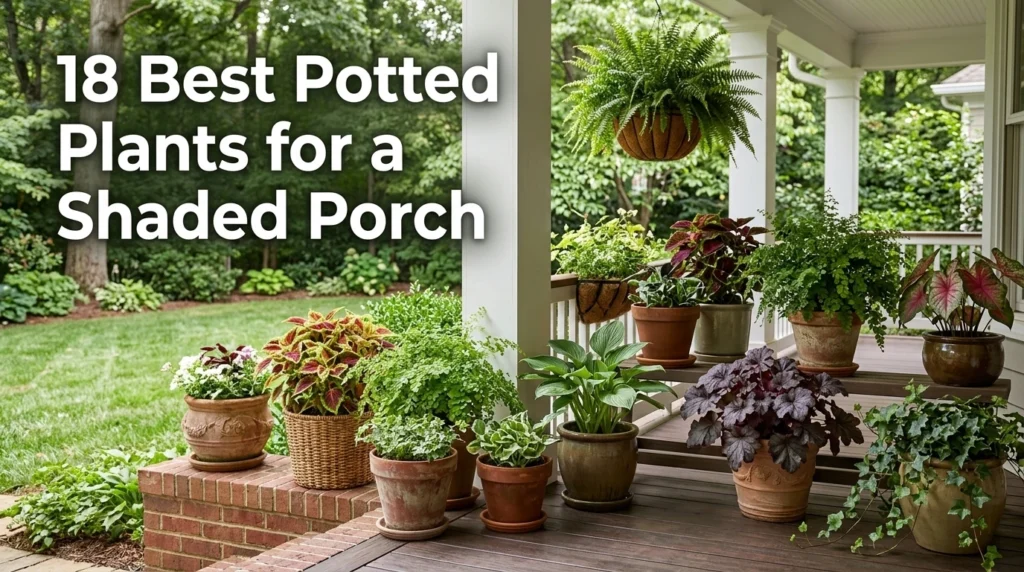
Some of the best potted plants for shaded porch include begonias, coleus, caladiums, hostas, coral bells, Boston ferns, fuchsias, and wishbone flowers. The right plant depends on how much light reaches your porch, how often you can water, and whether you want flowers, colorful leaves, or year-round shape.
A shaded porch is not always dark. It may receive soft morning sun, filtered light, or bright outdoor light without direct sun. Check the light before buying your plants.
Best Shaded Porch Plants at a Glance
- Best overall flowering plant: Begonia
- Best for colorful leaves: Coleus
- Best for bold foliage in shade: Caladium
- Best hanging foliage plant: Boston fern
- Best flowering hanging basket: Fuchsia
- Best easy-care perennial: Coral bells
- Best plant for a large pot: Dwarf hydrangea
- Best trailing plant: Creeping Jenny
- Best for year-round shape: Dwarf boxwood
- Best for hot and humid porches: Caladium
- Best pet-friendly choices: Boston fern, coral bells, impatiens, and fuchsia
Check your porch in the morning, at noon, and again in late afternoon. Some areas that look shaded early in the day receive strong sun later. This simple check is part of Lawn Savy’s practical approach to choosing plants that truly fit their growing space.
First, Know What Type of Shade Your Porch Gets
Shade labels can vary by nursery and plant type. In this guide, use these ranges as a simple starting point. Also consider how strong the sunlight is and what time of day it reaches the porch.
Full Shade
Full shade usually means less than about three hours of direct sun each day. The area should still receive outdoor daylight. .
Good choices include:
- Caladium
- Boston fern
- Hosta
- Wishbone flower
- Some begonias
- Some coleus varieties
Very dark corners may not support strong flowering. In these areas, choose plants grown for their leaves.
Partial Shade
Partial shade usually means about three to six hours of direct sun. Morning sun with afternoon shade is often gentler than strong afternoon sun.
Good choices include:
- Begonia
- Coleus
- Fuchsia
- Coral bells
- New Guinea impatiens
- Dwarf hydrangea
- Dwarf azalea
Dappled or Filtered Shade
Dappled shade has moving patches of sunlight that pass through trees, railings, screens, or a pergola. Many shade-loving plants grow well in this setting because they receive light without long periods of strong heat.
Bright Indirect Light
A covered porch may be bright even when direct sun does not reach the plants. This often happens near the front edge of the porch.
Bright indirect light works well for:
- Boston fern
- Fuchsia
- Begonia
- Coleus
- New Guinea impatiens
- Sweet potato vine
Quick Comparison of the Best Potted Plants for Shaded Porch
Hardiness zones and plant size can change by variety. Always check the plant label before buying.
| Plant | Best Use | Best Light | Life Cycle | Water Need | Care Level | Pet Note |
| Begonia | Flowers or colorful leaves | Full to partial shade | Annual in most areas | Moderate | Easy | Keep away from pets |
| Coleus | Bright foliage | Partial to full shade | Annual in most areas | Moderate | Easy | Check exact species |
| Caladium | Bold leaf color | Full to partial shade | Tropical annual | Moderate | Easy | Keep away from pets |
| New Guinea impatiens | Long-lasting flowers | Partial shade | Annual in most areas | Moderate | Easy | Generally pet-friendly |
| Boston fern | Hanging basket | Bright shade | Tropical perennial | High | Moderate | Pet-friendly |
| Coral bells | Colorful perennial foliage | Partial shade | Zones vary, often 3–9 | Moderate | Easy | Pet-friendly |
| Hosta | Large textured leaves | Partial to full shade | Often zones 3–9 | Moderate | Easy | Keep away from pets |
| Fuchsia | Flowering basket | Partial shade | Annual in cold climates | High | Moderate | Pet-friendly |
| Wishbone flower | Flowers in deeper shade | Partial to full shade | Annual | Moderate | Easy | Keep away from chewing pets |
| Browallia | Blue-purple flowers | Partial shade | Annual in most areas | Moderate | Easy | Keep away from pets |
| Dwarf hydrangea | Large feature pot | Morning sun and shade | Perennial, zones vary | High | Moderate | Keep away from pets |
| Dwarf azalea | Spring color | Partial shade | Perennial, zones vary | Moderate | Moderate | Keep away from pets |
| Hellebore | Cool-season flowers | Partial to full shade | Often zones 4–9 | Moderate | Easy | Keep away from pets |
| Japanese forest grass | Soft, arching texture | Partial to full shade | Often zones 5–9 | Moderate | Easy | Check exact plant |
| Carex sedge | Grass-like foliage | Partial shade | Zones vary | Low to moderate | Easy | Check exact species |
| Dwarf boxwood | Year-round structure | Partial shade | Perennial shrub | Moderate | Moderate | Keep away from pets |
| Creeping Jenny | Trailing foliage | Partial shade | Often zones 3–8 | Moderate | Easy | Keep inside the pot |
| Sweet potato vine | Fast trailing growth | Partial shade | Annual in cold climates | Moderate | Easy | Check the exact species |
Pet safety note: “Non-toxic” does not mean a pet should eat the plant. Any plant material may cause stomach upset. Always confirm the exact botanical name before buying.
For homes with pets, confirm the exact botanical name before buying. The ASPCA lists begonias, caladiums, hostas, hydrangeas, azaleas, hellebores, and boxwoods as toxic to dogs and cats. Boston fern, coral bells, impatiens, fuchsia, and sweet potato vine are listed as non-toxic.
18 Best Potted Plants for a Shaded Porch
1. Begonia — Best Overall Flowering Plant
Botanical name: Begonia species and hybrids
Best light: Partial shade; some types handle full shade
Best use: Table pots, floor containers, and hanging baskets
Water: When the upper layer of potting mix begins to dry
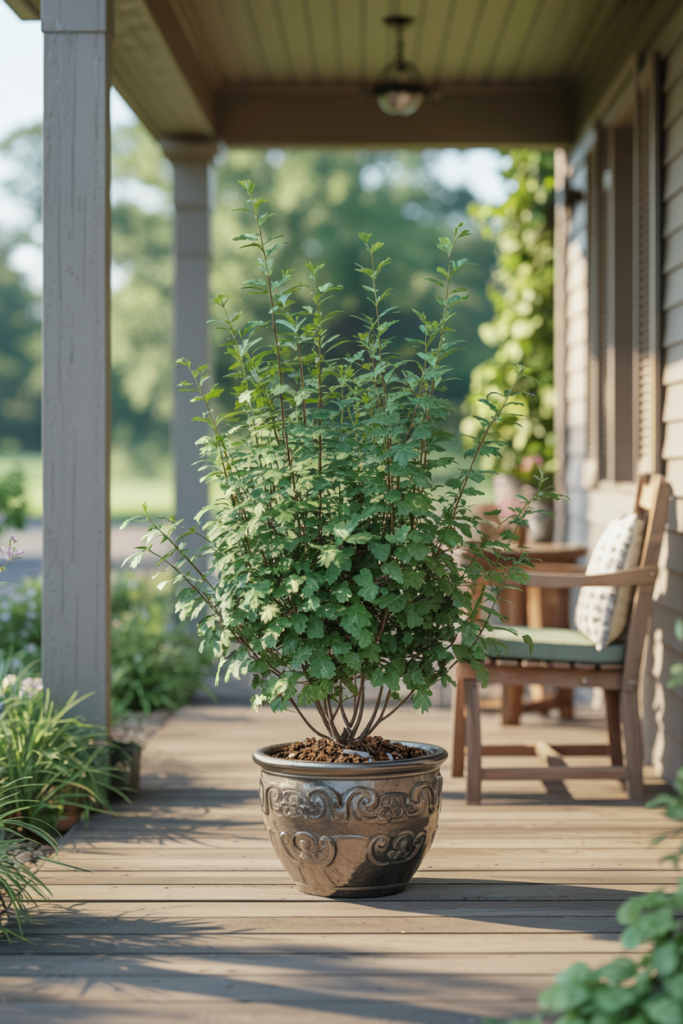
Begonias are one of the easiest ways to add flowers to a shaded porch. Wax begonias give steady color, tuberous begonias have larger flowers, and rex begonias are grown for patterned leaves.
Use loose potting mix and a container with drainage holes. Keep the soil lightly moist, but do not leave it soggy. Tuberous begonias can bloom through summer in shaded patio and porch containers. They are not winter-hardy in cold areas, but the tubers can be stored indoors.
2. Coleus — Best for Bright Foliage
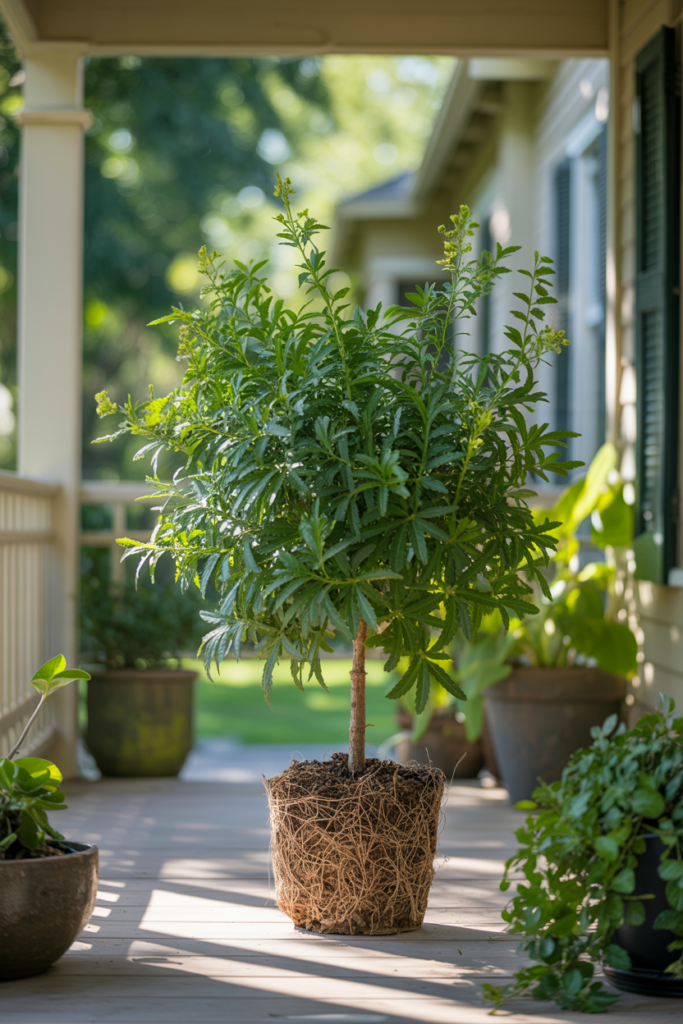
Botanical name: Coleus scutellarioides
Best light: Partial shade; some varieties handle full shade
Best use: Filler plant or single-color foliage pot
Water: Keep evenly moist, but not wet
Coleus comes in green, lime, pink, red, burgundy, orange, and purple. It is useful when a porch does not get enough light for heavy flowering.
Pinch the growing tips to keep the plant full and bushy. Deep shade may make some varieties stretch toward the light, so place the pot where it receives bright outdoor light. Coleus grows well in containers and hanging baskets, and most plants are treated as annuals outside warm climates.
3. Caladium — Best for Deep Shade and Bold Color
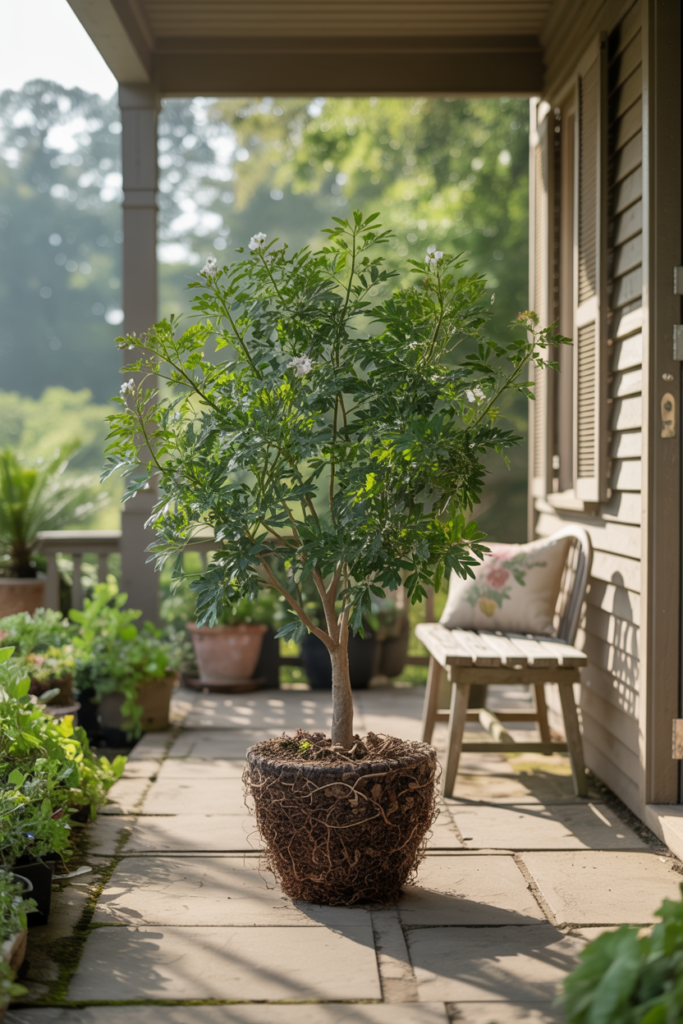
Botanical name: Caladium species and hybrids
Best light: Full to partial shade
Best use: Bright feature pot
Water: Keep the mix moist with good drainage
Caladiums have large heart-shaped leaves marked with white, pink, red, or green. They bring strong color to places where flowering plants may struggle.
Caladiums like warm weather and protection from wind. Their thin leaves can tear in exposed porch corners. Most are tropical plants, so cold-climate gardeners grow them as annuals or store the tubers indoors for winter.
4. New Guinea Impatiens — Best for Long-Lasting Flowers
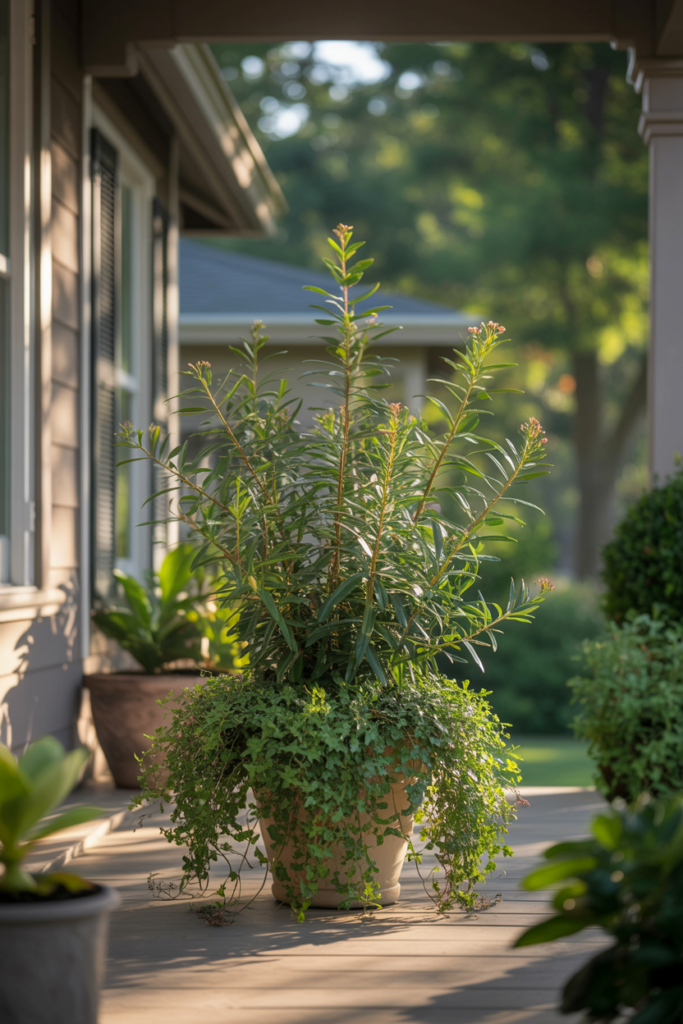
Botanical name: Impatiens hawkeri
Best light: Partial shade
Best use: Medium pots and mixed containers
Water: Keep evenly moist
New Guinea impatiens produce bright flowers from spring into fall. Colors include white, pink, red, orange, lavender, and purple.
They perform best in partial shade and need more water as light and heat increase. Traditional New Guinea impatiens are better for a shaded porch than SunPatiens, which prefer more light.
They have a rounded shape and work well as the main flowering plant in a medium porch pot.
5. Boston Fern — Best Hanging Foliage Plant
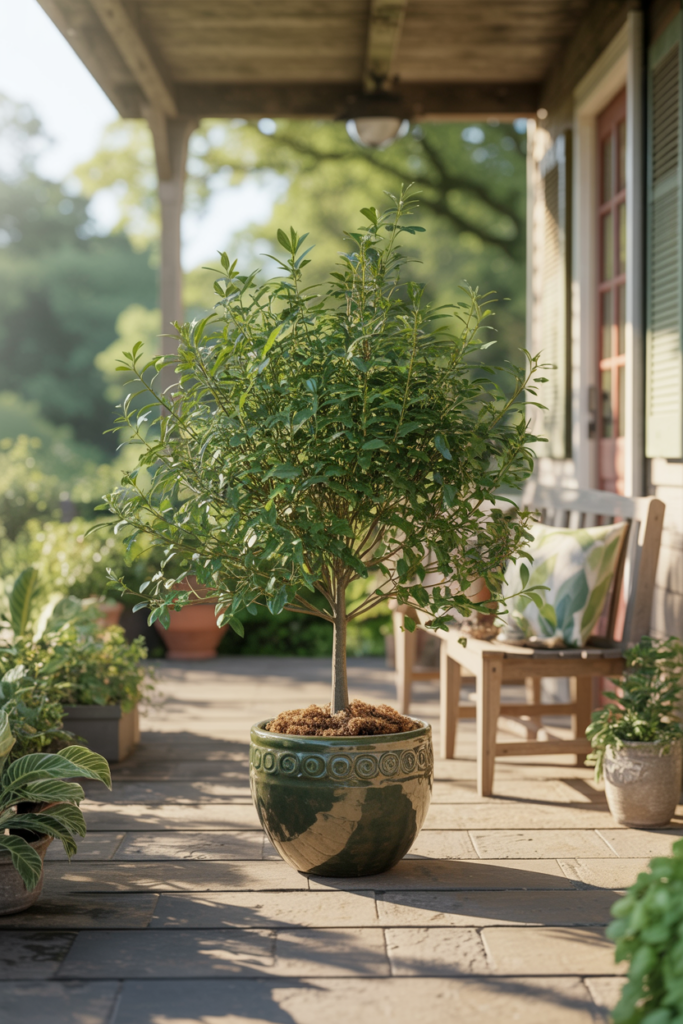
Botanical name: Nephrolepis exaltata
Best light: Bright shade or full shade with plenty of outdoor daylight
Best use: Hanging baskets and tall plant stands
Water: Keep moist; do not allow it to dry fully
Boston fern has long, arching fronds that soften porch rails, walls, and ceiling hooks. Some Boston ferns can grow 2 to 3 feet wide, so check the plant label and give the basket enough room.
This fern prefers humid air and steady moisture. Dry wind can turn the frond tips brown. A porch protected from afternoon sun and strong wind is ideal.
Boston fern is not cold-hardy in most of the United States. Move it indoors before frost or grow it as a seasonal porch plant.
6. Coral Bells — Best Easy-Care Perennial
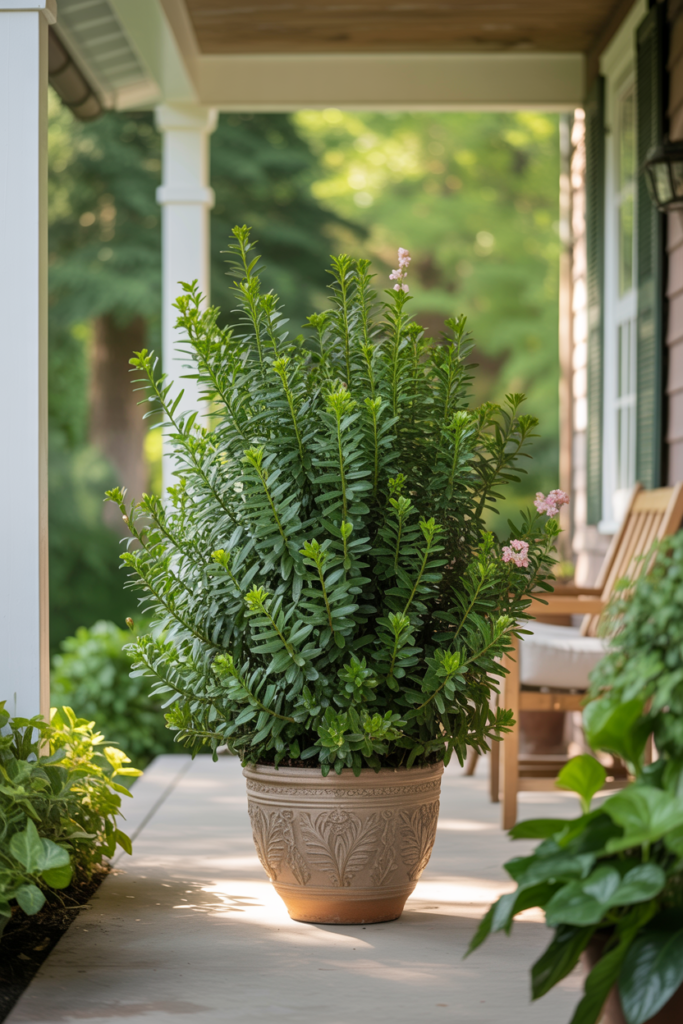
Botanical name: Heuchera species and cultivars
Best light: Partial shade
Best use: Long-lasting foliage in perennial containers
Water: Moderate; allow the surface to dry slightly
Coral bells have rounded leaves in green, lime, bronze, purple, silver, and red. Thin flower stems rise above the leaves in spring or summer.
They are a good choice when you want a perennial instead of replacing annuals each year. Use well-draining potting mix and do not bury the crown too deeply.
Many coral bells are hardy across a wide range of climates. However, roots in a pot are less protected from cold than roots in the ground. Move the container to a sheltered place in very cold winters.
7. Hosta — Best for Lush, Textured Leaves
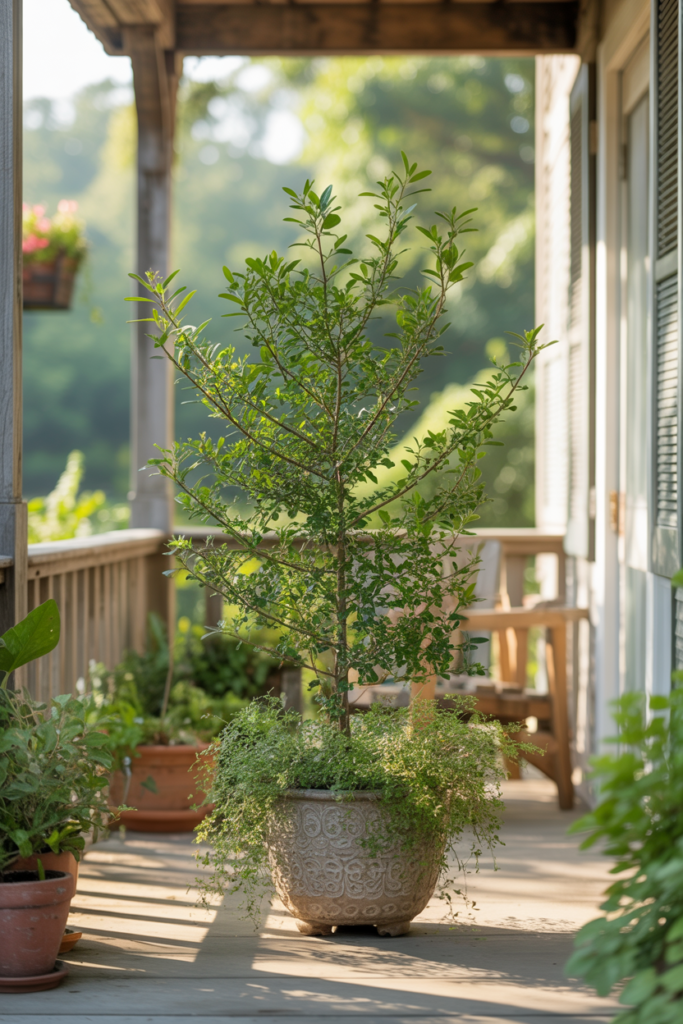
Botanical name: Hosta species and cultivars
Best light: Dappled, partial, or full shade
Best use: Large single-plant pots
Water: Keep evenly moist
Hostas come in many sizes, from small plants that fit on a porch step to large types with wide leaves. Leaf colors include blue-green, gold, white, and cream.
Choose a dwarf or compact variety for a smaller pot. Large hostas need wide, deep containers. Slugs and snails may chew the leaves, especially in cool, damp areas.
The University of Minnesota notes that a single hosta in a container can make a strong feature plant. Some morning sun can also improve the color of gold-leaved varieties.
8. Fuchsia — Best Flowering Hanging Basket
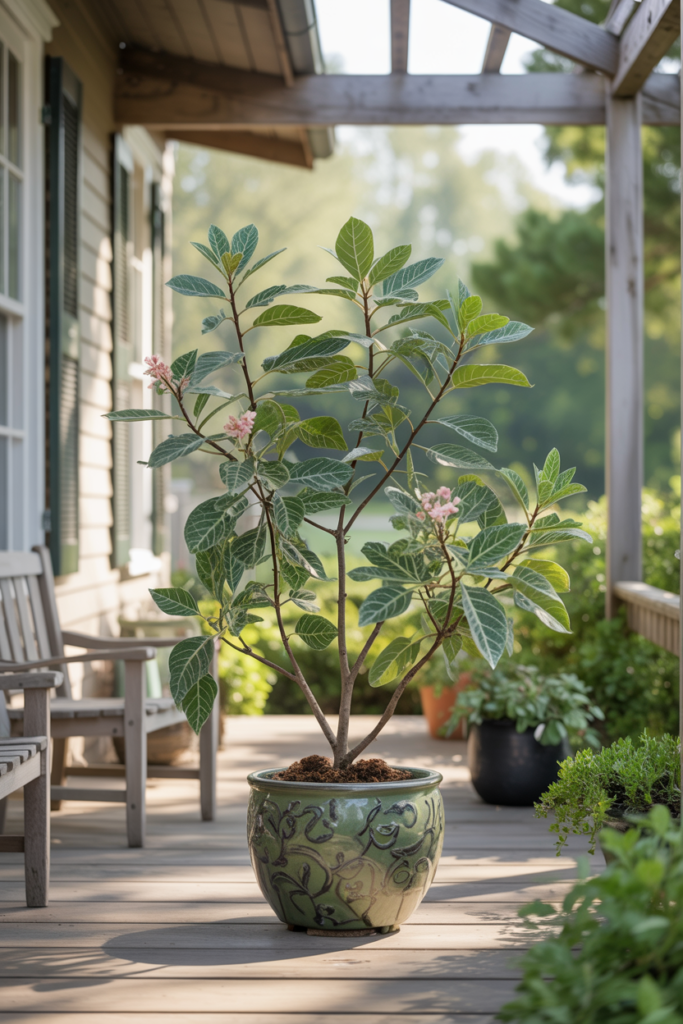
Botanical name: Fuchsia hybrids
Best light: Bright shade or gentle morning sun
Best use: Hanging baskets
Water: Keep moist; never allow a severe dry-out
Fuchsia has hanging flowers in pink, purple, red, white, and orange. The blooms attract hummingbirds and hang naturally over the edge of a basket. If you want to add more plants that support hummingbirds and butterflies, explore these perennial flowers for pollinator-friendly gardens for additional ideas.
Fuchsias prefer cool summers. They may slow down during strong heat, even when they receive enough water. Protect them from hot afternoon sun and dry wind.
9. Wishbone Flower — Best for Flowers in Deeper Shade
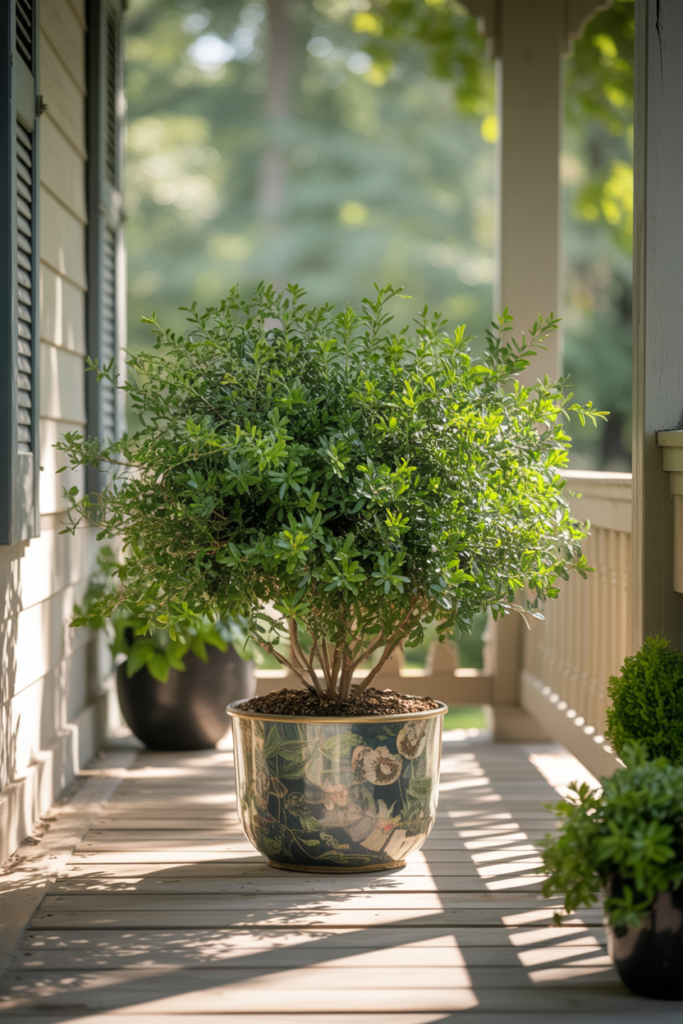
Botanical name: Torenia fournieri
Best light: Partial to full shade
Best use: Pots, window boxes, and low baskets
Water: Keep the soil evenly moist
Wishbone flower has small trumpet-shaped blooms in purple, blue, white, and yellow. It can flower through summer in a place where many annuals produce few blooms.
It has a low, spreading shape and can trail over a pot edge. Pinch young plants to encourage fuller growth.
10. Bush Violet — Best Compact Flowering Filler
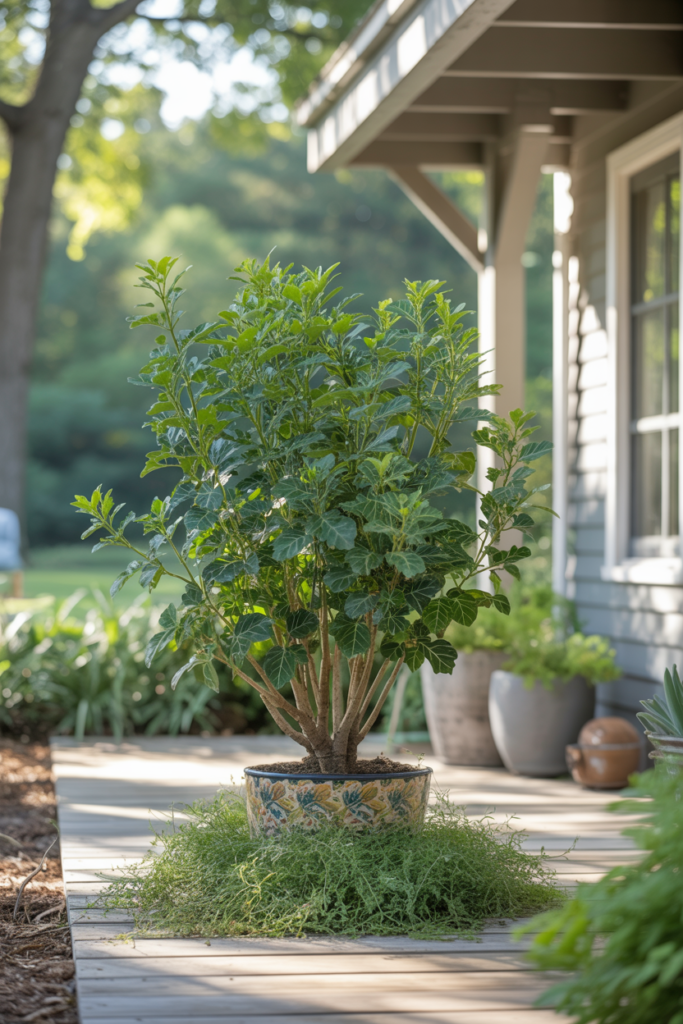
Botanical name: Browallia speciosa
Best light: Morning light with afternoon shade
Best use: Small pots and mixed containers
Water: Keep lightly and evenly moist
Bush violet, also called browallia, has blue-purple, white-centered flowers. Compact types fit well near the front of a mixed container.
Pinch the tips to create a fuller plant. Do not overfeed it. Too much fertilizer can produce more leaves and fewer flowers.
Browallia is normally grown as a warm-season annual. It is toxic if eaten, so keep the pot away from pets and young children.
11. Dwarf Hydrangea — Best Statement Plant
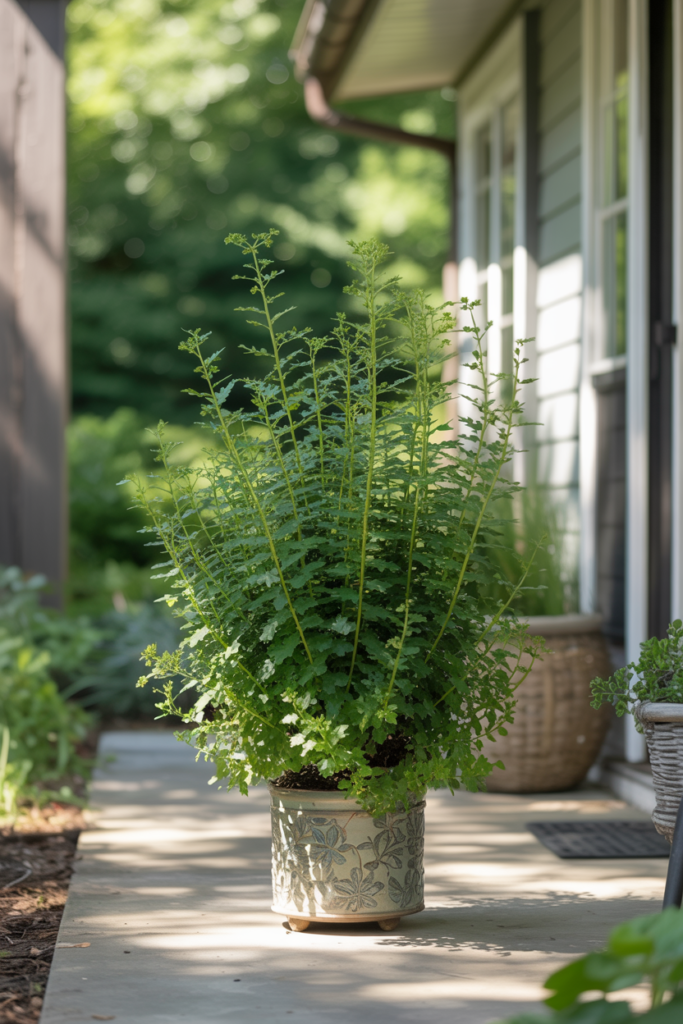
Botanical name: Compact Hydrangea cultivars
Best light: Morning sun, dappled shade, or bright partial shade
Best use: Large feature container
Water: High; check often during warm weather
A dwarf hydrangea can fill a large porch pot with broad leaves and large flower clusters. Choose a compact variety rather than planting a full-size shrub in a small pot.
Use a large container with good drainage. Hydrangeas dry faster in pots than in the ground, so check the soil often. Avoid harsh afternoon sun.
Some pink or blue bigleaf hydrangeas can change color with soil conditions. Other hydrangeas, including most white-flowered types, keep the same basic color.
12. Dwarf Azalea — Best Spring-Flowering Shrub
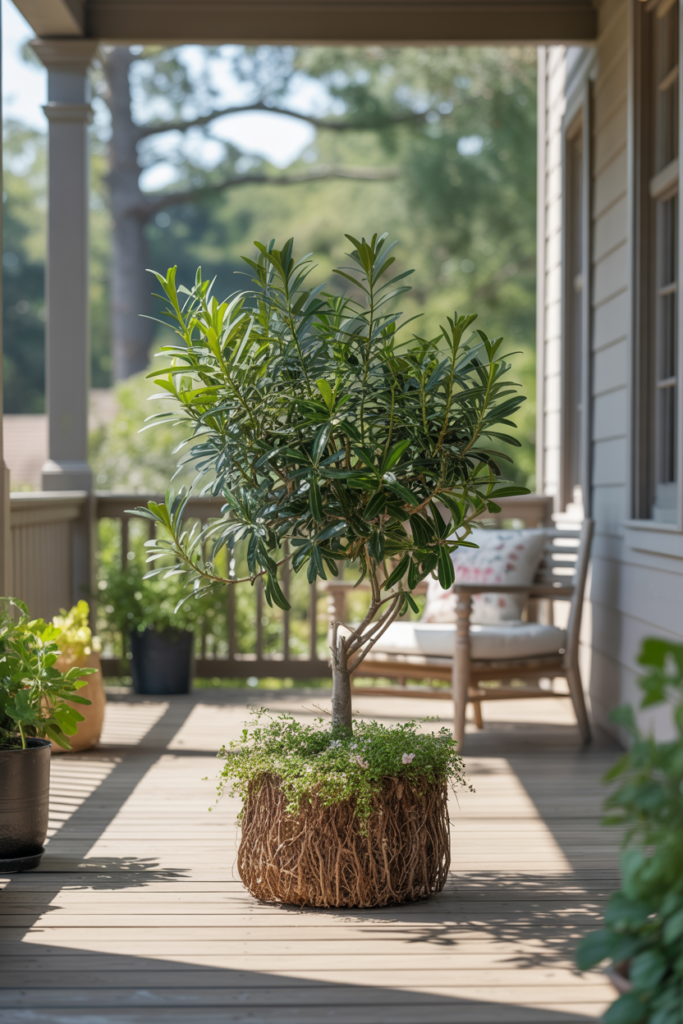
Botanical name: Compact Rhododendron cultivars
Best light: Dappled or partial shade
Best use: Large porch pot
Water: Moist but well-drained soil
Dwarf azaleas add a strong flush of spring flowers. Evergreen types may also give the porch shape after flowering ends.
Use an acidic potting mix made for azaleas, camellias, or rhododendrons. Do not allow the roots to remain in standing water. Place the pot away from hot afternoon sun and drying winds.
13. Hellebore — Best for Cool-Season Flowers
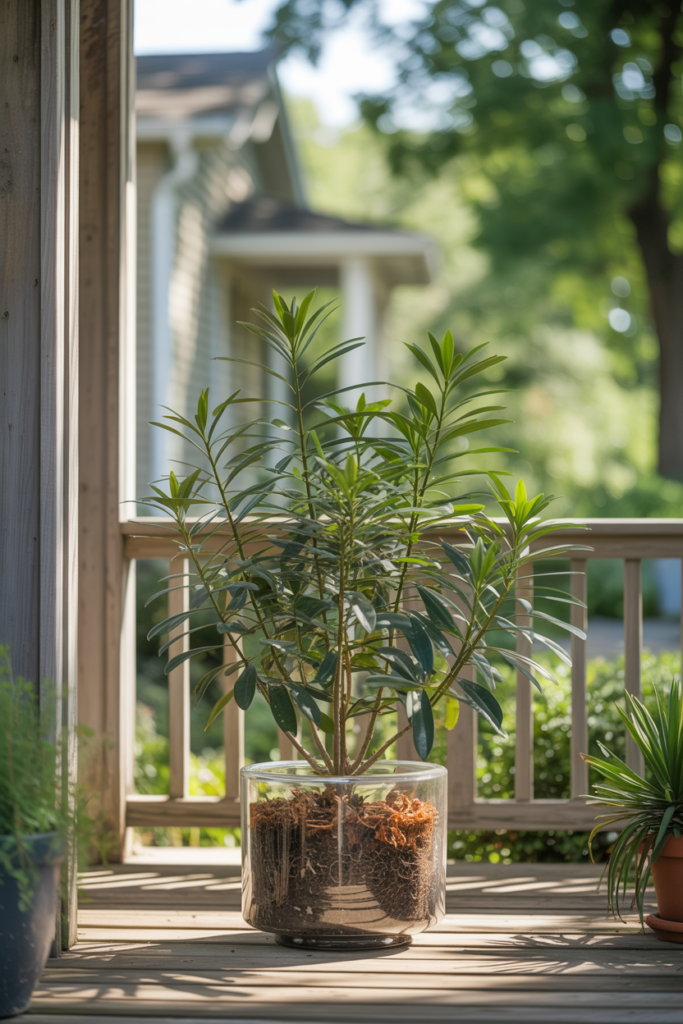
Botanical name: Helleborus species and hybrids
Best light: Partial to full shade
Best use: Winter and early-spring porch color
Water: Moderate
Hellebores bloom when many porch plants are still dormant. Their flowers may be white, pink, purple, red, yellow, or green.
They are cold-hardy perennials in many areas and can remain in a large pot for several years. Good drainage is important because wet crowns can rot.
The plant is toxic if eaten. Wear gloves if its sap irritates your skin, and keep it away from pets.
14. Japanese Forest Grass — Best for Soft Texture
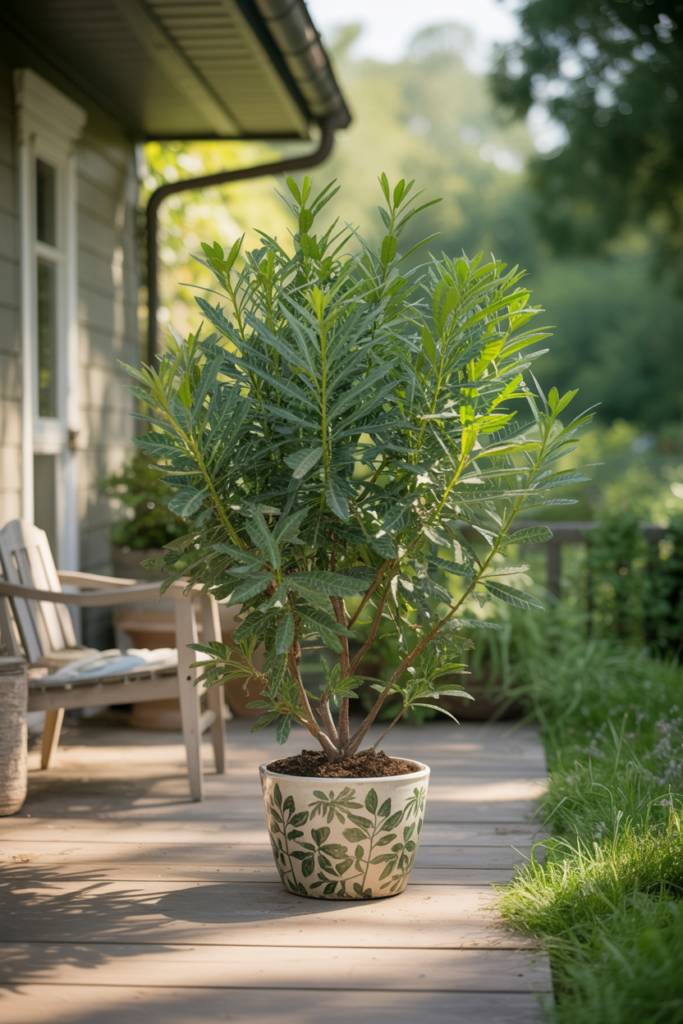
Botanical name: Hakonechloa macra
Best light: Partial to full shade
Best use: Arching foliage in a wide pot
Water: Keep evenly moist
Japanese forest grass has soft leaves that arch over the sides of a container. Green and gold-striped varieties brighten dark corners without looking too busy.
It prefers cool summers, rich soil, and regular moisture. Hot sun or dry potting mix can scorch the leaves. It grows slowly, so it does not need frequent dividing.
Japanese forest grass grows slowly and usually forms a clump. Check local guidance before planting any non-native plant outdoors. .
15. Carex Sedge —Best for Grass-Like Texture
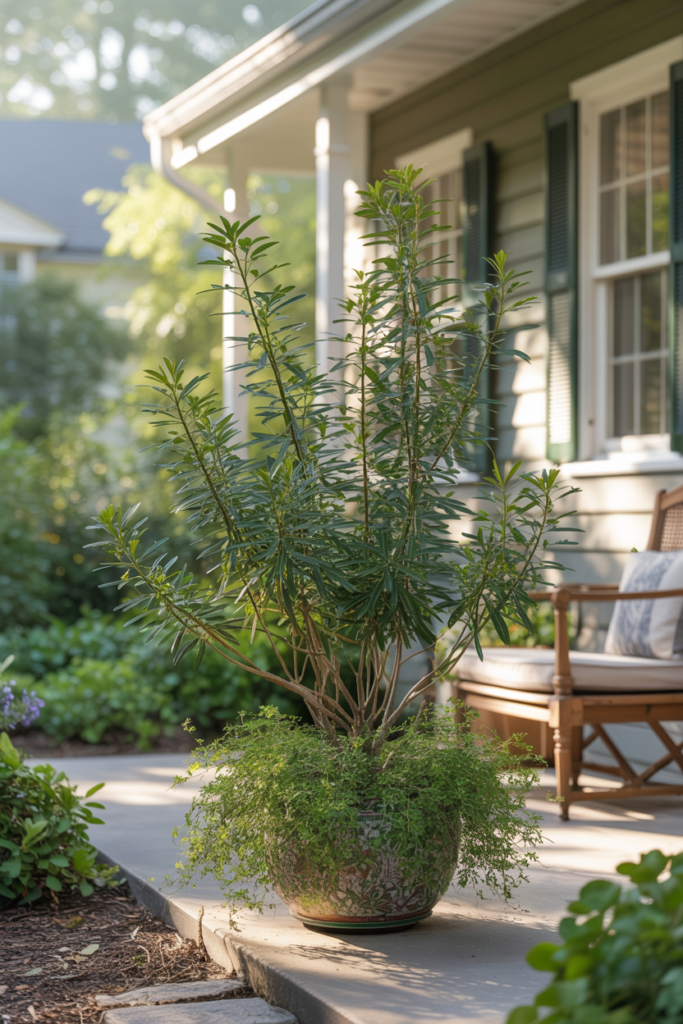
Botanical name: Carex species and cultivars
Best light: Partial shade; some types handle deeper shade
Best use: Filler, edging, or soft upright texture
Water: Low to moderate, depending on the variety
Carex looks like an ornamental grass, but it is a sedge. Many types have narrow green, gold, or variegated leaves.
Use compact varieties in containers. Some prefer moist soil, while others handle short dry periods. Check the plant label because care needs differ between species.
Carex works well with coral bells, hellebores, and trailing plants. Its fine leaves add movement without hiding nearby flowers.
16. Dwarf Boxwood — Best for Year-Round Structure
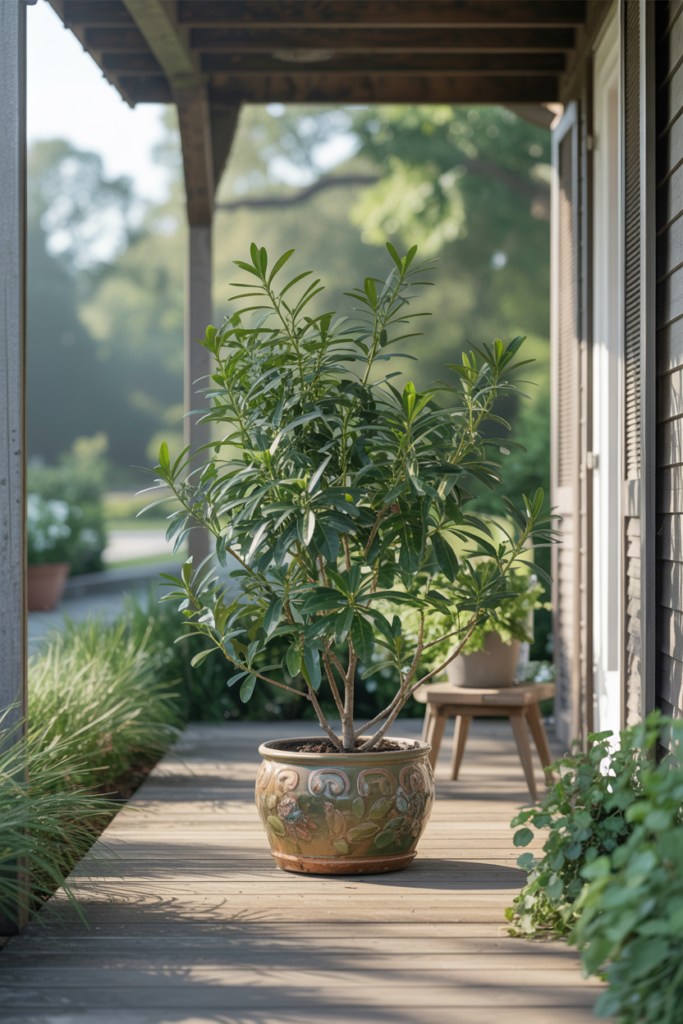
Botanical name: Compact Buxus cultivars
Best light: Partial shade or bright filtered light
Best use: Formal front-door pots
Water: Moderate
Dwarf boxwood stays green through winter in many climates. It gives a shaded porch a clean shape when annual flowers are gone.
Choose a slow-growing compact variety. Use a large, frost-safe pot and do not allow the roots to remain wet. Turn the container every few weeks if one side receives more light.
Boxwood is not a plant for a very dark corner. It needs bright shade or some gentle direct light. It is also toxic to pets when eaten.
17. Creeping Jenny — Best Trailing Plant
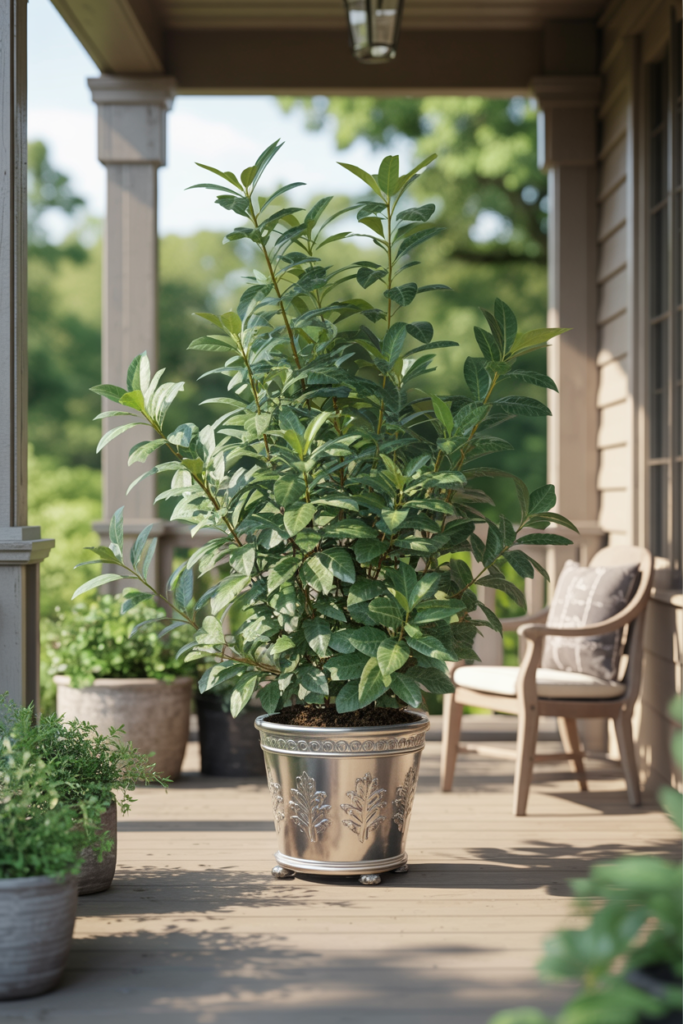
Botanical name: Lysimachia nummularia
Best light: Partial shade
Best use: Spiller over the pot edge
Water: Moderate; tolerates moist conditions
Creeping Jenny has small round leaves on long trailing stems. The gold-leaved form can brighten a shaded container.
It can spread outside the pot and may be considered invasive in some areas. Keep it contained and check your local invasive-plant list before planting it in the ground.
18. Sweet Potato Vine — Best Fast-Growing Spiller
Botanical name: Ipomoea batatas
Best light: Partial shade or morning sun
Best use: Trailing foliage in a large mixed pot
Water: Moderate
Ornamental sweet potato vine grows fast and trails over a pot edge. Leaf colors include lime green, bronze, dark purple, and nearly black.
It grows best with more light than deep-shade plants. In a very dark porch corner, growth may become thin and leaf color may fade.
Trim long stems when they begin to cover nearby plants. Sweet potato vine is normally grown as an annual outside warm climates and is listed as non-toxic to dogs and cats.
Four Easy Plant Combinations for a Shaded Porch
Only place plants together when they have similar light and water needs.
Bright Foliage Combination
Use:
- Caladium as the tall feature
- Coleus as the middle filler
- Creeping Jenny as the trailing plant
This mix works best in bright shade with steady moisture.
Flowering Hanging Basket
Use:
- Fuchsia as the main plant
- Wishbone flower around the edge
- A small trailing foliage plant
Keep the basket away from hot afternoon sun and check the soil often.
Low-Maintenance Perennial Pot
Use:
- Coral bells
- Carex
- A small trailing plant
This combination gives color and texture without relying on constant flowers.
Large Front-Door Container
Use:
- Dwarf hydrangea or dwarf boxwood
- Begonias around the base
- Sweet potato vine over the edge
Choose boxwood for year-round shape or hydrangea for seasonal flowers.
How to Care for Potted Plants on a Shaded Porch
Check the Soil Before Watering
Push your finger about an inch into the potting mix. Water if it feels dry at that depth, unless the plant prefers drier soil. A covered porch may block rainfall. Do not assume the pots received water because the yard is wet.
Avoid Keeping the Potting Mix Soggy
Shade slows water loss. Pots in deep shade may stay wet longer than pots near the porch edge. Wilting does not always mean the plant is dry. Check the soil first.
Feed Lightly During Active Growth
Container plants cannot send roots into the ground to find nutrients. Use a slow-release fertilizer or a light liquid feed based on the plant label. Do not feed dormant plants or plants already stressed by heat, cold, or root rot.
Rotate Pots for Even Growth
Turn each pot every week or two. This helps prevent plants from leaning toward the open side of the porch.
Remove Dead Leaves and Spent Flowers
Deadheading can help some plants keep blooming. Removing dead leaves also improves airflow and makes it easier to spot pests. Keeping the soil surface clean and free of unwanted growth is also important, especially when several containers are grouped together. For more practical flower-bed prevention tips, see our guide to natural weed control in flower beds.
Watch for Slugs, Snails, and Indoor-Outdoor Pests
Shaded, damp areas can attract slugs and snails. Ferns, fuchsias, coleus, and impatiens may also develop aphids, whiteflies, spider mites, or mealybugs. Check under the leaves before using any treatment.
Protect Tender Plants From Cold Weather
Move tropical plants indoors before frost. Check them for pests first. Plants moved from indoors to the porch in spring should be introduced to outdoor conditions slowly. Sudden exposure to brighter light can scorch leaves.
Common Mistakes to Avoid
Assuming Shade Means No Light
Shade plants still need light. A dark corner may cause weak growth, fewer flowers, and pale leaves.
Mixing Plants With Different Water Needs
Do not combine a moisture-loving fern with a plant that needs to dry between waterings.
Using Pots Without Drainage
A layer of stones at the bottom does not replace a drainage hole.
Overwatering Because the Porch Feels Cool
Cool shade slows evaporation. Test the potting mix instead of watering on a fixed daily schedule.
Forgetting That Porch Roofs Block Rain
Covered pots may stay dry during a week of wet weather.
Ignoring Pet Toxicity
Check botanical names before placing plants where dogs or cats can chew them. The ASPCA’s toxic and non-toxic plant database is a useful place to confirm a plant.
How to Keep Shaded Porch Pots Looking Good Through the Seasons
Spring
- Replace old potting mix when needed.
- Repot root-bound plants.
- Begin light feeding after growth starts.
- Move tropical plants outside only after frost danger passes.
Summer
- Check moisture often.
- Move heat-sensitive plants farther into the shade.
- Deadhead flowering plants.
- Trim fast-growing vines and fillers.
- Watch for pests.
Fall
- Stop heavy feeding.
- Decide which tropical plants will come indoors.
- Clean dead leaves from pots.
- Move hardy containers to a protected location.
Winter
- Water hardy outdoor containers only when the soil is not frozen and has become dry.
- Protect pots from repeated freezing and thawing.
- Keep tender plants indoors.
- Reduce watering for plants that are not growing actively.
Choose Plants That Match Your Porch
A shaded porch can hold more than plain green foliage. Begonias, fuchsias, wishbone flowers, and impatiens provide blooms, while caladiums, coleus, hostas, and coral bells bring color through their leaves.
At Lawn Savy, we recommend starting with the light. Then choose plants with similar water needs and enough room for their roots. A few well-matched pots are easier to care for and often look better than a porch crowded with plants that need different conditions.
FAQs: Best Potted Plants for Shaded Porch
What Plants Grow Best on a Porch With No Direct Sun?
Caladiums, Boston ferns, hostas, wishbone flowers, some begonias, and shade-grown coleus can do well without direct sun. The porch must still receive bright outdoor light.
What Flowers Bloom Well in Full Shade in Pots?
Wishbone flower, tuberous begonia, browallia, and some fuchsias can bloom in shaded containers. Flowering may be lighter in very deep shade.
What Are the Most Low-Maintenance Plants for a Shaded Porch?
Coral bells, hostas, carex, begonias, and coleus are easy choices when their pots drain well and their light needs are met.
What Are the Best Hanging Plants for a Shaded Porch?
Boston fern is best for green foliage. Fuchsia and wishbone flower are good flowering choices. Trailing coleus can also work in bright shade.
Which Shaded Porch Plants Come Back Every Year?
Hostas, coral bells, hellebores, Japanese forest grass, carex, hydrangeas, azaleas, and boxwoods can return each year when they are hardy in your climate and their roots survive winter.
How Often Should I Water Plants on a Covered Porch?
Check the soil instead of following a fixed schedule. Small baskets may need water often in warm weather, while large shaded pots may stay moist for several days.
Can Shade Plants Grow on a North-Facing Porch?
Yes. A north-facing porch often provides bright shade. Use plants that do not need several hours of direct sun.
What Size Pots Are Best for Porch Plants?
Small annuals may grow in 10- to 12-inch pots. Large hostas, shrubs, and hydrangeas need wider and deeper containers. The final size of the plant should guide the choice.